

Say Goodbye to Bad Breath: Easy At-Home Cat Dental Care
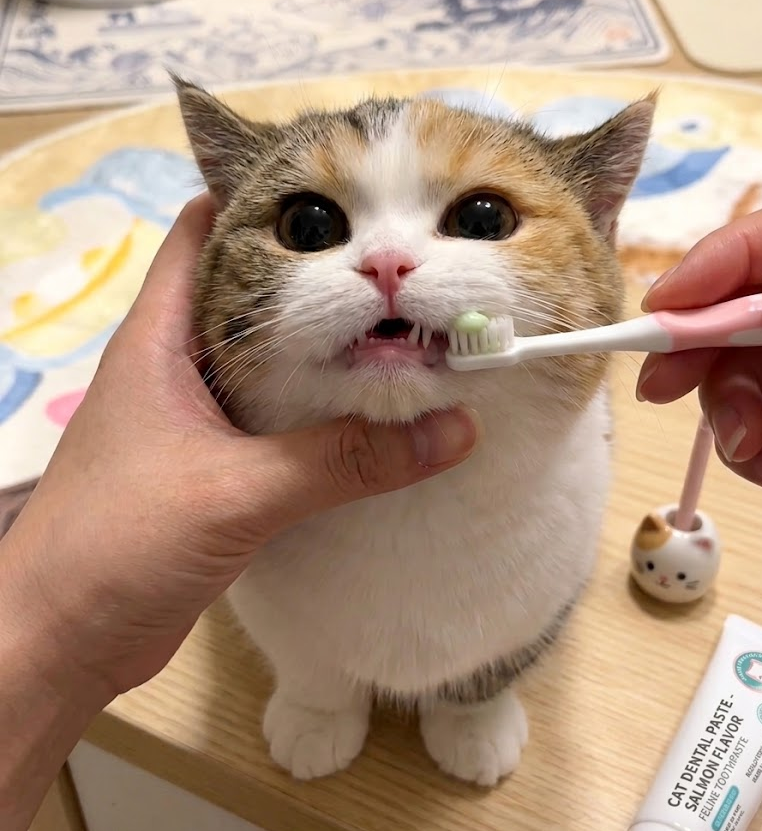
Want to cuddle with your cat, but what if their breath smells bad? Cat owners, pay attention! This is your cat’s way of signaling poor oral health. But don’t worry, in this blog post, we’ll teach you how to brush your cat’s teeth at home, and methods to keep their teeth clean without brushing.
Why brushing your cat’s teeth is so important
According to research from Cornell University’s Feline Health Center, 50% to 90% of cats over 4 years old suffer from some form of dental disease. Furthermore, the latest clinical observations from the Feline Veterinary Association indicate that up to 85% of cats show signs of periodontal disease by age 2. This demonstrates that cats have a very high probability of developing dental problems. If cat owners don’t brush their cats’ teeth daily, their felines are likely to develop gingivitis, periodontitis, and other diseases, seriously impacting their lives.
How to perform dental care for your cat at home
Dr. Jan Bellows, former president of the American Veterinary Dental Association (AVDC), often emphasizes that “the best dental care begins at home, but must be done at ‘cat-speed.'” He believes that “veterinarians can only treat existing lesions, while it is the owner who determines whether the cat’s mouth will remain healthy.” Therefore, we have summarized the specific steps for owners to brush their cat’s teeth at home. To ensure your cat has a good brushing experience, please follow these steps:
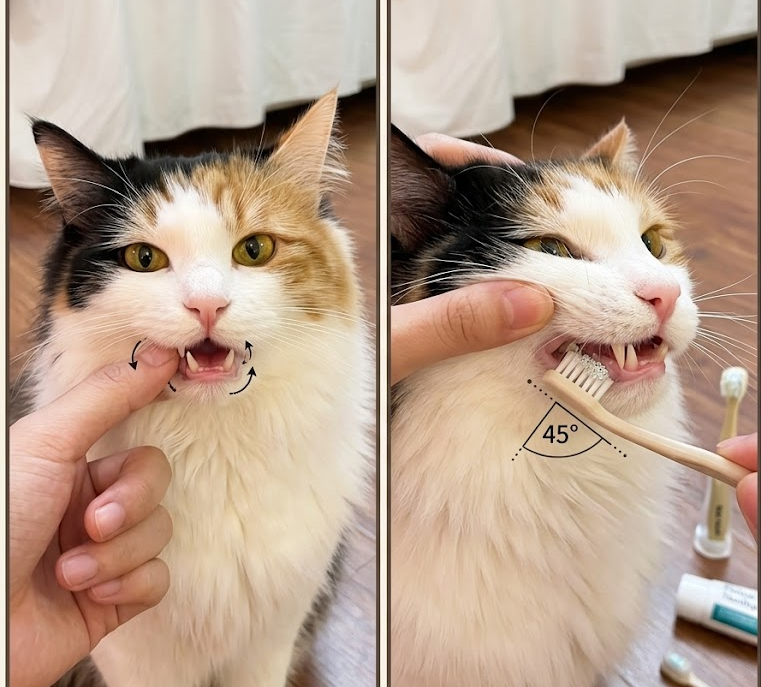
Step 1: First, massage the cat’s teeth and gums with your fingers to help them get used to the feeling.
Step 2: Use cat-specific toothpaste and a toothbrush to brush its teeth, being as gentle and slow as you did during the massage.
Step 3: Gently open the cat’s lips and insert the toothbrush between the lips and gums. Hold the bristles at a 45-degree angle to the teeth and gently brush the gaps between the teeth and gums, cleaning both the outer surfaces of the upper and lower teeth.
How to keep your cat’s teeth clean without brushing?
Besides regular brushing, there are other gentle ways to maintain your cat’s oral health without forcing them to cooperate. The following common and practical teeth cleaning methods can also help reduce plaque, prevent bad breath, and tartar buildup.
Are dental treats for cats really effective?
Most dental treats are on the harder side. When cats chew them, the treats rub against the tooth surface, scraping away some plaque. Some products also contain antibacterial ingredients, which can reduce bad breath.
Here are some of the most highly rated teeth-cleaning snacks on Amazon as of 2026:
Feline Greenies: Certified by VOHC (Veterinary Dental Association of America), these crunchy, large pieces effectively reduce tartar buildup and are suitable for picky eaters.
Purina DentaLife: VOHC certified, porous texture, less than 2 calories per capsule, suitable for overweight cats who need to control their weight.
What are dental cleaning additives for cat drinking water?
Cat dental cleaning additives are liquids that can be mixed into a cat’s drinking water, allowing the cat to clean its mouth while drinking. They have three main functions: 1) reducing plaque formation; 2) breaking down food debris and preventing its adhesion; and 3) neutralizing minerals and slowing down tartar buildup. For kittens that dislike brushing their teeth, cat dental cleaning additives are a good option.
How do dental hygiene toys for cats improve oral health?
First, it’s important to know that a cat’s natural eating instinct is to swallow quickly. Dental cleaning toys often contain silvervine or catnip, which triggers the cat’s biting reflex. When a cat chews on a dental cleaning toy, it acts like a toothbrush, removing plaque from the teeth and preventing it from calcifying into tartar. At the same time, the toy also acts as a massage, promoting blood circulation in the gum tissue and preventing early gingivitis.
There are many cat dental cleaning toys available on the market, such as Petstages Dental Mesh Toys, Potaroma Natural Silvervine Sticks, and the Hartz Chew ‘n Clean series, all of which are excellent cat dental cleaning toys.
Are cat dental cleaning wipes effective?
Dr. Nimek is a certified expert of the American Veterinary Dental Association (AVDC) and an editor of the *Veterinary Dentistry Guide*. He once said, “Dental plaque is a biological film that adheres to teeth like a sticky glue. It cannot be removed by rinsing alone. You must break down the structure of this film through physical friction.” Cat dental cleaning wipes provide just such physical removal.
Dr. Nimek’s recommended three-step method:
1. First, let your cat smell the dental wipes to get used to the scent.
2. Wrap a dental wipe tightly around your finger and wipe from the gum line towards the tips of your teeth, instead of rubbing back and forth.
3. The focus of cleaning is on the outer side of the upper palate’s lateral teeth. He said: This is where the cat’s salivary glands open, and it’s also where tartar most easily accumulates.
We highly recommend the following pet dental care products:
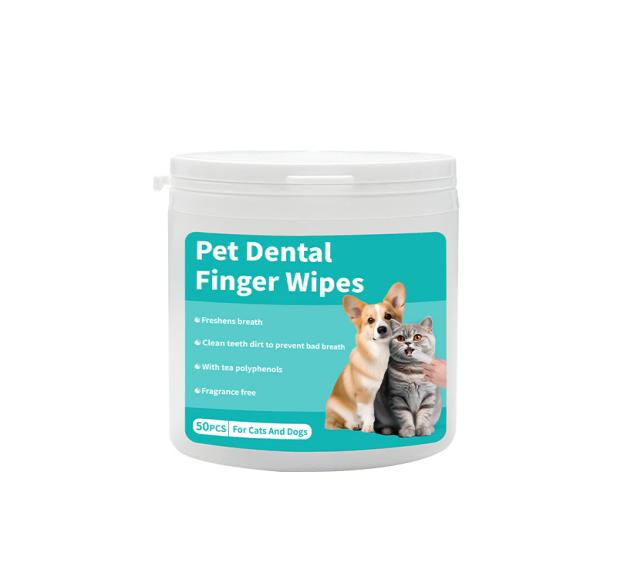 | Pet Dental Finger Wipes – Teeth Cleaning for Dogs & CatsEach box contains 50 disposable wipes, rich in tea polyphenols, which can clean teeth, freshen breath, and bring a gentle and stress-free daily cleaning experience. |
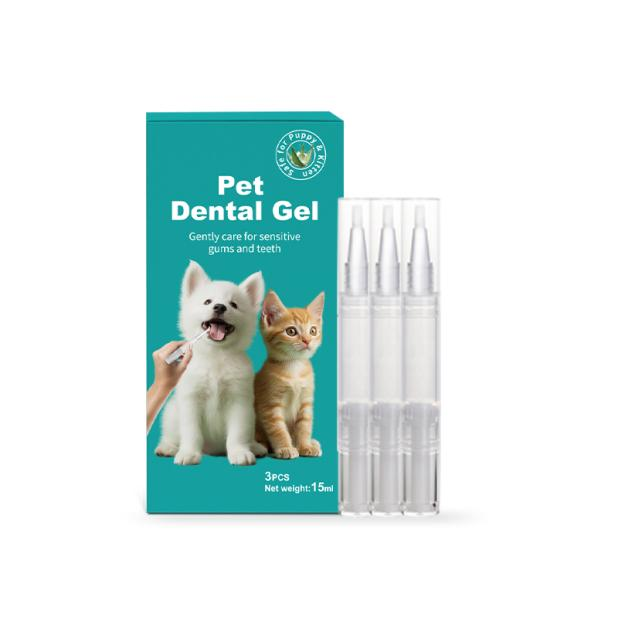 | 3pcs Pet Dental Gel Easy Teeth Cleaning and Fresh BreathRevolutionize your pet’s oral hygiene experience with our advanced bio-enzyme formula. This gel is specially designed for pets who resist brushing; it actively breaks down the protein film that builds plaque through a biochemical reaction rather than physical friction. |
What is the 3-3-3 rule for brushing a cat’s teeth?
In the field of veterinary dentistry, the 3-3-3 rule for brushing cats’ teeth usually means brushing their teeth at least 3 times a week (because dental plaque can calcify within 24-48 hours); brushing each side of the teeth for 30 seconds (focusing on cleaning the outer side teeth at the back of the upper palate); and replacing the toothbrush every 3 months (because cat saliva contains a high number of bacteria and the bristles can become damaged, replacing the toothbrush is to avoid bacterial reinfection and damage to the gums from the bristles).
When should you take your cat to the vet?
If your cat exhibits any of the following symptoms, please take it to the vet immediately:
- Bad breath
- Continuous drooling
- Unwilling to eat
- Bleeding gums
Cat dental care tips from Reddit:
Pet owners have accumulated many tips and tricks through long-term practice. The following are some practical tips from the Reddit forum that may be helpful to you.
1. When buying toothpaste for cats, the flavor is very important; choose a flavor your cat likes.
2. If your cat doesn’t cooperate with brushing its teeth, wrap it up to prevent it from scratching you.
3. Brush your cat’s teeth when it’s half asleep. This is when it’s most easily controlled by its owner, making the brushing process a breeze.
4. Choose teeth-cleaning snacks or water additives with the VOHC certification mark.