
Every dog parent hopes to stay with their furry friend for as long as possible. Yet few realize that dental health holds the key to their pets’ longevity. Statistics from Cornell University College of Veterinary Medicine show that around 85% of dogs over three years old suffer from varying degrees of periodontal disease. Oral issues are more than just bad breath and yellowed teeth — they can trigger systemic inflammation, damage internal organs, and even shorten a dog’s lifespan.
Proper daily canine dental care is essential to safeguard your dog’s health and prolong your precious time together.
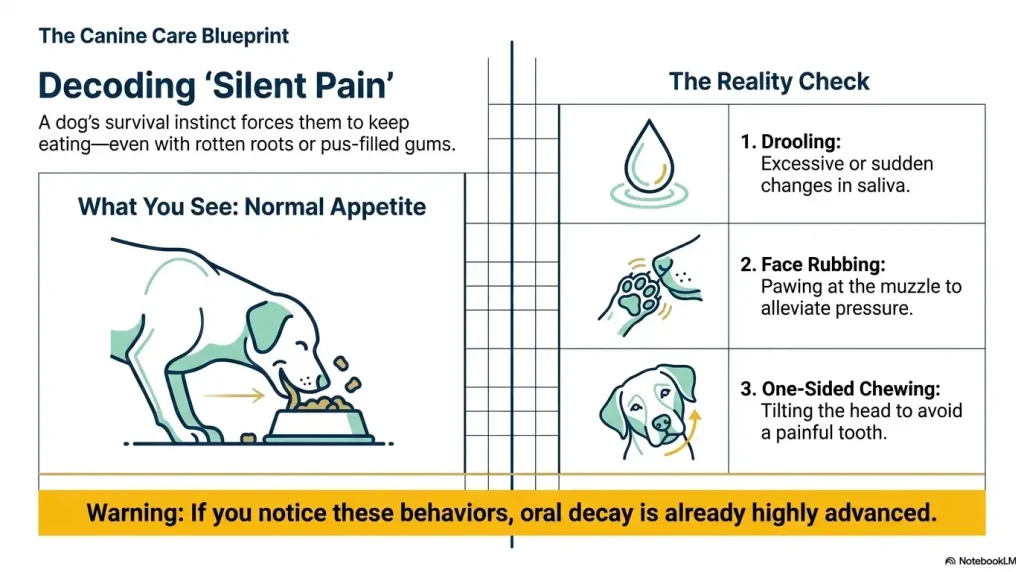
Dogs have a strong survival instinct, and they tend to insist on eating even if the roots of their teeth are completely rotten or their gums are pus. This silent pain is extremely deceptive. When your dog starts drooling, rubbing his face with his paws, or chewing on only one side, oral problems are usually already very serious.
Brushing is recognized as the most effective way to clean teeth and freshen breath. Especially for those small dog breeds (such as Chihuahuas), dental care is very important because their physiology is different from that of large breeds. Small dogs have smaller teeth and are more closely arranged, and food residues are difficult to clean up in place, which is easy to breed bacteria and is more likely to lead to dental disease. Small dogs have a much higher chance of developing dental disease than large dogs.
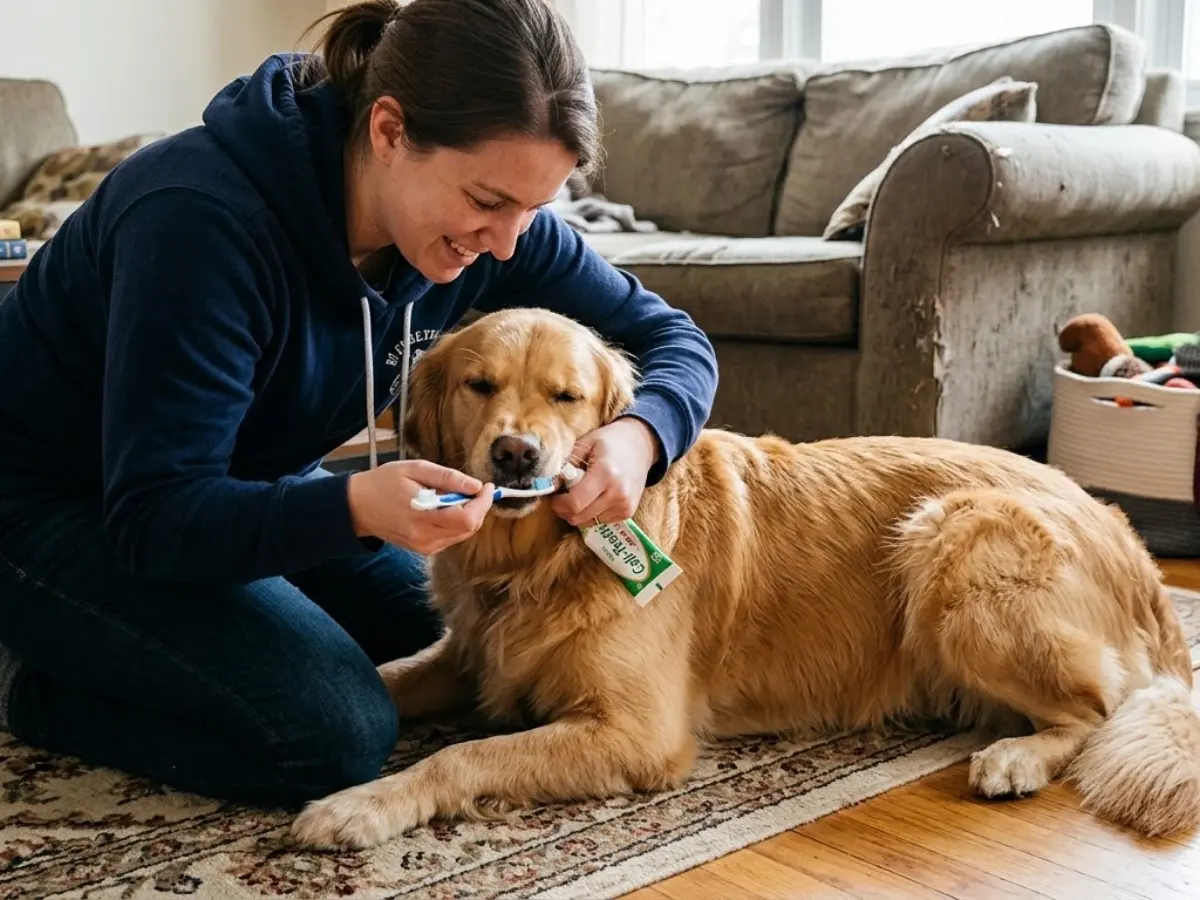
But many dog owners feel that this is a very resistant thing for dogs, and it is also troublesome for owners to operate. But I would say that it is not difficult. With a certain amount of patience and perseverance, in just 1 month, you can get your dog used to the process.
Preparation: A pet-specific soft-bristled toothbrush, pet-specific toothpaste.
Week 1: Let the dog familiarize himself with the taste of toothpaste first, it is recommended that it is best to prevent picky eaters from resisting, dip your fingers in pet toothpaste to apply the dog’s gums and the outside of the teeth, gently touch the mouth, do not force brushing, eliminate resistance, and adapt to oral touch.
Week 2: Replace the pet’s soft-bristled toothbrush, dip only a small amount of toothpaste, lightly brush the dog’s outer incisors and canines, for a few tens of seconds each time, with gentle movements, and give a snack reward after the end.
Week 3: Gradually expand the scope of brushing, slowly brush the lateral teeth and the outside of the posterior molars, control the time, step by step, let the dog get used to the touch of the toothbrush, and strengthen positive memory.
Week 4: Completely clean the outside and inside of the whole mouth, form a daily brushing habit, fix the care time, cooperate with rewards, and completely adapt to the daily brushing process.
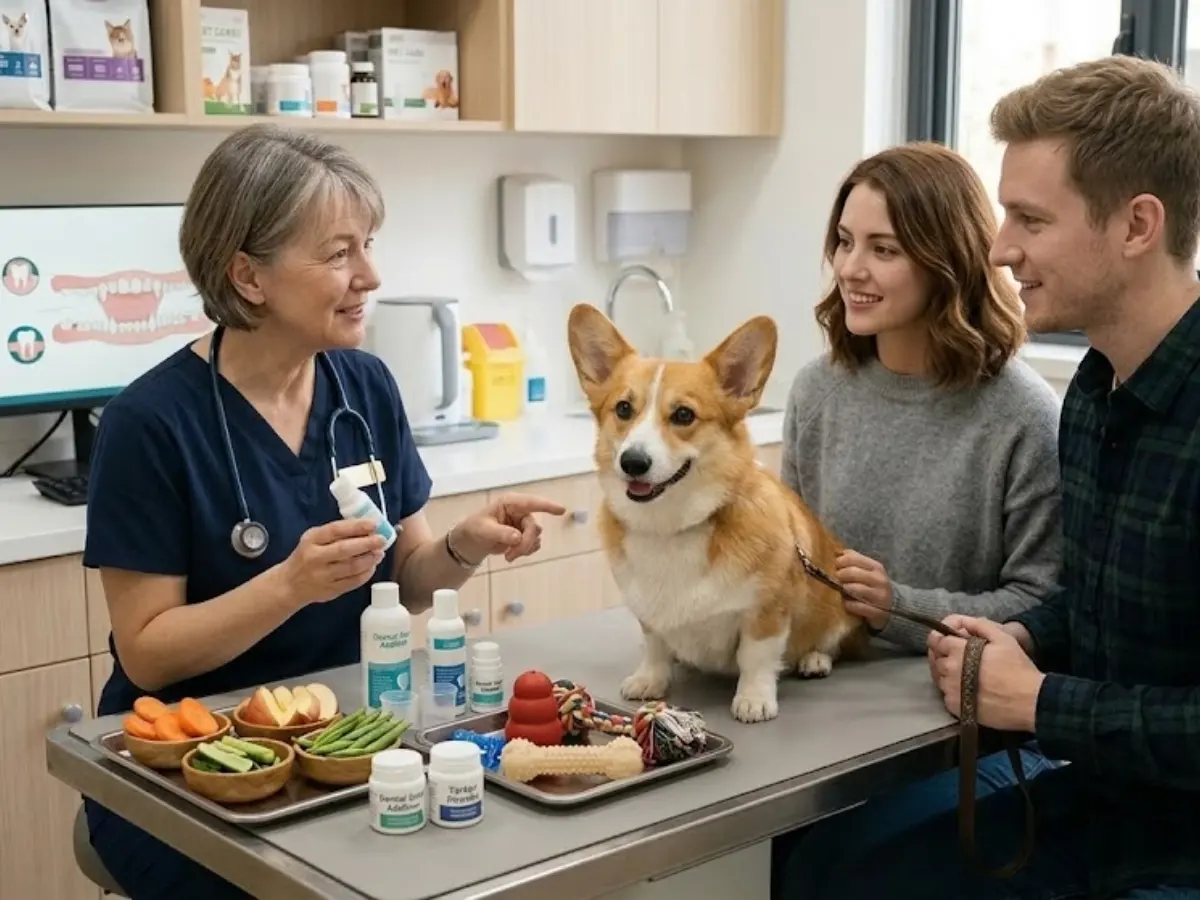
If you are busy with work and don’t have time to brush your dog’s teeth, these no-brushing products are very suitable. When choosing, give priority to the VOHC certification mark; only products that have been clinically proven to truly reduce plaque and tartar will have this certification, and the mouth protection effect is more reliable.
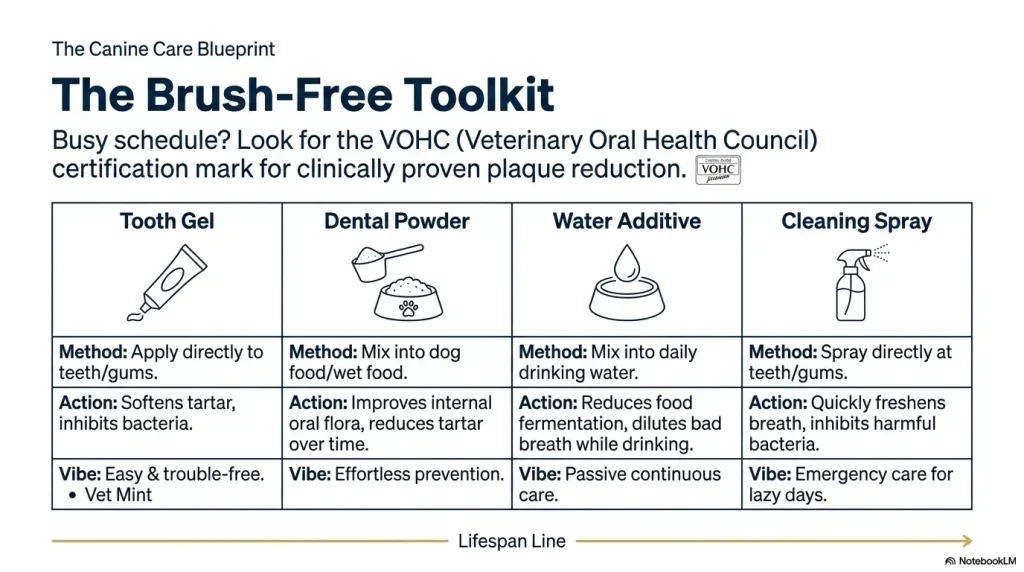
Applied directly to the teeth and gums, the ingredients can soften tartar, inhibit oral bacteria, and slowly clean the tooth surface without brushing, making it easy and trouble-free.
Directly mixed into dog food and wet food for feeding, after eating, improve the flora from the inside of the mouth, reduce tartar accumulation, and prevent bad breath and mild periodontal problems when eaten for a long time.
Mixed with the dog’s daily drinking water, drinking water can simultaneously care for the oral cavity, gently inhibit bacteria, reduce the fermentation of food residues, and easily dilute bad breath.
You can spray it when you go out and every day, and you can simply spray it a few times at teeth and gums to quickly freshen breath and inhibit harmful bacteria, which is suitable for emergency daily care for lazy people.
Some contain natural dietary fiber and plant active ingredients, which can kill two birds with one stone by cleaning your dog’s teeth and improving breath through physical friction and natural antibacterial effects while providing nutrition for your dog.
Recommended food:
1. Celery
2. Carrots
3. Cucumber
4. Apples
However, it is important to note that these foods do not serve as a long-term way to clean teeth. This type of food can only play a role in assisting teeth cleaning and cannot replace professional cleaning. If you want to protect your dog’s dental health for a long time, brushing dog’s teeth every day with special dental cleaning products is a more scientific and safe choice.
When you realize the importance of dog dental care, you find that there is nothing around you that can give your dog a dental cleaning. Look for it in your kitchen. I’m going to teach you how to make your own dog dental cleaning tool, which only requires the most common kitchen goodies.
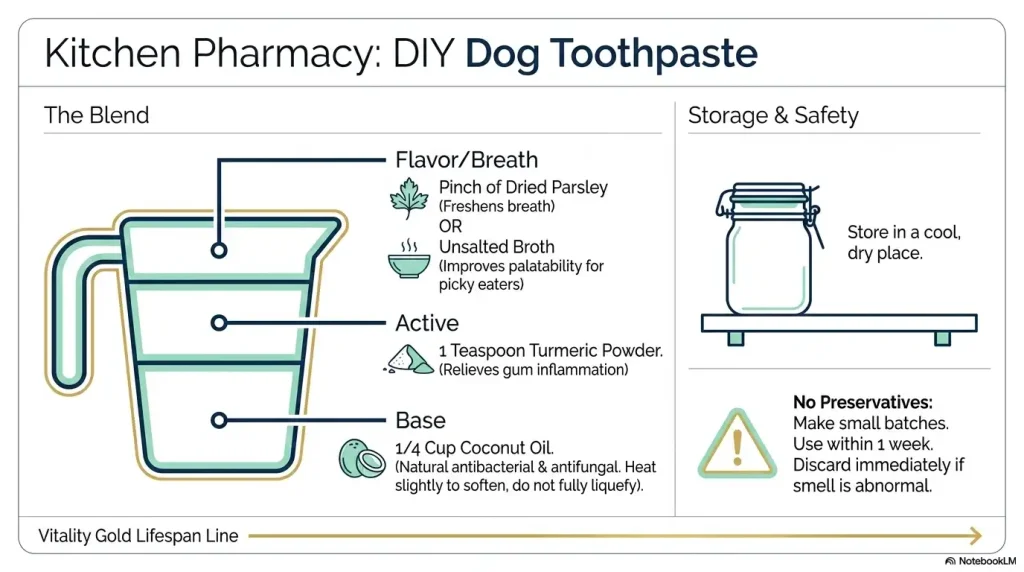
Tips: Since homemade toothpaste does not contain preservatives, it is recommended to make a small amount each time and use it within 1 week. If you notice an abnormal smell, discard it immediately.
During oral care, you may notice peculiar behaviors of dogs that indicate they are communicating with you.
Gnawing: Dogs use their front teeth to nibble on your hands or clothing like small bites. This is not an attack, but a sign of extreme trust and intimacy to help parents groom.
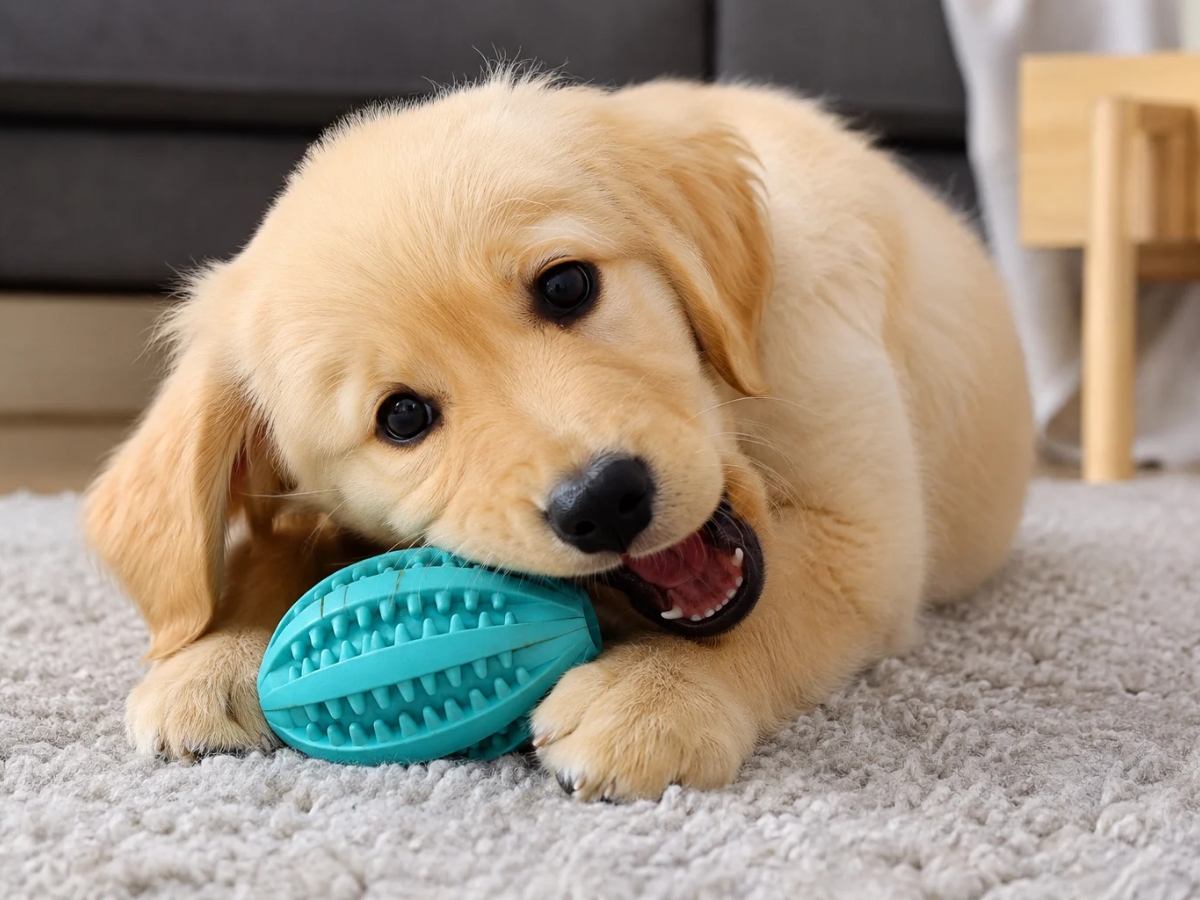
Sucking: Dogs biting on the corners of the cod or toys. This is usually a self-healing and soothing act, but it can also suggest that it is relieving gum discomfort in this way.
Human toothpaste has fluoride, foaming agents, and artificial flavors. If dogs swallow it, it upsets their stomachs, causing vomiting and diarrhea. Long-term use is bad for their health. Always use dog-specific toothpaste.
Most tartar and gum problems build up on back molars. Just cleaning the front teeth is basically useless. Plaque builds up in those hard-to-reach spots and quickly turns into tartar.
Dental snacks and chews only rub off surface food scraps. They can’t remove plaque or tartar, and are never a replacement for daily teeth brushing.
Being rough and forcing their mouth open makes dogs terrified of teeth cleaning. It causes stress, may cut their gums, and makes them hate brushing even more.
Bad breath, yellow teeth and red swollen gums are all warning signs of dental disease. If you ignore them, it can lead to tooth loss and even damage internal organs, shortening your dog’s lifespan.
Once plaque hardens into brown tartar, it can’t be removed by brushing. Never try to scrape it off forcefully at home—you’ll damage your dog’s tooth enamel! The only safe way to get rid of it is through professional ultrasonic teeth cleaning.
Every February is Pet Dental Health Month! Many vet clinics offer free oral exams or discounts on professional teeth cleanings. We recommend searching for “dog dental cleaning near me” to find deals near you.
Dogs hate sudden movements, strong-smelling human toothpaste (it’s toxic to them!), and being restrained too forcefully. Always use positive reinforcement, like treats or praise and pet-specific care products.
1. They come to you for comfort when scared; 2. They make consistent eye contact with you; 3. They sleep with their back against you; 4. They follow you around like a little shadow .
Purely free commercial teeth cleanings are very rare. However, some charities, veterinary colleges (e.g., Virginia Tech), or government animal welfare programs offer subsidized or free basic dental care for low-income households or adopted animals. Additionally, free initial oral screenings during Pet Dental Health Month are a great way to get a free assessment!
Stick to daily dog dental care, stay away from oral diseases, lower the risk of organ damage. Keep your pup’s mouth healthy, help them live longer, and enjoy more years together.