


In 2026, pet technology has taken a monumental leap. Modern GPS Dog Collars are no longer just basic beacons; they are sophisticated AI-powered dog collars that combine real-time GPS Location Tracking with comprehensive Health & Activity Monitoring.
In this definitive guide, we’ll review the best smart collars of 2026, evaluate core features like battery life and virtual fencing, and help you select the perfect tracker for your dog’s lifestyle and safety.
Article Summary
Tech Evolution: Explores how 2026 GPS dog collars evolved from simple trackers into AI-powered health and real-time biometric hubs.
Core Evaluation: Breaks down critical metrics, including multi-satellite precision, geofencing, vital sign monitoring, and battery efficiency.
Smart Selection: Matches collar categories directly to your dog’s lifestyle, whether for outdoor adventurers, yard safety, or senior pet care.
Quick Comparison: Smart Dog Collar Categories of 2026
For a quick decision, here is how the primary categories of GPS tracker collars compare in 2026:
| Collar Category | Best For | Tracking Tech | Battery Life | Monthly Fee | Key Health Features |
| All-Round Live Tracker | Best Overall Safety | Multi-Satellite + LTE | Up to 10 Days | Required (~$5/mo) | Sleep, Scratch & Activity Tracking |
| AI Medical Vitals Collar | Senior & Medical Care | GPS + Cellular | 2-4 Days | Required (~$10/mo) | Vitals, Cardiac, Pain & Seizure Detection |
| GPS Boundary / Fence Collar | Yard & Off-Leash Safety | GPS / GNSS | 24 Hours | Required (~$5.99/mo) | Boundary Alerts & Active Safety Feedback |
| No-Subscription Tracker | Budget & Basic Tracking | Off-Grid Cellular | 3-5 Weeks | No Monthly Fee | Weight & Basic Activity Goals |
1. The 2026 Evolution: From Basic Location to AI Vitals
Over the past three years, smart collars have transitioned from simple radio frequency transmitters to integrated biometric hubs.
Why Cellular LTE + Multi-Satellite Systems Matter
Older trackers suffered from Rural vs. Urban Signal Accuracy issues—multipath signal drift caused by skyscrapers in cities, or dead zones in wilderness areas. In 2026, premium collars connect across multiple satellite constellations (GPS, GLONASS, and Galileo) combined with multi-carrier Cellular Coverage / LTE Network switching. This ensures near-zero latency when triggering Live Tracking.
[According to ASPCA & PetLog Statistics] According to national pet recovery data, approximately 1 in 3 pets will become lost at some point in their lives. While microchips provide vital identity verification at shelters, active GPS trackers boost immediate, real-time owner recovery rates by over 85% within the first hour of escape.
Bluetooth Tags vs. Dedicated Dog GPS Trackers
While Bluetooth tags (like AirTags) work well for stationary keys, they fail as an active Escape Prevention tool.
Bluetooth Range Limitations: They rely on nearby smartphones to bounce a signal. In woods or quiet suburban streets, location updates can lag by 15–30 minutes.
Lack of Geofencing: Bluetooth tags cannot send automated Escape Alerts / Push Notifications the instant your dog breaches a backyard boundary.
2. Key Buyer Evaluation Criteria: How We Test & Rate Collars
When testing a Dog GPS Tracker, we analyze five core performance vectors:
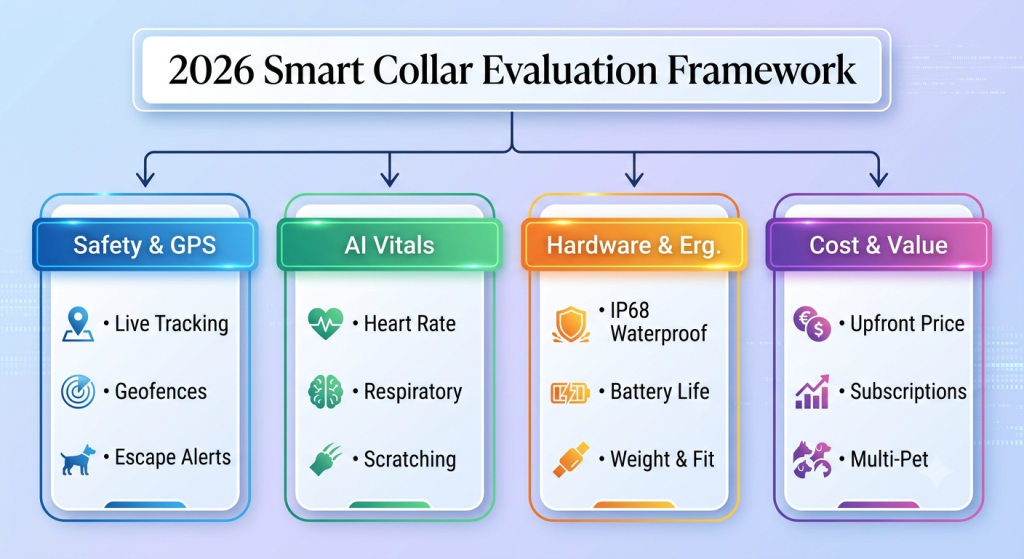
A. Location, Geofence & Safety
Real-time Updates / Live Tracking: Live tracking mode should refresh every 2 to 3 seconds during an active search.
Virtual Fence / Geofence & Safe Zones: The ability to draw custom polygon boundaries in the smartphone app and receive immediate alerts upon a Geofence Breach.
Location History / Route Mapping: Reviewing 30-day breadcrumb trails helps identify where your dog wanders or hides when scared.
B. Health & Vital Signs Monitoring
Activity & Exercise Tracking: Setting daily caloric and movement goals based on age, breed, and weight.
Sleep Pattern Tracking: Monitoring sleep quality to spot rest disruption or nighttime restlessness.
Scratch Monitoring / Excessive Scratching: Utilizing 3D accelerometers to flag early symptoms of skin allergies or flea infestations before physical lesions appear.
Vital Signs / Respiratory & Heart Rate: Medical-grade monitoring for aging or cardiac-prone dogs.
Pain, Stress & Seizure Detection: AI algorithms that detect abnormal muscle tremors or prolonged discomfort.
C. Hardware Specifications & Daily Maintenance
Battery Life: Ranging from 24 hours (high-frequency GPS fencing) to 4 weeks (standard beacon mode).
Waterproof Rating (IP68 / IP67): Crucial for dogs who love swimming or rolling in muddy puddles.
Size, Weight & Fit: Device weight must be proportionate to prevent neck strain, especially for small breeds.
Collar Attachment / Durability: Heavy-duty clips that resist snagging on branches during off-leash runs.
Blogger Maintenance Tip: After an intense muddy trail hike, clean off the tracker unit and your dog’s neck area promptly. Dirt and moisture buildup around charging contacts can degrade battery life or cause skin chafing. Using gentle, soft no-alcohol pet wipes keeps both the collar contacts clean and your dog’s skin free from irritation without stripping natural coat oils.
D. Business & Ownership Costs
Device Price / Upfront Cost vs. Subscription Fees / Monthly Cost: Understanding whether cellular SIM services require an ongoing contract.
Smartphone App User Experience: Responsive UI design and quick-access map toggles during emergencies.
3. Matching the Collar Category to Your Dog & Lifestyle
Smart Collar Selection Matrix
| Dog & Lifestyle Profile | Recommended Smart Collar | Focus & Key Features |
| High-Energy / Off-Leash Hikers | Choose All-Rounder LTE Trackers | • Fast Live Tracking • IP68 Waterproof • Escape & Boundary Alerts |
| Seniors / Chronic Medical Conditions | Choose AI Medical Biometric Collars | • Heart Rate & Respiratory Tracking • Pain & Scratching Detection • AI Health Trend Reports |
| Large Properties / Camping Enthusiasts | Choose Satellite Fencing Collars | • Custom Satellite Geofencing • Long-Range Boundary Alerts • Off-Grid Mapping Support |
| Budget-Conscious Urban Dwellers | Choose Standalone / No-Subscription Trackers | • No Monthly Subscription • Lightweight & Compact • Proximity & Bluetooth Mesh Tracking |
Common Pitfalls to Avoid
Relying on Tracker Collars Instead of Physical Restraints: A GPS collar is an emergency backup, not a replacement for proper leash control or training.
Ignoring Weight Limits: Equipping a small 10 lb dog with a heavy 100g GPS fence collar can cause neck fatigue and spinal strain.
Leaving Live Tracking On Continuously: Keeping 2-second live updates running permanently will drain battery life from 10 days down to a few hours. Use standard beacon mode until an emergency arises
Frequently Asked Questions
Q1: What is the best GPS dog collar with health monitoring in 2026?
Direct Answer: In 2026, the best options combine multi-satellite live tracking with continuous biometric monitoring. High-end all-rounder collars offer real-time GPS positioning along with sleep and allergy scratch monitoring. For dogs with medical needs, specialized AI health collars deliver medical-grade biometrics, including real-time cardiac monitoring, respiratory tracking, and AI pain detection.
Q2: Is a GPS dog collar worth the monthly subscription fee?
Direct Answer: Yes, for most pet parents, the monthly fee is worth the cost. GPS dog collars require built-in SIM cards to transmit location data over cellular networks. The subscription covers continuous LTE data transmission, enabling instant geofence escape alerts, 2-second live tracking, and cloud health analytics anywhere in the country.
Q3: How do GPS dog collars perform in rural or low-signal areas?
Direct Answer: Modern 2026 GPS collars utilize multi-carrier LTE-M networks that automatically switch between available cell towers. In areas with weak cell coverage, satellite GPS positioning still tracks coordinates, though transmitting those updates to your smartphone app requires at least a minimal cellular signal. For deep wilderness off-grid tracking, dedicated satellite/VHF handheld systems (like Garmin Alpha) are recommended.
Q4: Can a smart health dog collar replace visits to the veterinarian?
Direct Answer: No, a smart health collar cannot replace professional veterinary diagnosis. However, it acts as an essential early-detection tool. By monitoring heart rate, respiratory patterns, and sleeping behaviors against a personalized baseline, smart collars alert owners to subtle medical changes so vets can intervene early.
Q5: Why shouldn’t I just use an Apple AirTag instead of a dedicated GPS dog tracker?
Direct Answer: Apple AirTags rely entirely on nearby Apple devices to relay their position via Bluetooth, causing severe update delays in rural or low-foot-traffic areas. Dedicated GPS dog trackers use independent satellite positioning and cellular connectivity to deliver real-time updates every few seconds, automated boundary breach alerts, and comprehensive health monitoring.
-
Sale!

disposable Finger-shaped dental cleaning wipes for pets fresh breath
Original price was: $6.68.$3.34Current price is: $3.34. Add to cart -
Sale!

Gentle Neutral pH Round Pet Eye Wipes Tear Stain Removal
Original price was: $5.98.$2.99Current price is: $2.99. Add to cart -
Sale!

Foaming dog body cleaner with a silicone brush for pet paws no rinsing
Original price was: $8.98.$4.49Current price is: $4.49. Add to cart