

How to Clean a Dog’s Eyes
As dog owners, we often notice small amounts of eye discharge in our pets. However, how do we distinguish between normal discharge and signs of infection? And crucially, how can we safely clean those stubborn scabs without causing harm?
1. Identification: Normal Eye Droppings or Infection Signals
Not all discharge requires a doctor’s visit. By color and texture, we can assess a dog’s eye health:
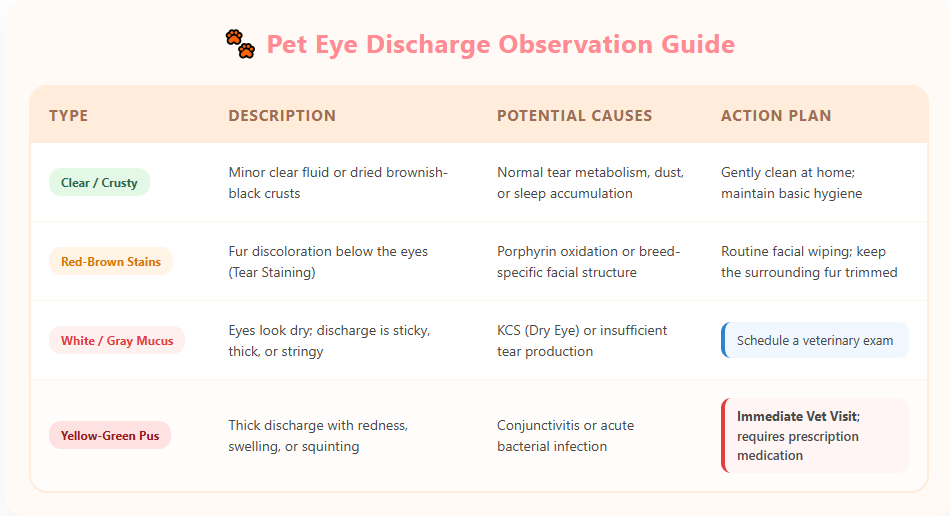
A sudden increase in discharge, cloudy or red eyes, or blood streaks are urgent signals of infection or corneal damage. Seek veterinary care immediately.
2. Practical Operation: How to Safely Clean Eye Hard Scabs?
The key to cleaning a dog’s eyes is patience, not force.
Step 1: Softening is Important
Do not try to peel off dry scabs, as this can tear the skin and cause pain. Use a soft cotton ball or gauze soaked in warm water for gentle wiping.
Step 2: Wipe from the Inside Out
Apply a damp cotton ball to the scab for 15-30 seconds, then wait for it to soften before wiping from the inner corner of the eye to the outer side. If it is not wiped clean, the first time, replace the cotton ball and repeat the above steps.
Final Step: Clean and Give a Reward
After finishing the cleaning, reward the dog. Let it associate wiping your eyes with good things, and it will work better with you next time.
3. Tool Selection: Choosing the Right Cleaning Solution
This is a common misconception among many owners. Here are professional suggestions:
- ❌ Baby wipes: Not recommended for use. The pH level of human baby wipes is different from that of dog wipes, and they may contain alcohol, fragrances, or substances harmful to dogs’ eyes.
- ❌ Contact lens solution: Use is strictly prohibited! Some enzymes in this solution are corrosive to dogs’ corneas.
- ✅ Physiological saline: This is the safest. The physiological saline purchased at the pharmacy can be used to flush foreign objects.
- ✅ Natural cleaning solution: Warm water or pet eye wipes can be used as a gentle alternative.
4. Difficulty: How to Clean Black Crust Around Dog Eyes
Dogs with light-colored fur (such as Bichon and Poodle) are prone to dark tear marks.
Cause: Porphyrin components in tears will turn reddish-brown when exposed to air oxidation.
To counteract this:
1. Keep Dry: Use a towel to absorb tears and prevent bacterial growth.
2. Trim Hair: Regularly trim hair around the eyes to prevent it from piercing the eyeball and causing tears.
3. Drinking Water Management: Try providing filtered water, as high mineral content in the water can also worsen tear stains.
5. When Should I Go to the Hospital?
If you observe any of the following conditions, please do not attempt treatment at home:
- Frequent scratching of the eyes with paws.
- Eyelid redness, swelling, or inability to open.
- The secretion appears clearly yellow or green.
- A white film on the eyeball or a hazy appearance.
Conjunctivitis, commonly known as red eye disease, frequently affects dogs. While cleaning the eye area can provide temporary relief, a full recovery typically necessitates antibiotics or anti-inflammatory medications prescribed by a veterinarian.