
If you have a cat, you probably know how comforting they can be. When we’re feeling down, they quietly stay beside us or curl up in our arms. On a relaxing weekend, they may happily snuggle with us on the sofa while we watch TV, helping us unwind after a long week. For many cat owners, our cats have long become part of the family.
That’s why it’s important to pay attention to their health and everyday condition. Today, let’s talk about dirty cat ears—how to tell when your cat’s ears actually need cleaning, how to clean them properly, and what to watch out for.
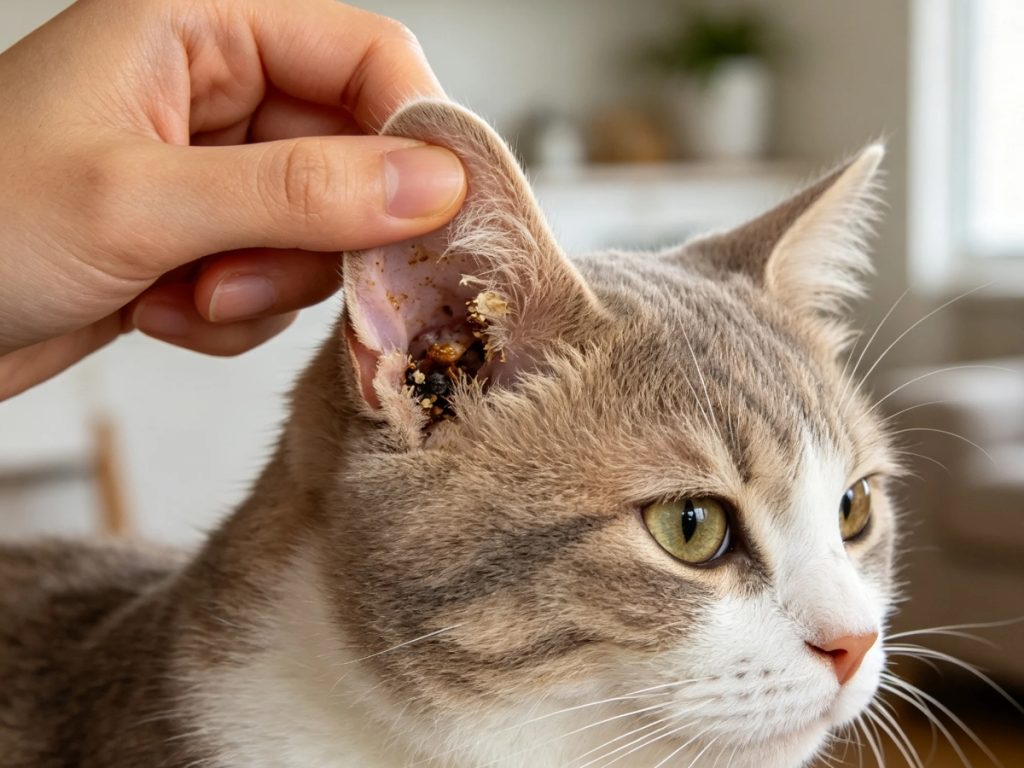
Table of Contents
1. What Do Normal Dirty Cat Ears Look Like? First, Get to Know Normal Ear Wax
What Do Normal Cat Ears Look Like?
The ear canal is mostly pink, clean, and free of any unusual odor.
There may be a small amount of light brown or pale-colored cat ear wax around the ear flap.
Your cat does not frequently shake its head or scratch its ears.
The ear wax is relatively dry and may be light yellow in color.
2. How Can You Tell the Difference Between Ear Wax and Ear Mites?
Dirty Cat Ears vs Ear Mites: The Main Differences
Normal ear wax is a natural secretion, while ear mites are mainly caused by an infestation of ear mites and other parasites.
| Ear Wax | Ear Mites | |
| Image Example | 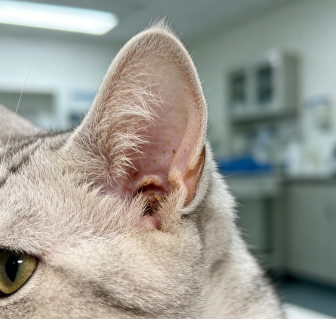 | 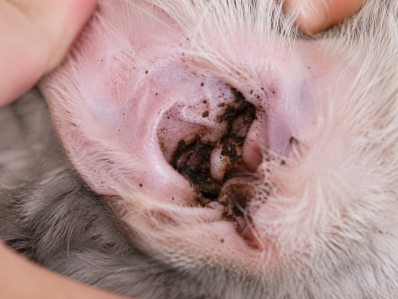 |
| Symptoms | A small amount of yellowish discharge, usually without an odor | Brown or black discharge, red ears, itching, pain, and an unpleasant odor |
| Cause | Natural oil secretion from the ears | Parasitic infestation |
| What Is It? | A mixture of natural oils and dead skin cells | Tiny mites that live in the ear canal and can cause ear canal inflammation and skin inflammation |
| Treatment | Regular cleaning | Ear cleaning and appropriate treatment |
| Prevention | Clean the ear canal regularly and keep the ears clean and dry | Avoid contact with pets that have ear mites; deworm regularly, clean the ears regularly, and keep the pet’s living environment clean |
3. What Should You Do If Your Cat’s Ears Are Very Dirty? First, Decide Whether They Need Cleaning
If there is only a small amount of pale yellow ear wax, the inside of the ears looks pink, there is no unpleasant odor, and your cat does not resist when you touch its ears, you can usually do some simple cleaning and routine care at home.
When Should You Avoid Cleaning Your Cat’s Ears at Home?
① The ear debris looks like dark brown or black coffee grounds, or there is a large amount of sticky discharge and a strong odor. This may indicate ear mites, fungal infection, or bacterial infection. Simply cleaning the ears at home will not solve the problem, and trying to handle it yourself may delay proper treatment.
② Your cat reacts very strongly when you touch its ears. If your cat struggles intensely, shakes its head constantly, or immediately pulls away when you touch the ears, forcing the cleaning process could easily cause injury.
③ Your cat frequently tilts its head, has trouble walking, or its eyes keep moving involuntarily. In this situation, seek veterinary care immediately.
④ You can clearly see a foreign object stuck inside the ear canal, or you can feel a small bump or lump. Do not try to dig it out yourself, as this could push the object deeper. An ear examination at a veterinary clinic is needed.
4. How to Clean Your Cat’s Ears?
A Simple and Gentle Cleaning Method
What you need: Cotton balls and a cat ear cleaner.
Steps:
① Hold your cat: Gently hold your cat’s ear flap between your left thumb and index finger and turn the ear flap outward. This makes the outer ear canal easier to see and also helps you control your cat’s head so the ear cleaner does not get shaken everywhere.
② Locate the outer ear canal: Find the visible opening of your cat’s outer ear canal.
③ Apply the ear cleaner: Place an appropriate amount of ear cleaner into the ear.
④ Massage the base of the ear: Gently massage the base of the ear with your right hand to help the ear cleaner loosen the ear wax. Then release your cat and allow it to shake its head naturally.
Wipe away the residue: Use clean cotton or tissue to gently wipe away the ear cleaner and ear wax from the outer ear canal and ear flap.
Other Cleaning Methods
If you use ear cleaner too often, your cat may start to resist the process. You can also try the following method:
Dampen a small piece of cotton with ear cleaner and gently wipe only the visible outer part of the ear. There is no need to deliberately clean deep inside the ear with a cotton swab, as this can easily hurt your cat. Ear wax in the outer ear canal can naturally be shaken out when your cat shakes its head.
Use the fingers of your left hand to gently turn your cat’s ear flap outward, then use your right hand to hold the cotton dampened with ear cleaner. Keep your cat’s head steady and wipe only the outer ear.
How to Clean Cat Ears Without Solution?
For a small amount of normal ear wax or light dust in your cat’s ears, you can use cat-specific ear wipes. They are suitable for everyday cleaning and routine hygiene.
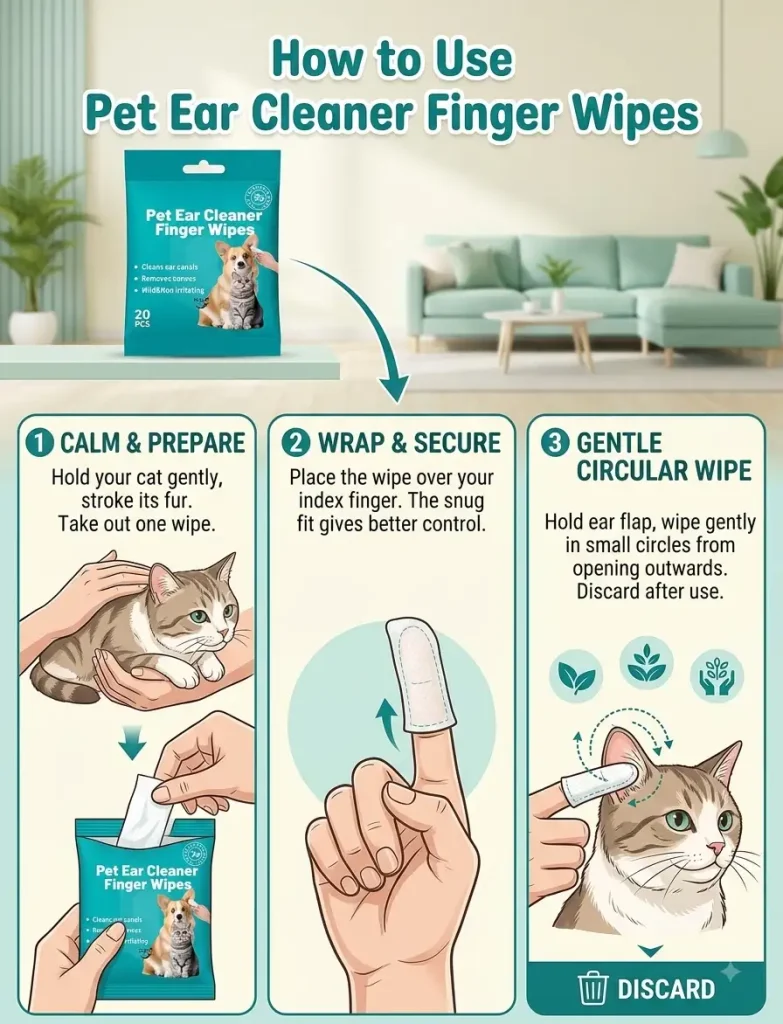
My Cat Ear Wipes: 3 Simple Steps
① Calm and prepare: Hold your cat in your arms and gently stroke its fur. Take out one pet ear wipe (or finger wipe).
② Wrap the wipe around your finger: Place the wipe over your index finger. The finger-wipe design fits closely around your finger, making it easier to control than a regular cotton pad.
③ Gently wipe in circles: Hold the ear flap and gently wipe outward in small circular motions, starting from the ear opening. The plant-based ingredients in the wipes can quickly remove excess oil. Simply throw the wipe away after use.
5. Is Homemade Cat Ear Cleaner Safe?
In general, homemade cat ear cleaner is not recommended. Dr. Ellie Cohen, a veterinary outreach specialist at the Richard P. Riney Canine Health Center at Cornell University, advises avoiding cleaning solutions containing alcohol or hydrogen peroxide because they can irritate a cat’s ear canal.
If your cat has an ear infection, consult a veterinarian to help you choose the most appropriate ear cleaning solution to help manage the infection.
6. How Often Should You Clean Cat Ears?
If your cat is undergoing treatment for an ear canal infection, the ears may need to be cleaned daily during the early stage. For routine care, cleaning once every 1–2 weeks is generally enough.
For cats that are prone to allergies, recurrent ear infections, or have folded ears, the cleaning frequency may need to be increased appropriately. For cats with otherwise healthy ears, you can simply clean them when you notice visible ear wax or dirt. Cleaning too often may actually irritate the ear canal and cause inflammation.
After bathing or playing in water, remember to take care of your cat’s ears if water gets inside.
7. FAQ: Common Questions About Dirty Cat Ears
Is Black Material in My Cat’s Ears Normal?
It depends on the situation.
A small, thin layer of brownish-black ear wax may be normal if the ear canal looks pink, there is no unpleasant odor, and your cat is not scratching its ears. In this case, simply observe your cat and wipe away visible dirt from the ear flap.
If there is a large amount of dark brown debris that looks like coffee grounds or wet mud, especially if it has an unpleasant odor, it may indicate ear mites in cats or may be accompanied by an ear infection. Take your cat to a veterinary clinic for an examination as soon as possible.
What Kills Ear Mites in Cats?
In cats, selamectin can treat parasites including fleas, ear mites, hookworms, roundworms, and ear mites. It is considered an off-label use in this context. Please carefully follow your veterinarian’s instructions and precautions when using treatment products containing selamectin or similar ingredients.
What Can Be Mistaken for Cat Ear Mites?
Many first-time cat owners mistake otitis externa for ear mites. Otitis externa caused by bacteria, yeast, allergies, or other factors can also make cats scratch their ears and shake their heads. The ears may become red, smell unpleasant, and produce dark-colored discharge, making the condition look very similar to ear mites.
Don’t assume that black ear debris or ear scratching automatically means your cat has ear mites. A veterinary examination, including an otoscopic examination and ear debris microscopy, is needed to determine whether the problem is mites, an imbalance of microorganisms, or an allergic trigger, so the right treatment can be provided.
Disclaimer: This article is intended for general pet-care education and reference only and cannot replace professional veterinary diagnosis, consultation, or treatment. Every cat has different health conditions and individual needs. If your cat develops severe ear redness or swelling, a strong odor, a large amount of coffee-ground-like discharge, or frequent head shaking and struggling, please take your cat to a reputable veterinary clinic promptly and follow your veterinarian’s instructions regarding medications or ear-care products.
-
Sale!

Gentle Neutral pH Round Pet Eye Wipes Tear Stain Removal
Original price was: $5.98.$2.99Current price is: $2.99. Add to cart -
Sale!
Foaming dog body cleaner with a silicone brush for pet paws no rinsing
Original price was: $8.98.$4.49Current price is: $4.49. Add to cart -
Sale!
Pet Deodorizing Spray 60ml – Portable Pocket Odor Remove
Original price was: $4.19.$3.99Current price is: $3.99. Add to cart