
< img height="1" width="1" style="display:none" src="https://www.facebook.com/tr?id=1290024239608037&ev=PageView&noscript=1" />

Dog Teeth Cleaning at Home: A Simple Step-by-Step Guide

Table of Contents

As dog owners, we all know that keeping our dogs’ mouths clean is an essential part of daily pet care. Simple dog teeth cleaning at home can effectively reduce plaque buildup and keep their breath fresh. Many owners might wonder, “How can I efficiently clean my dog’s teeth at home?” Don’t worry, let me explain in detail how to clean your dog’s teeth at home in a calm and low-stress manner, including what to do if your dog doesn’t like brushing their teeth, and some helpful tools for dog teeth cleaning at home.

Basic Understanding and Expectations of Dog Teeth Cleaning at Home

Can I Clean My Dog’s Teeth at Home?

Yes, most dogs can learn to accept dental cleaning. When cleaning your dog’s teeth at home, you don’t need to be as perfect as a professional dentist. Dog teeth cleaning at home simply involves gently removing food debris and plaque that easily reach the outer surfaces of your dog’s teeth.

at-home dog teeth cleaningSome dogs may adapt to having their teeth cleaned quickly, while others may require more patience. In either case, the process of cleaning your dog’s teeth at home must be kept calm. If resistance occurs, don’t try to clean everything perfectly at the end; instead, stop immediately and wait for the next time to clean more areas slowly. Our goal is to establish a calm habit for your dog during dog teeth cleaning at home, rather than striving for a perfect cleaning in one go.

Cleaning Duration and Frequency

Initially, we can control the dog’s teeth cleaning time at home to 10-30 seconds each time. After becoming proficient, it will take about 2-3 minutes to clean the entire outer surface of the teeth. It is generally recommended to clean your dog’s teeth at home daily. If this is not possible, cleaning your dog’s teeth at home 3 to 5 times a week can also achieve good daily care results.

Best Tool Selection

Choosing the right tools for your dog can make the dog teeth cleaning at home process easier and more comfortable for them.

  • Dog-specific toothbrushes: When choosing a toothbrush, opt for one specifically designed for dogs. Dog toothbrushes typically have softer bristles and longer handles, making it easier to reach the back teeth. Some even feature angled brush heads for easier handling. This easily avoids using human toothbrushes with overly stiff bristles.
  • Finger toothbrush: Slipped on your finger, it provides better control and won’t frighten your dog. You can clearly feel the pressure applied, making it suitable for beginners or small dogs.
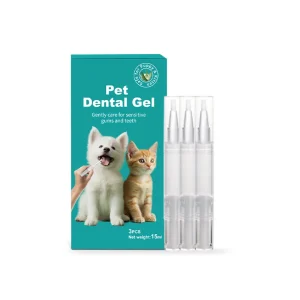
  • Dog-specific toothpaste/teething gel: Choose flavors your dog likes, such as poultry or peanut butter. Never use human toothpaste, as artificial toothpaste often contains xylitol or fluoride, which are toxic to dogs.
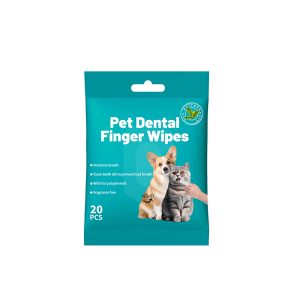
  • Dental wipes for dogs: These disposable cleaning wipes are used to wipe the outer surfaces of a dog’s teeth and around the gum line. They are convenient to use and usually accepted by dogs who don’t like brushing their teeth. Dental wipes are also especially suitable for dogs when traveling. While they are not as effective at removing plaque as brushing, they are very gentle.
  • Dental chews and drinking water additives: These can assist in cleaning through chewing friction or antibacterial properties, and can be used as a supplement to dog teeth cleaning at home, but cannot completely replace brushing.

Gradual Brushing Method

To help your dog establish good brushing habits, I suggest proceeding slowly and rhythmically:

Phase 1 : Getting used to the taste of toothpaste (1-3 days )

Before the toothbrush touches its mouth, squeeze a small amount of dog-specific toothpaste onto your finger and let your dog lick it. This will help your dog become familiar with the taste and smell of the toothpaste. If you praise or give it a small treat after it finishes licking it, it will associate toothpaste with pleasure.

Phase 2: Getting Used to Opening the Mouth and Touching ( Days 4-5 )

Gently touch the dog’s mouth and nose, part its lips, and lightly stroke along the outer gums with your finger for a few seconds, while praising the dog or giving it a small treat. If the dog pulls away, you need to be more patient and touch it in a gentler way.

Phase 3: Start Dog Teeth Cleaning at Home ( Day 6-7 )

Squeeze a small amount of toothpaste onto a toothbrush or finger toothbrush, gently open your lips, and brush the outer surfaces of a few upper front teeth in small circular motions for 10-20 seconds .

Phase 4: Expanding Scope and Duration (Starting from Week 2)

At this stage, focus on cleaning the outer surfaces of the dog’s upper and lower teeth (the inner teeth will be cleaned by the dog’s tongue, so there’s no need to scrub them forcefully), gradually moving from the front teeth to the back teeth, and slowly increasing the time to 2-3 minutes . Reward the dog with treats or toys after each dog teeth cleaning at home session. This will encourage the dog to cooperate more with each subsequent cleaning.

Phase 5 : Habit Solidification

Linking dog teeth cleaning at home to a fixed daily routine (such as after an evening walk) makes it easier to form a good long-term habit.
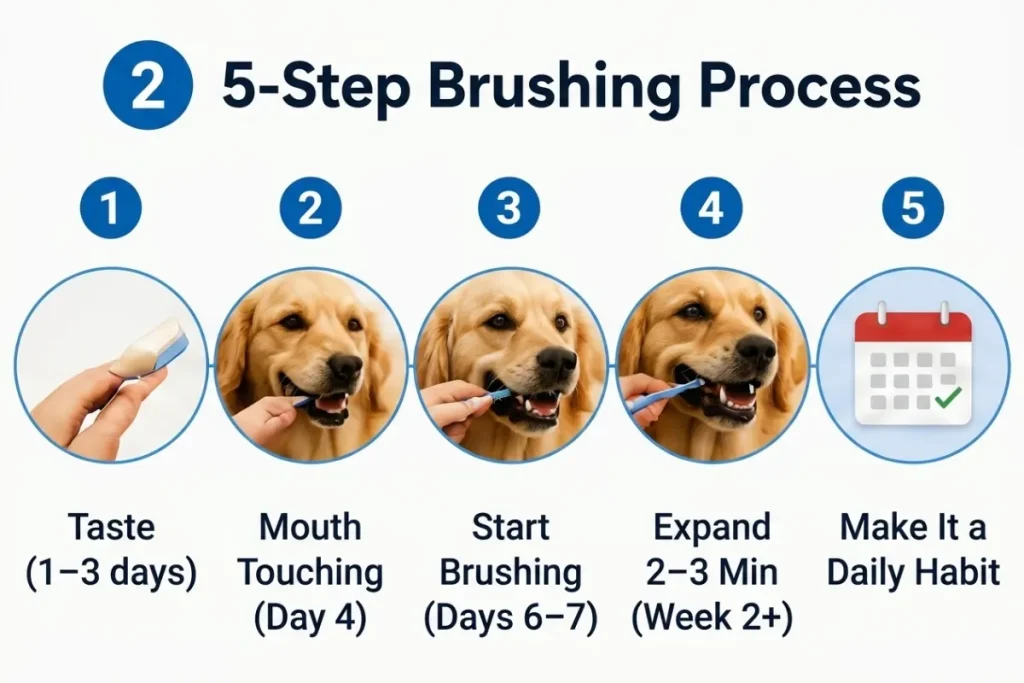
dog teeth cleaning at home step by step routine

Dogs Dislike Brushing Their Teeth or chewing Alternatives to Brushing.

Some dogs are naturally very sensitive in their mouths. During dog teeth cleaning at home, never force the dog to clean itself or forcibly open its mouth, as this will damage trust and make subsequent care more difficult. If the dog is uncooperative, you can try:

  1. Start by going back to the beginning and slowly build trust: You can spend a few days touching only the outside of your dog’s mouth and nose and giving it a reward, letting the dog know that you won’t force it.
  2. Switch to other dental care products: such as finger toothbrushes or dental wipes. Finger toothbrushes feel more like fingertip rubbing; dental wipes have minimal foreign body sensation and can be used to wipe the outer surfaces of teeth and the gum line, significantly reducing cleaning effort.
  3. Adopt a brushless combination approach: If your dog resists the presence of brush bristles, you can use a combination of dental wipes a few times a week and a dental cleaning stick every day, or add an appropriate amount of drinking water additive(VOHC). This will also help reduce residue and plaque.

Common mistakes to avoid

Please stop the following behaviors, as they will not only fail to clean your dog’s teeth effectively, but may even make your dog afraid of brushing its teeth.

  • Cleaning time is too long: In the early stages, a cleaning time of more than 30 seconds can easily make dogs irritable. It is better to have shorter cleaning sessions and more frequent cleaning than to make the dog resist.
  • Forcibly opening the mouth: In the early stages of dog teeth cleaning at home, you only need to brush the lips or the outer side when the mouth is slightly open. Forcibly opening the mouth will cause the dog to develop a fear.
  • Using human toothpaste: The ingredients in human toothpaste are unsafe for dogs, and accidental ingestion can easily cause poisoning. Especially when dog-specific toothpaste is unavailable, dog owners may take the risk. My advice is to skip brushing for a day rather than use human toothpaste.
  • Expecting perfect results with just one cleaning: Dental plaque and tartar are formed over a long period of time. The goal of home care is not to remove them all at once, but to maintain them gradually and continuously.
  • Clean only when you have bad breath: Don’t wait until you have an odor to start dog teeth cleaning at home. Bad breath may mean that your tartar is already very bad, so you should establish preventative habits in advance.

Differences in Care for Puppies, Adult Dogs, and Senior Dogs

  • Puppies: They are highly adaptable but have short attention spans. Therefore, for puppies, we can adopt very short and gentle dog teeth cleaning at homemethods, focusing on establishing an early habit of pleasant teeth cleaning.
  • Adult dogs: It may take several weeks for them to get used to the toothpaste and having their mouths touched, and you need to be absolutely patient.
  • Senior dogs: They often have tartar buildup or sensitive gums. Therefore, the care process must be very gentle. If an older dog shows resistance or pain during dog teeth cleaning at home, do not force it. Consult a veterinarian for an assessment before proceeding.

When to Stop Dog Teeth Cleaning at Home and Seek Veterinary Help

Home care and professional care complement each other. Dog teeth cleaning at home mainly focuses on maintaining the surface of the teeth and removing plaque, while professional veterinarians are responsible for deep cleaning below the gum line and treating dental diseases.

If any of the following signs appear, please stop dog teeth cleaning at home and seek medical attention immediately:

  • Red, swollen, or easily bleeding gums
  • Loose or broken teeth, or lumps /hyperplasia in the mouth
  • Sudden onset of severe halitosis that cannot be improved
  • Increased drooling, difficulty chewing, dropping food, or scratching the mouth with paws.
  • Swelling on the face or under the eyes
  • Touching a certain area of a dog’s face will causes severe pain.

FAQ

Q: Is it too late to brush the teeth of an elderly dog?

A: It’s never too late. If there’s a lot of tartar, it’s recommended to take your dog to a veterinary clinic for professional cleaning. While brushing can’t remove existing tartar, it’s very effective at maintaining oral hygiene and preventing new tartar buildup. Dog teeth cleaning at home daily is the best way to maintain your dog’s oral health.

Q2 : What should I do if I see a small amount of bleeding while brushing my teeth?

A: A small amount of bleeding may indicate mild gingivitis, which can be improved with gentle and consistent brushing. However, if the bleeding is heavy or persistent, or if your dog appears to be in pain, stop brushing and schedule an appointment with your veterinarian for evaluation.

Q3: Can I clean my dog’s teeth without brushing them?

A: While brushing is the most effective method, dental chews, oral supplements, and dental wipes can also help reduce plaque. These products are best used as supplementary tools to brushing, not as a replacement, especially for dogs prone to dental problems.

Q4 : How can I tell if my dog needs a professional teeth cleaning?

Symptoms include bad breath, yellow or brown tartar, red or bleeding gums, and difficulty chewing. If these symptoms occur, you can take your dog to a nearby veterinarian for a professional dental checkup and cleaning.

Q5: At what age should I start brushing my dog’s teeth?

Dental care should begin in puppyhood, once adult teeth start to erupt. Early introduction helps dogs get used to brushing their teeth and reduces the risk of oral problems later in life.
Related articles

Home Remedies for Smelly Dog: Guide to Eliminating Odors Naturally

Wondering how to get rid of dog smell fast? Discover safe home remedies for smelly dogs, including DIY dry shampoo, coat sprays, and carpet hacks!

What to Do About Dirty Cat Ears?

Wondering how to handle dirty cat ears? Learn how to distinguish normal ear wax from ear mites, clean them safely, and know when to see a vet.

How to Stop Dog Shedding: A Science-Backed

Learn how to stop dog shedding by up to 80% with veterinarian-approved nutrition, PPGSA grooming standards, and blogger-tested home remedies. Discover the best tools and routine for a cleaner home.