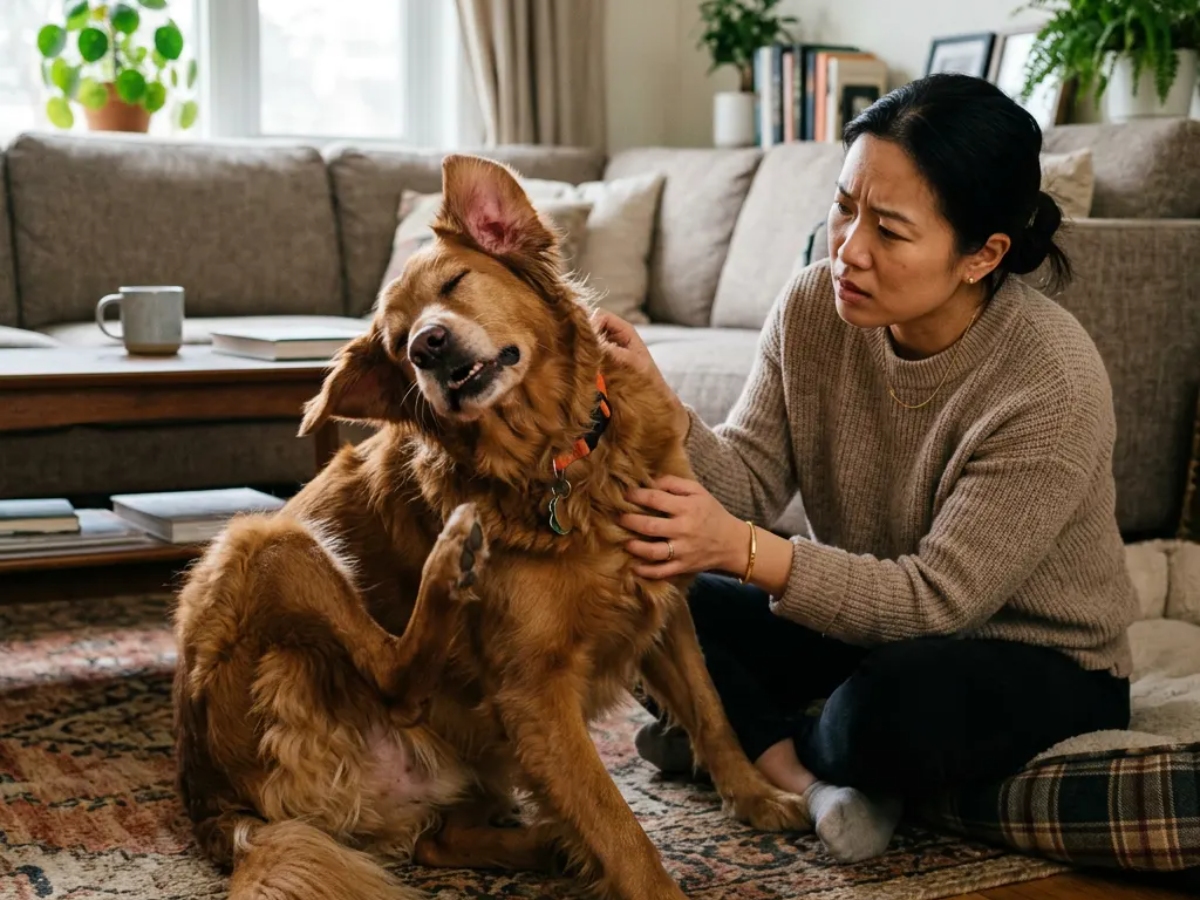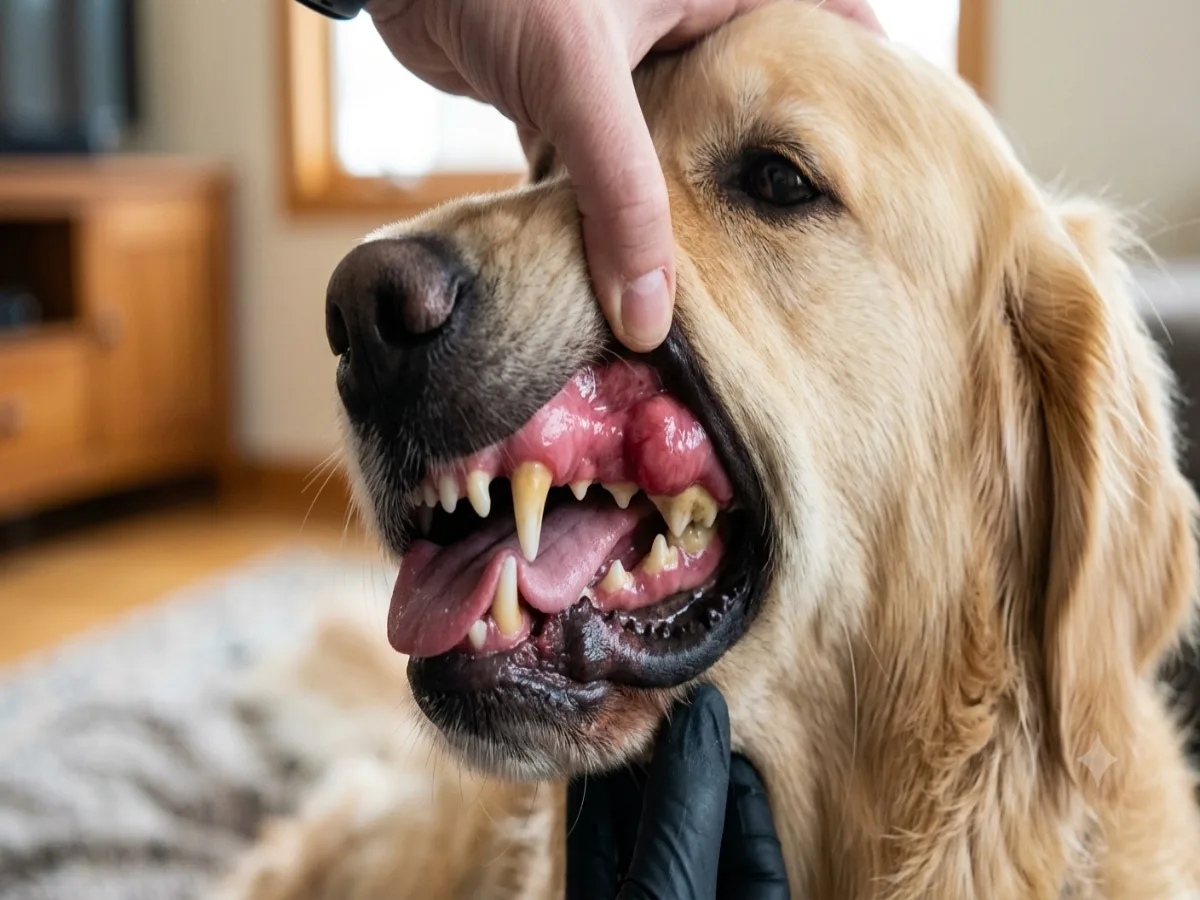

Many dog owners assume dry, flaky, or crusty ears are simply caused by cold weather or dry air. While that can certainly play a role, dry ears in dogs may also be linked to allergies, ear mites, yeast infections, ear dermatitis, or even a condition called ear margin hyperkeratosis.
I made the same mistake with my own dog. When I first noticed a few flakes along the edge of his ears, I thought they were just dry skin and started cleaning his ears more often. Later, I realized that figuring out the real cause was far more important than cleaning them more frequently.
If your dog has rough ear skin, flaky patches, frequent scratching, head shaking, or an unpleasant odor, it’s worth taking a closer look. In this guide, I’ll walk you through the common causes, symptoms, and safe home care tips to help keep your dog’s ears healthy.
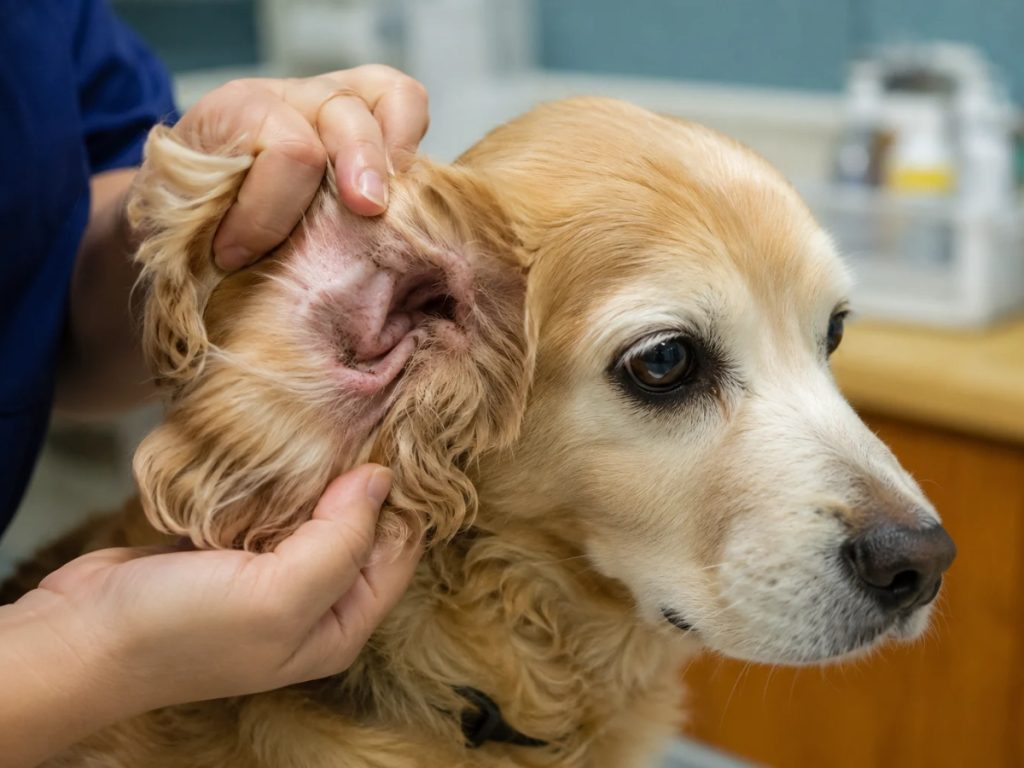
Sometimes, yes. If your dog only has a small amount of dry skin inside the ears, there’s no unusual odor, and they aren’t constantly scratching or shaking their head, it’s usually nothing to worry about.
However, pay closer attention if you notice any of the following:
The inside of the ear feels rough instead of smooth.
Crusts or scabs begin to form.
The ear becomes red or irritated.
There’s a noticeable odor.
Ear discharge increases compared to normal.
If these symptoms don’t improve or continue to get worse, it’s a good idea to schedule a visit with your veterinarian.
Dry, rough ears can have several possible causes, including:
① Dry weather or low humidity that dries out the skin.
② Bacterial, fungal, or yeast infections.
③ A lack of omega-3 fatty acids, which help maintain healthy skin.
④ Immune system issues related to digestive health or underlying thyroid disorders.
⑤ Bathing too often or using harsh shampoos that strip away the skin’s natural protective oils.
A yeast infection usually causes intense itching rather than dry skin alone. Dogs with yeast overgrowth often scratch their ears because the infection irritates the ear canal.
Common signs include:
● Swollen, red, or moist ears
● Thick ear discharge
● A strong odor
● Hair loss around the ears
Breeds with floppy ears, such as Dachshunds and Beagles, as well as dogs with heavy hair growth inside the ear canal, are generally more prone to yeast infections.
Yes. Ear mites are one of the most common causes of itchy ears, especially in puppies.
Besides constant scratching and head shaking, dogs with ear mites may develop:
Red, inflamed ears
A strong odor
Dark brown or black discharge that looks like coffee grounds
Scabs or crusts caused by repeated scratching
Ear mites damage the delicate skin inside the ear canal. As your dog scratches to relieve the itch, tiny wounds may develop. Once those wounds dry, crusts can begin to form.
When a dog develops ear dermatitis, the skin’s protective barrier becomes damaged. As a result, the skin can’t retain moisture as well as it normally would, leading to dryness and flaking.
The itchiness often makes dogs scratch even more, which further irritates the skin and creates a cycle of dryness, peeling, and inflammation.
Absolutely.
During colder months or in homes with indoor heating, moisture evaporates from the skin more quickly, making dry, flaky ears more common.
Improper grooming habits can also make things worse. Cleaning the ears too often, using harsh products, or leaving the ears damp after bathing can all weaken the skin’s natural protective barrier.
From my own experience, I’ve learned that cleaner isn’t always better. A consistent ear care routine using gentle, pet-safe products is much healthier than over-cleaning.
If you’ve never heard of ear margin hyperkeratosis, you’re not alone.
In simple terms, it’s a condition where the skin along the edges of a dog’s ears produces too much keratin. The ear margins may feel thick, rough, and hard to the touch. As the condition progresses, you may notice flaky skin, crusts, or even small cracks.
Some dogs don’t seem bothered by it, while others experience itchiness and scratch at their ears more frequently.
Common causes include:
An inherited skin condition
Chronic ear inflammation
Parasites
Abnormal oil production
Long-term skin irritation
If your dog’s ear edges continue to become rough, crusty, or cracked, it’s best to have your veterinarian determine the underlying cause before starting treatment.
Yes—but not just any product.
According to veterinary recommendations, if your dog’s ears are only mildly dry and don’t have redness, odor, discharge, swelling, or signs of pain, you may consider using a gentle, pet-safe ear care product designed to support the skin.
If the dryness is limited to the outer ear flap, a pet-specific moisturizing product may help. However, never apply human lotions, facial creams, or oils to your dog’s ears, and never drip moisturizers directly into the ear canal.
I used to think dry ears simply meant my dog needed more moisture. But I later realized that when dryness comes with scratching, a bad smell, redness, or discharge, it’s often a sign of ear mites, an infection, or ear dermatitis—not dehydration.
When that happens, it’s best to have your veterinarian identify the underlying cause so your dog can receive the right treatment.
If your dog only has a little dust, mild flaking, or slightly dry skin on the outer ear, regular cleaning with pet ear wipes or a gentle dog ear cleaner is usually enough.
Be gentle, and don’t clean the ears too often. Over-cleaning can strip away the skin’s natural protective barrier and make dryness even worse.
Moisture trapped inside the ears can create the perfect environment for bacteria and yeast.
Whenever I bathe my dog, I always make sure to dry the ears carefully, especially because floppy ears don’t get much airflow and tend to stay damp longer.
Keeping the ears dry can help reduce the risk of future ear problems.
It may be tempting to use lotion, essential oils, or homemade remedies when your dog’s ears look dry, but I wouldn’t recommend it.
A dog’s skin is much more sensitive than ours, and products made for people can easily cause irritation or make the itching worse.
Instead, stick with products specifically made for dogs.
Whenever you’re cleaning your dog’s ears, take a minute to look for anything unusual, such as:
Black or dark brown ear debris
A strong or unpleasant odor
Frequent scratching or head shaking
Redness, swelling, or signs of pain
If you notice any of these symptoms, it’s a good idea to schedule a veterinary exam instead of treating it as simple dry skin.
Healthy ears often start with a healthy dog.
Besides regular ear care, I also pay attention to changes in my dog’s diet, possible exposure to pollen or dust, and whether there are any skin issues elsewhere on the body. Sometimes, recurring ear problems are connected to allergies or overall skin health rather than the ears alone.
Ear mites are tiny parasites that cause intense itching. Dogs with ear mites usually scratch constantly, shake their heads, and develop dark brown or black ear debris that looks like coffee grounds.
A yeast infection, on the other hand, happens when yeast naturally living in the ear grows out of control. This often occurs in dogs with allergies, ears that stay damp, or a history of ear infections.
Dogs with yeast infections typically have:
Red, inflamed ears
A strong, unpleasant odor
Oily yellow, brown, or dark ear discharge
Persistent itching and discomfort
| Symptom | Ear Mites | Yeast Infection |
| Flaky skin | Common | Sometimes |
| Ear debris | Black, coffee-ground-like debris | Brown or oily discharge |
| Odor | Mild | Strong |
| Itching | Severe | Moderate to severe |
One habit that’s really helped my dog is sticking to a simple ear care routine. It only takes a few minutes each week and is easy enough for first-time dog owners to follow.
I regularly check the ears for redness, odor, or unusual discharge, gently wipe away dirt from the outer ear with pet ear wipes, and always make sure the ears are completely dry after baths or swimming.
Keeping up with these small routines has made it much easier to prevent dry ears and catch ear problems before they become serious.