

Many kittens are particularly tolerant of pain, so pet owners need to carefully observe the physical condition of the kittens to see what the problem is. Today, let’s share how to check the health of your cat by checking cat teeth and gums.
You can gently open your kitten’s mouth and look at its gums; if it is pink, pale pink, and still moist, it is healthy. For those cats with darker hair, their gums themselves will be black, which is normal.
Abnormal conditions often include the following: the gums are blue-gray, which is a manifestation of hypoxia in kittens; yellow gums are liver problems; pale and bloodless indicating that the kitten is more anemic; if the gums are too bright red, it may be in a state of fever.
If your kitten has these abnormal gum colors, you should go to the hospital immediately and hand it over to a professional veterinarian for treatment, and do not delay. The best time to seek medical attention.
Several conditions of abnormal gums:
White: usually a sign of anemia. Cats have white gums, lack of appetite, weight loss, dry hair, and hair loss; anemic cats will also have a white tongue and nose.
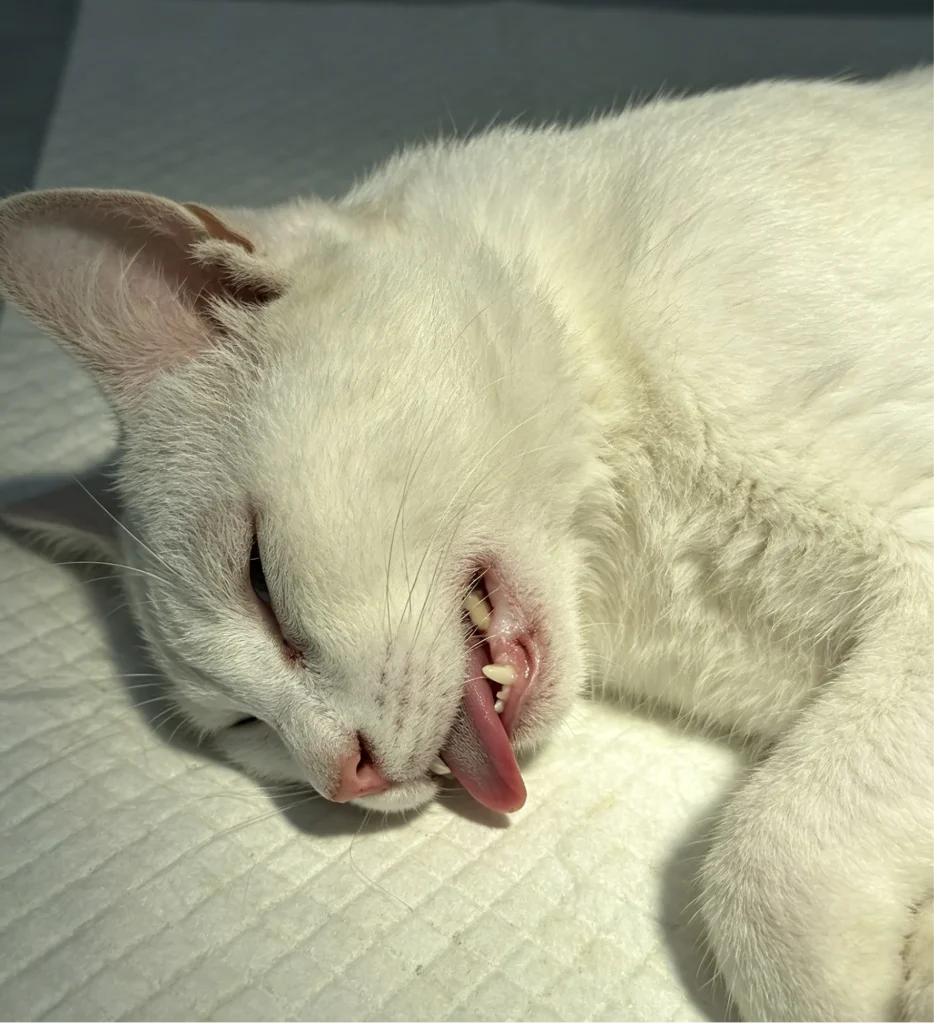
Pale gums in a cat
Yellow: This may be a sign of jaundice. The eyes, skin, gums, and ears will turn yellow, and may also be accompanied by vomiting, yellow water, and drowsiness. It is necessary to take the cat to the hospital in time for examination, specific treatment of specific problems, and to prescribe the right medicine.
Yellow gums in a cat
Redness and swelling: May be a symptom of stomatitis. The mouth is manifested by a noticeable odor, inflamed teeth, and drooling.
White and swollen: It may be an inflammation of the gums. The gums are white and swollen around, and the cat may drool, have bad breath, have difficulty chewing and eating, and painful swallowing. It is necessary to adjust the diet, drink plenty of water, and pay attention to oral hygiene.
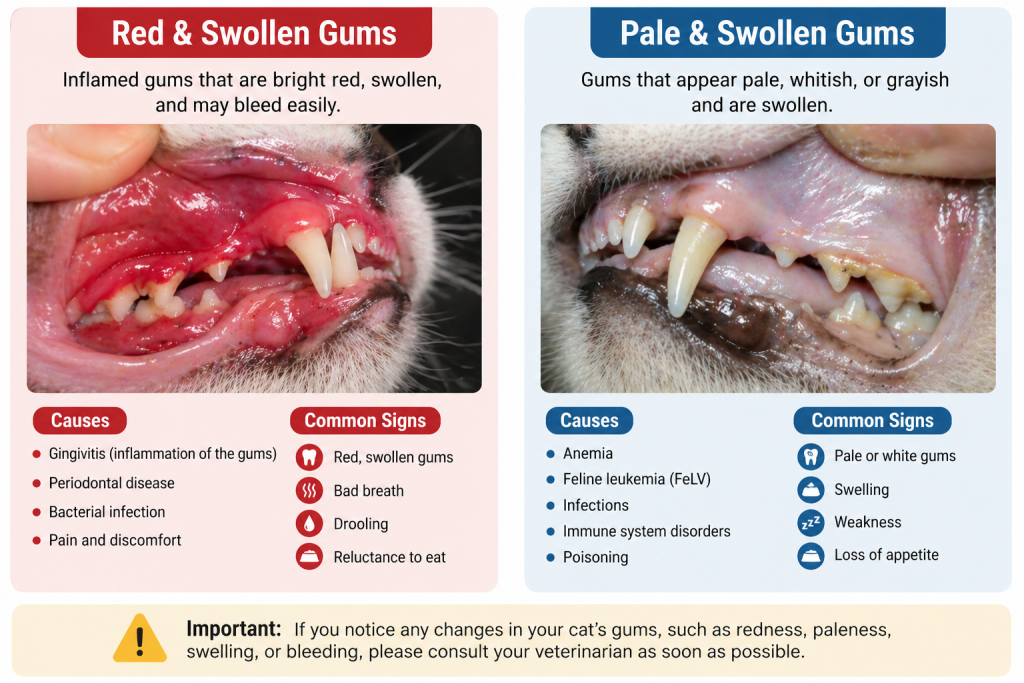
Red vs pale swollen cat gums comparison
Anemic cats, in addition to white gums, may also become unappetized, and even their favorite cat snacks will not be eaten. The body is also gradually losing weight, the hair loses its luster and is not smooth, and it becomes rough and loves to shed. Poor spirits love to sleep, lose interest in things around them, rarely play, and like to hide. In the long run, it affects the lifespan of the cat’s healthy body.
The inside of the cat’s mouth is rich in blood vessels and nerves, and the gums are darkened, which may be a natural phenomenon of black pigmentation caused by the uneven distribution of pigment cells. Some cats are born with black markings on their skin, which may appear black matter on the soft tissues of the mouth over time. The above is normal.
If you find that the black area of your cat’s gums is gradually enlarged, accompanied by bleeding, swelling, and other symptoms, this may be a signal of diseases such as gingivitis, periodontal disease, or even oral tumors.
☞ Periodontal disease: Periodontal disease can cause inflamed gums, loose teeth, and even tooth loss. This is one of the most common oral problems in cats.
☞ Chronic stomatitis: mainly manifested as redness and swelling of the oral mucosa, ulcers, and cats may lose their appetite due to pain.
☞ Osteoresorption: It causes the bone tissue around the teeth to be absorbed, which is a serious oral disease.
① Does dental calculus have to be extracted?
Minor tartar can be improved with daily brushing at home and natural use of cleaning products. Severe tartar needs to be used under the professional operation of a professional with professional scaling tools.
② Do oral problems only affect the oral cavity?
Serious oral problems can not only affect your cat’s eating but also affect vital organs such as the digestive system, heart, and kidneys, and can even be life-threatening.
③ Is it really okay to have baby teeth?
Yellowing of deciduous teeth may have food residues, which can form plaque if not cleaned for a long time, and finally form tartar, affecting the development and health of new teeth.
④ Can dry food clean cat teeth?
Cats’ teeth have a special shape, and dry food is usually swallowed directly when eaten, and generally cannot effectively clean teeth. You can usually study homemade natural chewing biscuits for cats at home, which is conducive to rubbing and cleaning teeth.
☀ Teething snacks:
You can prepare some crispy, chewy snacks, such as chicken necks and frozen chicken jerky so that they can take away food residues between their teeth by rubbing them when biting.
☀ Brush your teeth or use a dental cleaning product:
Brush your cat regularly with a pet toothbrush or a soft toothbrush. If your cat doesn’t like to brush your teeth, you can try pet mouthwash or dental powder first, add the toothbrush powder to the toothbrush, and brush it gently after each meal to take away food residues. You can also add mouthwash to your cat’s drinking water, and toothbrush powder can also be mixed into cat food.
☀ Environmental sanitation:
Cats usually like to lick their bodies, so they should regularly clean and disinfect the surrounding environment of the home, whether it is the door or the sofa, etc., which can effectively prevent bacteria from entering the cat’s mouth from the outside world.
☀ Develop a drinking habit:
Let the cat drink more water, and by drinking water, you can rinse off the minerals precipitated in the mouth.
☀ Treatment of tartar:
If the tartar is still on the surface of the teeth and has not hardened, the growth can be curbed by brushing your teeth, using mouthwash, etc. Minor tartar can be cleaned in the hospital, and professional things are left to professionals to do, check, and operate on by doctors.
With loss of appetite and lack of energy, cats prefer to choose liquid foods that are easy to eat, such as canned food. Chewing also becomes slow, and may even vomit food, sometimes meowing. The gums are red and swollen, accompanied by obvious bad breath and slight ulcers in the mouth.
The invisible killer of cats is not only oral diseases, chronic kidney disease, heart disease, diabetes, and even cancer, etc. there are no obvious signs in the early stages, but they are easy to ignore. Especially for oral problems, cats have a strong ability to endure pain, and when they find bad breath and drooling, it is often very serious, and everyone must pay more attention to the small details of their cubs!