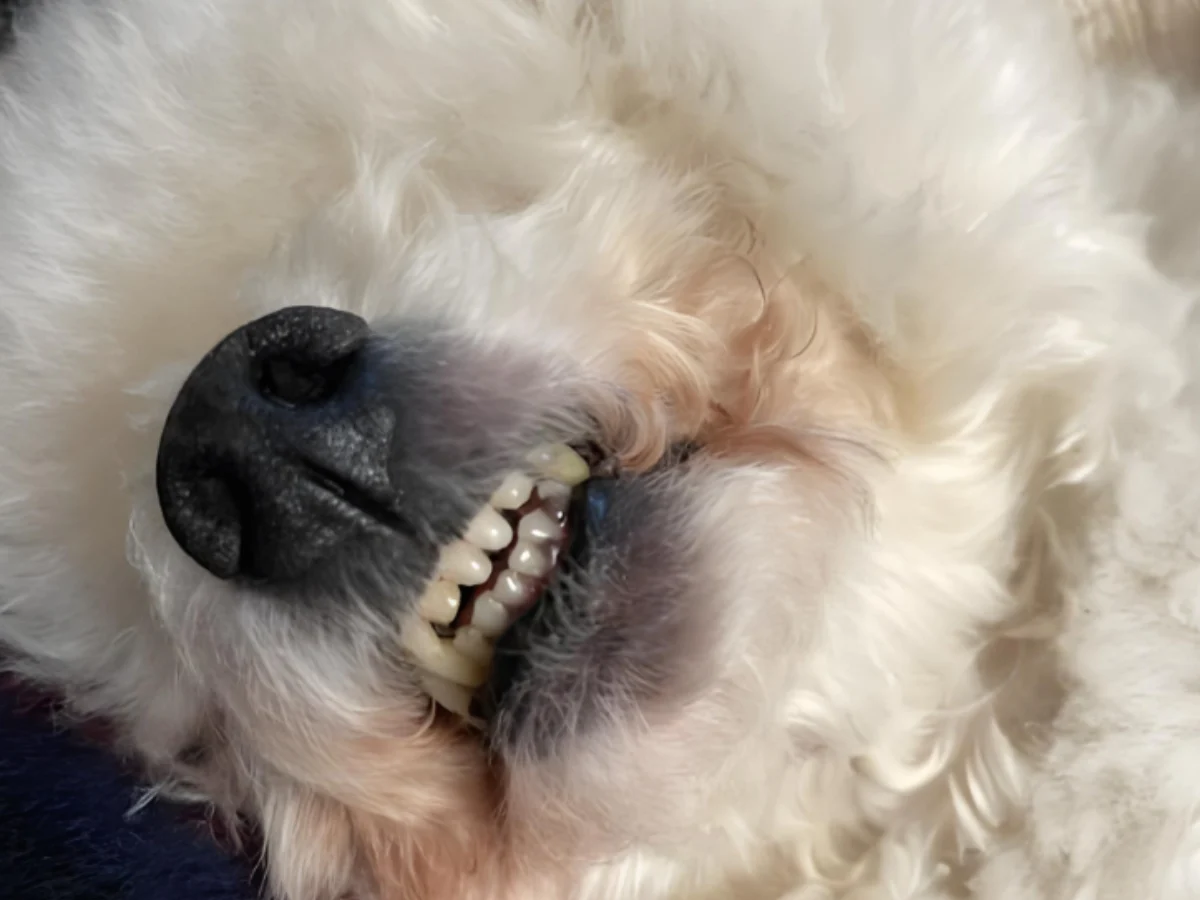

The core of caring for a dog’s teeth is to master the scientific method of how to keep dog’s teeth healthy. Many owners ignore this issue, unaware that oral bacteria not only cause bad breath and plaque but also threaten their dog’s overall health.
This article combines the core points of home care and professional dental cleaning to resolve common problems, such as fragile teeth and resistance to brushing in dogs, and teaches you step by step to use natural methods to protect your mouth, effectively remove oral bacteria, and protect your dog’s dental health in an all-around way.
1. The core cognition of dog oral health: home care and professional dental cleaning are combined
① What are the effects of oral bacteria on a dog’s heart and kidney health?
The Riney Canine Health Center at Cornell University points out that 80%–90% of dogs over 3 years old have some degree of periodontal disease, and small breeds and aging increase the risk. If oral bacteria accumulate in a dog’s mouth over time, they can enter the bloodstream through gum wounds, damaging heart valves and kidney function, leading to serious diseases such as heart inflammation and nephritis, especially in elderly dogs, where the risk increases significantly.
Dear shoveling officers, adhering to the daily care of dog dental health and removing oral bacteria in time is the key to preventing such systemic diseases, and dogs will be healthier and happier.
② Why must dog oral care be combined with home care and professional dog teeth cleaning?
Home care can inhibit the growth of plaque and oral bacteria on a daily basis, such as regular teeth cleaning and the use of canine care products, while professional dog dental cleaning can completely remove tartar and deep bacteria that cannot be removed by home care.
2. What are the main causes of weak teeth in dogs?
Several common dog oral problems
☞ Tartar: Formed by a mixture of food debris and bacteria, it is difficult to remove.
☞ Gingivitis: Food debris builds up in the gums, breeding bacteria that can lead to gum inflammation and tooth pain.
☞ Periodontal disease: Developed by tartar and gingivitis, manifests as swollen, inflamed, and bleeding gums, severely damaging gum tissue and potentially causing teeth to loosen and fall out.
☞ Tooth decay: Food debris and bacteria grow, and acidic substances dissolve calcium in teeth, forming cavities. Tooth decay can cause tooth pain and loss of appetite.
☞ Broken teeth: Trauma or gnawing on hard objects causes tooth wear or fracture and tooth root exposure, which may lead to pulp cavity infection and periodontal disease.
☞ Misalignment: Problems with the development of the upper and lower jaws or ectopic growth of permanent teeth, causing teeth to get stuck and affecting eating.
3. How to heal your dog’s teeth naturally
How to improve your dog’s dental health in a natural way?
☀ Chew Toys: Massage the gums while your dog chews to scrape away plaque to promote oral health and dental hygiene.
☀ Add coconut oil: Dip a small amount of coconut oil with your finger or toothbrush and apply it to your dog’s teeth and gums. Add a teaspoon of coconut oil to your dog’s food several times a week.
❤ Tips: Before adding coconut oil to your dog, consult your veterinarian to ensure a safe and appropriate dosage.
☀ Daily diet: Consume hard dog food and bones; pumpkins, carrots, and cucumbers provide nutrition for dogs; Papaya and pineapple, as well as strawberries and blueberries, help maintain healthy gums and prevent infections
❤ Tips: Fruits can only be used as a reward for furry children occasionally. Before feeding, make sure your pet doesn’t have an allergic reaction to these foods.
4. How to brush your dog’s teeth when resisting
The correct way to guide dogs to resist brushing
● Touch your dog’s mouth more often to get used to being touched
● Squeeze a little toothpaste on the toothbrush, and if the dog takes the initiative to lick it, reward it with treats or toys
● When the dog is not disgusted with brushing his teeth, put the toothbrush in the dog’s mouth and start brushing slowly; it is best to use a finger toothbrush at the beginning
● When the dog gets used to it, you can change the finger toothbrush to a toothbrush
● Brush your teeth in a circular motion from canines to molars
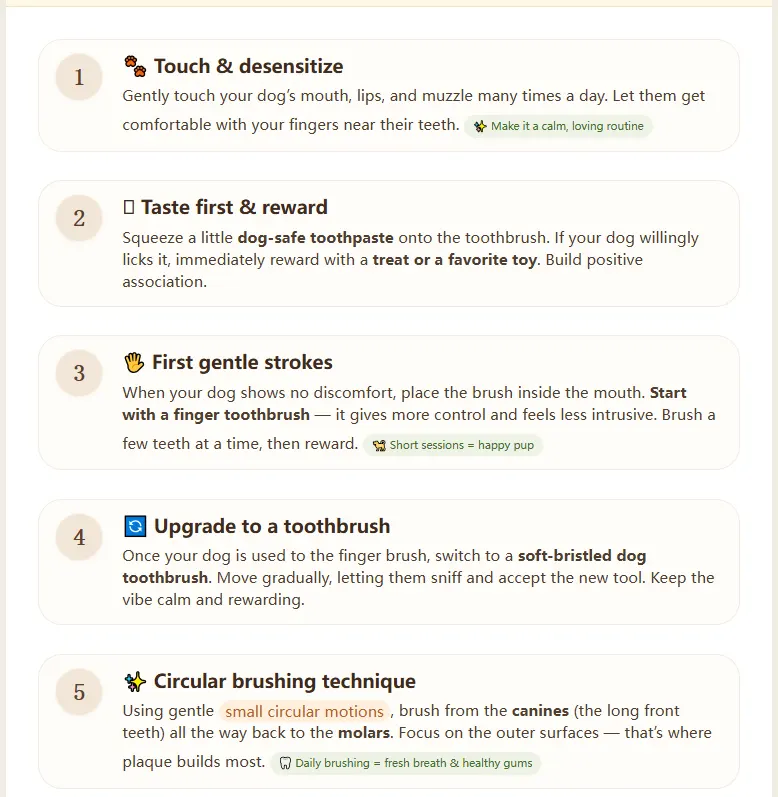
Dog teeth brushing: step-by-step guide for training resistant dogs at home
5. An effective way to get rid of bacteria in your dog’s mouth
Three ways to easily remove plaque
Daily brushing: Take the time to brush your dog’s teeth every day after dinner, which not only maintains oral hygiene but also enhances the bond with your dog.
Chew Cleaning: Encourage dogs to chew to remove plaque.
Professional scaling: Veterinarians can provide professional scaling, which is the most thorough way to clean the mouth but usually requires anesthesia.
6. Answers to frequently asked questions
✨ How to maintain your dog’s dental health in the long term?
Choose a pet-specific toothbrush and toothpaste to get your dog brushed through adaptive training. At the same time, use mouthwash and chew teeth-cleaning items, such as chewing gum. Take your dog to the pet hospital regularly for oral check-ups to detect and deal with oral problems in a timely manner.
✨ What is the 3-3-3 teeth rule, and is it suitable for dogs?
Not applicable to dogs’ oral care standards, but guidelines for brushing habits are designed specifically for humans.
✨ What to give your dog to strengthen teeth?
For example, carrots are rich in vitamins and high in fiber, and when chewed, they can physically clean the surface of the teeth and promote health. and meat (such as chicken and beef) to provide protein and an appropriate amount of calcium, and be careful to avoid excessive amounts during tooth replacement.
-
Sale!

disposable Finger-shaped dental cleaning wipes for pets fresh breath
Original price was: $6.68.$3.34Current price is: $3.34. Add to cart -
Sale!
Gentle Neutral pH Round Pet Eye Wipes Tear Stain Removal
Original price was: $5.98.$2.99Current price is: $2.99. Add to cart -
Sale!
Foaming dog body cleaner with a silicone brush for pet paws no rinsing
Original price was: $8.98.$4.49Current price is: $4.49. Add to cart