

Often, we get so caught up in welcoming a new family member—a puppy—that we forget we have to go to work! How do we balance work and spending time with our puppy? That’s a real challenge!
How to potty train a puppy when you work? This is a source of anxiety for most people. We’d also like to emphasize that if you really don’t have time to spend with your puppy, don’t let your puppy feel sad or deprived of your company.
Can I get a puppy if I work 9’5″?
The answer is “Yes.” Potty training a puppy just requires a firm plan, a consistent routine, the right potty training supplies prepared in advance, and the right mindset.
Bringing a new puppy home is exciting, but if you work full-time, it can often feel overwhelming. You might ask yourself, “If I’m gone all day, how can I potty train my puppy while I’m at work?”
If possible, take a few days—or even a week—off when you first bring your puppy home. This gives you plenty of time to bond with your puppy and establish a daily routine. A stubborn puppy might make potty training more challenging, but success is still guaranteed.
While you’re at work, you’ll need to make arrangements for your puppy’s daytime routine. Puppies have limited bladder control; an 8-week-old puppy can usually hold it for only 2–3 hours and cannot be left home alone for an entire workday.
By maintaining a consistent training schedule, providing a suitable training environment, offering assistance during the day, and following simple cleanup routines, you can successfully raise a well-behaved dog even while working full-time.
How to potty train a puppy when you work?
Often, it’s not a matter of whether you can have a puppy, but rather how much effort you’re willing to put into making arrangements during the day! With proper time management, it is possible to housebroken your puppy.
After several months of trial and error, adjusting his schedule, and refining the cleaning routine, my puppy Leo finally developed a fairly consistent habit of relieving himself in a designated spot.
Crate Training: The Basics
Crate training isn’t about punishment; it’s about fostering a sense of belonging and security in your puppy. When a puppy first arrives, it’s scared and unfamiliar with its surroundings—the crate might feel like a safe haven to him.
Choose a crate that’s the right size—one where your puppy can stand, turn around, and lie down. If it’s too big, they might relieve themselves in a corner. Don’t force them inside; instead, use treats to gently guide them in. You can also place safe chew toys in the crate to keep your puppy entertained and help maintain their energy and vitality!
Playpen/Enclosed Area: When the Crate No Longer Meets Daily Needs
If you work more than eight hours a day, relying solely on a crate isn’t enough. You’ll need to set up a larger playpen for your puppy, giving it more room to move around and stretch. This allows the puppy to freely walk, stretch, drink water, and play as needed, rather than being confined to a small space for long periods, which can affect its physical and mental well-being!
Designate clear “potty areas” and “rest areas” within the fenced-in space and lay down pee pads. Keep the fenced-in area fresh every day—after cleaning, spray it with a pet deodorizing spray to neutralize lingering odors and keep the space smelling fresh.
Set a Daily Potty Schedule for Your Puppy
When I first started training Leo, my biggest mistake was underestimating his physical limits! So, to help with potty training, we need to set a daily potty schedule for him and have him go at fixed times!
Before heading to work in the morning:
The very first thing you do when you wake up—before brushing your teeth or eating breakfast—is to take your puppy to the designated potty spot. After that, feed him, play with him briefly, and then take him out to relieve himself again. Before you leave for work, take him out one last time, then place him in his crate or playpen so he can move around freely.
If your puppy relieves itself outdoors, use a pet wipe to quickly clean its paws and belly when you return home—grass and dirt from outside can easily be tracked indoors, and a single wipe will keep its paws clean while reducing the hassle of cleaning your floors!
During Your Lunch Break:
If your workplace is close to home, you can go home at lunchtime to spend time with your puppy and help with potty training! When you get home, take your puppy out to relieve itself first, then feed it. After playing with your puppy for a short while, do another round of potty training, and then put the puppy in its crate or the fenced-off area you’ve set up.
If your workplace is too far away to return home, you can arrange for a dog walker or a family member to come to your home during lunchtime to care for your puppy! However, their visit must include the following steps: taking the puppy out to relieve itself, feeding it after the bathroom break, playing with the puppy, and then conducting another potty training session afterward. This will improve the effectiveness of your puppy’s potty training.
Our puppies can stay in their crates for a maximum of a few hours; for a 4-month-old puppy, it’s best not to exceed 5 hours, so they need to be let out at least once during the day for a short play session!
Rover (2024 Survey): About 60% of full-time workers successfully completed puppy potty training through midday dog-walking services (30–60 minutes). The key is “not exceeding the puppy’s physiological limits.”
After work:
This is the most important time of the day for building an emotional bond. The puppy has been waiting in its crate or playpen all day, so it needs plenty of interaction now! The first thing to do when you get home is to take the puppy out to relieve itself, followed by dinner. After dinner, you can take it outside for some exercise.
After a workout or a walk, use the pet glove wipes to give your puppy a quick full-body wipe—the glove-style design makes it easy to slip right onto your hand, allowing you to clean your puppy as if you were petting them. This is especially suitable for lively, active puppies who don’t like to stand still; If your puppy is particularly dirty or has an odor, squeeze a small amount of no-rinse pet foam onto their fur, massage it in, and then wipe it clean. The no-rinse formula is perfect for quick cleanups on busy weekdays—especially for us after a long day at work!
Before bedtime:
We recommend taking your puppy out for one last bathroom break before bedtime, around 9–10 p.m., to avoid being woken up in the middle of the night! In my experience, removing food and water after 6–7 p.m. reduces your puppy’s need to relieve itself. Place the crate where your puppy can see you—such as next to the bedroom or by the bedside—to provide a sense of security for both of you.
If your puppy whines at night needing to relieve itself, quietly take it outside, then bring it back to the crate. Try to avoid playing with it, so it doesn’t get too excited and end up unable to sleep.
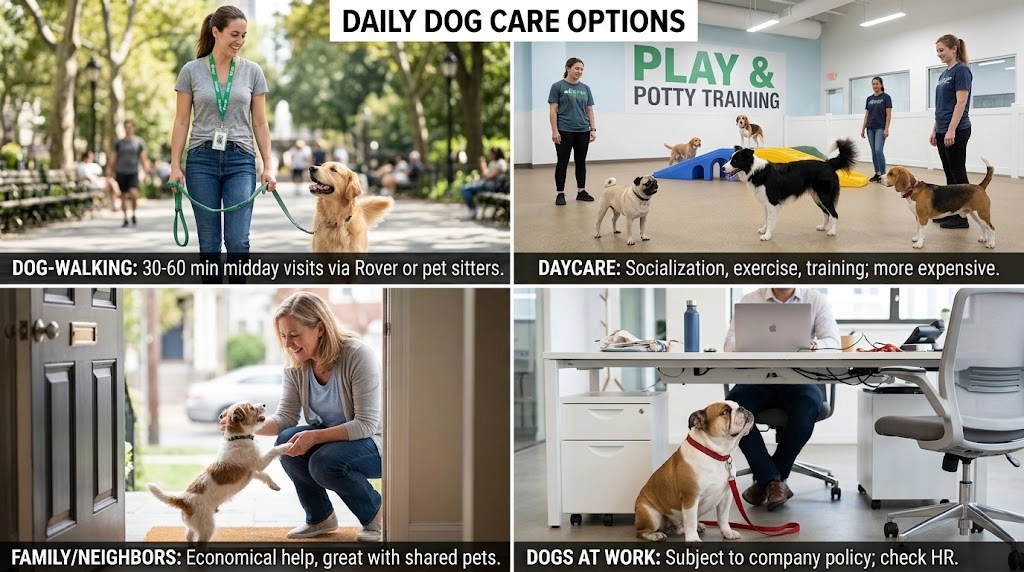
Dog-walking services, dog daycare centers, and other daily assistance
- Dog-walking service:You can book through dog-walking platforms like Rover or Wag for 30–60-minute midday visits that include bathroom breaks, feeding, and playtime. Alternatively, you can contact a well-recommended pet sitter in your community for regular in-home visits; pricing is typically more flexible than on these platforms.
- Dog daycare centers: Choose a center that offers socialization, exercise, and potty training for your dog, though these are usually more expensive. You might consider using them 1–2 days a week.
- Family/neighbors: This is the most economical option, and it’s most convenient if your neighbors or family members also own dogs.
- Bringing your dog to work: Some companies have policies that allow employees to bring their dogs to work. You can check with HR to see if this is permitted, but be mindful of coworkers who may be afraid of dogs.
Create the Perfect “Puppy Safe Zone” While You’re at Work
I understand that it’s impossible to leave 3-month-old Leo home alone for 8–9 hours without letting him relieve himself. The key to solving this problem is figuring out how to create a space where he won’t have accidents while you’re away.How to potty train a puppy when you work?
Designate specific “potty areas,” “play areas,” and “rest areas” for your puppy. This not only provides a safe environment for potty training but also helps them better manage their living space.
If your puppy has an accident indoors, never punish or scold them—these accidents happen from time to time and are perfectly normal. Scolding them will only cause fear and anxiety, making training more difficult. Please stay calm and clean up the mess calmly afterward!
The AKC states that punishing accidents can cause confusion and anxiety. Positive reinforcement, on the other hand, helps puppies understand which behaviors earn rewards.
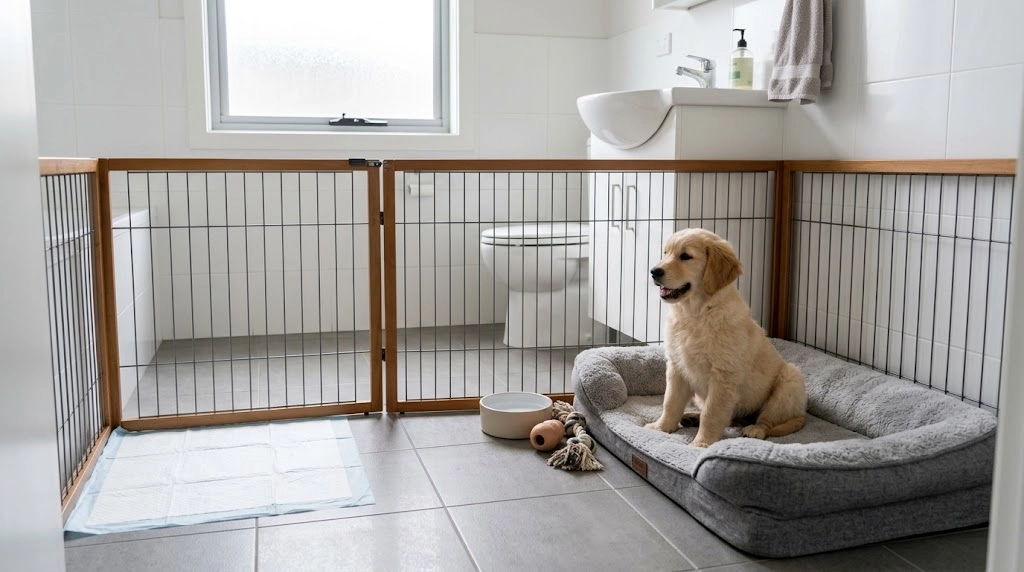
Can I leave my puppy in the bathroom while I’m at work?
Of course, but you’ll need to eliminate any safety hazards for your puppy.
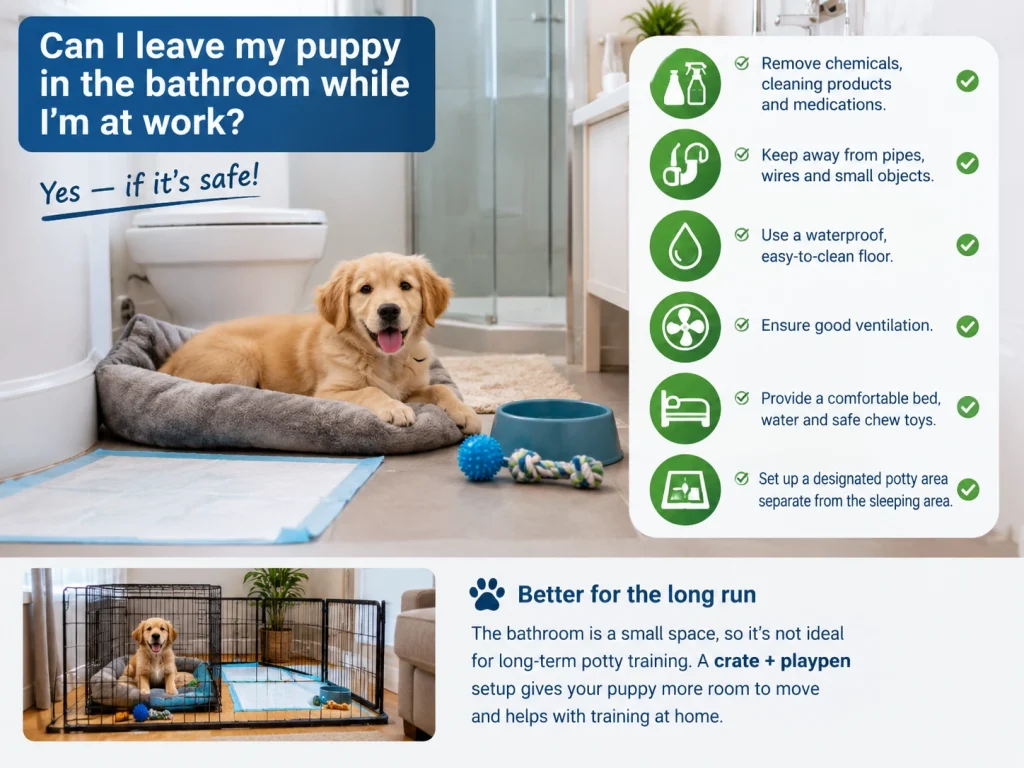
To keep your puppy in the bathroom, the following conditions must be met: Remove all chemicals, cleaning products, and medications; ensure there are no pipes, wires, or small objects the puppy can chew on; make sure the floor is waterproof and easy to clean; ensure good ventilation; provide a comfortable bed, water, and safe chew toys; and set up a designated potty area separate from the sleeping area.
However, because the bathroom is a small space, using it long-term may not yield ideal results for potty training; it’s better suited as a short-term transitional solution. While you’re at work, you can combine a crate and playpen to help with potty training at home, which gives your puppy more flexibility in its movement.
How long does it take to potty train a puppy?
There is no one-size-fits-all answer to how long it takes to potty train a puppy. Potty training usually takes 4–8 weeks to achieve basic success, but it may take 4–6 months to master completely, and some puppies may even take up to 12 months. This depends entirely on several factors, including the puppy’s age, size, and the consistency of the training methods.
How to potty train a puppy when you work? Although working full-time can make training more challenging, as long as we use scientific methods, remain patient, and work hard alongside our puppy, we will ultimately succeed.
To address your concerns, you can draw on my real-life experience with puppy potty training as a reference. This experience may provide you with some practical insights and guidance for hands-on application, helping you better understand the various situations you might encounter during the training process and make appropriate arrangements based on your own circumstances.
FAQs:
1. If I work full-time, do I need to train my dog to use a potty pad?
It isn’t strictly necessary, but it’s recommended as a temporary solution. If you can’t take your puppy outside within its bladder capacity, a potty pad can prevent accidents indoors and reduce anxiety.
2. How often should my dog go outside?
Use the rule of “puppy’s age + 1 hour” to estimate how often your puppy needs to go outside. Take your puppy outside immediately after waking up, eating, drinking, or playing—even if it’s not yet time for a scheduled walk.
3. My puppy always goes to the bathroom in its crate. What should I do?
The crate may be the wrong size, or the puppy hasn’t established that this is a sleeping area. The crate should be large enough for the puppy to stand, turn around, and lie down comfortably.
Use methods such as offering food, toys, or treats to encourage the puppy to enter voluntarily, associating the crate with positive experiences.
-
Sale!

Soft pet skincare wipes that are antibacterial and eliminate odors, suitable for cleaning ears/paws/underbody areas, relieving itching and discomfort
Original price was: $4.29.$2.99Current price is: $2.99. Add to cart -
Sale!
-1-300x300.webp)
Cat Chin Blackhead Cleaning Wipes for Cats
Original price was: $11.89.$9.99Current price is: $9.99. Add to cart -
Sale!

Natural Rinse-Free Pet Grooming Glove Wipes
Original price was: $9.44.$4.72Current price is: $4.72. Add to cart