
No, you cannot 100% stop dog shedding. Shedding is a vital biological function required for hair follicle renewal and skin protection. However, by implementing a veterinarian-backed routine, you can reduce and control dog shedding by up to 80%. This effectively removes loose undercoat before it lands on your furniture, keeping your home clean and fur-free.
| The Myth | The Science |
| Striving for “100% Zero Shedding” | Goal: “Reduce & Control 80% of Shedding” |
| Shaving down double coats | Removing dead, loose undercoat early |
| Relying on harsh chemical solutions | Nourishing hair follicles from within |
| Damaging skin barrier & causing burns | Maintaining a fur-free home & healthy coat |
To successfully win the battle against pet hair, you must shift your mindset from total elimination to scientific management. When you focus on strategies that promote skin and coat health, remove loose fur at the source, and nourish hair follicles from within, maintaining a hair-free living space becomes an effortless daily reality.
To effectively manage dog shedding, you first need to understand the biological mechanics behind why dogs lose hair. Shedding isn’t just an arbitrary inconvenience—it is a complex, hormone-driven process governed by sunlight exposure, genetics, and breed characteristics.
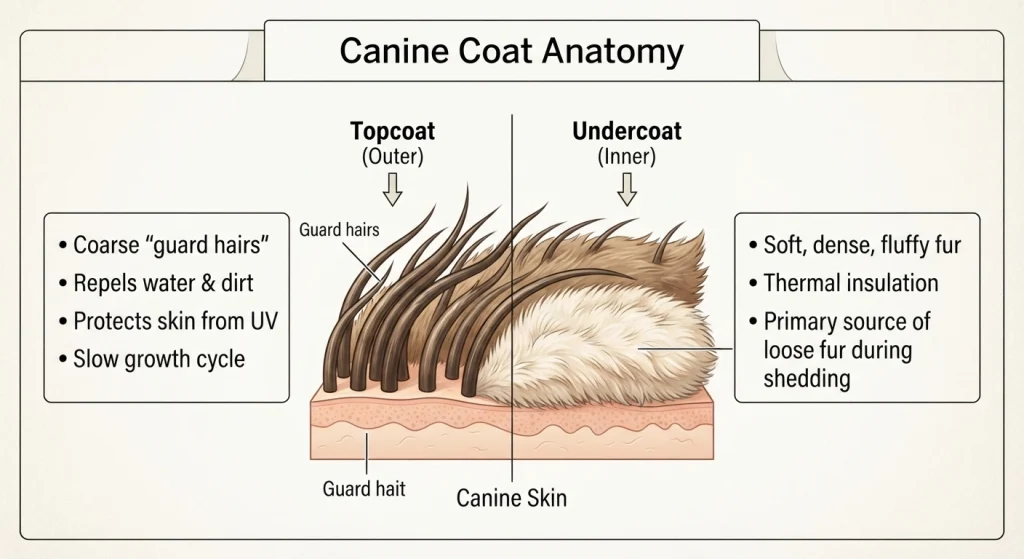
Not all canine fur is created equal. Understanding your dog’s specific coat architecture is crucial for selecting the right grooming strategy and tools.
Topcoat (Guard Hairs): The outer layer consists of longer, coarser hairs designed to protect the skin from UV rays, moisture, dirt, and physical friction.
Undercoat (Secondary Hairs): The inner layer consists of soft, dense, downy fur that acts as thermal insulation—keeping your dog warm in winter and cool in summer.
Breeds classified as double-coated dogs—such as Golden Retrievers, Siberian Huskies, German Shepherds, Samoyeds, and Shiba Inus—possess both an outer topcoat and a dense undercoat.
During peak shedding seasons, these breeds undergo a phenomenon known as “blowing coat” (or coat blow). As temperature and daylight shift, the dog’s body rapidly sheds its entire inner insulating undercoat over a 2- to 4-week period. Massive clumps of loose fur detach simultaneously from hair follicles.
Dogs never stop shedding completely. However, heavy seasonal shedding typically lasts 2 to 4 weeks during spring and fall. Spring shedding releases the dense winter undercoat to prepare for warmer weather, while fall shedding drops the lighter summer coat to grow a thick winter layer. However, indoor dogs shed lightly all year long because artificial heating and indoor lighting confuse their natural biological clocks.
Shedding is primarily triggered by photoperiod (daylight duration) rather than temperature alone.
Spring Shedding: As days grow longer in spring, daylight exposure stimulates the pineal gland to release hormones, triggering hair follicles to shed the heavy winter undercoat.
Fall Shedding: As daylight hours shorten in autumn, hair follicles drop lighter summer fur to make room for a dense, cold-weather coat.
The Indoor Lighting Trap: Modern house dogs live under constant artificial lighting and climate-controlled heating/AC. This artificial environment disrupts their coat’s natural circadian rhythm, keeping hair follicles in a state of continuous, moderate year-round shedding rather than two distinct seasonal drops.
If you are researching how to stop dog shedding in short-haired dogs (such as Labradors, Pugs, Boxers, Beagles, or Dachshunds), it is essential to understand why short fur poses unique challenges:
Rapid Follicle Turnover: Short-haired breeds have a very brief Anagen (growth) phase. Because their hair reaches its genetically predetermined maximum length quickly, the hair follicle enters the shedding phase much faster than that of a long-haired dog.
Woven Fabric Embedment: Unlike long fur that sits loosely on carpets or gathers into sweepable tumbleweeds, short hairs act like stiff microscopic needles. They pierce deeply into woven upholstery, car seats, and clothing, making physical removal significantly harder without specialized rubber grooming tools.
To understand how professional groomers and veterinarians handle canine coat health, we must look at the four distinct stages of canine hair follicle growth:
Anagen Phase (Active Growth): The hair follicle actively produces new keratin fibers. Breeds with long Anagen phases (like Poodles) shed very little because hair keeps growing without dropping.
Catagen Phase (Regression): Growth slows down, and the hair sheath contracts and attaches to the root.
Telogen Phase (Resting): The hair stops growing but remains anchored in the follicle while a new hair begins forming beneath it.
Exogen Phase (Shedding): Old strands are pushed out of the follicle as loose fur, completing the biological cycle.
According to official anatomical guidelines established by the American Kennel Club (AKC), canine coat types and shedding intensity are genetically encoded into breed standards. A dog’s follicle density, topcoat-to-undercoat ratio, and growth phase durations vary wildly by breed heritage. Understanding these anatomical distinctions allows pet owners to tailor their nutritional and grooming protocols to their dog’s precise biological needs rather than applying generic solutions.
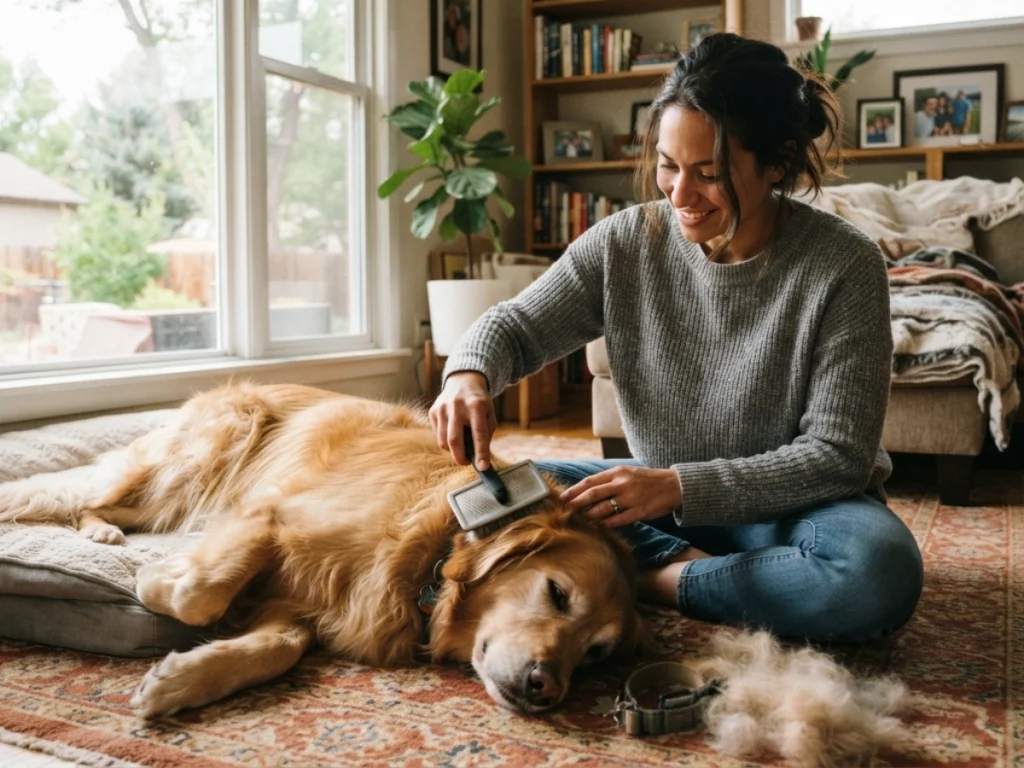
To achieve groomer-quality results at home, you need a systematic approach. Following a structured deshedding routine allows you to remove up to 80% of dead undercoat before it lands on your floors, carpets, and furniture.
Finding the best product to stop dog shedding starts with choosing the correct dog shedding brush tailored specifically to your dog’s coat type. Using the wrong tool can damage topcoat guard hairs or fail to reach trapped undercoat.
Double-Coated Breeds (e.g., Golden Retrievers, Huskies, Shepherds):
Undercoat Rake / Deshedding Rake: Features rounded steel pins designed to penetrate the topcoat and pull out dense, trapped undercoat.
Deshedding Tool / Furminator: Use gently on dry fur to strip away remaining dead hair follicles near the skin surface.
Medium to Long Hair (e.g., Collies, Spaniels, Setters):
Slicker Brush: Fine wire pins effectively pull out loose hair and untangle minor mats.
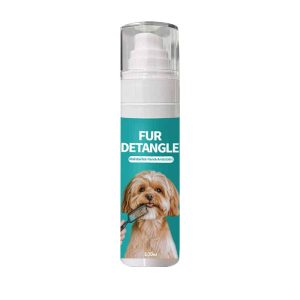
Pro Tip: Before brushing long or dry coats, lightly misting a pet detangling spray prevents static, softens knots, and protects hair shafts from snapping.
Steel Comb / Finishing Comb: Use as a final pass to detect hidden tangles behind ears and leg feathers.
Short Hair (e.g., Labradors, Beagles, Pugs):
Rubber Curry Comb: Use in firm, circular motions to loosen short, needle-like dead hairs.
Bristle Brush: Distributes natural skin oils across the coat for a polished shine.
Pro Tip: Wipe down short-haired dogs after brushing with hypoallergenic pet wipes to quickly catch remaining loose dander and surface fur.
Bathing opens up skin pores and relaxes hair follicles, making it one of the most effective ways to release stubborn undercoat.
The Golden Rule — Brush BEFORE You Bathe: Always thoroughly brush out dead fur prior to wetting the coat. Water tightens mats and makes dense undercoat virtually impossible to comb through.
Select a Specialized Formula: Use a dedicated dog shedding shampoo formulated with an Oatmeal Dog Shampoo base and Aloe Vera. These ingredients hydrate dry skin, soothe irritation, and soften hair roots to encourage dead hair release.
Lather and Dwell Time: Massage the shampoo deep into the coat down to the skin. Allow it to sit for 5 to 10 minutes to penetrate dense fur layers.
Rinse Thoroughly: Residual shampoo dries out skin barriers and causes severe itching and scratching, which accelerates pathological hair loss. Rinse until the water runs completely clear.
The ultimate secret weapon of professional pet groomers is the High-Velocity Force Dryer / Blow Dryer.
Mechanics: Unlike traditional human hair dryers that rely on heat, a high-velocity force dryer uses powerful concentrated air streams to physically blast loose, damp undercoat away from the skin.
Efficiency: It releases dense pockets of shedding fur in minutes that would otherwise require hours of manual brushing.
Safety Notice: Always use warm or cool air settings—never high heat—to protect delicate canine skin from thermal burns.
Once the coat is 100% dry, perform a final pass with your slicker brush or undercoat rake to sweep away remaining loose strands loosened by the force dryer.
Peak Shedding Season (Spring/Fall): Brush 3 to 4 times per week to manage heavy coat blow.
Off-Season Maintenance: Brush 1 to 2 times per week to keep hair follicles healthy and minimize year-round shed.
Professional Alliance Protocols:
This grooming protocol aligns strictly with safety, sanitation, and coat management standards set by the Professional Pet Groomers & Stylists Alliance (PPGSA) and the National Dog Groomers Association of America (NDGAA).
Fear Free Low-Stress Handling:
Following Fear Free Pets (Fear Free Groomer) guidelines, desensitize dogs to high-velocity dryers using positive reinforcement, short initial sessions, and ear protection to reduce anxiety, keeping skin and emotional health intact.