
“What does housebroken mean for a dog?” is a question many first-time dog owners search for. When I brought Leo—my puppy—home, the concept of house-training was unfamiliar to me, and even a little intimidating! Could I train my puppy properly? How long would it take me to teach him to go to the bathroom in the right spot? I couldn’t help but wonder, but luckily, I found the answer!
So, what does housebroken mean for a dog?
What Is housebroken?
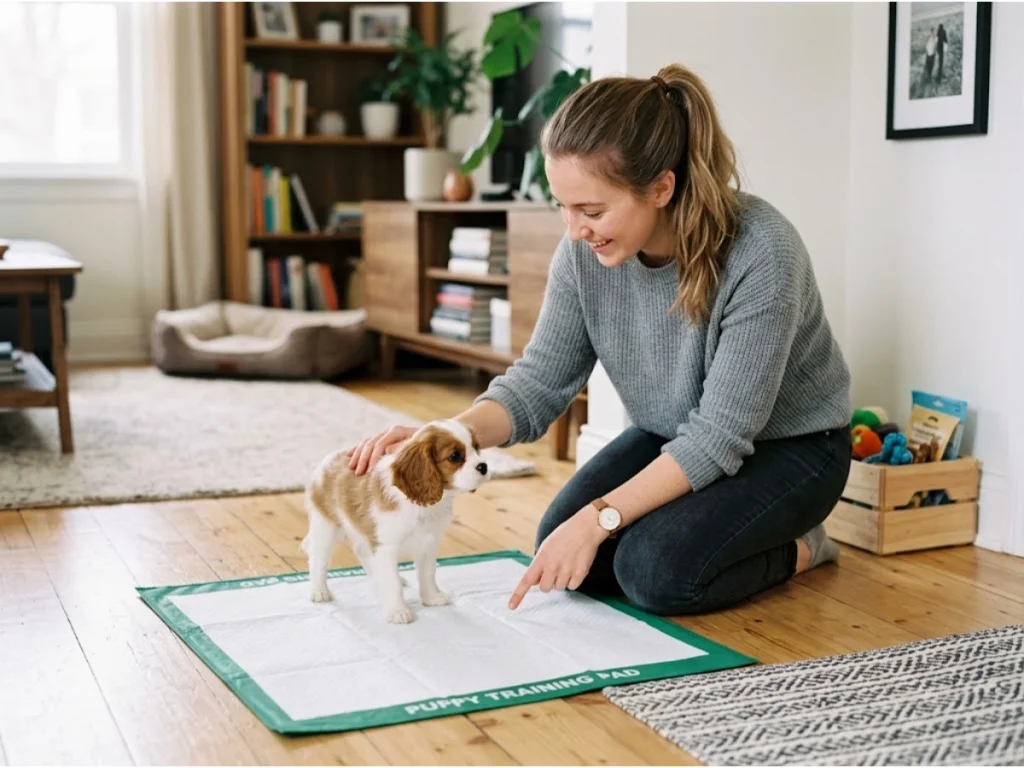
Simply put, “housebroken” means that a dog has learned not to relieve itself indoors and knows how to signal its owner when it needs to go, so it can use a designated outdoor or indoor area instead of going anywhere in the house.
When I first started training Leo, I thought that if I took him outside a few times, he would naturally understand that “the bathroom is outside.” Later, I realized that it wasn’t that the dog didn’t understand—it was that I needed to repeatedly make it clear “when to go, where to go, and what happens after success.”
What does housebroken mean for a dog?
A new puppy naturally doesn’t know the rules of its new home. Many owners think this is simply about not peeing on the carpet or in various corners of the house, but for a dog, it’s a comprehensive process involving bladder control, behavioral habits, and building trust.
For puppies, this is both a learning process and a developmental one. The Merck Veterinary Manual notes that puppies don’t begin to develop the ability to voluntarily control their elimination until around 8.5 weeks of age; therefore, training cannot rely solely on the idea that “they’ll learn it after just one lesson.” It also requires frequently taking them to the correct spot, continuous supervision, timely rewards, and environmental management.
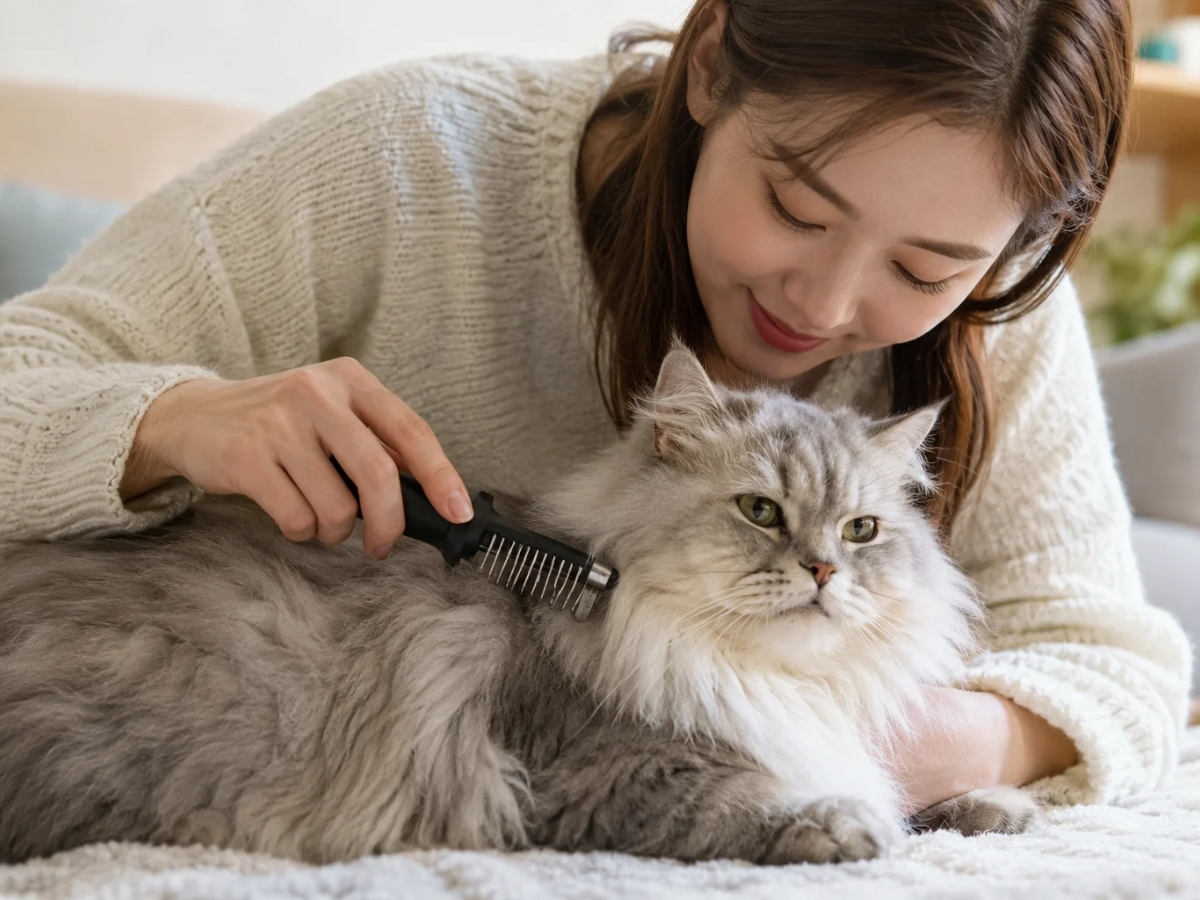
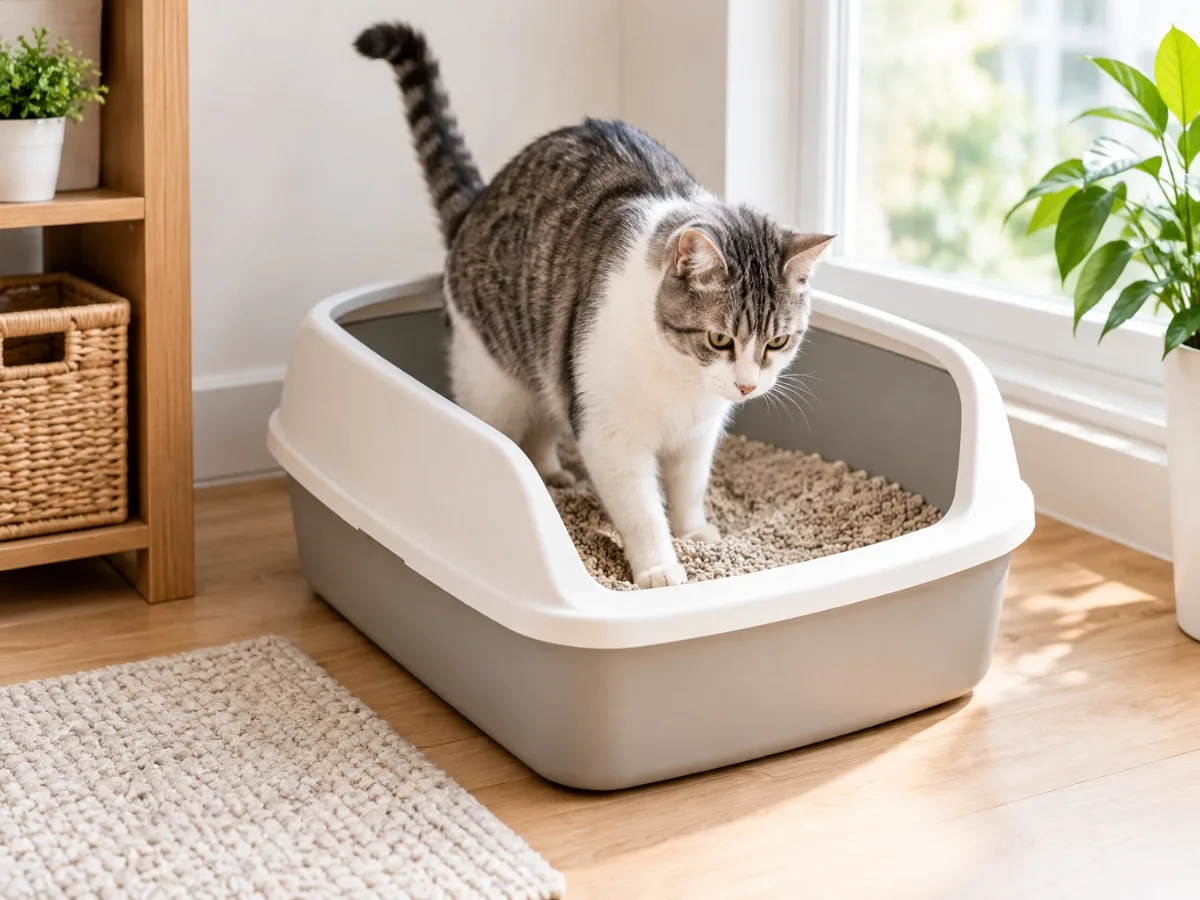
When it comes to teaching dogs to relieve themselves in a designated spot, cat owners may wonder why cats typically use a litter box instinctively—a behavior driven by their instinct to bury their waste—while dogs, as territorial animals, require guidance to properly distinguish between play areas and bathroom areas.
Is your dog housebroken?
Often, you can’t judge based on just one or two successful attempts—those might just be flukes. It’s more important to see if this has become a habitual behavior or a consistent pattern!
When Leo first came home, my daily routine consisted of following him around with pet wipes, deodorizing spray, and a mop to clean up indoor accidents. This is also a good opportunity to remind new pet owners of the essentials they need to prepare before starting housebroken!
Below is a self-assessment checklist to determine if your dog has learned to go to the bathroom in a designated spot. Please use it as a reference:
- Your dog knows where the correct spot is and will relieve itself in that specific location
- Shows recognizable cues before needing to relieve themselves, such as sniffing the floor, circling, standing by the door, scratching at the door, or pacing back and forth
- Accepts a new designated spot when in a new environment
- Can go for extended periods without relieving themselves indoors, barring exceptional circumstances
- Maintains good bathroom habits even without strong prompts
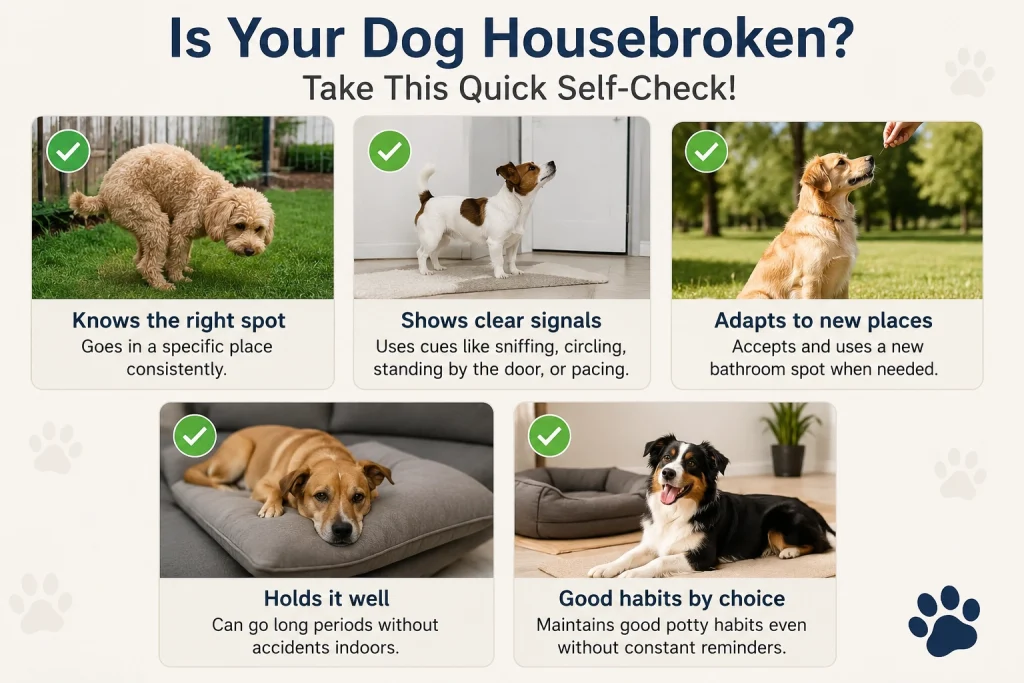
Later, Leo’s most obvious cue was walking over to the doorway and then turning back to look at me. Or he’d pace back and forth anxiously—and that’s when I realized I’d succeeded!
Which dog breeds are harder to housebreak?
However, it’s important to note that no dog is inherently incapable of learning to relieve itself in a designated spot.
Based on the combined experience of numerous dog trainers and pet owners, the following breeds are considered more challenging to train in this regard:
- Chihuahua
- Dachshund
- Bichon Frise
- Maltese
- Shih Tzu
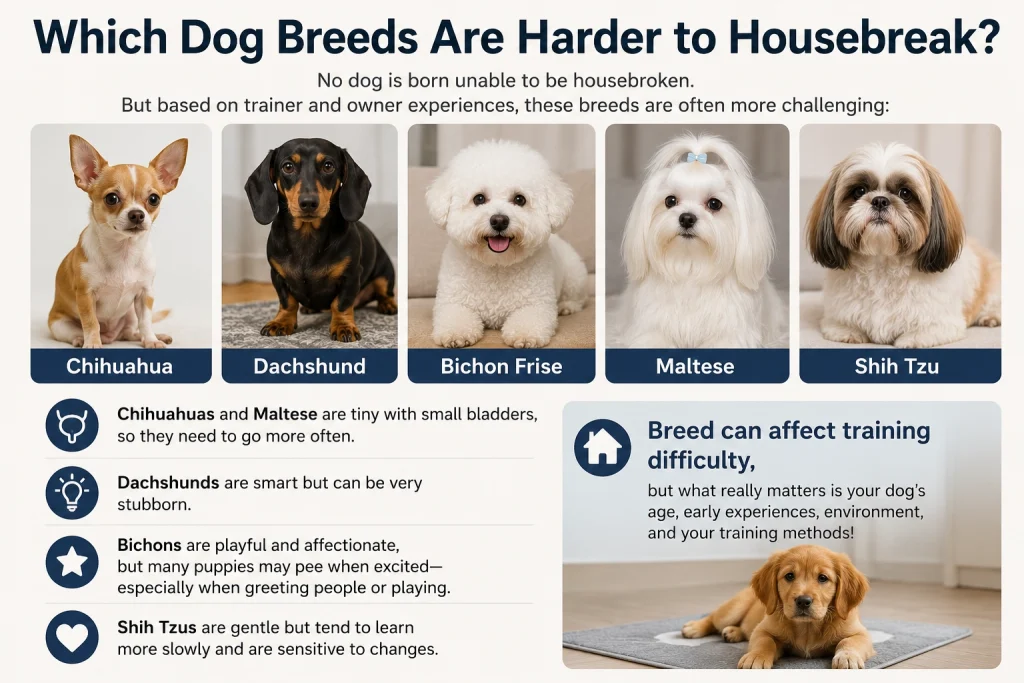
Chihuahuas and Maltese are small in size and have limited bladder capacity, so they typically urinate more frequently than larger dogs. Dachshunds are intelligent but can be quite headstrong. Bichon Frisés are lively and affectionate, but many owners report that as puppies, they tend to urinate suddenly out of excitement—especially when they see their owners, guests, or while playing.
Shih Tzus have a gentle temperament but tend to learn at a slower pace and are quite sensitive to changes in their environment.
While breed does indeed affect the difficulty of training, the true determinants of training success are the dog’s age, upbringing, living environment, and the owner’s training methods!
A comparison chart of housebroken methods for different age dogs
Puppies’ bladders take time to develop, and adult dogs and rescue dogs have completely different psychological states.
Here is a comparison table of housebroken methods from different perspectives:
| Comparison Dimension | Puppy (2-6 months) | Adult Dog (1-7 years) | Senior Dog (7+ years) |
| Physiological Characteristics | Bladder muscles not fully developed; poor holding capacity. | Physically mature; strong bladder control. | Potential physical decline; joint discomfort. |
| Training Focus | High-frequency guidance + Establishing a routine. | Resetting old habits + Positive reinforcement. | Lowering difficulty + Being tolerant and patient. |
| How to Handle Indoor Accidents | Never yell; clean up calmly and use an enzymatic deodorizing spray to eliminate scent markings. | Interrupt and guide to the correct spot if caught in the act; don’t punish after the fact. | Be understanding; check for physical discomfort or stress from an unfamiliar environment. |
| Cleaning & Grooming Tips | After elimination, use pet wipes to clean paws and belly to maintain hygiene. | After going on grass outdoors, use glove wipes and waterless-foam for cleaning to avoid tracking dirt all over the house. | Place ample potty pads indoors; use a pet paw cleaner for easy cleaning. |
For example, before Leo was 4 months old, he basically “couldn’t hold it in when he needed to go.” It wasn’t until he was around 6 months old, with consistent training, that his house-training habits truly became established.
From a management perspective, the VCA recommends gradually increasing a puppy or new dog’s freedom of movement within the home only after 8–12 consecutive weeks without indoor accidents; veterinary behavioral articles also consider at least 8 consecutive weeks without indoor elimination to be a key milestone for gradually reducing supervision.
Will a seven-day housebroken program succeed?
My experience tells me it won’t, but you will see very significant progress to a large extent. Seven days is better suited for establishing a preliminary routine; it does not mean the dog has fully mastered it.
However, within seven days, we can figure out certain patterns regarding our puppy:
- Identify its elimination habits and bathroom cues
- Establish a fixed route for going outside, which increases the success rate of using the designated outdoor spot
- Teach the dog that eliminating in the designated area makes it easier to earn a reward
- Clean up quickly after indoor accidents to prevent lingering odors that might cause the dog to choose the same spot again
After your dog relieves itself in the designated spot, you should reward it immediately—ideally with verbal praise and a small treat near the spot, rather than waiting until you get home. The VCA also recommends giving rewards outdoors, near the elimination area; the AVSAB suggests promptly reinforcing every correct response during the early stages of learning a new behavior.
FAQs:
1. How long can a dog hold its urine?
Bladder function develops differently at various ages, so the amount of time a dog can hold its urine varies. However, it is not recommended to let your dog hold its urine for long periods, as this can be harmful to the kidneys and bladder.
2. How can I quickly clean up after my dog relieves itself on a rainy day?
Keep pet-safe no-rinse foam and pet wipes or wet wipes for gloves by the front door. Before entering the house, use a wet wipe to remove large clumps of mud and sand. Then, squeeze out some no-rinse foam and rub it into the fur on their paws and lower abdomen, and finally dry them off with a dry towel.
3. Is it necessary to reward a dog immediately during housebroken?
Yes, immediate rewards are essential, and verbal praise is also recommended. This helps the dog establish positive associations with the designated potty spot, which significantly increases the success rate of housebroken.
-
Sale!

Soft pet skincare wipes that are antibacterial and eliminate odors, suitable for cleaning ears/paws/underbody areas, relieving itching and discomfort
Original price was: $4.29.$2.99Current price is: $2.99. Add to cart -
Sale!

Single-Use Pet Grooming Glove Wipes – Paw Fur & amp Body Clean
Original price was: $8.98.$4.49Current price is: $4.49. Add to cart -
Sale!

Pet Dental Finger Wipes – Teeth Cleaning for Dogs amp Cats
Original price was: $6.68.$3.34Current price is: $3.34. Add to cart