
“How long does it take to clean a dog’s teeth?” It’s one of the most common questions pup parents ask before booking that vet appointment. If you’re feeling a bit anxious about dropping your furry family member off for the day, don’t worry—you’re not alone.
In this guide, we’ll break down exactly what happens behind the clinic doors, how long a dental cleaning for dogs typically takes, and everything you need to know to keep your pup safe, happy, and pearly-white.
How long does a vet take to clean a dog’s teeth?
If your dog’s oral health is in good condition and the procedure is merely a routine preventive cleaning, it typically takes only 30 to 60 minutes. This process usually includes:
- Ultrasonic Scaling: Removing tartar that has accumulated on the tooth surfaces and deep beneath the gum line.
- Polishing: Smoothing out microscopic abrasions left by the scaling process to make the tooth surfaces smoother, thereby preventing bacteria from rapidly re-adhering.
What influences the duration of the cleaning?
Ultimately, how long a dog teeth cleaning takes depends on two major factors: how much tartar has built up over time, and whether there are any underlying issues hidden under the surface.
How long does dog teeth cleaning take with anesthesia?
From the induction of anesthesia to recovery, a standard procedure typically keeps a dog under anesthesia for 1 to 2 hours.
Pre-Anesthesia Preparation (Approx. 30 minutes)
The veterinarian administers sedatives intravenously and performs intubation to ensure proper respiration; this critical 30-minute period is essential for guaranteeing the safety of the surgical procedure.
Monitoring and Comprehensive Procedures (Approx. 45 to 90 minutes)
Typically, a comprehensive dental cleaning performed under general anesthesia involves more than just scaling; it also includes the following procedures:
- Full Oral Examination:A tooth-by-tooth inspection to check for looseness or the presence of periodontal pockets.
- Dental X-rays:Much like dental X-rays for humans, this allows for the detection of lesions located beneath the gumline that are invisible to the naked eye.
How long do tooth extractions take?
- Simple Extractions: If a baby tooth is stubborn or a permanent tooth is already loose, the vet can usually pop it out in just a few minutes.
- Complex Extractions: For multi-rooted teeth like molars, things get trickier. The vet will need to carefully cut into the gums and section the tooth to extract each root individually. A single complex extraction can easily add 20 to 40 minutes to the procedure.
Pro Tip for Pet Parents: On the day of the cleaning, keep your phone close by! Even if you aren’t waiting in the clinic, the veterinary team will need to reach you immediately to get your green light before pulling any teeth.
Therefore, on the day your dog undergoes a comprehensive oral examination, even if you are not present on-site, it is essential that you remain readily contactable so that we may consult with you regarding whether to proceed with any necessary extractions should the need arise.
Precautions for the Day of Your Dental Cleaning for dogs
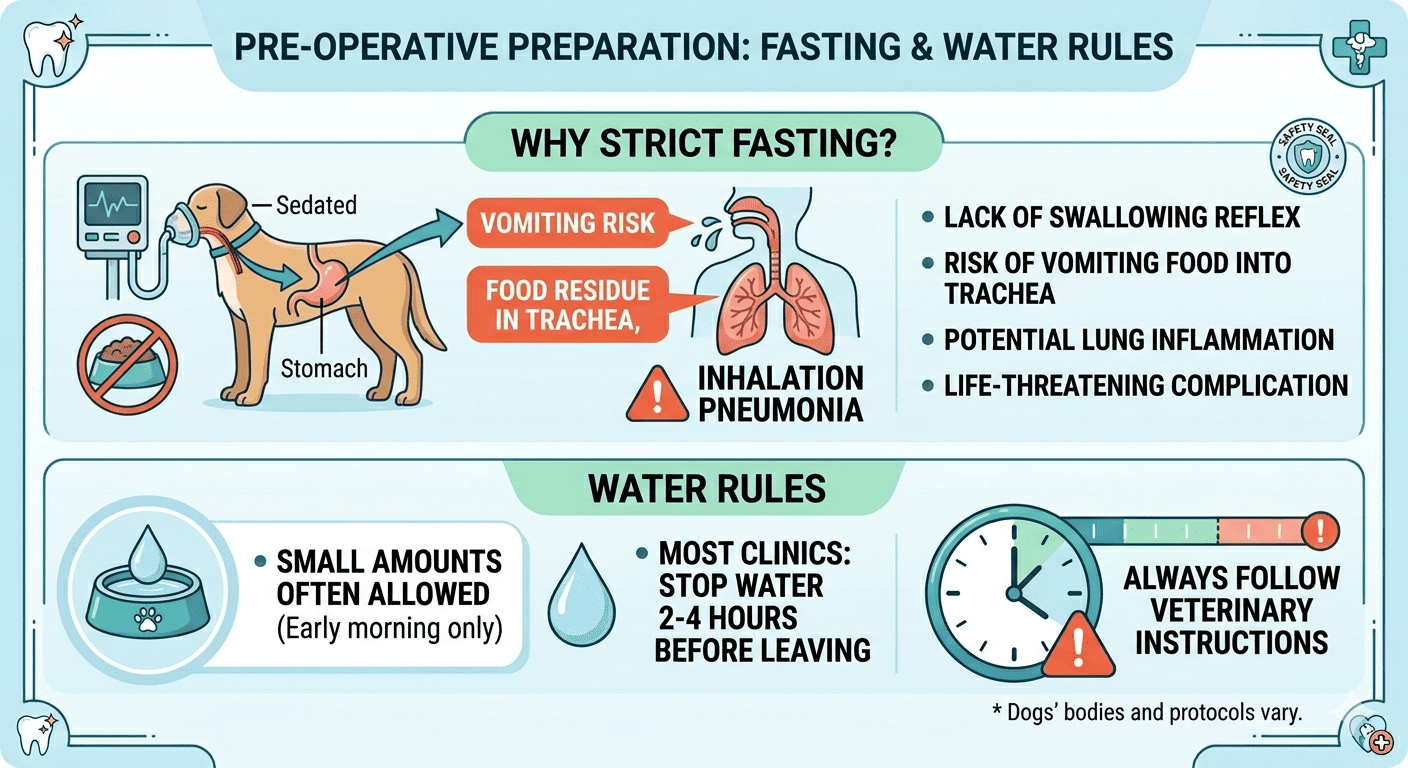
Can dogs eat the morning of teeth cleaning?
If preliminary examinations indicate that a professional surgical dental cleaning is required, most veterinarians strictly mandate that the dog fast for 8 to 12 hours prior to the procedure.
Why Strict Fasting Is Required
This strict fasting protocol is necessary because, under anesthesia, a dog’s swallowing reflex is temporarily suppressed. During the anesthetic process, the dog may vomit; if food particles enter the trachea, it can lead to extremely dangerous aspiration pneumonia—a condition that, in severe cases, can be life-threatening.
Guidelines Regarding Water Intake
Generally, allowing a small amount of water on the morning of the procedure is permissible; however, most clinics recommend withholding water for the final 2 to 4 hours before leaving for the appointment. It is crucial to strictly adhere to the specific instructions provided by your veterinarian, as each dog’s physical constitution and anesthetic protocol may vary.
The Risks of Dental Cleaning
How many dogs die from teeth cleaning?
Many pup parents worry that dental cleaning procedures carry a risk of death; however, the truth is that the mortality risk associated with the cleaning itself is extremely low. The real culprit is actually the failure to adhere to proper, standardized protocols during the procedure.
Anesthesia Mortality Rate: According to data from modern veterinary medicine, for healthy pets, the probability of death resulting from anesthesia is merely 0.05% to 0.1%.
Standardized Protocols: In the vast majority of fatal cases, the root cause lies not in the anesthesia or the surgery itself, but rather in the failure to undergo proper pre-operative screening; consequently, underlying medical conditions emerge as the culprits.
- Pre-operative Blood Tests: Blood tests serve to assess whether the liver and kidneys can effectively metabolize anesthetic agents, as well as to detect the presence of infections, anemia, or other medical conditions.
- Real-time Monitoring: Throughout the surgical procedure, a dedicated specialist utilizes specialized equipment to continuously monitor the dog’s ECG, blood pressure, blood oxygen saturation, and respiratory rate. Should any vital signs deviate from normal parameters, the veterinarian will immediately adjust the anesthetic dosage or implement other appropriate interventions.
What breed of dog has the most dental problems?
Different dog breeds naturally possess distinct oral conditions; breeds that are more prone to developing oral health issues require extra attention regarding their dental care and examinations.
Small-Breed Dogs
Representative Breeds: Poodles (including “Teddy” types), Yorkshire Terriers, Chihuahuas, Pomeranians
Reason: Although their body size has diminished, the number of teeth (42 permanent teeth) and their actual size have not scaled down proportionally. This results in extreme overcrowding within their confined oral cavities, creating countless “hiding spots” for food debris and making them highly susceptible to tartar buildup.
Brachycephalic Dogs
Representative Breeds: Pug, French Bulldog, Shih Tzu
Reason: Their shortened facial structure often results in jaw deformities and misaligned teeth (malocclusion), thereby compromising normal chewing and self-cleaning functions.
If your dog belongs to one of the breeds mentioned above, you need to pay extra attention to its dental health. It is essential to establish good habits regarding teeth brushing and daily care from an early age; furthermore, if circumstances permit, you should take your dog to a professional facility for an oral examination twice a year.
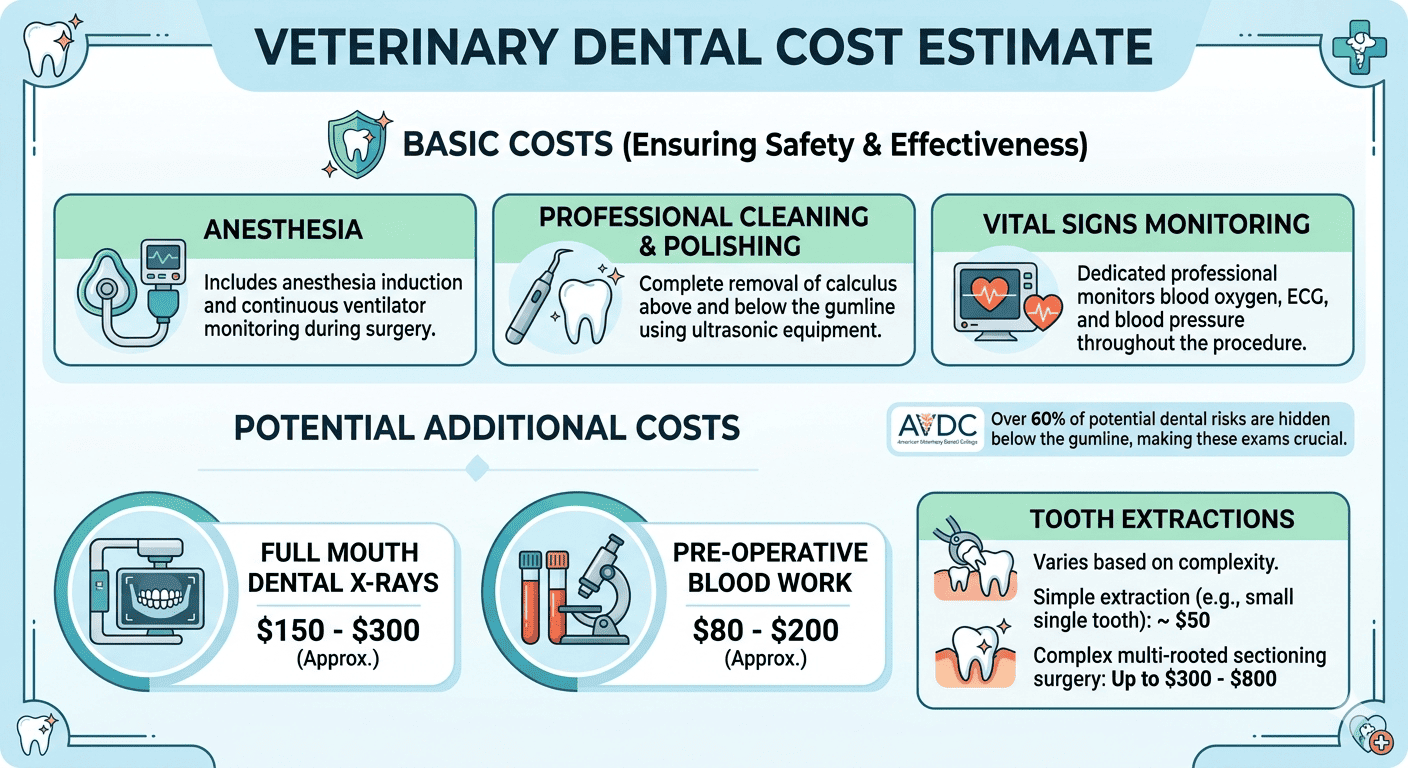
Dog teeth cleaning cost
According to comprehensive statistics from AAHA and PetMD for 2025–2026, the average cost of a complete, standard dental cleaning in North America is between $350 and $700.
Disclaimer: The information in this article is for educational purposes only and does not substitute for professional veterinary advice, diagnosis, or treatment. Always consult a licensed veterinarian (DVM) regarding your pet’s specific medical condition and anesthesia risks.
FAQ:
Q1:Where can I find dog teeth cleaning near me?
Professional dental cleaning for dogs requires general anesthesia to facilitate deep cleaning beneath the gumline and to allow for dental X-rays. When selecting a clinic, two key factors should be prioritized: the availability of a dedicated dental X-ray machine and the presence of a designated staff member to monitor anesthesia. The procedure typically entails a full day of hospitalization to ensure both a thorough pre-operative assessment and a safe post-operative recovery.
Q2:Do dogs feel better after a teeth cleaning?
Absolutely. Although dogs cannot speak, the improvements following a dental cleaning are often transformative.
1. Elimination of chronic pain
2. A “return to youth” phenomenon
3. Improved overall health
Q3:How long does it take for a dog to recover from teeth cleaning?
While most dogs recover from anesthesia within a few hours on the day of the procedure, full recovery depends on the treatment’s complexity. A standard day of hospitalization is typical for monitoring. If extractions are performed, specific post-operative care may be required to ensure proper healing.
-
Sale!

50 Pcs Pet Ear Cleaning Finger Wipes for Dogs and Cats
Original price was: $5.19.$4.99Current price is: $4.99. Add to cart -
Sale!

disposable Universal multi-purpose pet cleaning wipes body fur care
Original price was: $6.28.$3.14Current price is: $3.14. Add to cart -
Sale!

disposable Finger-shaped dental cleaning wipes for pets fresh breath
Original price was: $6.68.$3.34Current price is: $3.34. Add to cart