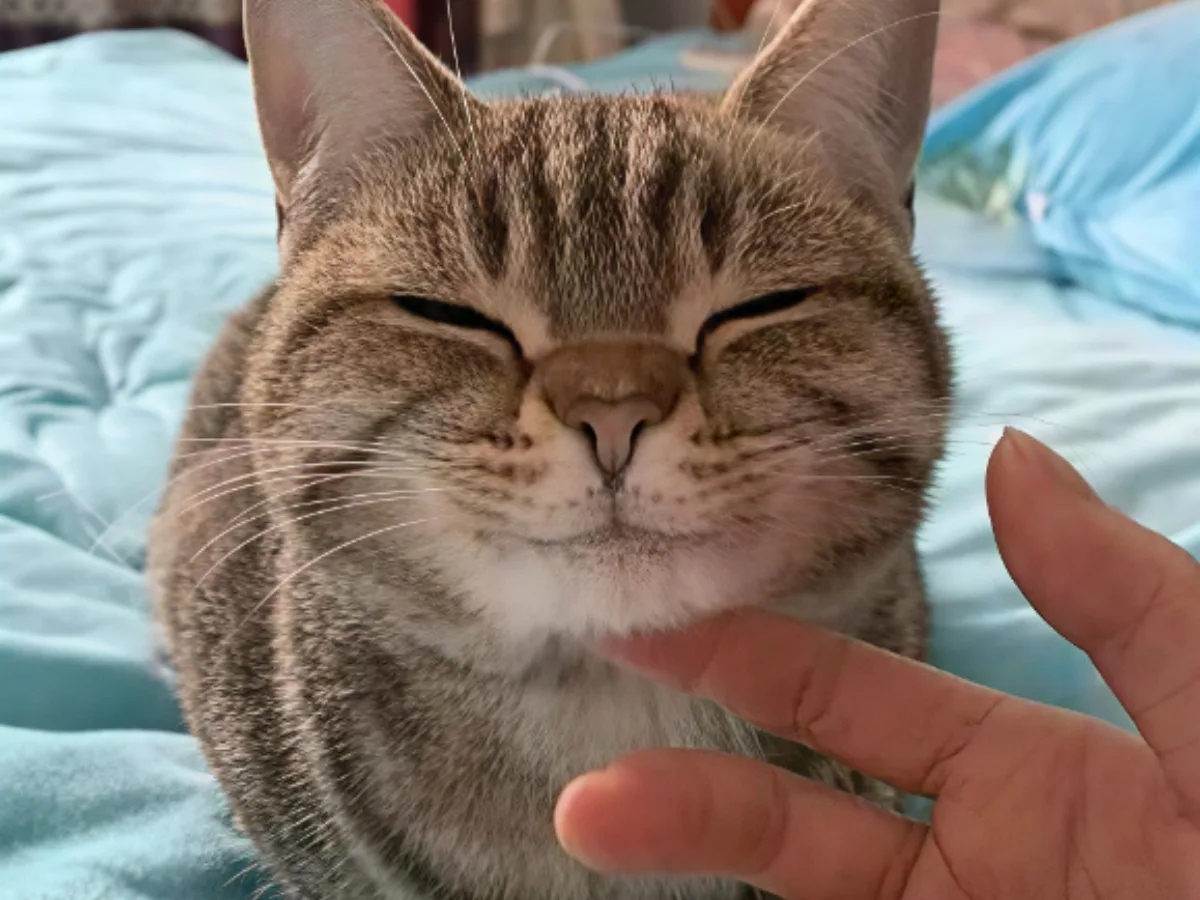

The first time I noticed that my cat, Fiona, could independently rotate both ears to track sounds behind her while maintaining eye contact with me, it felt almost like a superpower. Those seemingly small and delicate cat ears conceal a physiological structure far more complex than one might imagine—and they also harbor health risks that owners often overlook. By understanding cat ears, you can gain insight into your cat’s auditory world and emotional expressions and better protect the health of this crucial sense.
What do you know about the interesting stories of cat ears?
Understanding the Structure and Function of Cat Ears: How Do Cats Hear the World?
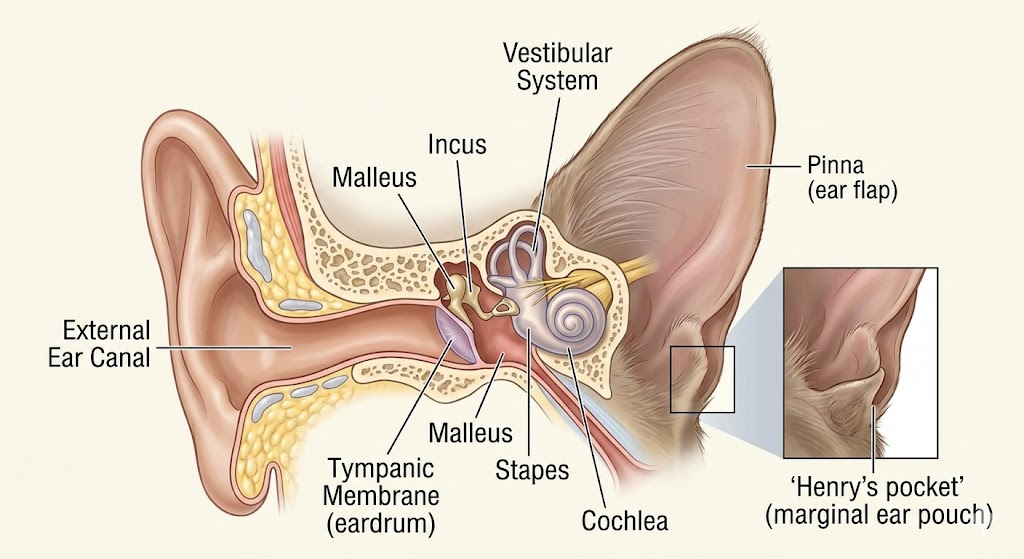
The Merck Veterinary Manual notes that a cat’s ear consists of the outer, middle, and inner ear, serving functions related to both hearing and balance. Cats can perceive higher-frequency sounds than humans, making them exceptionally sensitive to subtle environmental movements. However, the long, curved shape of the ear canal makes it prone to the accumulation of earwax, secretions, and inflammation, which can complicate cleaning and hinder the absorption of medication.
I used to think cleaning a cat’s ears was just a routine grooming task—until the day I took a really close look. What I saw wasn’t just “dirty” but a complex structure: a curved ear canal, pale pink inner walls, and a system far more intricate than I had imagined. That moment completely changed my perspective on cat ear care. Since then, I have dedicated myself to learning about the structure of cats’ ears, their hearing capabilities, and proper ear care.
Outer Ear (Pinna and Ear Canal)—Sound collection
Pinna: The visible, triangular flap of the outer ear that collects sound. Composed of cartilage covered by very thin skin, it can rotate up to 180 degrees using 32 muscles, with each ear capable of moving independently.
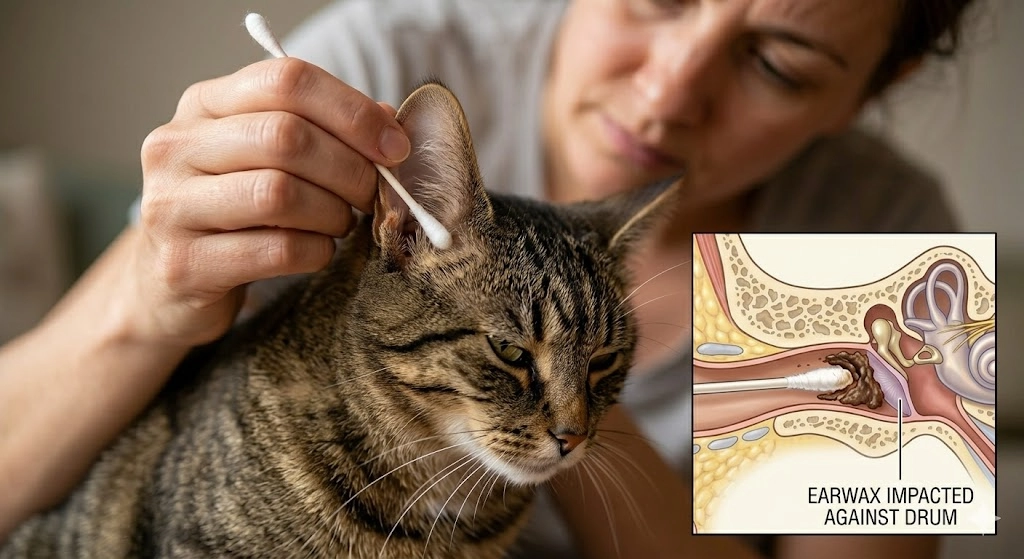
Ear Canal: Cats have an L-shaped ear canal. While this structure protects deeper tissues, it also facilitates the buildup of earwax, secretions, and inflammation, making cleaning more difficult. Washington State University’s College of Veterinary Medicine advises against inserting cleaning tools deep into the ear canal, as doing so could damage the eardrum.
The Middle and Inner Ear—Sound processing and balance
Middle Ear: Composed of the eardrum, three tiny auditory ossicles, the tympanic cavity, and the Eustachian tube. When sound waves travel through the ear canal and strike the eardrum, they cause it to vibrate; the three tiny ossicles work together to amplify these vibrations, transmitting the sound signal to the inner ear without loss.
Inner Ear: Located deep within the ear, the inner ear comprises two core components: the cochlea and the vestibular system (responsible for balance). Meanwhile, the balance system—formed by the semicircular canals and the vestibule—is the secret behind a cat’s remarkable agility. A cat’s ears are not only responsible for hearing sounds but also serve as the control center for its sense of balance.
The Amazing “Henry’s Pocket”
While petting Fiona, I noticed a small fold along the lower edge of her pinna—this is the amazing “Henry’s Pocket.” Henry’s Pocket (also known as the cutaneous marginal pouch) is a small fold of skin located on the outer, lower edge of the ear; it is a normal anatomical feature of a cat’s ear.
Although its exact function has not been fully determined, scientists believe it may play a role in sound localization, help increase ear flexibility, and serve as a vestigial structure from the cat’s evolutionary past.
However, it is also a favorite hiding spot for parasites like ticks and fleas, making it a crucial area that must not be overlooked during routine ear checks.
Why is a cat’s hearing far superior to a human’s?
Data from Cornell University’s College of Veterinary Medicine indicates that a cat’s hearing range is significantly broader than a human’s, allowing it to perceive higher-frequency sounds; while specific upper limits vary slightly across sources, it is generally accepted that cats can hear frequencies well into the ultrasonic range—far beyond the capability of the human ear.
I’ve noticed that my cat always detects someone passing outside the door a few seconds before I do, and she can even hear footsteps coming from the far end of the hallway.
The following is a specific comparison chart from different dimensions through humans, dogs, and cats:
| Comparison Dimension | Human | Dog | Cat |
| Hearing Range | 20 Hz – 20 kHz | 15 Hz – 50 kHz | 45 Hz – 64 kHz |
| Ultrasound Perception | Cannot hear ultrasound at all | Can hear up to 50 kHz, but with poor resolution | Can hear up to 64 kHz, capable of detecting mouse ultrasonic vocalizations |
| Outer Ear Structure | Few muscles, unable to rotate ears | 18 muscles, limited range of movement | 32 muscles; each ear can rotate 180° independently |
| Hearing Sensitivity | Sensitive only in the human speech frequency range | More sensitive to low-frequency, faint sounds | Most sensitive to high-frequency, subtle sounds |
Common cat ear diseases
The 2023 AAHA guidelines note that otitis externa (inflammation of the outer ear) is present in 20% of cases involving allergic skin disease in cats. Furthermore, regarding ear mites, existing veterinary reviews indicate an association with a significant proportion of feline otitis externa—reported in the literature to range from 53% to 69%.
Common cat ear diseases include:
- Ear mite infections
- Yeast infections
- Otitis (external, middle, or inner ear infections, including bacterial infections)
- Aural hematomas
- Ruptured eardrums
- Mange (skin disease caused by mites)
- Ear problems caused by allergies
- Solar dermatitis (scaling, papules, and itching caused by sun exposure)
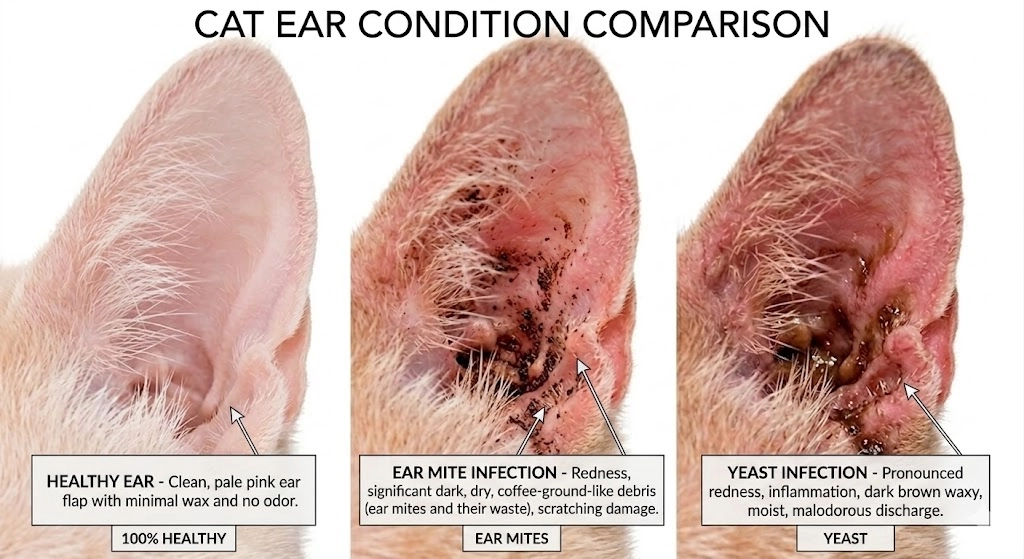
Comparison of healthy cat ears VS unhealthy cat ears
According to clinical descriptions in the Merck Veterinary Manual and AAHA guidelines, healthy cat ears should generally be free of noticeable odor and excessive discharge. Ear discomfort is a common issue in cats; however, many owners struggle to distinguish between a normal ear canal, ear mites, and yeast infections, which can lead to delays in proper care and treatment.
Please note that these conditions can occur concurrently. You can use a reference chart for a preliminary assessment at home, but if abnormalities are detected, seek a veterinary examination as soon as possible. Do not attempt to use human medications; instead, use the ear drops recommended by a veterinarian.
| Comparison Dimension | Healthy Cat Ear | Yeast Infection | Ear Mite Infection |
| Appearance / Color | Light pink with even skin tone | Noticeably red and swollen, may appear dark red or deep reddish-brown | Red and swollen, may have bleeding or scabbing due to scratching |
| Discharge / Debris | Almost no visible discharge, only a tiny amount of transparent or light yellow thin wax | Dark brown, reddish-brown, or black moist waxy material, often sticky in texture | Dry dark brown or blackish crumbly debris, resembling coffee grounds |
| Odor | No odor, or only a very faint, non-offensive natural scent | Strong, pronounced sweetish-musty or sour/yeasty odor | Mild odor, less noticeable than yeast infection |
| Ear Canal Skin | Smooth, dry, with no significant scaling or crusting | Thickened, rough skin, possibly with scaling or crusts | May have scratch marks, abrasions, or in severe cases, crusting |
| Typical Symptoms | No abnormal behavior; cat is calm, does not scratch ears | Frequent head shaking, scratching ears with hind paws, ear sensitive and painful to touch | Intense itching, frequent head shaking, hair loss around the ears, visible scratches on the outer ear flap |
| Contagiousness | None | Not contagious | Highly contagious |
Should I clean my cat’s ears?
Generally speaking, the ears of healthy cats do not require cleaning.
Excessive manual cleaning can actually disrupt the ear canal’s natural balance. Cat owners often use cotton swabs to clean out even the slightest amount of wax. Swabs not only damage the delicate microbial barrier within the ear canal but also force wax—which is naturally moving outward—back deep into the horizontal section of the L-shaped canal. This can lead to a blockage near the eardrum, easily triggering severe otitis externa (outer ear infection).
The epithelial cells in a healthy cat’s ear canal possess a unique “self-cleaning” function. Small amounts of natural ear oils trap dust and metabolic debris; when the cat shakes its head or scratches the ear flap, some of this dirt is expelled, maintaining a basic level of cleanliness.
I recall a time I nearly made a mistake by over-cleaning healthy cat ears. I saw a tiny bit of earwax and assumed the ear was dirty. My veterinarian later explained that this was normal and that my actions actually risked irritating the ear canal. Most of the time, the best care is simply not to clean them unnecessarily.
Veterinarians generally recommend cleaning a healthy cat’s ear canals once a week. For cats prone to allergies, check the ears every 3–4 days; for cats with a history of ear disease, strictly follow your veterinarian’s instructions.
How to make ear wash for cats at home? This will tell you the answer.
How to clean cat ears properly?
Proper cat ear cleaning not only removes earwax and debris but also reduces the risk of ear mites, yeast infections, and bacterial infections. However, note that a cat’s ear canal is L-shaped; you must avoid inserting the cleaning tool too deeply to prevent injury.
Here are the steps for cleaning a cat’s ears properly:
1. Preparation: Gather a veterinarian-approved cat ear drop, cotton balls or gauze, pet wipes and treats; have a second person assist if necessary.
2. Calm the cat: Soothe your cat to help them relax. Wrapping the cat in a towel can provide a sense of security and minimize struggling.
3. Apply the cat ear cleaning solution (vet-approved): Gently lift the ear flap upward and backward to straighten the ear canal, then squeeze the appropriate amount of veterinarian-recommended cleaner into the canal. Avoid touching the ear with the bottle tip to prevent contamination.
4.Massage the base of the ear: Gently massage the base of the ear for about 30 seconds, then allow your cat to shake its head freely.
5. Wipe the ears: Use a cotton ball, pet wipes or gauze to gently wipe away debris and excess cleaner from the outer ear flap and the opening of the ear canal.
6.Offer a reward: Give your cat treats and praise; this helps create positive associations, making future cleanings easier.
Veterinary Disclaimer
This content is for general pet care and education purposes only and cannot replace professional veterinary diagnosis, treatment, or personalized advice. If your cat’s ears are severely bleeding or have an unusual odor, or if the cat frequently scratches its ears, please consult a veterinarian promptly.
FAQs:
Q1: Can cats hear you when you speak to them?
Yes, absolutely. They can hear perfectly well and can even distinguish between their owner’s voice and a stranger’s; ignoring you is simply “cat-style aloofness.” They are selective. They likely hear our voices, but their brains may filter out low-frequency idle chatter to focus on sounds that are more relevant to them.
Q2: Can I use hydrogen peroxide to clean a cat’s ears?
No. Hydrogen peroxide irritates a cat’s delicate ear canals, and any residual liquid left in the L-shaped canal can foster bacterial and yeast growth. Always use a veterinarian-approved cat ear cleaner.
Q3: Should I clean the inside of the cat’s ear?
Healthy cats generally do not require frequent ear cleaning; if you notice a significant buildup of earwax, an unusual odor, or signs of discomfort, you should consult a veterinarian promptly rather than frequently cleaning the ears yourself.
-
Sale!

Gentle Neutral pH Round Pet Eye Wipes Tear Stain Removal
Original price was: $5.98.$2.99Current price is: $2.99. Add to cart -
Sale!

Foaming dog body cleaner with a silicone brush for pet paws no rinsing
Original price was: $8.98.$4.49Current price is: $4.49. Add to cart -
Sale!
Pet Deodorizing Spray 60ml – Portable Pocket Odor Remove
Original price was: $4.19.$3.99Current price is: $3.99. Add to cart