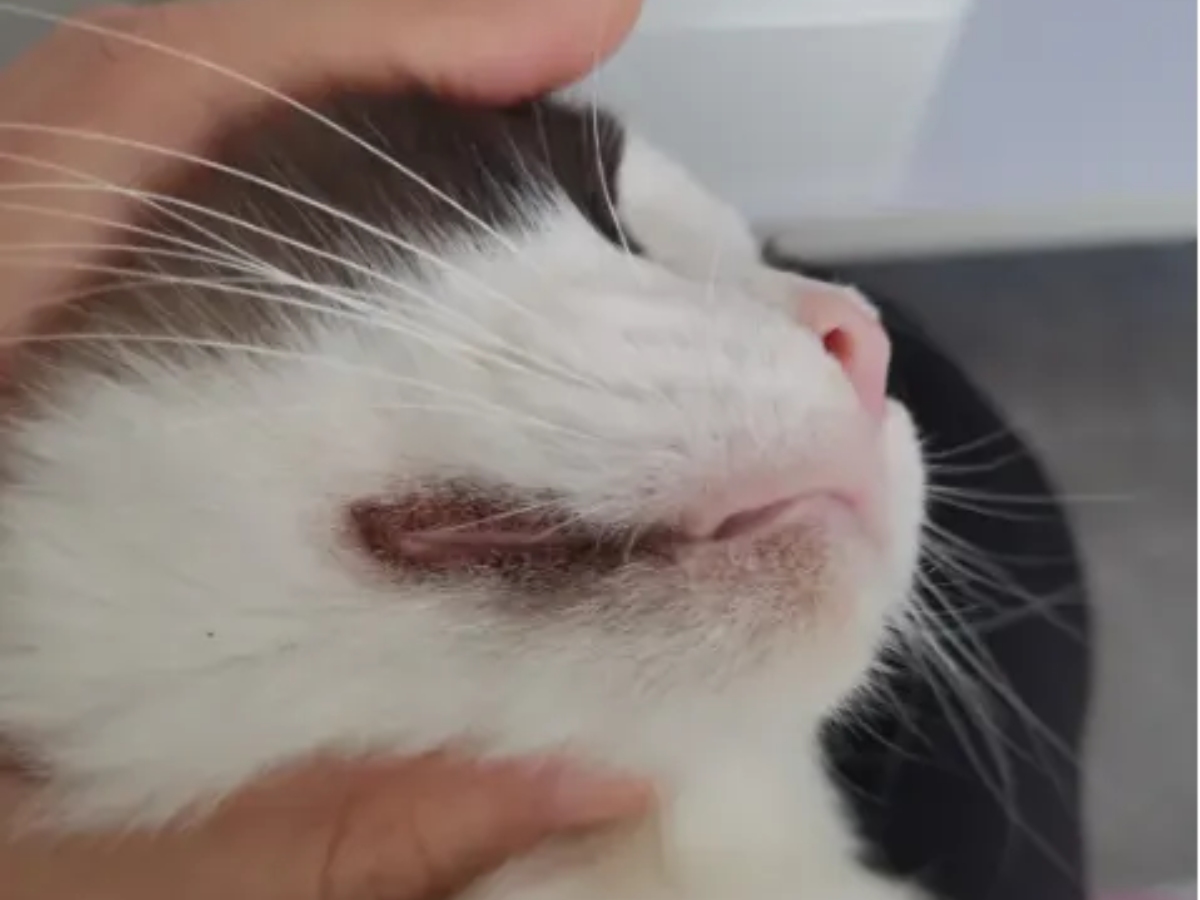

Many cat owners panic when they notice black or brown buildup inside their cat’s ears and immediately think it must be ear mites. However, ear wax color alone cannot tell the whole story.
As cat parents, today let’s help fellow cat owners quickly tell if their cat’s ears are healthy using the cat ear wax color chart, along with wax texture and accompanying symptoms.
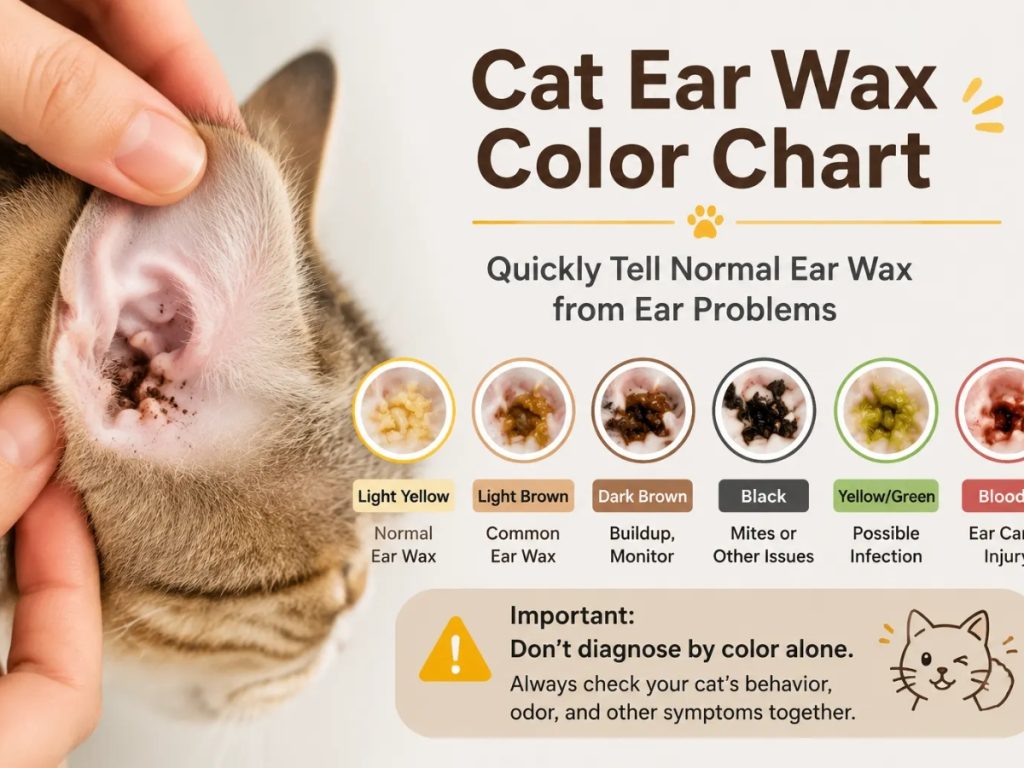
Table of Contents
1. What Does Normal Cat Ear Wax Look Like?
What color is normal cat ear wax?
Healthy cat ear wax is usually:
Light yellow
Light brown
Pale tan
Texture: Normal ear wax usually has a mild and natural texture:
Not overly hard or sticky
Does not feel rough or greasy when touched
May appear as dry flakes or small soft pieces
Smell:
Healthy cat ears usually have little to no noticeable odor.
A mild oily smell, similar to normal skin secretions, can be normal.
However, a strong smell such as:
Sour odor
Fishy smell
Rotten smell
may indicate an ear problem that needs attention.
2. Cat Ear Wax Color Chart: What Do Black, Yellow, and Brown Ear Wax Mean?
Is black ear wax in cats always caused by ear mites?
No. Black ear wax does not always mean your cat has ear mites. There are several possible reasons why your cat may have dark ear debris:
① Normal ear wax buildup
Cats naturally produce oil and wax inside their ears, which forms normal ear wax.
Healthy ear wax is usually light yellow or light brown. However, when it builds up over time without cleaning, it may become darker and look like black debris.
② Yeast or fungal infection
A fungal infection can also cause dark, dirt-like material inside the ear. In these cases, cats may also show:
Ear odor
Frequent scratching
Head shaking
Redness or irritation
③ Allergies or irritation
Some cats are sensitive to:
Certain foods
Pollen
Dust
Harsh cleaning products
These irritants may trigger inflammation in the ear canal, leading to increased discharge that looks like dark ear dirt.
What color of cat ear wax is considered unhealthy?
Black, dark brown, yellow-green, or bloody ear discharge may indicate an ear problem.
Here are some common differences:
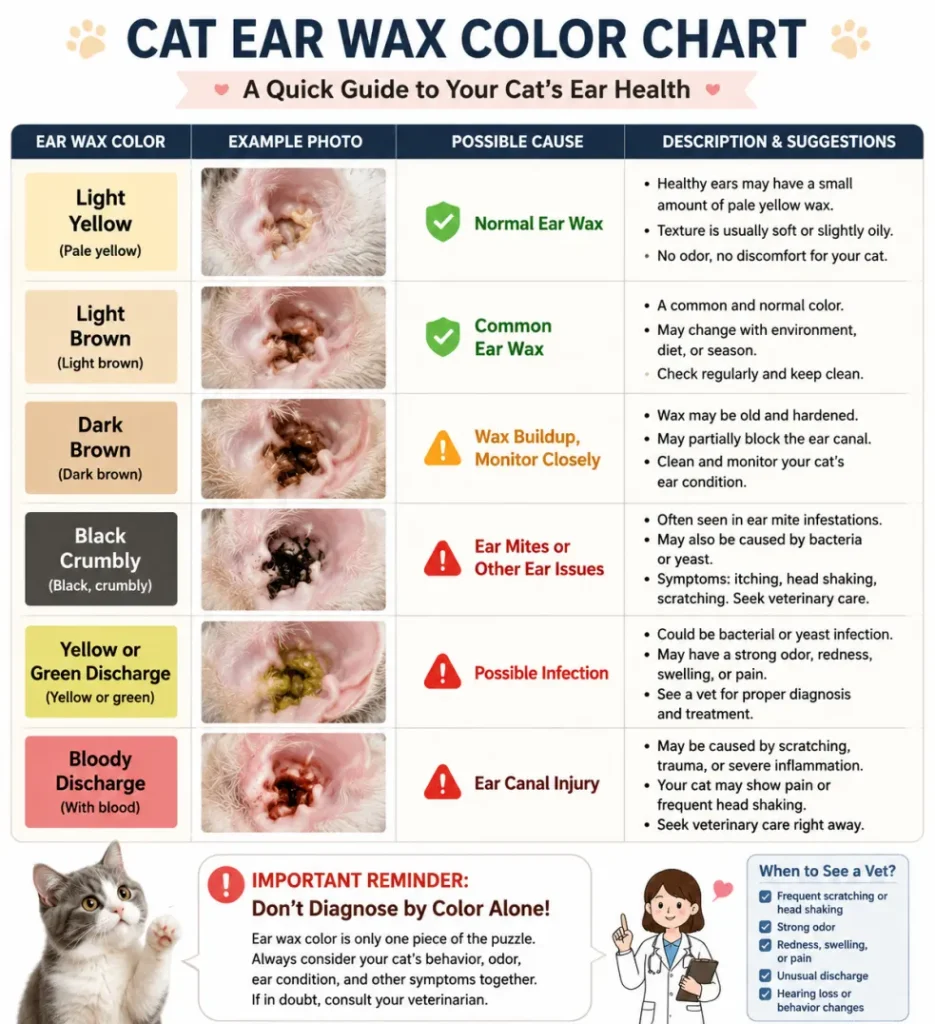
Important: Do not diagnose a disease based only on ear wax color. Always consider your cat’s behavior and other symptoms.
How much ear wax is too much for a cat?
The amount of ear wax is not the only thing that matters. You should pay attention if:
● Black or brown debris returns quickly after cleaning
● Ear wax has a strong unpleasant smell
● Discharge looks oily, thick, or coffee-ground-like
● Your cat frequently scratches ears or shakes their head
● The ears become red, swollen, or painful
● Your cat loses balance or seems to have hearing problems
If these signs appear, it is better to have your cat checked by a veterinarian.
3. Cat Ear Wax vs Ear Mites: How Are They Different?
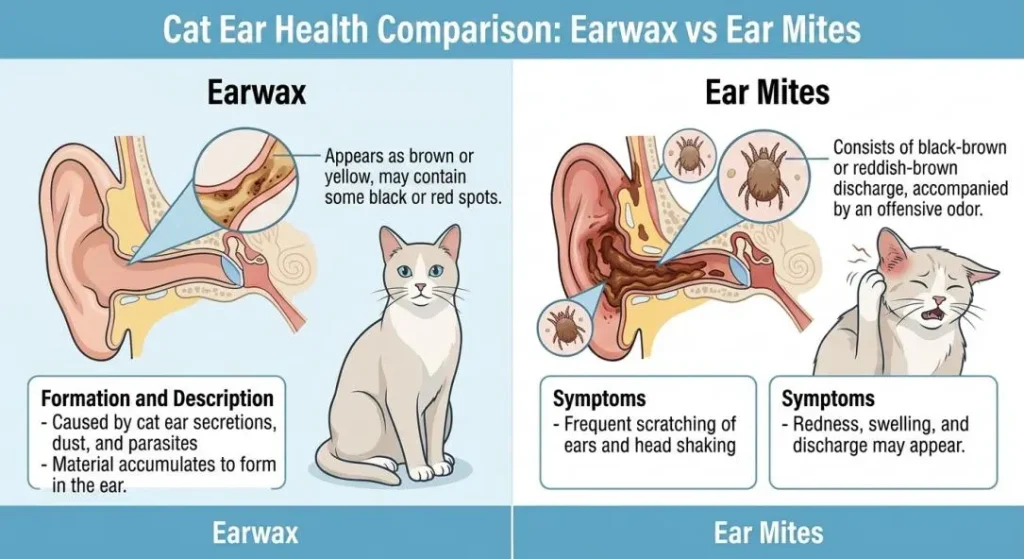
How can you tell the difference between cat ear wax and ear mites?
Normal ear wax:
Usually light brown or yellow, may contain small amounts of dust or debris, does not usually cause intense itching, no strong odor.
Ear mites:
Ear mites often cause:dark brown or black crumb-like discharge, coffee-ground-like debris, strong itching, frequent ear scratching, head shaking, redness or swelling, possible discharge or inflammation.
Ear mites are parasites that irritate the ear canal and cause cats to produce more debris.
Should I clean the black stuff out of my cat’s ears?
Yes, but clean carefully. Friends of Animals Pet Dermatology Clinic emphasizes that one should assess the symptoms before deciding whether to clean a cat’s ears, as the black material could stem from ear mites, fungi, bacteria, or simply earwax; the underlying cause is what truly requires treatment, rather than just wiping away the black debris.
Black debris inside your cat’s ears could be:
Ear wax
Dust
Dead skin cells
Ear mites
Leaving buildup for a long time may increase the risk of irritation or ear infections.
However, avoid digging deep into the ear canal. Use cat-safe ear cleaning products and gently clean only the visible outer ear area.
4. How to Safely Remove Cat Ear Wax
If your cat only has mild ear wax buildup and no signs of infection, you can try gentle cleaning at home.
① Check the ear first
Move the hair around your cat’s ear so you can clearly see the inside. Look for:
Color of the discharge
Amount of buildup
Redness or swelling
Unusual smell
② Use a cat-safe ear cleaner
Apply a few drops of pet ear cleaner into the ear canal according to the product instructions.
Then:
Gently cover the ear with your hand
Massage the base of the ear slowly
Allow your cat to shake out loosened debris
③ Wipe away softened wax
Wrap a pre-moistened pet ear cleaning wipe around your index finger and softly sweep away loose wax and dirt from the inner flap (pinna).
Important Safety Note: Never insert Q-tips or cotton swabs deep into your cat’s ear canal! Swabs can accidentally puncture the delicate eardrum or push ear wax deeper inside, causing impacted blockages. Textured ear wipes provide a safer, controlled way to wipe away surface debris while keeping your finger at a safe depth.
5. FAQ: Common Questions About Cat Ear Wax
How often should I clean my cat’s ears?
Healthy cats usually do not need frequent ear cleaning. If your cat has:
No excessive ear wax
No odor
No redness
No itching
you can simply check the ears every 2–4 weeks and clean only when needed.
In my own cat care routine, I prefer checking the ear condition first instead of cleaning on a fixed daily schedule. Over-cleaning can disturb the natural environment inside the ear and may cause unnecessary irritation.
Does darker cat ear wax always mean something is wrong?
Not necessarily.
Normal cat ear wax is usually light yellow or light brown, but it can become darker as it accumulates over time.
However, you should be more careful if dark ear wax appears with:
Coffee-ground-like black debris
Frequent scratching or head shaking
Strong ear odor
Red or swollen ear canals
Large amounts of oily discharge
These signs may suggest ear mites, infection, or another ear problem.
Can I tell if my cat has ear mites at home?
You can make a preliminary judgment based on symptoms, but you cannot confirm ear mites with your eyes alone. Possible signs include:
Constant ear scratching
Frequent head shaking
Dark black discharge
Bad odor
Rapid return of debris after cleaning
If symptoms continue, a veterinarian can examine the ear canal or perform a microscopic test to confirm the cause and choose the right treatment.
Medical & Care Disclaimer: This guide is for educational and informational purposes only and does not replace professional veterinary advice. Always consult a licensed veterinarian for proper diagnosis if you notice symptoms like swelling, foul odor, balance issues, or severe discharge.
-
Sale!

Premium Pet Glove Wipes – Hypoallergenic Aloe for All Animals
Original price was: $3.29.$1.99Current price is: $1.99. Add to cart -
Sale!

Fragrant shampoo for dogs and cats with dry skin featuring a foaming stain remover
Original price was: $7.29.$6.29Current price is: $6.29. Add to cart -
Sale!

Foaming dog body cleaner with a silicone brush for pet paws no rinsing
Original price was: $8.98.$4.49Current price is: $4.49. Add to cart