
Raising a dog is like raising your own child, and it needs to be cared for. Many pet stores and pet hospitals provide scaling services, and pet owners are also paying more and more attention to their pets’ oral hygiene. Is it reliable to clean a dog’s teeth without anesthesia? Today, we will take you to understand the difference between non-anesthetic and anesthetic dental cleaning, as well as provide some tips for cleaning your dog’s teeth at home.
The American College of Veterinary Medicine also gives professional answers about dental cleaning for non-anesthetic pets. Non-anesthetic dental cleaning allows your dog to gradually remove tartar through professional scaling tools and medical instruments without the use of anesthetics, that is, in a waking state.
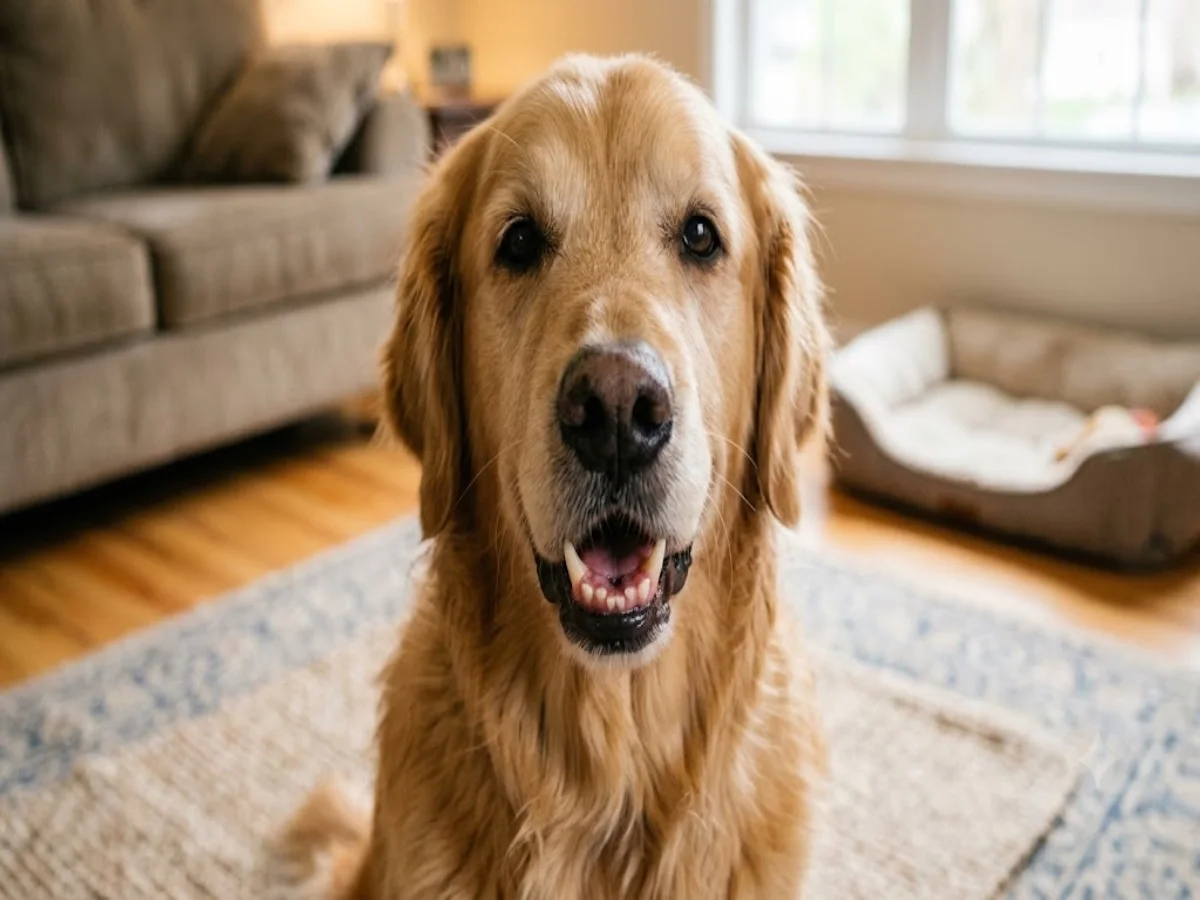
Have you noticed that your dog’s teeth are a little wrong recently? Yellow surface or even some puffiness? This may be the cause of tartar, which can gradually grow larger if not cleaned up in time, leading to tooth inflammation, pain, etc.
♥ Note: If your dog is older or has more severe tartar, it may require multiple cleanings to remove completely.
Professionals will first calm the dog’s emotions, do a good job of Baoding fixation, choose different postures for different dog breeds, keep it comfortable and quiet, and do not let the dog move around and get hurt. Then use a professional ultrasonic scaler and a manual scraper to gently clean the tartar and tartar on the surface of the teeth and the outside of the teeth gap, little by little.
The whole process only cleans the outer surface stones of the teeth visible to the naked eye, without penetrating deep under the gums, without surgery or X-rays.
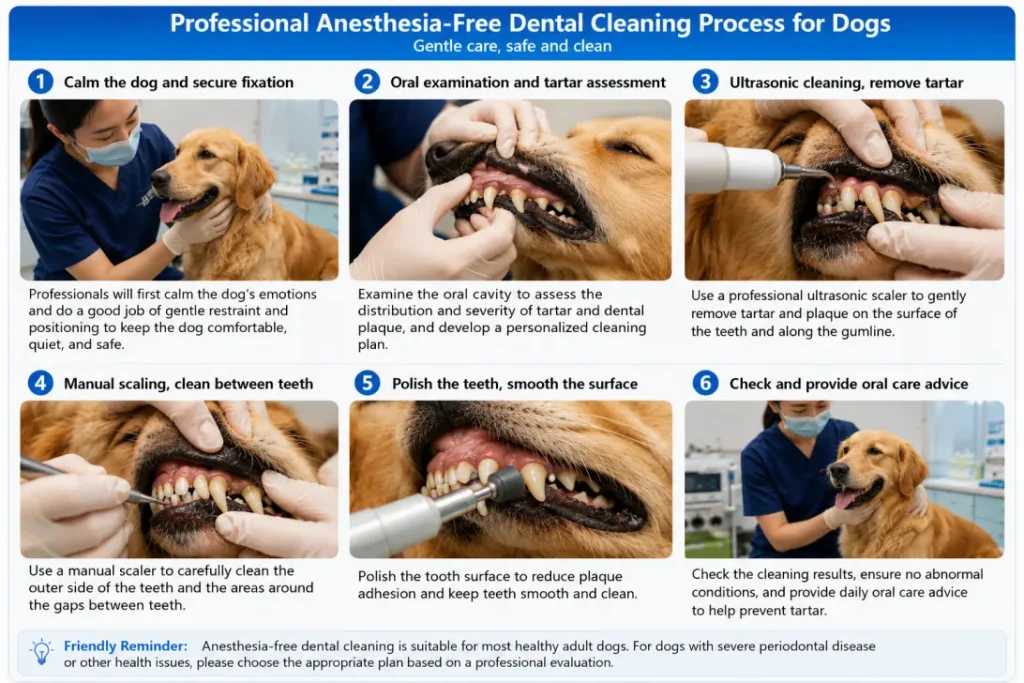
Anesthesia-free dog dental cleaning process steps.
✨ Salt and vinegar water plus mouthwash:
Let your dog drink mouthwash for about a week to soften the tartar. Pour the dog into the drinking bowl at a ratio of 1:50, then dip a cotton swab in salt and vinegar water and gently rub it against the edge of the dog’s teeth in a ratio of 1:1:17, and you can see that the tartar is gradually rubbed off. This process takes a certain amount of time and patience, and it is worth the effort to see your dog’s teeth gradually return to white.
✨ Baking soda combined with toothwashing water to clean:
After mixing baking soda and water and stirring well, use a gauze dipped in the mixture to wipe the surface of the dog’s teeth, and use it with a toothbrush for places with tartar, and the effect of daily insistence will be more obvious.
✨ Daily care:
Brush your dog’s teeth regularly, soak the brush head in hot water before brushing, and choose a soft brush head for pets to prevent bleeding gums. When you usually accompany your dog, give your dog teeth, teeth and cow knees, and other teething toys to help prevent the formation of tartar.
Cleaning a dog’s teeth without anesthesia is the state of the dog’s being awake throughout the whole process, without injections or anesthetics, and the whole process is stabilized and fixed by Baoding, and the dog obediently cooperates with cleaning. General anesthesia teeth cleaning is when the dog falls asleep under general anesthesia, completely unconscious, and is left to the doctor.
Dental cleaning for dogs without anesthesia:
• Pros:
The price is lower, there is no need to be hospitalized, and you can take it home immediately after finishing
There is no risk of an anesthetic
Suitable for dogs who are old, have a bad heart, have a weak constitution, and are intolerant to anesthetics
• Cons:
It can only clean the surface, and it is difficult to completely remove plaque and tartar
Unable to perform detailed dental examinations and X-rays, it is easy to ignore dental problems, and cause missed diagnoses and misdiagnoses
Dogs will feel pain and can easily injure themselves and the operator during the operation
Dental cleaning requires polishing, which is best done under anesthesia. Without polishing, the loss of enamel from dental cleaning can make plaque more likely to build up
Anesthetized dog teeth cleaning:
• Pros:
It can be thoroughly cleaned with a full mouth, penetrate deep under the gums, clean up hidden stones, take X-rays to check the roots, and do complete periodontal treatment
It is suitable for dogs with thick tartar, severe bad breath, and inflamed gums that require in-depth treatment
• Cons:
The cost is higher, requires preoperative physical examination and postoperative observation, and the process is more complicated
There is a risk of anesthesia allergy and cardiopulmonary burden, and dogs with advanced age and underlying diseases must undergo physical examination and evaluation before doing it
Summary: No matter what kind of dental cleaning method it is, you need to take good care of it after cleaning your teeth and observing the dog’s oral condition.
Pet owners do not have professional tools and techniques, and it is not recommended to scrape off tartar on their dogs. You can try to clean your dog’s tartar if:
The dog has a docile and cooperative personality, does not move or resist
Tartar is relatively mild, with only a little light yellow tartar on the surface of the teeth
There are special scrapers for pets, or soft-tipped scaling tools
There is no redness, swelling, or bleeding in the gums; only the surface of the teeth is cleaned
① Dietary adjustments help reduce tartar in dogs:
☀ Feed your dog less soft and slimy food, and control the amount of canned and wet food you feed every day. This kind of food easily sticks to the gaps between the teeth and the surface of the teeth, and over time it slowly accumulates, turning into tartar and tartar that is difficult to clean.
☀ When the dog chews, it is equivalent to having its own physical teeth-grinding cleaning, which can rub off part of the tooth-surface residue.
Prepare raw carrots and other high-fiber fruits and vegetables for your dog, and let them gnaw on half of them every day. If your dog doesn’t like carrots, you can also replace them with apples or cabbage stalks, which are a little hard but not too hard.

② Daily oral care:
In addition to brushing your dog’s teeth, there are also these tips: the residue and plaque that cannot be brushed in the gaps between the teeth can be gently cleaned with pet-specific dental floss and interdental brushes
Get into the habit of regularly looking at your dog’s mouth and doing a simple oral health check. Once you find obvious stones in the teeth, red, swollen, and inflamed gums, take them to the pet hospital as soon as possible to prevent small problems from dragging into serious oral diseases.
Comparison of dog teeth cleaning methods:
| Type | Price Range | Best For | What It Actually Does | Notes & Cost Drivers |
| Anesthesia-Free Cleaning | $180–$400 | Dogs with mild dental issues, well-behaved, for routine maintenance only | Removes only visible plaque and tartar on the tooth surface | Cannot clean below the gumline, no X-rays available, no extractions possible, only surface-level cleaning |
| Anesthesia-Assisted Cleaning | Starts at $300; severe cases can cost $1,500+ | Dogs with heavy tartar, periodontal disease, or severe gum redness/bad breath | Full-mouth X-rays, subgingival scaling, polishing, comprehensive oral exam, and bad tooth treatment | Additional costs for blood work ($75–$200), anesthesia, and extractions; prices are typically higher in urban areas |
Key Cost Factors:
| Factor | Explanation |
| Dog’s Size / Age | Larger or older dogs usually cost more. |
| Location | Prices at vet clinics in big cities are generally 20–40% higher than in smaller cities. |
| Severity of Condition | Severe tartar buildup requiring extractions or periodontal treatment significantly increases the cost. |
Deep cleaning dog teeth cost reference: Basic: between $500-$800 for general veterinary clinics; Some specialty pet hospitals include X-ray and anesthesia monitoring with an estimated $1,000-$2,000+. Additional fees for tooth extraction: Hundreds to thousands of dollars per piece.
Most of the information on Reddit about dog dental cleaning without anesthesia involves dog owners discussing what needs to be paid attention to without anesthesia and anesthesia, as well as asking for help.
It is not recommended to feed the dog sedatives casually, as poor dosage control can easily damage the liver and kidneys and cause life risks. If the dog resists, find a professional clinic for non-anesthetic, soothing teeth cleaning, and do not use human or prescription drugs privately.
At home, you can develop the habit of brushing your teeth with dental cleaning gloves, wipes, teething sticks, and other dental cleaning snacks for daily maintenance.
Try to use coconut oil, seaweed powder, etc. to soften lighter tartar, relieve bad breath, and freshen breath, and cannot be dissolved in serious cases such as tartar.