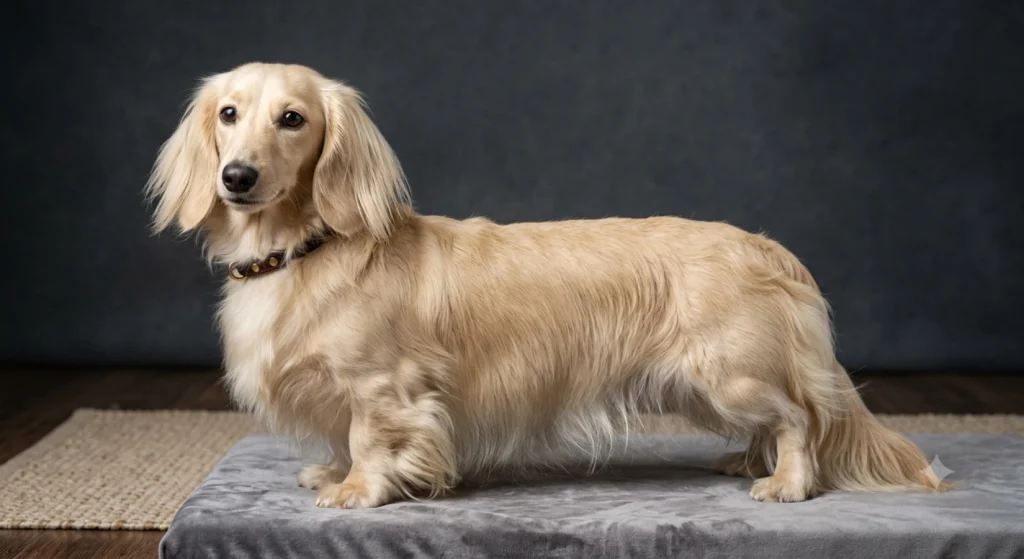
A true English Cream Dachshund refers to a specific lineage of miniature or standard dachshunds with British ancestry, featuring a pale gold or clear cream coat, and typically a longhaired coat type. With their exquisite appearance and remarkably gentle temperament, they have become one of the most popular dog breeds in the American pet market in recent years.
As a pet parent with years of experience, I am well aware of the chaos and misconceptions surrounding “true vs. fake cream” in the breeding market. Combining authoritative AKC standards with my own hands-on experience, this article will take you on a deep dive into the genetic mysteries and scientific coat care protocols for this unique breed.
Quick Overview
Genetics: True English Creams possess the Chinchilla gene, guaranteeing a stable coat with a solid black nose and nails.
Temperament: Remarkably mellow, affectionate, and calm—completely shattering the “stubborn” hound stereotype.
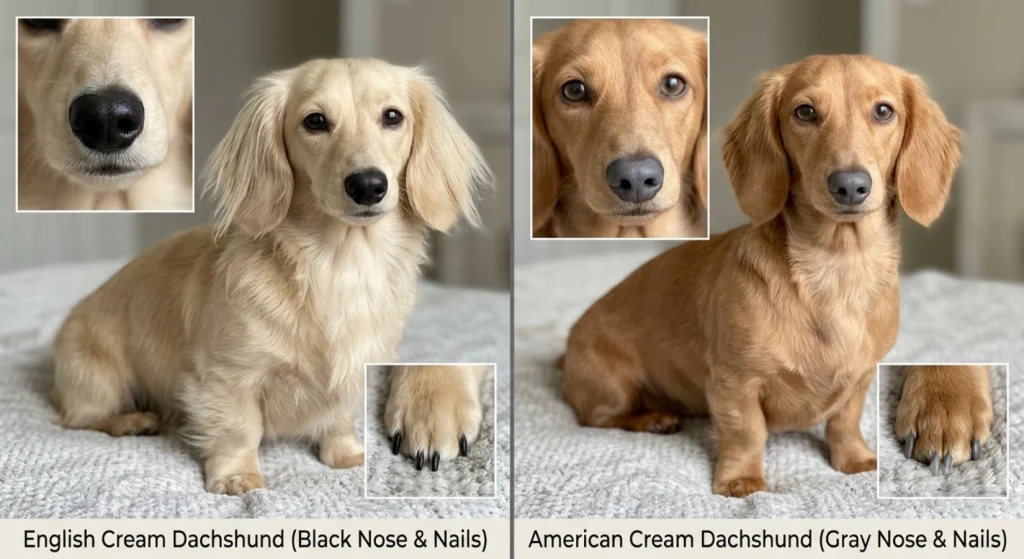
True English Cream Dachshund vs. “American Cream” (Diluted Red)
In the dachshund breeding world, “cream” is a highly alluring yet incredibly confusing term. Many people clump all light yellow, buff, or off-white dachshunds together under the umbrella name of “cream.” However, from the perspective of canine coat color genetics, a “True English Cream” and what is often labeled an “American Cream” (a diluted red) are controlled by entirely different genetic loci.
Core Genetics and Key Differences
To provide a straightforward comparison, the genotypes, birth characteristics, and adult visual transformations of these two coat colors are organized in the table below:
Comparison Dimension
True English Cream
American Diluted Red / “Fake Cream”
Core Controlling Gene
Chinchilla Gene (C)
Blue Dilution Gene (D)
Gene Mechanism
Precisely dilutes red pigment without affecting the black melanin in the coat, nose, and nails.
Indiscriminately washes out all pigments across the body, diluting red, black, and chocolate simultaneously.
Puppy Birth Status
* Shaded Cream: Born looking almost solid black or dark charcoal gray. * Clear Cream: Extremely pale color, close to pure white or a faint cream tint.
Skin and coat color are incredibly pale; born looking almost snowy white without any black pigment overlay.
Adult Coat Transformation
* Shaded Cream: The cream color grows out and spreads from the roots, eventually retaining an elegant dark overlay (Black Shading) on ear tips and tail tips. * Clear Cream: Gradually “colors up,” transforming into a pure, rich golden cream texture.
Continuously “reddens” with age. Because they are genetically red dogs, the red pigment continuously rebounds and concentrates, eventually turning them completely into various shades of red dachshunds.
Key Areas Pigmentation
Pure black. Must possess a solid Black Nose and Black Nails.
Blue-gray or dark gray. The nose, nails, and any coat overlay appear blue or gray.
Blogger’s Anti-Scam Tip
Stable and fade-resistant. The genetic expression is stable and the pigmentation is healthy, making them a truly worthwhile Family Member to bring home.
Buying a “fading dog” at a premium. Many unethical breeders exploit novice Pet Parents’ love for snowy white puppies, selling these “faint red dogs” under the name of cream at premium prices, only for them to drastically change color as they grow.
According to the Dachshund Club of America (DCA) and AKC breed standards, a true English Cream Dachshund must have a solid Black Nose and Black Nails. This dark Pigmentation is not only the ultimate litmus test for visual quality, but also a core physiological indicator used to evaluate whether a puppy is free from genetic defects, low immunity, or sub-healthy skin conditions caused by over-dilution.
Mellow Personality: Understanding the English Cream Dachshund Temperament
Often dubbed the “Golden Retriever of the Dachshund world,” the English Cream Dachshund is renowned across the canine community for its sweet, gentle personality. Not only are they elegant in appearance, but their unique temperament makes them exceptional family companions with incredibly low dominance tendencies.
Core Traits of the “English Cream Temperament”
Unlike traditional hound-type dachshunds that are often perceived as “vocal, stubborn, and bursting with excess energy,” true English Creams typically exhibit the following characteristics:
Ultimate Gentleness and Calmness: They are natural “masters of emotional stability.” At home, they rarely exhibit neurotic barking or unprovoked anxiety, preferring to quietly cuddle by their owner’s side.
Velcro Nature: English Creams deeply crave human companionship. They possess an almost needy loyalty to their owners, choosing to stick to your feet or lap like Velcro. They are the perfect family companion pets and therapy dogs.
Highly Friendly to Conspecifics and Strangers: They naturally possess extremely low aggression. When meeting strangers or other dogs, English Creams usually display a curious, docile attitude rather than a guarded, confrontational stance.
Why Are English Cream Dachshunds Mellow?
Inheritance of Longhaired Genes: In the breeding history of Dachshunds, Longhaired Dachshunds were crossbred with Silky Terriers or small longhaired gundogs. This breeding process largely neutralized the intense “terrier attitude” (such as aggression, stubbornness, and excessive barking) found in traditional Smooth or Wirehaired Dachshunds.
Strict Lineage Selection: The true English Cream line (originating from the famous Dennison pedigree in the UK) was initially bred with “gentleness, obedience, and non-aggression” as the core selection criteria alongside their silky light coats. Any dogs with overly sensitive or aggressive temperaments were strictly excluded from breeding programs.
Dilution of Hound Wildness: Early breeding of Longhaired Dachshunds introduced genes from small gundogs like spaniels. In the English Cream branch, this gundog gene of “eagerness to please” was amplified, while the traditional dachshund “stubbornness and wildness” for digging and tracking prey was significantly diluted.
Temperament Differences from “American Cream Dachshunds (Recessive Red)”
The genetics behind coat colors also subtly guide their behavioral tendencies:
True English Cream (Chinchilla Gene): Because their lineage is incredibly pure and strictly managed (bred generation after generation from gentle British longhaired creams), their mellow temperament possesses exceptionally high genetic stability.
“American Cream” (ee Recessive Red): These dogs are essentially genetically recessive red. Their ancestral lineage can be highly mixed, containing various smooth, wirehaired, or traditional American hound lines carrying the ee gene. Consequently, their personality is more like a “mystery box,” often retaining more of the high-strung energy, loud voices, and stubborn streaks of traditional dachshunds.
How to Responsibly Bring an English Cream Dachshund Home
Responsibly bringing a True English Cream Dachshund home involves more than just a financial investment; it requires deep respect for the health and genetics of this specific bloodline. Because the cream color is highly sought after and commands premium prices in the market, unethical breeders (such as backyard breeders or puppy mills) frequently exploit buyers through fraudulent practices or unhealthy pairings.
Here is a complete action guide to ensure you welcome your pup through legitimate, responsible channels:
Finding and Screening Responsible Breeders
A true English Cream breeder prioritizes the health and temperament of the dogs over “quick cash turns.”
1. Find and screen responsible breeders.
Genetic and Health Screening (Core): Reputable breeders must provide screening reports for both parents regarding IVDD (Intervertebral Disc Disease) risks, PRA (Progressive Retinal Atrophy) eye exams, as well as cardiovascular and joint certifications.
Sire and Dam Transparency: Breeders should proactively share the parents’ pedigrees. In a true English Cream pedigree, ancestral lines can usually be traced back to famous British cream bloodlines (such as the renowned Dennison line or certified imported UK lines).
On-site or Video Inspections: Observe the living environment of the puppies and the dam. A healthy breeding environment should be clean and well-socialized. If a breeder refuses to let you see the mother dog or insists on a “hand-off” in a public place like a parking lot, back out of the transaction immediately.
2. Signing a Formal Contract and After-sales Guarantees
A responsible breeder never wants a puppy they bred to end up on the streets:
Health Guarantee Clauses: The contract should include a multi-stage warranty/refund clause against congenital genetic diseases (such as PRA or severe congenital heart disease).
Spay/Neuter and Companion Agreements: The vast majority of legitimate breeders selling pet-only puppies will require buyers to sign a time-limited spay/neuter agreement and will withhold official registration papers (such as AKC or FCI) until the buyer provides proof of alteration.
Lifetime Rehoming Commitment: A top-tier breeder’s contract will invariably state: “If the buyer can no longer care for the dog for any reason, the dog must be returned to the breeder and cannot be surrendered to a shelter or resold independently.”
Purchase Process, Costs, and Contracts
In the United States, the process of buying a purebred English Cream longhaired dachshund with AKC registration and cleared health screenings typically looks like this:
Cost Estimation: Currently in the US, the price of a pet-only English Cream from a reputable, high-quality breeder generally ranges between $2,500 and $4,500. If the price is abnormally low (e.g., a few hundred dollars), it is highly likely a scam or a dog with severe health flaws.
Application Form: Excellent breeders are highly selective about buyers. You will need to fill out a detailed questionnaire explaining your living arrangements (fenced yard, renting status), working hours, and whether there are children or other pets at home.
Waiting Period (Waiting List): Because English Creams have small litter sizes (typically 3–5 puppies) and responsible breeders do not over-breed, you may need to wait 6 months to a year or even longer.
AKC Limited Registration: As a family companion pet, your AKC certificate will be under “Limited” status. This means you must spay or neuter the puppy between 6–12 months of age, and any offspring of this dog cannot be registered with the AKC.
Considering Adoption
If you are not set on buying a puppy, you can also explore responsible adoption:
Follow breed-specific rescue groups (such as the Dachshund Rescue network in the US).
Occasionally, adult English Cream dachshunds desperately need new homes due to unexpected family changes. Adopting them not only grants them a second chance at life but also avoids supporting unethical breeding.
Echoing Mainstream American Pet Culture
In American pet culture, Adopt, Don’t Shop is a core value deeply embraced by society. Bringing a once-homeless dog into your home and celebrating its special Gotcha Day is a badge of pride for countless American pet owners.
Region-Specific Guide
Where to Find One Safely (Region-Specific Guide): If you live on the East Coast, you might frequently search geo-targeted keywords like english cream dachshund virginia or english cream dachshunds for sale near me to find your dream Fur Baby. For these specific regional cross-state or local purchases, breeder compliance remains paramount.
Actionable Advice for Cross-State Transport and Local Searching:
In-State Search: It is recommended to first check the official AKC Breeder Directory to locate highly rated, fully compliant breeders registered within Virginia or your home state.
Compliant Cross-State Transport: If your dream english cream mini dachshund for sale is located in another state, never choose unmonitored cargo shipping. Opt for a reputable Pet Nanny service instead. A professional Pet Nanny accompanies the puppy throughout the journey inside the airplane cabin, providing low-stress comfort and ensuring this precious English Cream pup arrives safely in your arms.
Assessing Your Home Environment and Budget
Although English Cream longhaired dachshunds are small, their unique physiological structure means their care costs are higher than standard breeds.
Financial Budgeting: Beyond initial purchase or adoption fees, you need to budget for pet health insurance. Because dachshunds are highly prone to Intervertebral Disc Disease (IVDD), spinal surgeries and subsequent physical therapy can be extraordinarily expensive.
Time and Companionship Commitment: As mentioned earlier, English Cream longhaired dachshunds are intensely attached to their humans. If your family works full-time outside the home for over 6–8 hours a day and cannot provide doggy daycare or a dog walker, this breed might not be the right fit for you.
Home Modifications: Before your puppy arrives, you must modify your home into a “jump-free environment.” Purchase specialized pet ramps to place alongside sofas and beds, strictly prohibiting them from leaping up and down.
Essential Supplies and Mental Prep Before Puppy Arrives
One week before bringing your puppy home, a responsible owner should prepare the following essentials and establish a family-wide feeding consensus:
Basic Supplies:
Y-shaped Harness: Never use a collar! Collars put dangerous pressure on a dachshund’s delicate cervical and spinal columns.
Playpen and Crate: Used for early crate training and housebreaking. A sense of security is vital for a puppy newly separated from its mother.
Grooming Tools for Long Coats: Pin brushes, steel combs, de-tangling sprays, and mild pet shampoos for bath time.
Mental & Behavioral Alignment:
The entire household must align on verbal commands (e.g., using the exact same words for “sit” or “no”) to prevent puppy confusion.
Prepare yourself mentally for the first few nights when the puppy may whine or bark due to the unfamiliar environment. Use positive reinforcement and comfort rather than punishment.
First Steps After Arriving Home
Schedule a Vet Checkup: Within 24–48 hours of bringing the puppy home, take them to a trusted veterinary clinic for a comprehensive checkup (screening for infectious diseases, parasites, ear canal health, etc.) and plan out their upcoming vaccination schedule.
Navigating the Golden Socialization Window: Before their vaccines are fully completed, you can take them out to see the world in a pet stroller or by holding them in your arms. Exposing them to different sounds, cars, and crowds will perfectly nurture the gentle genetics hardwired into your English Cream Dachshund.
Professional Grooming Strategies for Longhaired Cream Dachshunds
Due to their uniquely delicate, light coat color, professional grooming strategies for Longhaired Cream Dachshunds must pay extra attention to anti-yellowing, stain prevention, and maintaining a weightless texture, on top of standard longhaired dachshund care.
A longhaired dachshund’s coat provides sun protection and insulation; never shave their entire coat down to the skin.
Cream Coat Washing and Care Strategy
Use Anti-Yellowing and Brightening Shampoos: Cream coats easily yellow due to UV rays, sebum oxidation, or dirt. Alternating a mild clarifying shampoo with a specialized brightening shampoo for light/white coats is key; never use harsh bleaching products.
Strictly Avoid Heavy Oil Residue: Overly heavy conditioners or mineral oils will make cream fur appear greasy, split, and rapidly attract dust. Opt for water-soluble, lightweight conditioners and ensure they are thoroughly rinsed out.
Tear Stain and Muzzle Discoloration Prevention: The muzzle and eye corners of light-colored coats easily turn red or yellow. Use a specialized tear-free, hypoallergenic facial wash during baths. In daily life, immediately blot away moisture with a dry tissue after meals or wiping away tears to keep the area dry.
Skin Barrier Protection and Bathing Standards
Following the safety guidelines of the Professional Pet Groomers & Stylists Alliance (PPGSA) and the coat science theories of the National Dog Groomers Association of America (NDGAA), you must never over-clean these allergy-prone, thin-skinned longhaired breeds, as doing so will destroy their incredibly fragile Skin Barrier.
Blogger’s Top Recommendation: To maximize protection for their natural barrier during baths, I highly recommend using Oatmeal shampoo and Hypoallergenic coat care products.
Preventing Common Skin Conditions: Utilizing these gentle, soothing grooming products effectively relieves and prevents sub-healthy skin conditions like Hot spots (acute moist dermatitis), which flare up easily during hot, humid summers.
Referencing the Fear Free Pets expert guidelines, whether performing at-home care or visiting a grooming salon, you should always employ low-stress behavioral handling and emotional soothing when line-brushing, blow-drying, or trimming their signature Black Nails.
Preventing Lifelong Grooming Phobia: This low-stress, scientific approach minimizes your pup’s anxiety, preventing rough handling from instilling a lifelong trauma or fear of Grooming.
Coat Brushing Strategy for Cream Dachshund
The pet grooming world has a widely shared, painful golden rule: “Prevent matting before it requires shaving to the skin.”
Frequently Overlooked Matting Hotspots: Although the long coat of an English Cream Dachshund is as silky and smooth as can be, this exact texture means the areas behind the ears and on the belly are incredibly prone to forming stubborn Matted fur / Matting due to daily friction.
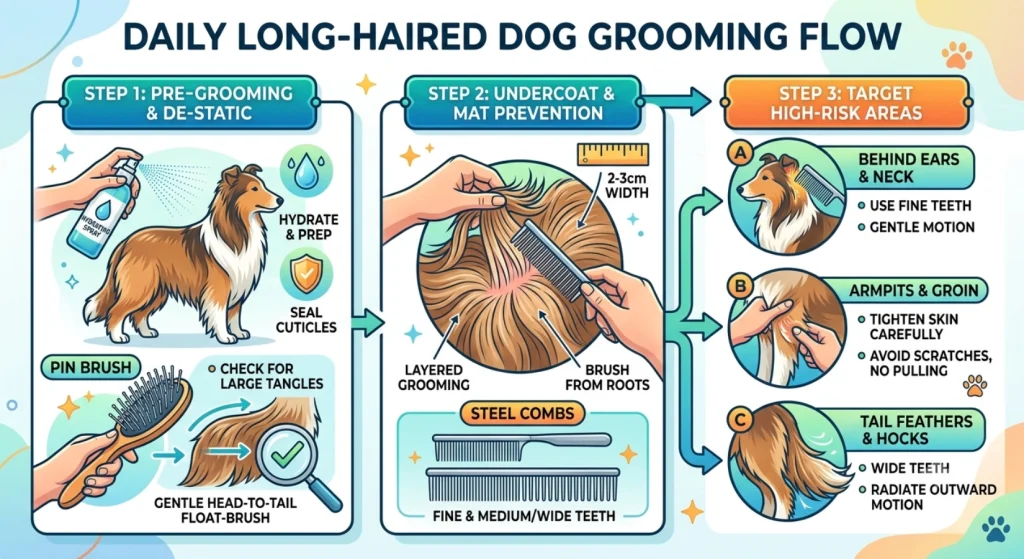
Apply Conditioning Spray: Before brushing, you must lightly and evenly mist the entire body (especially the long-feathered areas) with a leave-in de-tangling spray or diluted professional canine conditioner. This hydrates the coat and seals the cuticles.
Recommended Tool: A long-pin cushion brush (Pin Brush, a pure stainless-steel pin brush without protective tips is highly recommended to prevent snagging).
Technique: Gentle head-to-tail float-brushing. Relax your wrist, hover slightly, and use the cushion’s buffer to glide down the body from head to tail. This maps out the coat’s natural flow while checking for any large tangles.
Step 2: Layered Grooming & Undercoat Mat Prevention
Layered Sectioning: Use one hand to flip the coat upward, exposing the skin, while holding the brush or comb with your other hand to stroke outward from the roots (closest to the skin). Work on one section at a time (about a 2–3 cm wide strip of hair), gradually dropping down layer by layer.
Recommended Tool: A medium/wide-toothed stainless steel comb (Steel Combs) paired with a fine-toothed steel comb.
Precision Handling of High-Risk Areas:
Behind Ears & Neck: The fur here is the softest and most prone to clumping due to head-shaking or collar wear. Switch to the fine-toothed side of your steel comb and glide through ultra-gently following the coat’s growth direction.
Armpits & Groin: This is where the skin is thinnest and most sensitive. Carefully tighten the skin with your hand while combing to avoid scratching the skin with the comb’s tips. Absolutely no pulling or tugging.
Tail Feathers & Hocks: The long dachshund furnishings are concentrated here. Use the wide-toothed side of the comb to brush outward in a radiating motion to keep them flowing and majestic.
PPGSA Safety & Desensitization Tips
To comply with PPGSA safety and animal welfare standards, daily brushing must be built upon positive reinforcement and behavioral guidance:
Gentle Movements: Maintain a 15-to-30-degree angle between the comb teeth and the skin. Never scrape vertically against the skin to avoid scratches or folliculitis.
Short, Split Sessions: If your dog is highly sensitive to brushing, break down the daily full-body groom into smaller blocks—”ears and chest in the morning, belly and hind legs in the afternoon.” Always reward them with high-value treats after each mini-session.
Frequently Asked Questions
How can I tell if a puppy is a “purebred” English Cream Dachshund?
Verify their pedigree to ensure there is UK/England ancestry within the past 5 generations, check that the parents carry the Chinchilla gene (C), and observe that the nose and nails are solid black rather than blue, gray, or pink.[cite: 4]
What is the average size of a Miniature English Cream Dachshund?
Miniature dachshunds typically weigh under 11 pounds at adulthood (12 months old), while “tweenie” or standard sizes range between 11 to 20 pounds.[cite: 4]
Do English Cream Dachshunds shed a lot?
As they are Longhaired, they do shed seasonally. They require De-shedding sessions and daily brushing to prevent Matting, as per IPG (International Professional Groomers) coat care standards.[cite: 4]
Where can I safely acquire an English Cream Dachshund?
Always purchase from an AKC-registered breeder who has completed certified genetic health screenings, or check breed-specific English Cream Dachshund rescue organizations to find puppies or adult dogs looking for their forever homes.[cite: 4]
Disclaimer
This article is for informational and educational purposes only and does not replace professional veterinary advice, diagnosis, or certified grooming guidance. Always consult a licensed veterinarian before changing your pet’s diet, care routine, or health plans. We assume no liability for any actions taken based on this content.
Related articles
Dog Scratching Ear? Causes, Treatments & Safe Care Tips for Dogs
Is your dog constantly scratching their ear or shaking their head? Read my first-hand guide on causes, safe home care, and when to see a vet.
Why Is My Dog Losing Teeth? A Vet-Approved Guide to Dog Teeth Loss
Found a tooth on the floor? Discover why adult dogs lose teeth, how to spot hidden dental pain, and the exact steps to keep your pup happy and healthy.
Dog Tooth Abscess: Symptoms, Causes, Treatment & Prevention
Is your dog facing sudden facial swelling or a burst tooth abscess? Learn the vital symptoms, real vet treatment costs, and why home remedies won't work.