
Brief Overview
- Traits: Loyal yet stubborn; needs early socialization.
- Costs: First-year expenses range from $1,500 to $4,500+.
- Grooming: Needs line brushing 2–3 times weekly; do not shave.
- Back Care: Prone to IVDD; strict zero-jumping policy required.
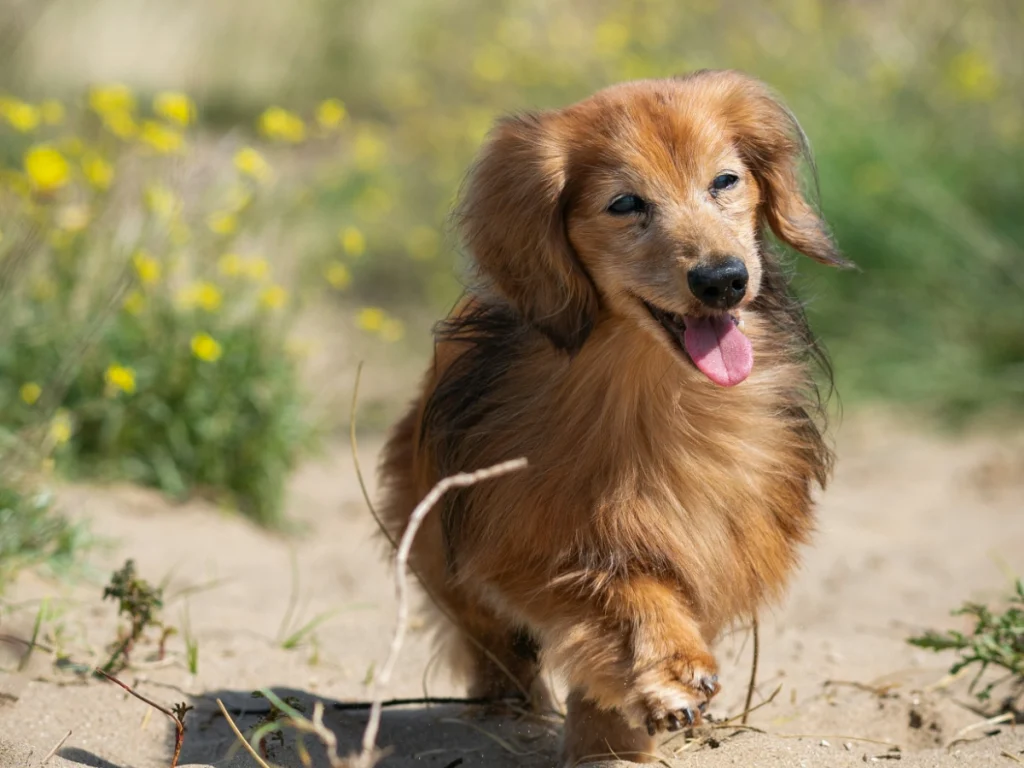
Long Haired Dachshund Originating in 15th-century Germany, these iconic sausage dogs are far more than just a pretty face or a social media trend. If you are looking to buy one or already have one, reading the following guide carefully is an absolute must
Their glamorous looks come with unique care requirements. From grooming their notoriously fluffy “Grinch paws” and preventing their fine undercoats from matting, to protecting their elongated spines from IVDD (Intervertebral Disc Disease), being a responsible dog mom or dog dad takes more than just cuddles—it requires strategic, biology-backed knowledge
In this comprehensive, expert-verified guide, we are bypassing the generic internet fluff to bring you actionable insights from a clinical and nutritional perspective. Whether you are curious about the real long-haired dachshund price, seeking the best dog food to protect their joints, or trying to overcome their famously stubborn training hurdles, we have you covered.
Table of Contents
Is a Long-Haired Dachshund the Right Pet for Your Family?
Are long-haired dachshunds a good pet? Yes, long-haired dachshunds make exceptional, affectionate, and loyal pets that are well-suited for families, apartments, and active individuals. However, due to their naturally stubborn and independent personality, they are prone to alert barking and separation anxiety
Here is your core guide to fully evaluating whether a long-haired dachshund fits your lifestyle:
The Pros: Why They Make Great Family Dogs
- Gentler Temperament: Compared to smooth-coated and wire-haired dachshunds, long-haired varieties are generally considered to have the mildest temperaments and be the quietest.
- Compact Size: Perfectly suited for apartment living or smaller households.
- Intensely Loyal: Long-haired dachshunds are incredibly loyal, affectionate, and sweet. They love to cuddle and will happily shadow you from room to room.
- Highly Alert: Despite their small stature, they make excellent watchdogs and will sound the alarm to alert their owners of anything out of the ordinary.
However, beneath that silky exterior lies a fierce hound with a deeply rooted, independent will. They are naturally stubborn, independent, and obstinate, and their unique physical structure introduces specific health risks.
The Cons: The Challenges You Will Face
- Independence and Stubbornness: True to their hound heritage, they can be exceptionally stubborn at times. Training demands immense patience and positive reinforcement.
- Prone to Barking: They are sensitive to sounds and can become excessive barkers if not properly socialized.
- Spinal Health Risks: Because of their long bodies and short legs, they are highly susceptible to IVDD (Intervertebral Disc Disease). They must not be allowed to constantly jump up and down from furniture or navigate steep stairs.
- Compatibility with Other Pets: They generally get along well with other dogs. However, since they were originally bred as hunters (specifically to hunt badgers), small animals like rabbits, hamsters, or cats may trigger their natural prey drive.
Deep Dive: Socialization for a Confident FurbabyTo raise a well-rounded, confident long-haired dachshund, you must intentionally socialize them during their critical puppy development window (ideally between 8 to 16 weeks).
- Expand Their Horizons: Safely expose them to a wide variety of sights, sounds, human demographic types, and fully vaccinated animals.
- Build Positive Associations: Use high-value treats and praise to ensure they associate new experiences with safety and rewards.
- Prevent Reactivity: A properly socialized long-haired dachshund learns to navigate the world with curiosity rather than fear-based reactions, effectively curbing their instinctual urge to bark at every passing stranger.
Long-Haired Dachshund Price, Breeders, and Adoption
When you decide to bring a long-haired dachshund into your life, you face a pivotal choice: should you buy or adopt your long-haired dachshund? Both paths are filled with love, but they require entirely different vetting processes and financial investments
Price Ranges: Initial Costs of Different Channels
| Source of Acquisition | Price Range (USD) | Price Determinants / Included Fees | Potential Traits & Risk Indicators |
| Purebred Breeder (AKC/CKU, etc. certified) | $1,500 – $4,000+ | Pedigree (champion titles), coat color (rare dapple or English cream are usually pricier), and breeder reputation. | Strict breeding standards, better health guarantees; typically provides clear genetic health screening reports. |
| Backyard Breeder / Regular Pet Store | $800 – $1,500 | Market supply and demand dynamics, basic feeding, and breeding costs. | Higher potential risks; likely lacks genetic health screenings, presenting a larger risk for future medical costs. |
| Adoption (Shelters / Rescue Organizations) | $150 – $500 | Only covers basic administrative/processing fees for spaying/neutering, vaccinations, and microchipping. | Cost-effective and highly meaningful for public good; mostly adult dogs, requiring careful confirmation of past medical history. |
According to data from the American Kennel Club (AKC) and comprehensive puppy data registries, the average first-year cost of raising a small dog (such as a miniature long-haired dachshund) typically runs between $1,500 and $4,500+, and this does not even include the expenses required to settle into a stable routine. The AKC’s historical cost metrics reveal that ongoing, annual adult care for small dogs averages roughly $1,831 per year, covering routine veterinary wellness checkups, premium nutrition, and toy replenishments.
Grooming & Skin Care: Managing a Majestic Coat and Avoiding Mats
Long-haired dachshunds possess silky, flowing coats that are especially prominent behind the ears, across the chest, under the belly, and along the back of their legs (feathering). While stunningly beautiful, improper care can easily lead to tangles, skin inflammation, or parasite infections.
Here is your daily and periodic grooming playbook for your long-haired dachshund:
Core Grooming Steps
1. Daily Brushing
- Tool Selection: Prepare a slicker or pin brush for detangling and a steel greyhound comb for smoothing and double-checking.
- Grooming Focus: Focus heavily behind the ears, armpits, inner thighs, and the tail, as these high-friction zones are the most prone to developing mats.
- Technique: Hold the base of the hair with one hand and brush from the inside out, bottom to top following the hair growth with the other hand, avoiding harsh tugging that hurts the dog.
- Frequency: To maintain optimal coat health, pet parents must perform a thorough brushing at least 2–3 times a week.
PPGSA (Professional Pet Grooming and Stylists Alliance) Standard: Industry regulations dictate using the "line brushing" technique (brushing layer-by-layer from the skin outward) to guarantee no hidden matting is missed at the base of the fur.
AKC S.A.F.E. Grooming Guidelines: Experts recommend using a high-quality pin brush with rounded tips to separate fine hairs down to the follicle without scratching or damaging the dog's vital skin barrier.
2. Targeted Trimming
- Paw Trimming: Periodically trim the stray hair between the paw pads. Overgrown pad hair causes dachshunds to slip on smooth floors, which can deal a fatal blow to their fragile spines (IVDD risk).
- Sanitary Trimming: Appropriately thin or shorten the feathering around the rear end and underbelly to prevent waste from staining the coat.
- Say No to Shaving the Whole Body: A long-haired dachshund's coat acts as a shield against UV rays. Shaving them bare easily triggers solar dermatitis.
- The Popular "Puppy Cut": This classic style involves a uniform trim where the body fur is shortened to about 0.5 to 1 inch. Unlike breeds with highly intricate grooming demands where owners must study endless Poodle Haircut Styles, the long-haired dachshund keeps things relatively simple while still preserving the breed's beautiful, iconic ear feathering.
Low-Stress Handling Guide (EEAT):
- Fear-Free (Fear-Free Certified) Philosophy: Grooming should be a relaxed and stress-free experience for dogs.
- Lick Mat Solution: Spread xylitol-free, dog-safe peanut butter onto a silicone lick mat to distract the dog during nail or paw trimming.
This action triggers the release of calming endorphins in their brain, entirely neutralizing anxiety and allowing you to safely trim their paws without inducing psychological or skin stress.
3. Regular Bathing & Blow-Drying
Always complete a full brushing session before bathing them to prevent pre-existing knots from turning into felt-like tangles when wet.
For routine care baths, choose a soothing, gentle, and moisturizing formulation like oatmeal shampoo. This is a proven, soothing recipe that deeply hydrates the coat and locks in moisture without breaking down their natural epidermal defense layer.
(Quick Tip: If you live in a multi-dog household, avoid using a specialized, volume-enhancing Poodle Shampoo on your Doxie; a dachshund's fine, straight coat requires deep epidermal hydration rather than curl definition.)
- Bathing Frequency: For healthy skin, bathe them roughly every 1–2 weeks in the summer, which can be extended to every 2–3 weeks in the winter. (Keep in mind, dachshunds/Doxies have very short legs, making their long coats act like natural brooms during every outdoor walk!)
- Never Use Hot Water: Excessively hot water strips away the skin's natural protective sebum, completely canceling out the moisturizing benefits of the oatmeal. Lukewarm water (close to or slightly below canine body temperature, around 95–98.6°F / 35–37°C) is ideal.
- Let it Sit: Oatmeal shampoo shouldn't be rinsed off right away. After working it into an even lather, let it sit on the dog for 5 to 10 minutes, allowing the soothing and moisture-locking factors of the oatmeal to fully penetrate the skin.
- Avoid Residue: Though oatmeal formulas are gentle, leaving any shampoo residue on dense, silky long coats or the skin surface will trigger new itching and dandruff once dry.
Protecting the Long Back and Preventing IVDD
Due to their specific "short legs, long body" genetics, a long-haired dachshund's spine bears significantly higher physical leverage pressure than average dog breeds. Combined with their natural predisposition to Intervertebral Disc Disease (IVDD), protecting their long back is a lifelong endurance war.
Long-Haired Dachshund Spinal Pressure & Behavior Reversal Table
| Skeletal Reality | Suspension Bridge Crisis | IVDD Damage Point | Reversal Action |
| Chondrodystrophy Gene: Long back, extremely short limbs. | Lack of Underneath Support: The bridge span is too long while the piers are too short. | Mid-Spine (Thoracolumbar Junction): Bears the greatest downward gravitational force of the entire body weight. | Strict Weight Control: Maintain a lean body condition, measure primary meals precisely, avoid high-calorie treats, and refuse to overload the "bridge deck". |
| Excessively short limbs, ultra-low chassis. | Lack of Vertical Shock Absorption: Joints cannot absorb shock through deep flexing like long-legged breeds can. | Impact Shocks the Entire Spine: The instant impact force of landing a jump travels 100% directly to and vibrates through the entire spine. | Strict Zero-Jumping Policy: Install specialized ramps/steps alongside sofas and beds; entering/exiting cars or stairs must be handled by the owner using horizontal, two-handed cradling. |
| Elongated body structure. | Terrible Resistance to Torsional Shear: When the bridge body shakes violently side-to-side, the structure is highly susceptible to fatigue damage. | Severe Compression & Twisting of Discs: Sudden turns or emergency stops violently compress or twist the intervertebral discs between vertebrae. | Modify Exercise Routines: Strictly forbid high-risk games that involve sudden stops and sharp turns, like frantic fetching or catching frisbees. Change to slow-paced, flat, straight-line walking. |
| Unique Cervical-Torso Alignment Angle. | Uneven Transmission of Pulling Force: Pulling the front end creates a leverage magnification effect along the long bridge body. | High-Level Intervertebral Disc Degeneration: The neck and anterior thoracic vertebrae experience concentrated local stress. | Ban Standard Neck Collars: Walking must strictly utilize a Y-shaped harness to distribute pulling forces evenly across the chest. |
According to WSAVA (World Small Animal Veterinary Association) standards, an adult dachshund must maintain a distinct, visible "hourglass" waistline when viewed from directly above. Their ribs should be easily felt under a thin layer of skin during a gentle touch, but they must never be visible to the naked eye.
Blogger’s Warning & Prevention War Stories:"Absolute Rule:
Never, under any circumstances, allow your long-haired dachshund to jump directly off a sofa, a high bed, or out of a vehicle!" Dachshunds are naturally fearless hunters who will attempt Olympic-level leaps if you do not stop them; training them to use ramps early is a literal lifesaver for their fragile backs.
What to Avoid with Dachshunds?
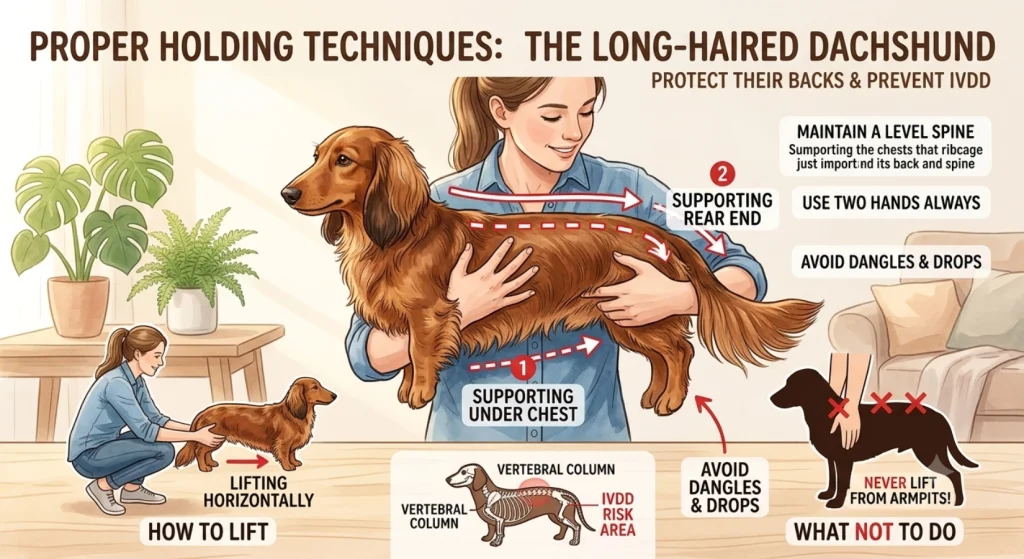
- Avoid Rough or Insecure Carrying Postures: Never lift a dachshund up by their front armpits or let their heavy hindquarters dangle unsupported.
- The Safe Method: Always place one hand underneath their chest to support the ribcage while securely cradling their rear end with your other arm, keeping their entire spine perfectly level and horizontal at all times.
- Avoid Frequent Climbing of High Staircases: Repeatedly traveling up and down steep household stairs forces their short limbs to overextend, putting repetitive, highly dangerous pressure on the lumbar vertebrae. Block off traditional stairs with baby gates and focus on single-story living or gradual ramp designs wherever possible.
What is the Best Dog Food for a Dachshund?
A long-haired dachshund's diet should not only sustain daily energy but also meticulously control weight and slow down chondrodystrophy-related degeneration (CDDY).
Many dog parents ask, "What is the best dog food for a dachshund?" My answer is: look for a high-quality, small-breed-specific formula that lists real meat as the first ingredient and contains L-carnitine to maintain lean muscle mass.
- Core Dietary Strategy: Dachshunds need nutrient-dense dog food to meet their vibrant energy levels, but the calorie density must be strictly controlled to prevent weight gain—which is the ultimate enemy of their spine.
Core Nutrient Addition Checklist
- Anti-Inflammatory & Coat Enhancement (Omega-3): A long-haired dachshund's hair follicles require substantial nourishment. Adding high-purity deep-sea fish oil rich in EPA and DHA to their daily food reduces joint inflammation and keeps their long coat shining like silk.
- Cartilage & Joint Protection (Glucosamine, Chondroitin): Due to their innate chondrodystrophy, they should receive long-term, daily supplementation of Glucosamine and Chondroitin sulfate to delay the degeneration of intervertebral discs and limb joints.
- Premium Protein Sources: Choose high-protein, low-fat dog food centered around chicken, turkey, or salmon to help them build lean core muscle groups that support their fragile long back.
Veterinary Nutrition Standard:
According to life-stage guidelines jointly formulated by the AAHA (American Animal Hospital Association) and the AVMA (American Veterinary Medical Association), nutritional care must be strictly tailored by age.
For the Long-Haired Dachshund Puppy: Growing puppies require a precise small-breed growth formula. This formula must be rich in glucosamine and chondroitin to build strong joint cartilage, while maintaining a balanced calorie density to ensure steady, safe skeletal development and prevent early-onset arthritis later in life
Long-Haired Dachshunds FAQ
Q1: Are long-haired dachshunds high maintenance compared to smooth coats?
Direct Answer: Yes, primarily due to coat care. While smooth dachshunds require minimal brushing, long-haired varieties demand brushing 2–3 times a week to prevent matting in areas like the ears and belly. They also sweep up yard debris easily due to being low to the ground.
Q2: How much exercise does a miniature long-haired dachshund need daily?
Direct Answer: A miniature long-haired dachshund typically needs 30 minutes to 1 hour of low-intensity exercise daily. Activities should focus on continuous walking and controlled play, strictly avoiding jumping or stair-climbing to protect their long spine from IVDD.
Q3: What are the most common long-haired dachshund colors?
Direct Answer: Long-haired dachshunds come in a stunning spectrum of coat colors and patterns. Common variations include solid Red, Cream (such as the highly sought-after English Cream), Black and Tan, Chocolate and Tan, and striking patterns like Dapple or Piebald.
Q4: Where can I safely find mini long-haired dachshund puppies for sale near me?
Direct Answer: To safely find miniature long-haired dachshund puppies for sale, always vet for ethical breeders registered with official kennel clubs (like the AKC) who provide comprehensive genetic health screenings for parents. Alternatively, check local breed-specific rescue groups to adopt a long-haired dachshund in need.
Disclaimer:
This article is for informational and educational purposes only and should not replace professional veterinary diagnosis, treatment, or advice. Every long-haired dachshund's health condition is unique. If your furbaby shows any signs of illness or discomfort—especially symptoms of suspected IVDD—please consult a licensed veterinarian immediately.
-
Sale!
Pet Deodorizing Spray 150ml – best Natural Dog Cat Odor Remover
Original price was: $5.29.$4.99Current price is: $4.99. Read more -
Sale!

disposable Finger-shaped dental cleaning wipes for pets fresh breath
Original price was: $6.68.$3.34Current price is: $3.34. Add to cart -
Sale!

disposable antibacterial dog wipes eliminate odors suitable for ears/paws/underbody areas relieving itching
Original price was: $4.29.$2.99Current price is: $2.99. Add to cart