
Welcoming a new family member is exciting, but housebreak can be a real struggle! Being woken up in the middle of the night, constant “surprises” on the carpet, and slow progress—these are all challenges new pet owners face.
So, how long does it take to housebreak a dog? Seven days or four weeks? This is a normal transition period, and as long as you use the right methods, every puppy can learn to go in the right spot!
Why does housebreak a dog drive pet parents crazy?
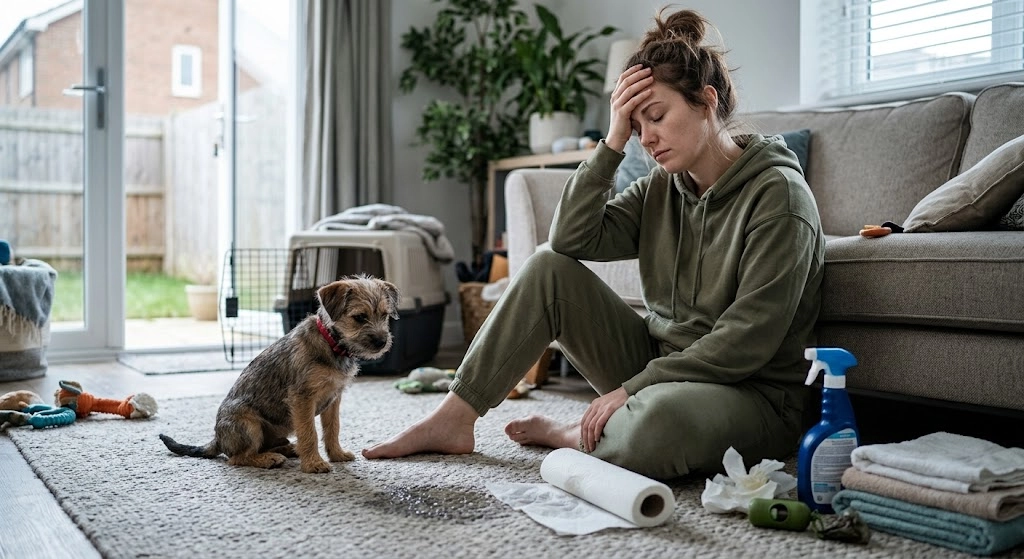
Because the cleanup that follows is a real headache for owners! On one hand, there’s the soggy carpet and the pungent odor; on the other, there’s Leo’s innocent and adorable face—it’s hard to bring yourself to punish him.
I still remember the day Leo first came to my home; he was only 8 weeks old. I was full of anticipation, imagining all the wonderful times we’d have walking and playing together—but instead, I was met with three straight weeks of indoor accidents. I was completely overwhelmed!
Changes in his age, physiology, and environment made it difficult for him to adjust at first. These are all normal parts of the process. With proper housebreak, a strict potty schedule, and patient guidance from the owner, every dog will succeed—it just takes different amounts of time.
Before starting housebreak, you need to prepare in advance and mentally brace yourself—otherwise, when accidents happen indoors, you’ll be scrambling to clean up the mess!
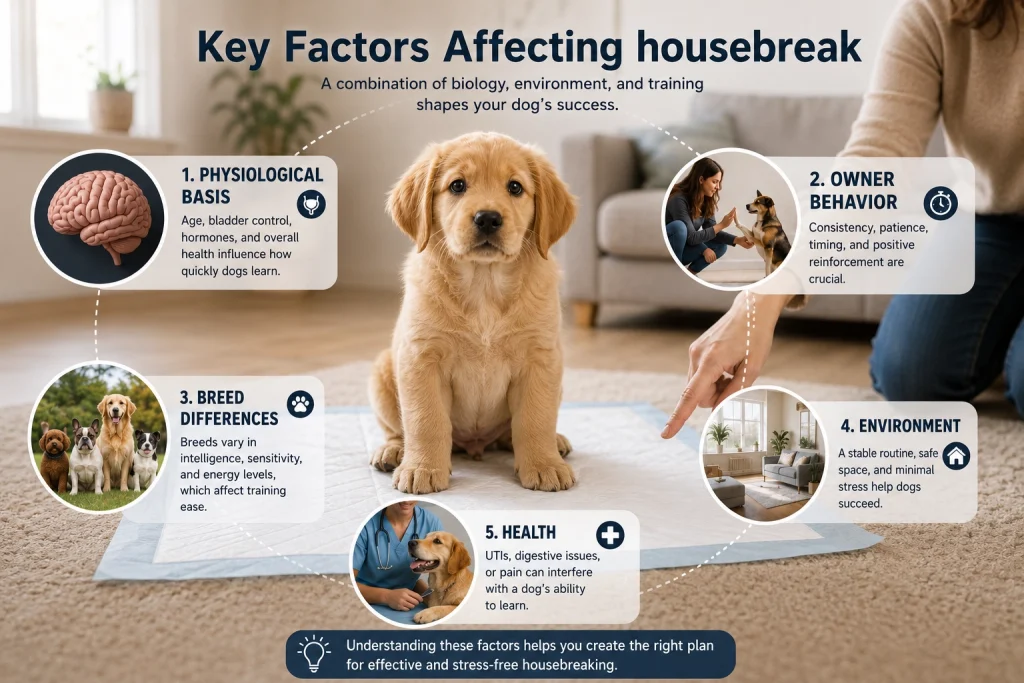
Key factors affecting housebreak a dog
Many factors can influence a dog’s housebreak, so there’s no single answer to this question: How long does it take to train a dog to go to the bathroom in a specific spot?
So, how long does it take to housebreak a dog? Understanding which factors affect housebreak will help you master more training techniques and make the process more efficient!
Physiological Factors
These are the most fundamental physiological limitations—and they’re unavoidable!
The essence of training is to establish a conditioned reflex linking the urge to relieve themselves with going to a designated spot, but this depends on whether the dog has sufficient physiological control. Puppies vary in bladder function, bowel control, metabolic rate, and overall health, which means the length of time they can hold their urine varies.
Breed Differences
The physiological structure and genetic traits of different dog breeds determine their starting points in housebreak. Small dogs have smaller bladders and faster metabolisms, requiring more frequent elimination. They are also more sensitive to inclement weather, which may increase the likelihood of indoor accidents due to reluctance to go outside, resulting in a longer housebreak period.
Large dogs have relatively larger bladders and slower metabolisms, allowing them to hold their urine for longer periods; consequently, their housebreak typically takes less time than that of small dogs.
Note: Breed affects only the speed of housebreak, not the likelihood of success. With the right methods and sufficient patience, dogs of any breed can be successfully housebreaked.
Owner Behavior
The owner’s training behavior is a key factor in the success of housebreak. The owner’s consistency in training is the most critical human factor influencing the outcome.
Pet owners must maintain consistency in the potty schedule, provide close supervision during potty breaks, offer immediate rewards for success, give clear commands, and handle indoor accidents appropriately—all of which help teach the dog which behaviors are allowed and which are not!
Environment and Health
Both the external environment and the dog’s internal health can affect housebreak. These are the most easily overlooked factors; many owners, eager to achieve quick results, resort to scolding and punishment to enforce housebreak—but the outcomes are often disappointing!
Adverse weather can hinder outdoor housebreak, making dogs reluctant to go outside. In such cases, the owner’s persistence in training or the provision of a temporary indoor potty area becomes crucial.
Newly adopted puppies are often in a state of stress, and their elimination habits may change. Giving them time to adjust to their new environment and immediately establishing a new daily routine are key to stabilizing the situation. The ASPCA notes that adult dogs in new environments may exhibit marking behavior due to stress, which typically subsides after 10 days to two weeks of adjustment.
Health conditions can affect a dog’s physical state, potentially leading to loss of control over elimination!
Unneutered dogs may begin to mark their territory with urine. Many pet owners wonder: Does neutering help with potty training?
How long does it take to housebreak a dog?
According to the American Kennel Club (AKC), most puppies take 4–6 months to fully master housebreak, but some may take as long as 12 months.
This depends on their age, training methods, breed, and the consistency of the training. The key to successful training is to avoid taking shortcuts and instead cultivate habits that the puppy can repeat every day.
Leo’s housebreak Schedule:
| Age | Training Stage | Accident Frequency | Key Progress |
| 8-10 Weeks | Habit Establishment Phase | 5-8 times/day | Learns to eliminate in a designated spot |
| 10-12 Weeks | Signal Understanding Phase | 3-5 times/day | Begins to understand potty commands |
| 12-14 Weeks | Bladder Control Phase | 2-3 times/day | Can hold bladder for 2-3 hours |
| 14-16 Weeks | Steady Progress Phase | 1-2 times/day | Actively waits by the door |
| 16-18 Weeks | Basic Success Phase | 1-2 times/week | Can hold bladder 6-8 hours overnight |
| 18-24 Weeks | Fully Trained Phase | Occasional accidents | Fully trained, with possible excitement urination |
When Leo was 14 weeks old, I thought he was fully housebreaked, but then in his 15th week, I found another urine stain on the living room carpet. This perfectly illustrates the inconsistency in housebreak timelines and the need for long-term persistence!
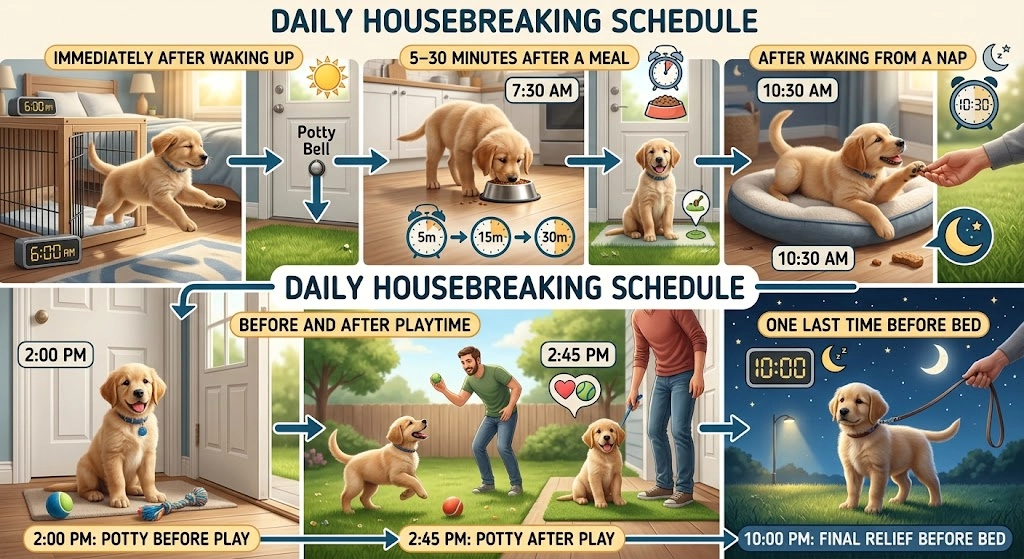
Key Timing Tips for housebreak a dog:
- Take him outside immediately after waking up
- Within 5–30 minutes after a meal
- After waking from a nap
- Before and after playtime
- One last time before bed
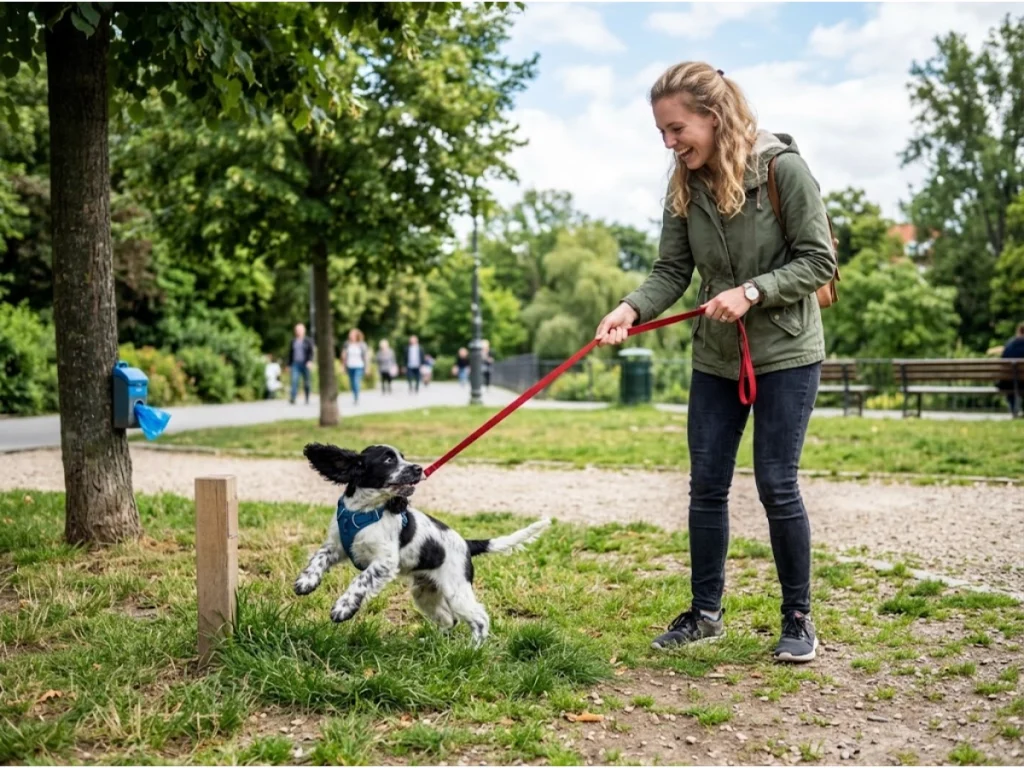
For the first two weeks, I had to take Leo outside almost every hour—to be honest, it was really exhausting. But for the sake of keeping things clean in the long run, I stuck with it!
Are the 3-day and 7-day spot-housebreak methods you see online real?
There’s some truth to them, but the claims are often exaggerated. Based on my experience training Leo, the first three days were indeed the most critical.
During those days, I devoted almost all my time to him, following the key time points for housebreak. By the third day, I noticed that Leo had already figured out: going outside = using the bathroom = getting a treat he loves. But that didn’t mean he had actually learned to use the bathroom in the designated spot.
Compared to the 3-day method, the 7-day approach does show more noticeable progress. Indoor accidents decreased significantly; he began walking toward the door on his own; his potty cues—like sniffing the floor and circling—became increasingly obvious; and he could hold it for longer periods. However, this still doesn’t mean he’s fully trained—accidents still happen.
Many of these so-called “3-day or 7-day training success” stories actually just show that the dog has learned to go to a specific spot to relieve itself, not that it can consistently maintain this behavior and prevent accidents from happening!
Cleaning tips during housebreak a dog
During housebreak, cleaning is about more than just keeping things looking clean. If you don’t clean thoroughly, lingering odors may cause your dog to return to the same spot to relieve itself time and time again. The following cleaning tips combine my own experience with some professional advice, and I hope they’ll help with your housebreak.
- Keep a “outdoor training bag” by the door, stocked with essentials like pet wipes, wet gloves, poop bags, and treats.
- If an accident happens indoors, don’t scold your dog. Handle the situation calmly, spray a pet deodorizing spray over the entire soiled area to eliminate odors, and wipe the surrounding area with pet wipes to ensure no scent remains—this will help prevent future accidents!
- If your pet’s fur gets soiled during a bathroom break, use a no-rinse pet foam. Spray it onto the fur and wipe it off with a towel—no need to rinse with water. Keep the skin dry.
- After a bathroom break on a rainy day, use a glove wipe to clean your pet’s paws or belly to check for urine. You can also brush your pet 2–3 times a day with a pet brush to reduce shedding and strengthen your bond.
FAQs:
1. What’s the fastest way to housebreak a puppy?
There’s no “fastest” way—only consistent effort. A combination of consistent training times, immediate rewards after success, and a structured training schedule is key. Only through continuous practice will your puppy develop a lifelong habit.
2. How can I stick to my puppy’s housebreak schedule while I’m at work?
Hire a professional dog walker, ask a friend to take the puppy outside, or keep the puppy in a crate or playpen. Dogs generally won’t relieve themselves where they sleep, which can significantly reduce accidents.
3. How can I housebreak a puppy without using a crate?
Use a playpen to restrict the dog’s movement, maintain close supervision, keep the dog within your line of sight at all times, establish fixed potty times, and limit the dog’s free-roaming space.
-
Sale!

Soft pet skincare wipes that are antibacterial and eliminate odors, suitable for cleaning ears/paws/underbody areas, relieving itching and discomfort
Original price was: $4.29.$2.99Current price is: $2.99. Add to cart -
Sale!

Premium Pet Glove Wipes – Hypoallergenic Aloe for All Animals
Original price was: $3.29.$1.99Current price is: $1.99. Add to cart -
Sale!

10 Pcs Individually Wrapped Dog Wipes – Portable Travel Size
Original price was: $3.59.$2.99Current price is: $2.99. Add to cart