
While all cats experience itchy ears from time to time, persistent scratching could indicate a more serious ear condition. Although ear mites are a common primary suspect, the causes of itchy ears in cats are far more complex than one might imagine; they range from allergies and infections to irritation caused by foreign objects.
Frequent ear scratching is a concern for many pet owners. How to soothe cat’s itchy ears? Drawing on personal experiences—including lessons learned the hard way—and professional veterinary advice, this article uncovers the truth behind itchy ears in cats.
Common causes of itchy ears in cats:
Ear mites are one of the most common causes of otitis externa (outer ear inflammation) in cats. These highly contagious parasites often irritate the ear canal, causing the production of copious black secretions. Typical symptoms include intense itching, dark brown “coffee-ground” earwax, and frequent head shaking.
Malassezia is a yeast naturally present in the cat’s ear canal; however, immune system abnormalities or changes in the ear environment can lead to overgrowth and infection. Ear secretions appear dark brown to black, accompanied by significant itching.
Note: This type of itching does not respond to standard anti-allergy medications; the infection itself must be treated directly.
Allergies to environmental factors (such as dust mites, pollen, or mold) or food can cause redness, swelling, and itching of the ear skin. These reactions often extend to the face, and scratching with paws can lead to injuries such as bleeding. Ear itching is a common symptom of food allergies.
Aural Hematoma: Rupture of blood vessels in the ear flap (pinna) due to vigorous scratching or head shaking, resulting in a fluid-filled swelling that requires surgical treatment.
Solar Dermatitis/Squamous Cell Carcinoma: Prolonged sun exposure can lead to cancerous changes in white cats or cats with light-colored ears; early signs include redness and scaling along the ear margins.
Immune-Mediated Diseases: Conditions such as proliferative necrotizing otitis externa or sebaceous adenitis; while rare, they can cause severe lesions.
Cat ear itching can stem from causes other than disease. Factors such as grass seeds, tiny foreign objects, water entering the ear during bathing, or over-cleaning can cause discomfort and subsequent itching.
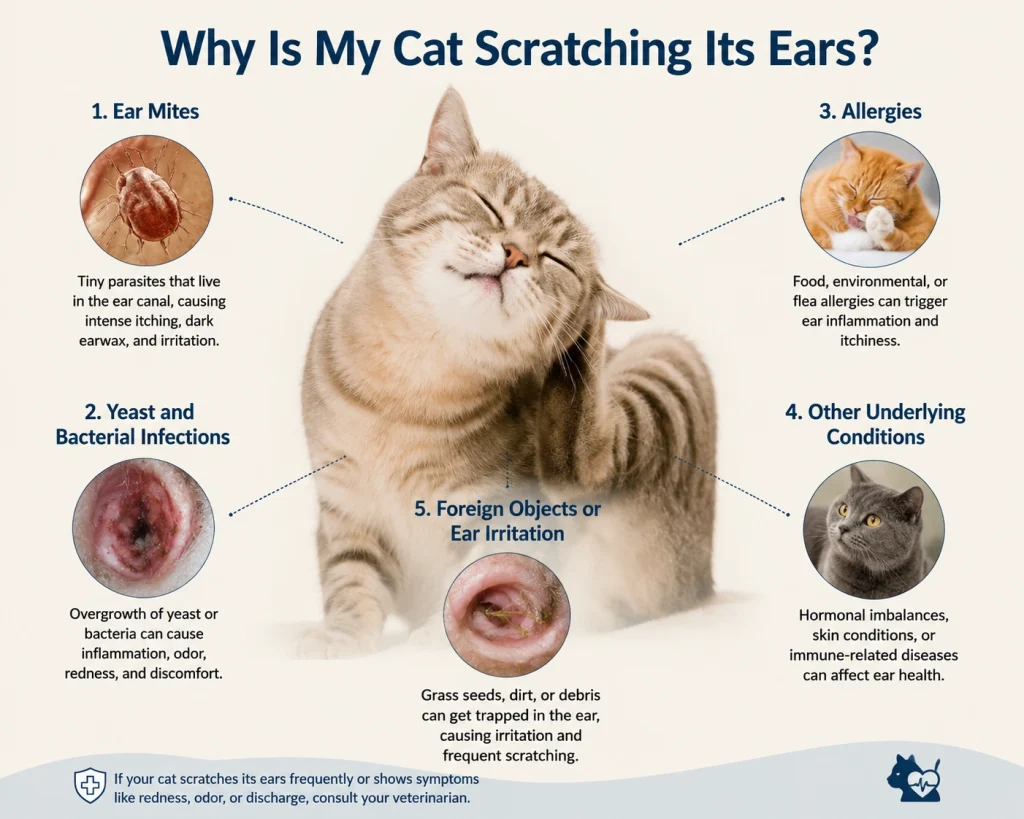
Here is a self-check chart for diagnosing itchy cat ears; use it at home to help identify the cause and avoid delaying treatment!
| Potential Underlying Cause | Symptom Characteristics | Other Signs |
| Ear Mite Infestation | Dark brown, coffee-ground-like dry discharge | Severe itching; highly contagious (quarantine from other household pets required) |
| Mixed Yeast / Bacterial Infection | Yellowish-brown sticky discharge with a sour/foul odor | Strong odor, accompanied by both pain and itching |
| Food / Environmental Allergies | Clean ear canal but frequent scratching; presence of visible wounds | Frequent paw licking, facial redness/swelling, hair loss |
| Normal Earwax | Pale yellow, no noticeable odor | No other signs of discomfort |
When Fiona first started scratching her ears, I almost fell into the trap of making a snap judgment—assuming it was ear mites and nearly buying potent miticides. Fortunately, I checked her ears in time and discovered that her ear canals were actually very clean, showing only slight redness—a classic sign of seasonal allergies. Had I blindly administered medication, the irritating ingredients in the formula would only have aggravated her allergic reaction!
Here is a comprehensive guide on how to get rid of yeast in cat’s ears safely : “How to Get Rid of Yeast in Cat’s Ears Safely: Signs, Treatments, Prevention.”
While the itching might offer temporary relief at times, persistent ear itchiness rarely resolves spontaneously.
How to soothe cat’s itchy ears? Ear itching is typically caused by ear mite infestations, yeast or bacterial overgrowth, or allergies; these issues tend to worsen within the warm, humid, and enclosed environment of the ear canal and cannot be resolved by the cat’s immune system alone.
If left untreated, frequent and vigorous head-shaking and scratching can easily rupture the capillaries in the ear flap, leading to a large aural hematoma that often requires surgical drainage. Chronic, long-term inflammation can also cause the ear canal tissue to thicken and proliferate, resulting in permanent narrowing of the canal or even deafness. Even more seriously, if the infection breaches the eardrum and spreads to the middle or inner ear, the cat may exhibit neurological symptoms such as a head tilt or loss of balance and circling.
Therefore, if you notice your cat frequently scratching its ears, observe abnormal ear discharge, or detect a sour odor, the best course of action—and the one that spares the cat from further harm—is to seek prompt veterinary attention for an ear canal examination.
If you notice your cat scratching her ears raw, the first step is to prevent further injury: immediately put on an Elizabethan collar (E-collar) and trim her claws to protect the wound. Avoid using alcohol, hydrogen peroxide, or human ear medications; a cat’s unique ear canal structure makes it highly sensitive to these ingredients, which can irritate the skin and worsen inflammation.
If the ear is bleeding and accompanied by symptoms such as black, coffee-ground-like discharge, a foul odor, redness, swelling, frequent head shaking, or pain upon touch, consult a veterinarian as soon as possible. A vet will typically use an otoscope and analyze ear discharge to determine if the issue is caused by ear mites, yeast, or a bacterial infection, and then select an appropriate treatment plan.
According to the AAFP/ISFM guidelines on cat-friendly handling and environments, fear, pain, and unnecessary stress should be minimized during examinations and treatments to ensure accurate diagnosis and a better veterinary experience.
As a cat owner, I once dealt with my cat Fiona, suddenly scratching her ears. That experience taught me that promptly observing changes in the ears and identifying the root cause of the itching is far more important than simply trying to relieve the itch.
Before administering any medication to your cat, it is essential to determine the underlying cause. Using the wrong medication or delaying treatment could jeopardize your pet’s health and well-being. If you are unable to promptly diagnose the ear issue, please take your cat to a nearby veterinary clinic immediately for professional help.
Once the cause has been identified, precise treatment is necessary to ensure a speedy recovery.
How to soothe cat’s itchy ears? Below are specific causes and corresponding treatment plans for your reference:
| Diagnosed Cause | Core Treatment Plan |
| Ear Mites | Use miticidal ear drops or systemic parasiticides (e.g., ingredients containing selamectin or moxidectin). All contact animals must be treated and the environment thoroughly cleaned. Course of treatment usually lasts 3–4 weeks. |
| Yeast Infection / Malassezia | Use antifungal ear drops or medicated bath products. Meanwhile, actively investigate and treat the root cause (allergies or endocrine disorders); otherwise, recurrence is extremely likely. |
| Bacterial Infection | Select antibiotic ear drops or oral medications based on culture and sensitivity test results. |
| Allergic Diseases | Requires lifelong management. Includes elimination diets, environmental control, medication therapy, or allergen immunotherapy. |
If you are looking for medication to treat ear mites in dogs, you can find the answers here: “Dog Ear Health Guide: How to Choose the Best Ear Mite Medicine for Your Dog”
Physical Barrier: Put on an Elizabethan collar (E-collar) immediately. Preventing secondary infection is the top priority when a cat has scratched itself until it bleeds. Using a collar is the quickest and most direct way to stop scratching and provide protection.
Prepare Tools: Use a gentle, alcohol-free ear cleaning solution formulated for cats that contains ceruminolytic (earwax-dissolving) agents, along with medical-grade cotton balls or gauze and freeze-dried treats.
The Cleaning Process:
Post-Cleaning Reward:
Immediately after cleaning, offer the cat its favorite treat and praise it. This fosters a positive association and helps prevent resistance during future cleaning.
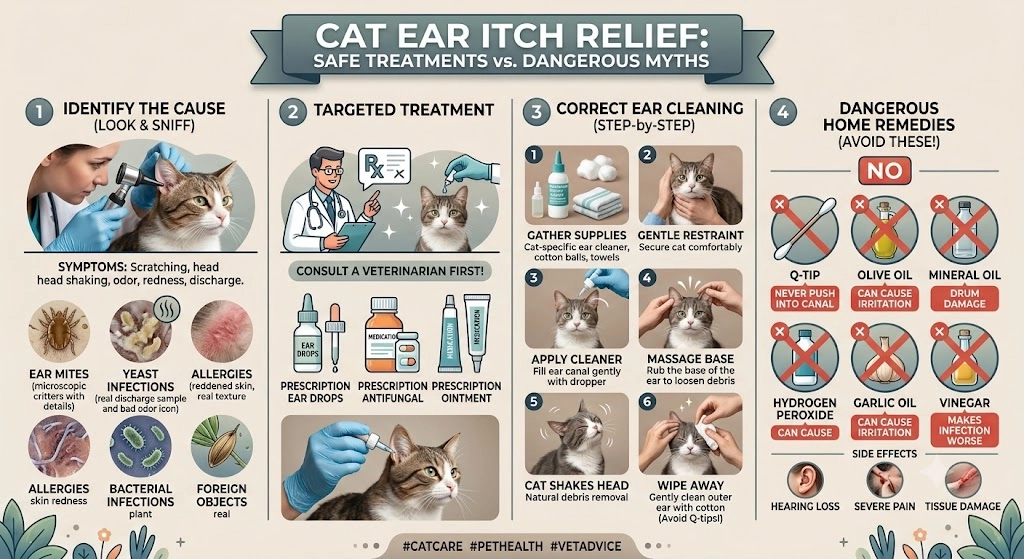
Misconception 1: Popular online home remedies. These must be tailored to the individual cat’s specific condition; one should not blindly trust remedies found online!
Misconception 2: Pouring hydrogen peroxide or alcohol directly into the ear canal. This is strictly prohibited; both substances are highly irritating and will aggravate skin damage and pain. Only pet-specific ear cleaning solutions recommended by a veterinarian should be used.
Misconception 3: Deep cleaning with cotton swabs. This can push debris toward the eardrum or even puncture it.
Misconception 4: The more frequent the cleaning, the better. Cat ears have a self-cleaning function; excessive cleaning (especially with irritating products) disrupts the ear canal’s micro-ecosystem and stratum corneum, potentially triggering inflammation.
| Safe for Home Observation | Requires Immediate Veterinary Care |
| Only a small amount of waxy discharge, with no frequent scratching | Continuous scratching leading to skin lesions, bleeding, or a hematoma (aural hematoma) |
| Normal energy levels and appetite | Obvious ear pain, resisting touch upon palpation, or aggressive behavior |
| No other systemic symptoms | Neurological symptoms such as a head tilt, loss of balance, or nystagmus (involuntary eye movement) |
| No abnormal odor from the ear canal | Foul odor emanating from the ear, accompanied by purulent (pus-like) or bloody discharge |
The American Veterinary Medical Association (AVMA) consistently emphasizes that ear disorders require professional assessment. Relying solely on home care is inappropriate, especially when symptoms are recurrent, painful, or affect hearing.
1. Otoscopy: Examining the condition of the ear canal and eardrum to check for foreign bodies, polyps, or perforations.
2. Cytology of ear canal secretions: The gold standard for definitive diagnosis. A swab is used to collect earwax for direct microscopic counting of bacteria, fungi, and mites, providing immediate direction for treatment within minutes.
3. Systemic examination (when necessary): If allergies are suspected, this may involve food elimination trials or serum allergen testing; if tumors or deep-seated infections are suspected, biopsies or imaging studies may be required.
The content of this article is for informational, educational, and experience-sharing purposes only and does not constitute professional veterinary diagnosis, treatment advice, or prescriptions of any kind. If your pet experiences a medical emergency—such as severe pain, loss of balance, bleeding, or abnormal behavior—please contact your local veterinary clinic or emergency veterinary center immediately for treatment.
Yes. Indoor cats can still contract ear mites through contact with infected animals or contaminated environments.
All cats and dogs that have been in contact with the infected cat should be examined and treated simultaneously. Since mites can survive in bedding and carpets, the environment requires thorough cleaning.
If mites are not present, the itching is likely caused by a yeast infection, bacterial infection, or allergies. Discontinue the use of anti-mite medication and consult a veterinarian for ear cytology to determine the appropriate antifungal, antibacterial, or anti-allergy treatment.