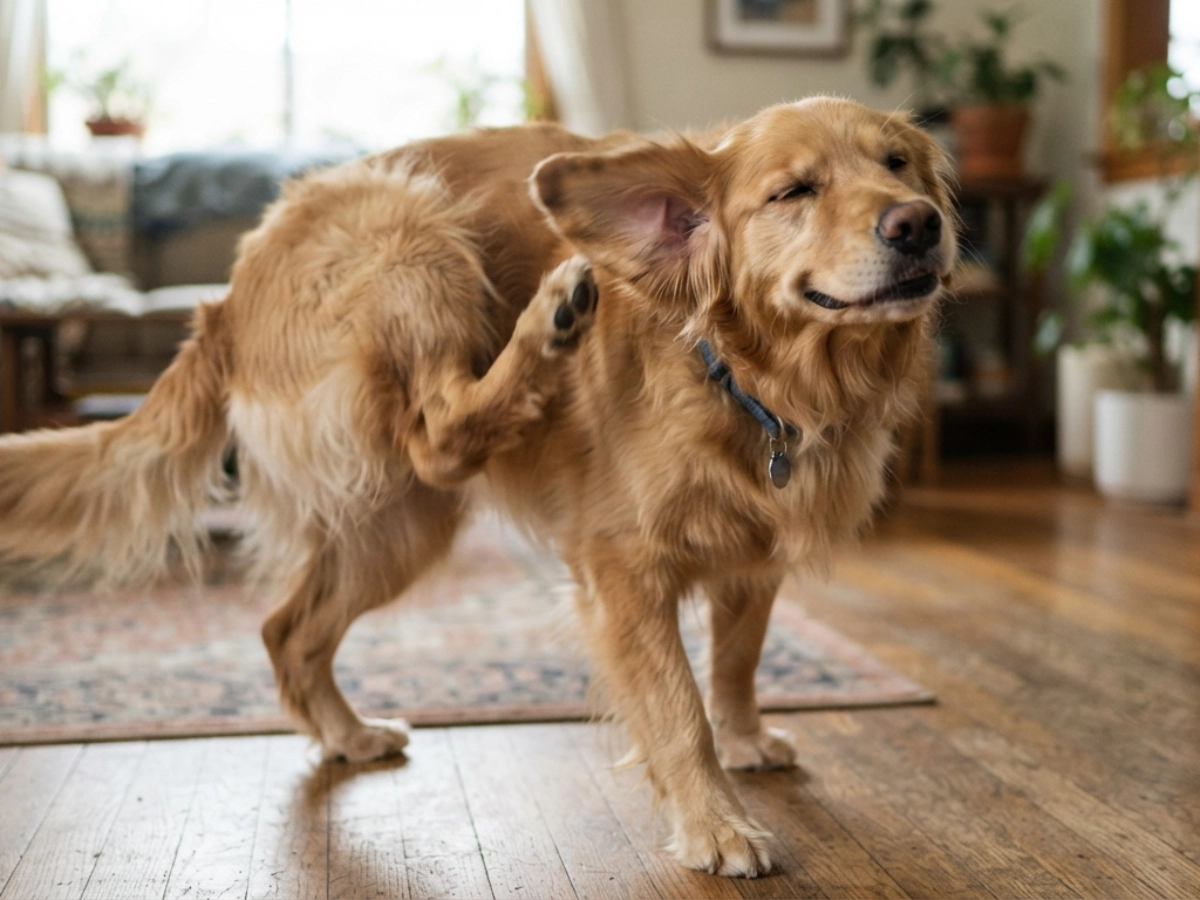

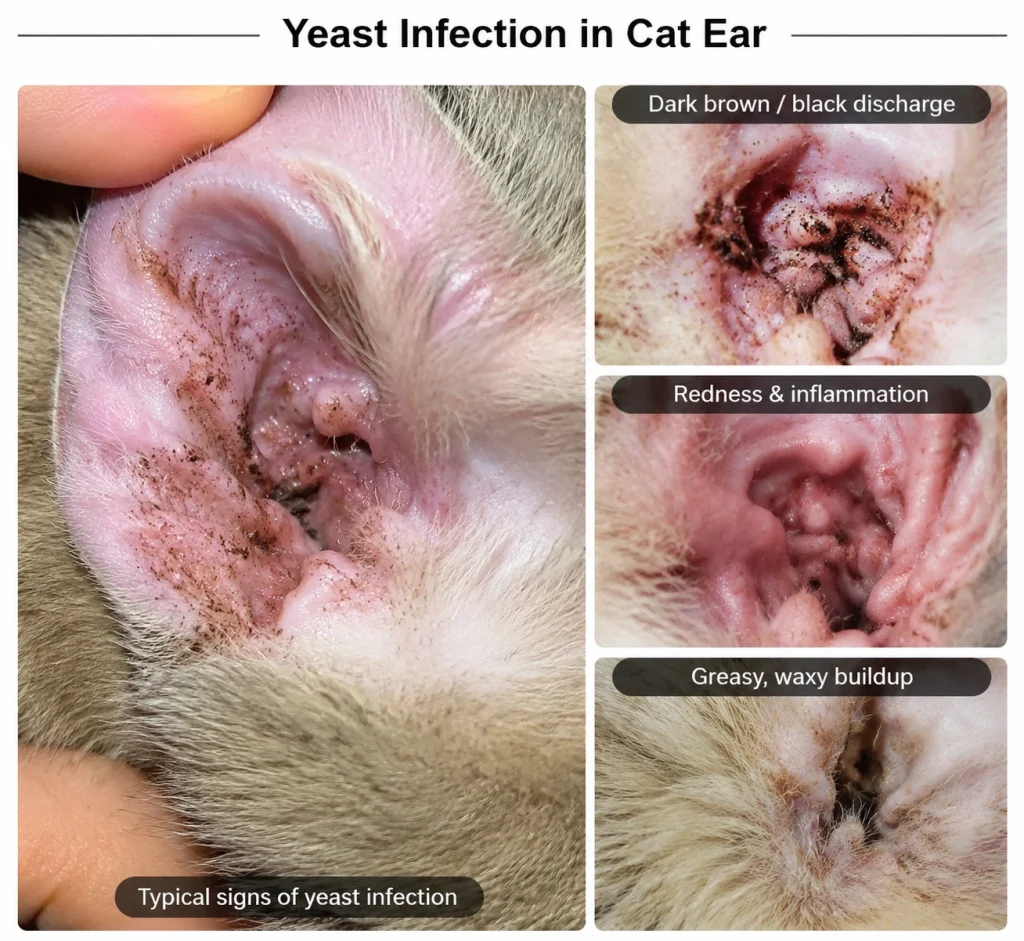
For a cat owner, nothing is more heartbreaking than seeing your beloved pet in discomfort. My cat, Fiona, started shaking her head more frequently than usual. At first, I didn’t think much of it—cats shake their heads all the time, right? It started subtly. Later, while she was curled up next to me, I noticed a faint, musty odor. I took a look inside her ears and discovered a dark, waxy buildup—far from the clean, pink ears I was used to seeing. My gut told me something was wrong; it was likely a common yet troublesome condition: cat ear yest.
How to Get Rid of Yeast in Cat’s Ears Safely? This article provides a comprehensive guide—from spotting the signs and identifying symptoms to prevention—to help you maintain your cat’s ear health.
A yeast infection in a cat’s ear is caused by the overgrowth of Malassezia is a tiny, single-celled fungus naturally present in small amounts on a cat’s skin and within the ear canal. When this natural balance is disrupted, it triggers a cascade of issues—including inflammation, itching, foul odors, and discharge—causing the cat significant discomfort.
If you are interested in learning about the structure and function of cat ears, as well as what healthy cat ears look like, then you won’t want to miss this article: “Interesting Stories About Cat Ears—The Structure and Function of Cat Ears.”
Allergies: Food allergies (to ingredients such as chicken, beef, fish, or dairy) or environmental allergies (dust mites, pollen, furniture, etc.) can cause skin inflammation and excessive wax secretion, creating conditions favorable for yeast overgrowth. Veterinary dermatologists typically recommend investigating underlying triggers—such as allergies or systemic diseases—while simultaneously treating the ear yeast infection.
Moisture retention in the ear canal: Frequent bathing, swimming, living in humid environments, or improper ear cleaning methods can cause moisture to become trapped within the narrow ear canal.
Ear mites: These parasitic mites cause intense irritation and excessive wax production, creating the perfect environment for secondary yeast infections.
Chronic skin inflammation or immune system issues: Chronic conditions such as Feline Leukemia Virus (FeLV), Feline Immunodeficiency Virus (FIV), or diabetes can compromise the body’s natural defenses, leading to lowered immunity and recurrent ear infections.
Antibiotic overuse: Long-term antibiotic treatment can eliminate beneficial bacteria that normally compete with and keep yeast populations in check.
Note: Yeast infections in cats’ ears are rarely isolated issues. According to veterinary clinical data, otitis externa (outer ear inflammation) is common in cats and can involve a combination of factors—including yeast, ear mites, allergies, and secondary infections—so it is best to confirm the underlying cause through otoscopy and cytology.
A healthy cat’s ear should have a pale pink inner ear flap; the skin should be smooth, free of redness, swelling, thickening, or scabbing, and have no unusual odor. If your cat exhibits any of the above symptoms, monitor the condition closely and seek veterinary attention immediately if the situation is severe.
This is one of the questions I get asked most often. The symptoms are so similar that even experienced pet owners can get confused. Both conditions cause head shaking, scratching, and discomfort. However, there are significant differences:
| Comparison aspect | Cat ear yeast infection | Ear mites |
| Main cause | Overgrowth of Malassezia yeast | Excessive reproduction of Otodectes cynotis |
| Appearance of discharge | Thick, oily discharge that is usually brown or light yellow, often with a waxy texture | Dark brown or black, dry debris that looks similar to coffee grounds |
| Odor | Noticeable, strong musty or fermented smell | Usually no obvious or strong odor |
| Level of itching | Moderate to severe itching | Extremely intense itching |
| Contagiousness | Usually not contagious to other pets or humans | Highly contagious, especially among cats and other animals |
| Diagnosis | Veterinary examination and ear cytology (microscopic examination of ear samples) | Veterinary examination and microscopic identification of ear mites |
| Treatment | Antifungal medications | Anti-parasitic medications |
| Duration | Often chronic with a high recurrence rate if the underlying cause is not addressed; symptoms may continue for weeks or longer | Without treatment, mites can continue reproducing and spreading; with effective parasite control, they can usually be eliminated within 2–4 weeks |
When Fiona first started scratching her ears a few years ago, my initial thought was ear mites. I bought over-the-counter mite medication, but it actually aggravated her ear discomfort. Eventually, I took her to a veterinary clinic; a cytology exam revealed a pure yeast infection, likely triggered by a sudden rise in indoor humidity during the rainy season.
For cats that are anxious or resistant to examinations, the “Cat Friendly” handling principles advocated by the AAFP can help reduce stress, making otoscopic exams and sample collection go more smoothly. Checking Fiona’s ears has now become part of her routine health care.
Treating a yeast infection requires a systematic approach to eliminate fungal overgrowth and alleviate inflammation. Avoid administering medication blindly at home, as this could lead to more serious ear complications.
Before medicating your pet, the goal is not only to clear the yeast but also to identify the underlying cause of the overgrowth.
In veterinary dermatology (ACVD) practice, ear cytology is a crucial diagnostic step to determine whether the infection is yeast-based, bacterial, or mixed. If there is a suspicion of a compromised eardrum, topical ear medications should only be used after a veterinary assessment to prevent the medication from entering the middle ear and causing further risks.
Debris and wax must be removed from the ear canal before applying medication. Your veterinarian will likely perform a thorough cleaning at the clinic or instruct you on how to clean the ears at home using a vet-approved, non-irritating ear cleaner (containing drying agents like salicylic acid or ketoconazole). This removes the “gunk” that protects the yeast and blocks medication from reaching the infected tissue, thereby enhancing the treatment’s effectiveness.
Once the cat ear yeast infection is confirmed, the veterinarian may recommend antifungal medication. They will prescribe targeted topical antifungals (such as miconazole, clotrimazole, or ketoconazole). These drops or ointments are typically applied once or twice daily for a course of 7 to 14 days. It is essential to complete the full course of treatment, even if symptoms appear to resolve early.
If an allergy is suspected as the underlying cause, nutritional management is vital. Under veterinary guidance, switching to a limited-ingredient diet or a hydrolyzed protein diet can significantly reduce systemic and skin inflammation.
Cleaning is crucial, as excessive wax and debris create a favorable environment for yeast growth. Proper cleaning removes excess secretions, reduces moisture accumulation, and improves medication contact, leading to more effective clearance of the yeast infection.
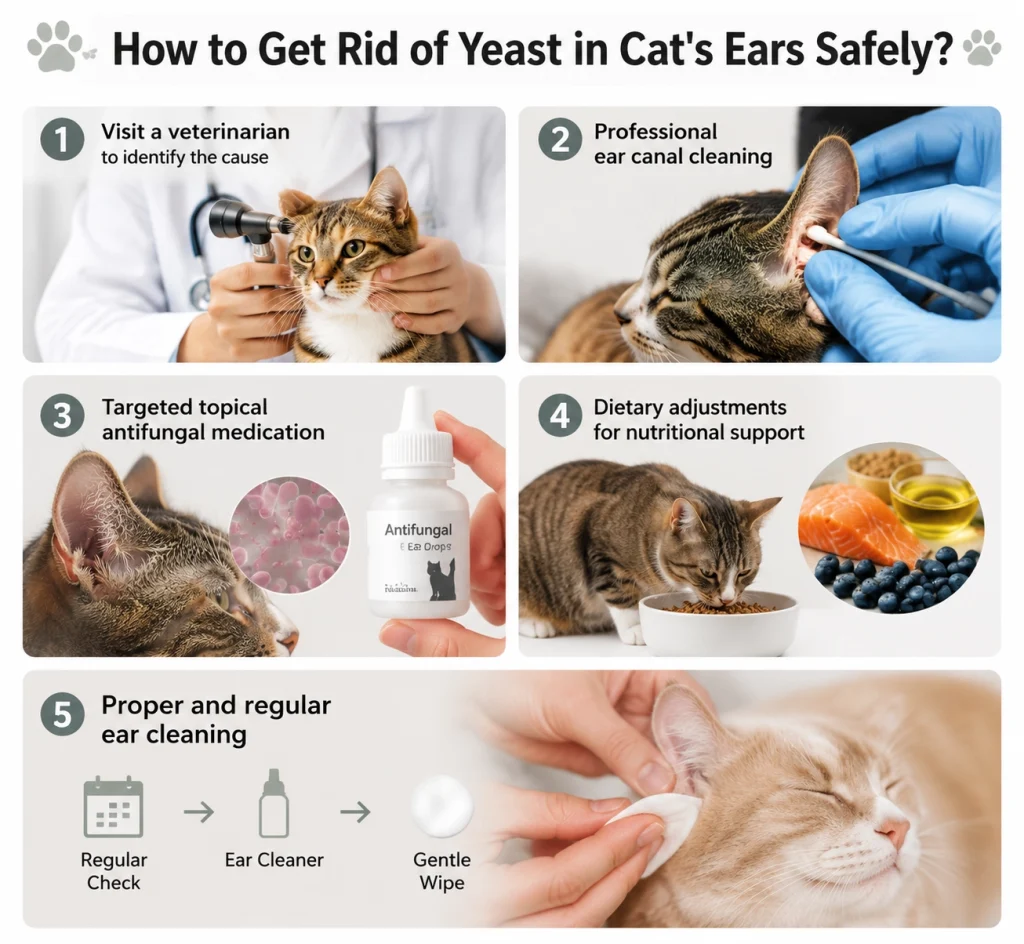
Many “home remedies” circulating online are unsafe for cats. It is crucial to know which ingredients or items should not be used in a cat’s ears and to use veterinarian-approved products specifically designed for cats. VCA’s guidelines on ear cleaning emphasize using appropriate ear-cleaning solutions and avoiding irritating methods such as cotton swabs, alcohol, or hydrogen peroxide.
If you want to treat a cat ear infection at home, you can refer to this article—“Cat Ear Infection Home Remedies: What Works and What Doesn’t”
Prevention is better than cure, especially for chronic conditions like yeast overgrowth. Incorporate the following habits into your cat’s daily care routine:
After bathing or exposure to water, gently dry the base of your cat’s ears with a soft towel. Never insert cotton swabs deep into the ear canal, as this can damage the canal or irritate the eardrum.
Once a week, gently lift the ear flap to check for redness, unpleasant odors, or the accumulation of abnormal discharge.
Work closely with your veterinarian to identify any food or environmental allergens and prevent your pet from coming into contact with them.
Ear mites are a common cause of ear problems in cats; they create conditions favorable for yeast growth. Therefore, it is important to take this seriously and learn to distinguish between ear mite infestations and yeast infections.
Use air conditioning or a dehumidifier to maintain balanced humidity levels in your home, as yeast thrives in warm, humid environments.
All content provided in this article is for informational, educational, and experience-sharing purposes only and does not constitute professional veterinary diagnosis, treatment advice, or medical prescriptions of any kind. If your pet experiences a medical emergency—such as severe pain, loss of balance, bleeding, or abnormal behavior—please contact your local veterinary clinic or emergency veterinary center immediately for treatment.
No. Yeast infections require targeted antifungal treatment. Left untreated, they can lead to chronic inflammation, narrowing of the ear canal, hematomas caused by scratching, and deep inner-ear infections that may result in permanent deafness or neurological balance disorders.
No; you should never use over-the-counter human medications in a cat’s ears. Cats are highly sensitive to certain ingredients; improper use can damage their eardrums or lead to poisoning if they ingest the medication while grooming.
With proper and consistent treatment prescribed by a veterinarian, most mild to moderate yeast infections in cats resolve within one to two weeks. However, chronic or severe cases—such as those linked to underlying allergies—may take longer to heal and require a long-term treatment plan.