
Updated on September 24, 2026. reviewed by Mauve(A 4-year-old pet owner ) Reading time: 6 minutes.
As a pet owner, you may have noticed your dog developing skin redness or excessive licking after using certain wipes—usually, the culprit is unsafe ingredients.
What ingredients should you avoid in dog wipes? In what specific situations and practical scenarios can you safely use wipes on your dog? Today, I’m sharing my and Leo’s effective cleaning tips and a practical guide to avoiding pitfalls!
Why Ingredient Safety Is Vital to Your Dog’s Health?
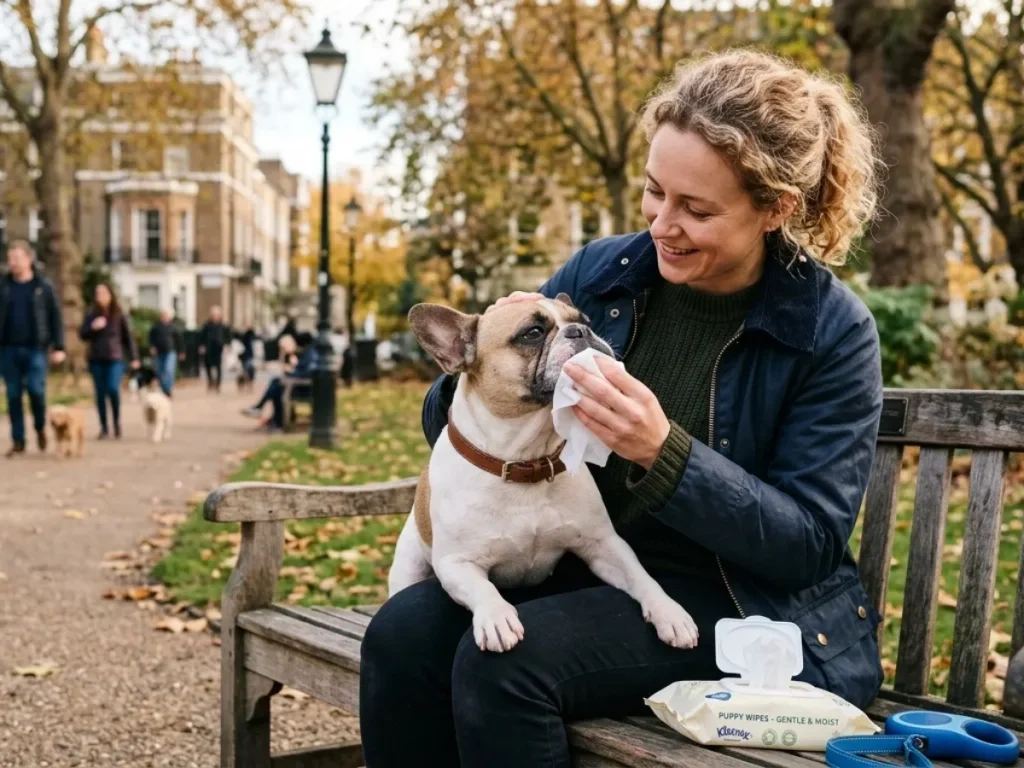
Before diving into our checklist, we must understand a key fact: the safety of pet wipes isn’t just about cleaning—it directly impacts your dog’s long-term health. That’s why it’s even more important to choose cleaning products clearly labeled as suitable for dogs and cats, with specific intended uses.
We must be “picky” about ingredients for three professional reasons:
Unique Skin Physiology
A dog’s skin environment differs from that of humans. According to the VCA, human skin has a pH of approximately 5.2–6.2, while the skin and coat of dogs and cats have a pH of approximately 6.2–7.5. Therefore, everyday cleaning products designed for humans should not be used directly on dogs.
The Risk of Ingestion
Dogs will lick their fur after being wiped down, which means they may ingest any residue. Minimize residue as much as possible after cleaning; for dogs that like to lick their paws, gently pat them dry with a towel after use and monitor their reaction. Therefore, using non-toxic ingredients is crucial for preventing the accumulation of chemicals and chronic health issues.
Immune System Protection
A pure formula can reduce the risk of allergies and respiratory discomfort. Products that are free of strong fragrances, have a clear purpose, and list ingredients transparently are generally better choices for everyday use. A cleaning product only truly offers health benefits when it is gentle on the body and safe enough to eat.

6 Ingredients to Avoid
To help you decipher the complex labels on pet products, here are 6 ingredients I look out for when examining packaging.
The following 6 ingredients are commonly found in low-quality dog wipes:
| Ingredient | Label Aliases | Potential Hazards | Risk Level |
| Alcohol | Ethanol, Isopropyl Alcohol | Strips natural oils, causing severe dryness and irritation. | High |
| Parabens | Methyl-, propyl-, and Butyl-paraben | Disrupts hormones; triggers skin allergies. | High |
| Propylene Glycol | PG, 2-dihydroxypropane | Potential organ toxicity if ingested via licking. | High |
| Fragrance | Parfum, Scent, Artificial Aroma | Triggers respiratory distress and skin sensitivity. | Medium |
| Sulfates | SLS, SLES, Sodium Lauryl Sulfate | Harsh agents that damage the skin barrier. | Medium |
| Phthalates | DEP, DBP, DEHP | Linked to hormonal imbalances and reproductive issues. | High |
The ASPCA notes that while human personal care products aren’t necessarily toxic to pets, the fragrances or other ingredients they contain may irritate the skin; the VCA also recommends using personal care products formulated specifically for your pet’s species. For daily paw and coat wiping and spot cleaning, it’s safer to choose wipes labeled “suitable for pets.”
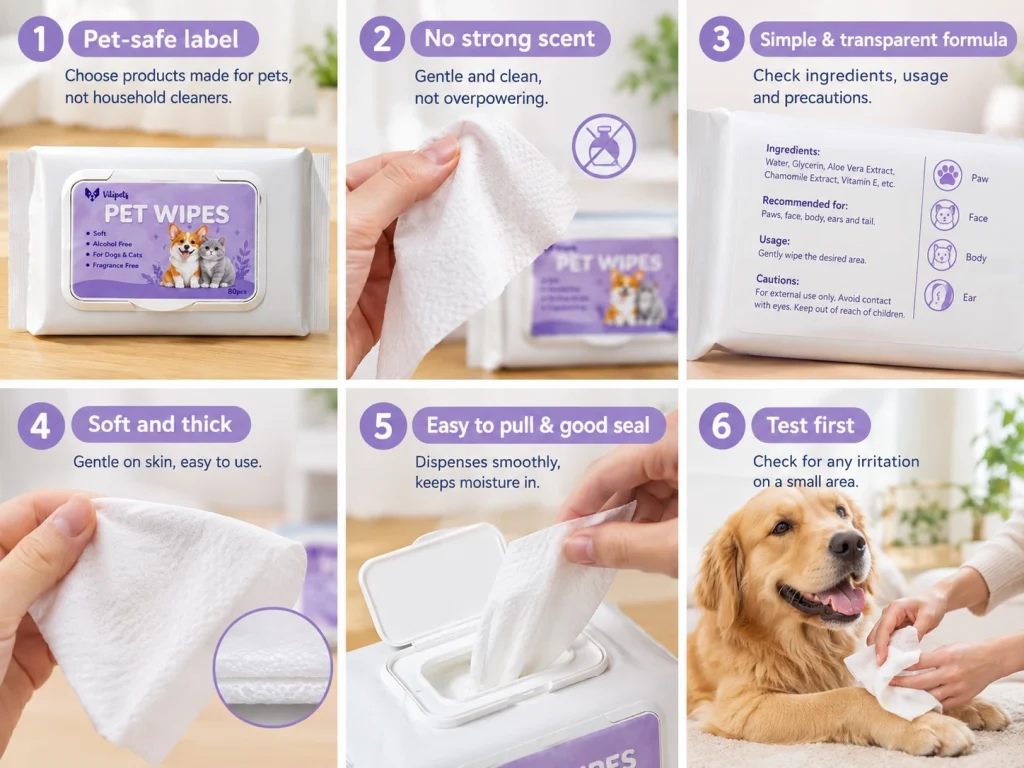
When choosing pet wipes for Leo, I consider these 6 things
1. Is it clearly labeled as “pet-safe”?
I prioritize products that clearly state the intended user and application areas on the packaging, rather than using household cleaning wipes, disinfectant wipes, or wipes with unclear purposes as everyday pet care items.
2. Is the scent too strong?
Personally, I prefer varieties without a strong lingering fragrance. The purpose of wipes is to remove dust and minor stains—there’s no need to mask the issue with a heavy scent.
3. Is the formula simple, and is the labeling transparent?
I check the ingredients, usage instructions, recommended areas of use, and precautions on the packaging. The clearer the information, the easier it is to determine if the product suits Leo’s daily grooming needs.
4. Are the wipes soft and thick enough?
Wipes that are too thin tend to curl at the edges or tear when wiping paws; products with soft material and moderate moisture content are usually easier to control in terms of pressure.
5. Are they easy to pull out and does the packaging seal well?
When returning from a walk, I’m often holding the leash in one hand and opening the door with the other. Only packaging that dispenses smoothly and seals tightly will actually get used frequently.
6. Do I test them on a small area first?
When using a new wipe for the first time, I’ll gently wipe a small, inconspicuous area on Leo’s body and then observe whether he seems uncomfortable. If he keeps licking or biting the area, dodging, or if his skin condition.
7 Safe Ingredients
It is identifying high-quality ingredients that actively nourish the skin barrier that truly matters. Ideal wipes must clean effectively while using natural extracts to protect a dog’s delicate skin.
The following 7 ingredients represent the gold standard for gentle, high-performance care. Use this list as your primary benchmark for identifying truly safe products:
- Aloe Vera: Acts like a cooling lotion to soothe itchy or dry skin.
- RO / Pure Water: The cleanest base to wash away dirt without any harsh chemicals.
- Vitamin A: Helps the skin stay strong and grow healthy new fur.
- Vitamin E: A “skin food” that keeps the coat soft and heals small dry spots.
- Chamomile: Gently calms down skin redness and helps sensitive dogs feel better.
- Glycerin: Works like a magnet to trap moisture and keep the skin hydrated.
- Coconut Oil: It kills germs naturally and leaves the fur smelling fresh and looking shiny.
Natural ingredients are generally more suitable for dogs with sensitive skin or those requiring regular daily cleansing.
When Should You Use Wipes?
When the weather is dry, I use regular pet wipes to quickly wipe Leo’s paws. After it rains, after a trip to the park, or when Leo is noticeably shedding, I prefer to use glove wipes to gently stroke his body in the direction of his fur. It feels more like a brief, interactive grooming session rather than just a rushed “wipe-and-done” routine.
Here’s a usage plan I’ve put together based on Leo’s daily routine:
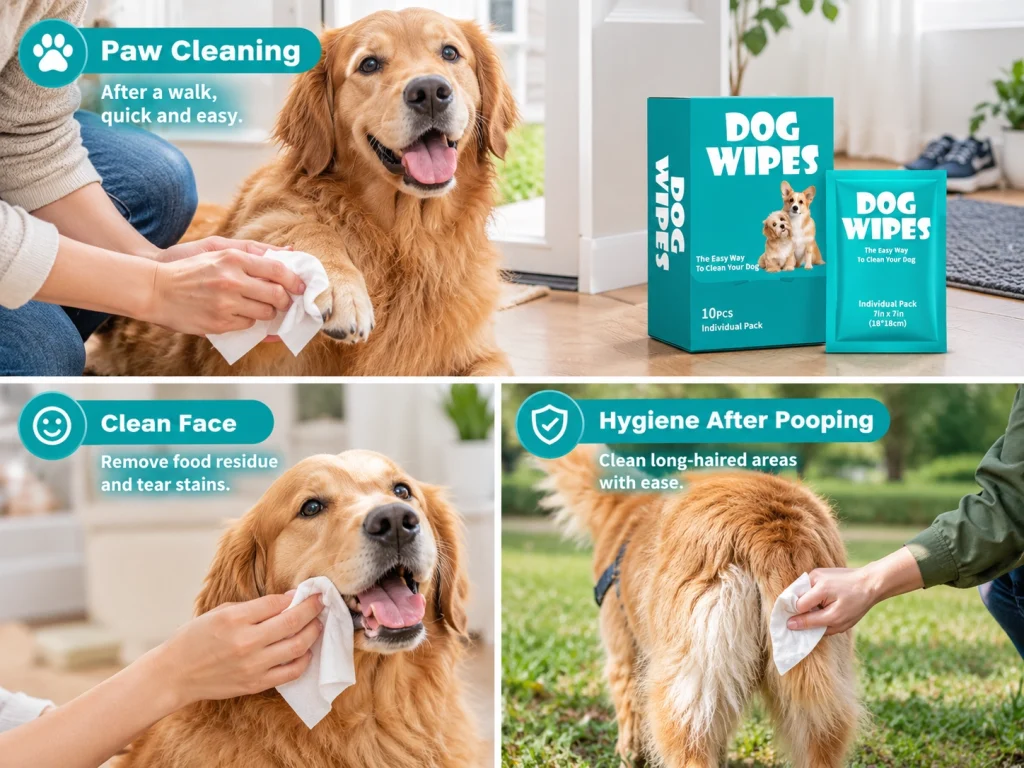
1.Pet Wipes: A Daily Cleaning Essential
Wiping Paws After a Walk: When we get home from a walk, I use 1–2 wipes in the entryway to quickly clean all four paws and between his toes, while also checking for any small thorns or debris stuck in the crevices.
Wiping His Mouth and Tear Stains After Meals: After he finishes his wet food or canned food, I wipe away any residue around Leo’s mouth to keep his face clean and fresh, preventing bacterial growth and redness on his chin.
Hygiene After Defecation: Convenient and hygienic for wiping down long-haired areas or cleaning up after your dog does its business.
2.Pet Glove Wipes: A “Lazy Person’s Spa” and Large-Area Cleaning
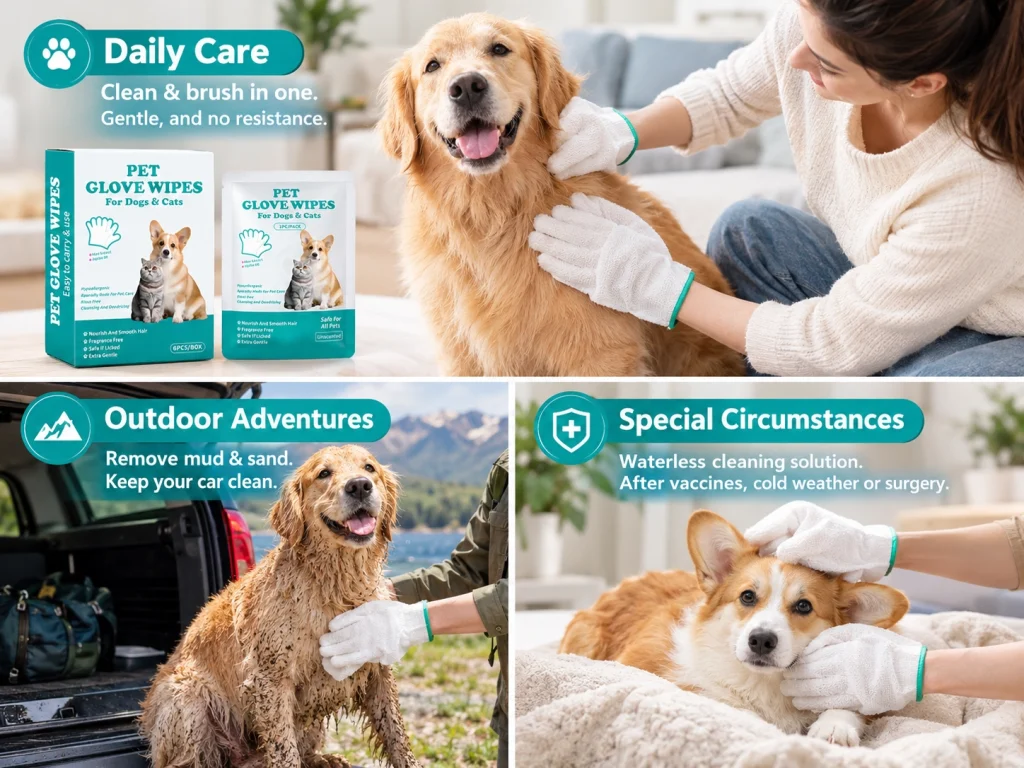
Daily Care Between Baths: Put on the gloves and gently stroke your dog’s entire body. This not only removes surface loose hair and dust but also combines petting with cleaning—and your dog won’t resist at all.
Outdoor Camping and Road Trips: After taking Leo to the mountains or the beach and before getting back in the car, pull out a pair of glove wipes and wipe him down from head to toe. This keeps mud and sand out of the car and leaves him smelling naturally fresh.
Alternative to Bathing During Special Circumstances: After vaccinations, when it’s too cold in winter, or when your dog has just had a minor surgery and shouldn’t get wet, glove wipes are an excellent waterless cleaning solution.
Welcome to read more articles on vilipets.com
FAQs:
1. Are dog wipes as good as a bath?
No, while wipes are excellent maintenance tools, they are not a substitute for a deep-cleaning bath.
2. What is a good substitute for dog wipes?
A soft microfiber cloth soaked in warm water and a drop of pet-safe shampoo is your best option.
3. Are dog wipes good for dogs?
Yes, high-quality wipes are an excellent addition to your grooming kit, provided they are pH-balanced for canines.
4. Can I use baby wipes on my dog?
No, you should avoid using baby wipes on your dog whenever possible. They are formulated for acidic human skin and will disrupt a dog’s neutral pH balance, leading to skin barrier damage and infections.
-
Sale!
Gentle Neutral pH Round Pet Eye Wipes Tear Stain Removal
Original price was: $5.98.$2.99Current price is: $2.99. Add to cart -
Sale!
Gentle Pet Ear Drops for Dogs Cats Ear Care & Wax Removal
Original price was: $6.19.$5.99Current price is: $5.99. Add to cart -
Sale!
-1-300x300.webp)
Large Green Pet Dental Wipes Teeth Cleaning amp Fresh Breath
Original price was: $5.99.$3.99Current price is: $3.99. Read more