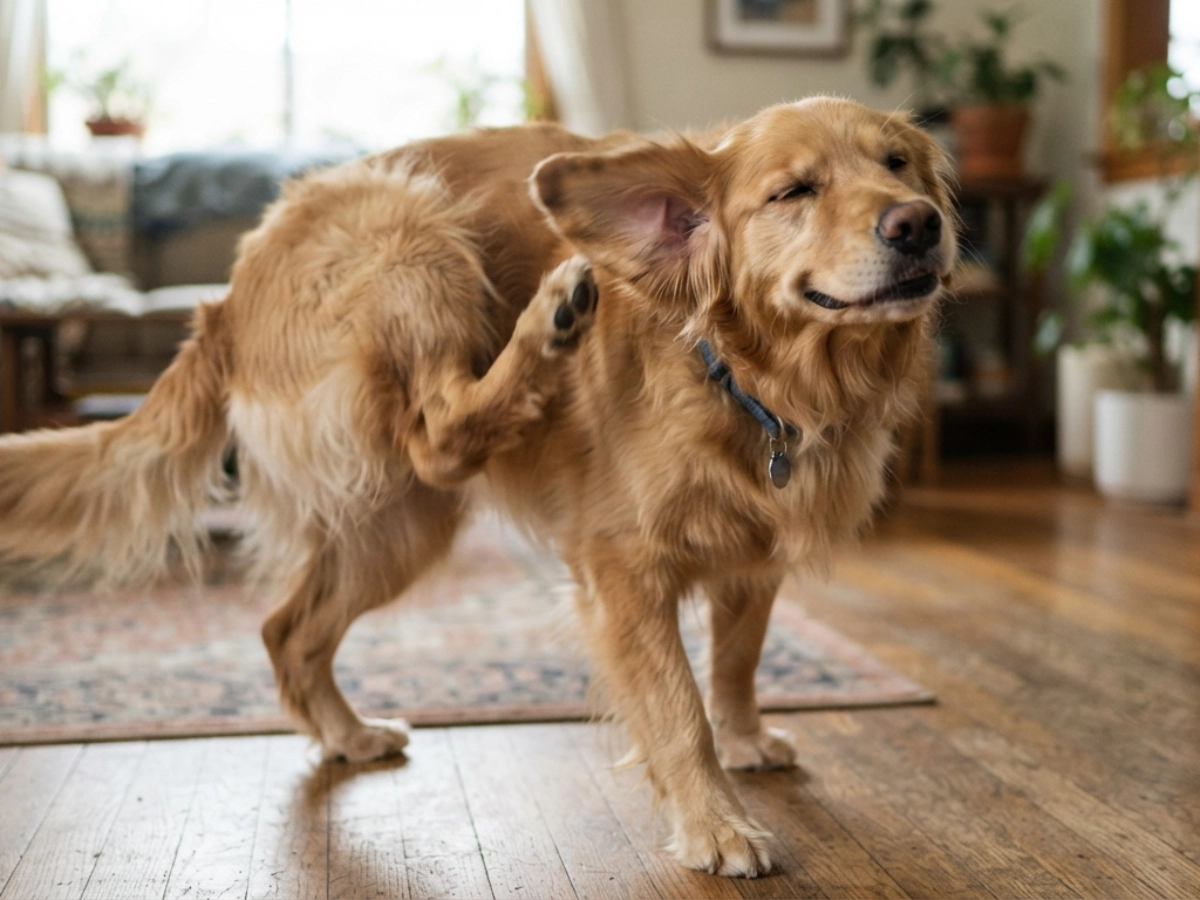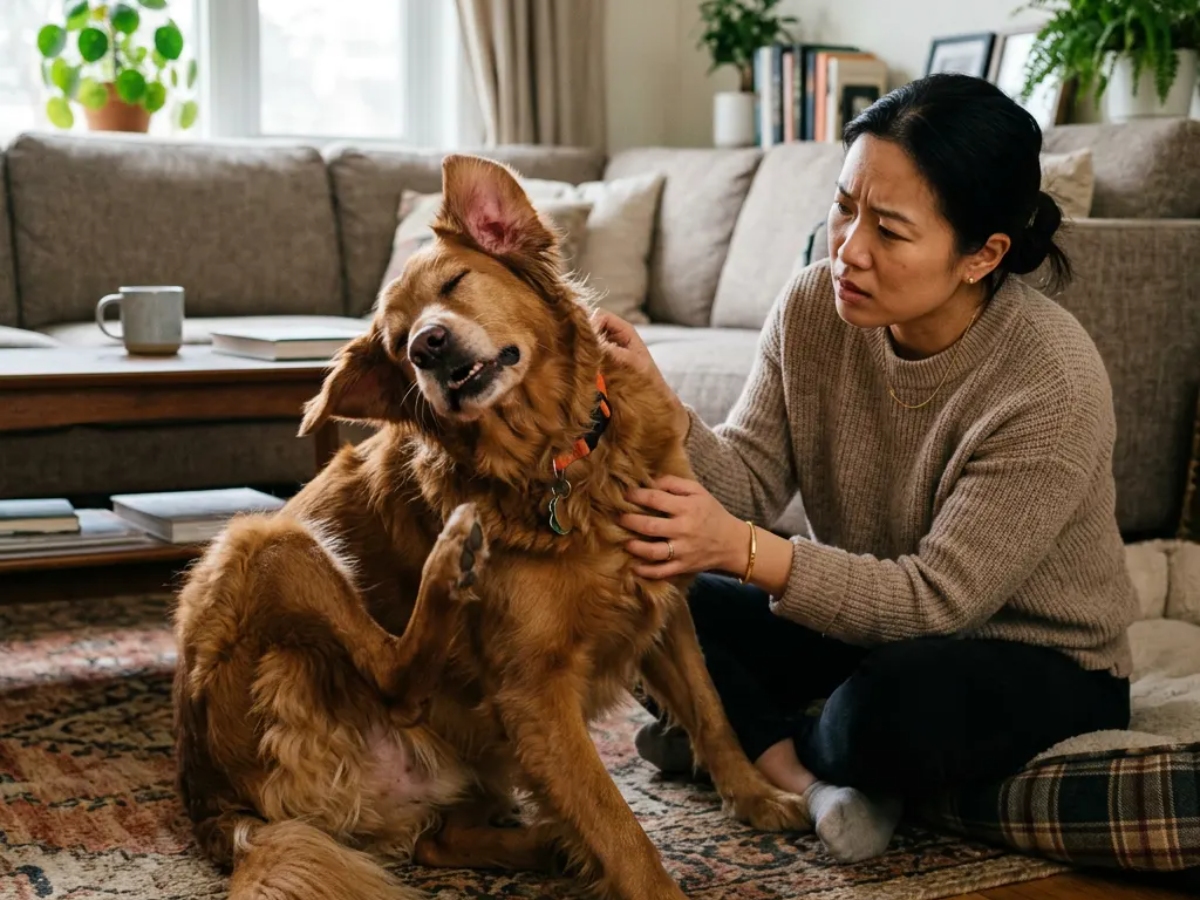

As a dog owner, have you ever been bothered by your dog’s repeated ear scratching? As someone who has owned dogs for many years, I’ll share how I deal with it.
When my dog first got an ear infection, I didn’t pay much attention to it .
At first, the dog didn’t seem to be in serious condition. It would occasionally scratch its ears or shake its head, and I thought it was just dust in its ears or that the bathwater hadn’t been drained properly.
However, within just a few days, the situation worsened noticeably. My dog began scratching much more frequently, sometimes shaking its head in the middle of the night. I also noticed a sour odor coming from the ears. That’s when I started to worry.
My first thought was to try some over-the-counter otitis ear drops for dogs, hoping they could quickly relieve the irritation and help the infection clear up.
After years of raising dogs and dealing with numerous ear infections, I can confidently tell you this:
A bottle of over-the-counter otitis ear drops for dogs may not be enough to solve your problem.
Some mild infections may improve with gentle enzyme-based ear care products. However, more severe infections often require prescription medications before the inflammation spreads deeper into the ear canal. According to VCA Animal Hospital , ear infections are usually caused allergies, anatomical ear issues, bacteria, or yeast overgrowth, all of which require proper diagnosis by a veterinarian.
Dogs are more susceptible to ear infections than humans because their ear anatomy is completely different. According to the American College of Veterinary Surgeons(ACVS) , a dog’s ear canal is L-shaped. While this design helps protect the eardrum, it also creates an environment where moisture, debris, allergens, and microorganisms can become trapped.
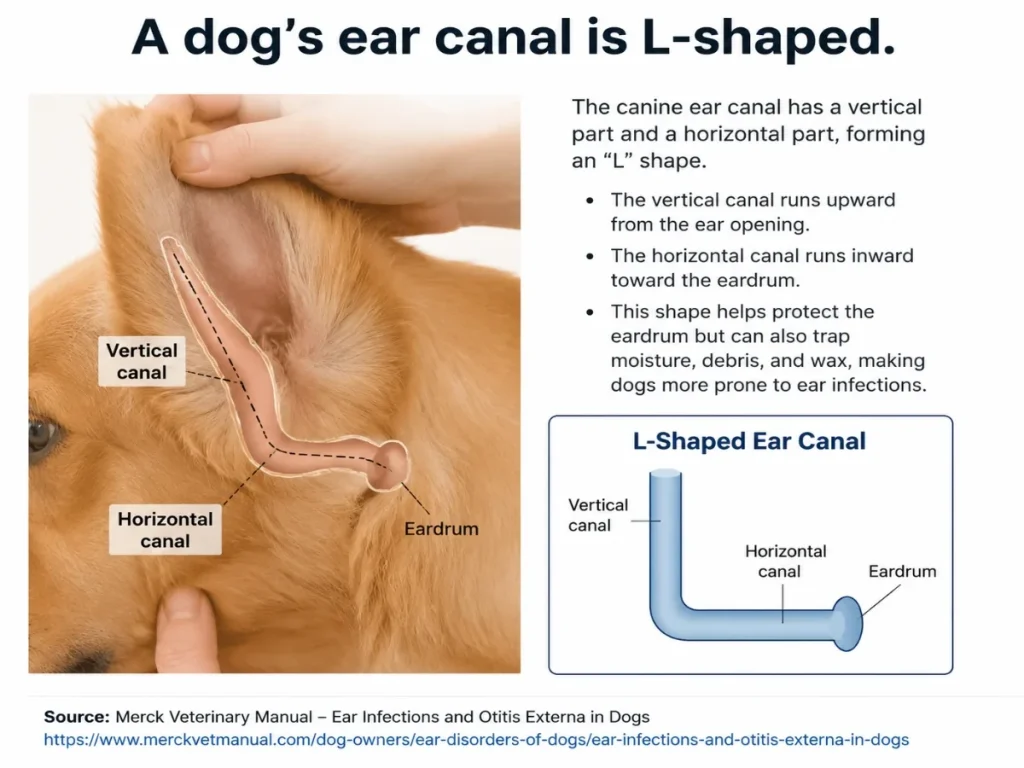
As a result, dogs whose ears are not thoroughly dried after bathing, dogs with floppy ears that limit airflow, and dogs with environmental allergies are at a significantly higher risk of developing ear infections.
Breeds such as Cocker Spaniels, Basset Hounds, and Labrador Retrievers often experience ear problems more frequently than other breeds.
One of the Biggest Mistakes Dog Owners Make
One of the biggest mistakes dog owners make is choosing treatment based solely on symptoms.
Many over-the-counter otitis ear drops for dogs claim to treat redness, odor, and itching. However, the effectiveness of treatment depends entirely on the underlying cause of the infection.
Bacteria, yeast, allergies, and ear mites can all produce similar symptoms, yet each requires a different treatment approach.
Without identifying the root cause, even the best otitis ear drops for dogs may provide only temporary relief.
Here are some common signs that may help you make a preliminary assessment.
One of the most recognizable signs is a sour, musty, or corn chip-like odor coming from the ear canal.
Other symptoms include:
If you suspect a yeast infection, you may want to read our Dog Antifungal Ear Drops Guide.
Unlike yeast infections, bacterial infections typically progress more quickly and are often more painful.
Common symptoms include:
If you’re not experienced in treating ear infections, distinguishing between these conditions can be extremely difficult.
This is one reason many dogs continue experiencing recurring symptoms despite treatment—the underlying pathogen was never properly identified.
If your dog’s ears appear dirty, don’t rush into cleaning them.
Before cleaning, keep two important points in mind:
According to the VCA Animal Hospital Cleaning Guidelines , Never insert cotton swabs deep into the ear canal, as this can push debris farther inward and potentially damage the ear canal or eardrum.
Home treatment should never replace professional veterinary care when serious symptoms are present.
Contact your veterinarian immediately if you notice any of the following:
For severe ear infections, home care and treatment are pointless and will only worsen the dog’s condition.
Please contact a veterinarian immediately if any of the following situations occur:
While every effort has been made to ensure the accuracy of the information presented in this article, it should not be used as a substitute for professional veterinary care. Ear infections, parasites, allergies, and other medical conditions can share similar symptoms. Only a licensed veterinarian can provide an accurate diagnosis and appropriate treatment plan for your dog.