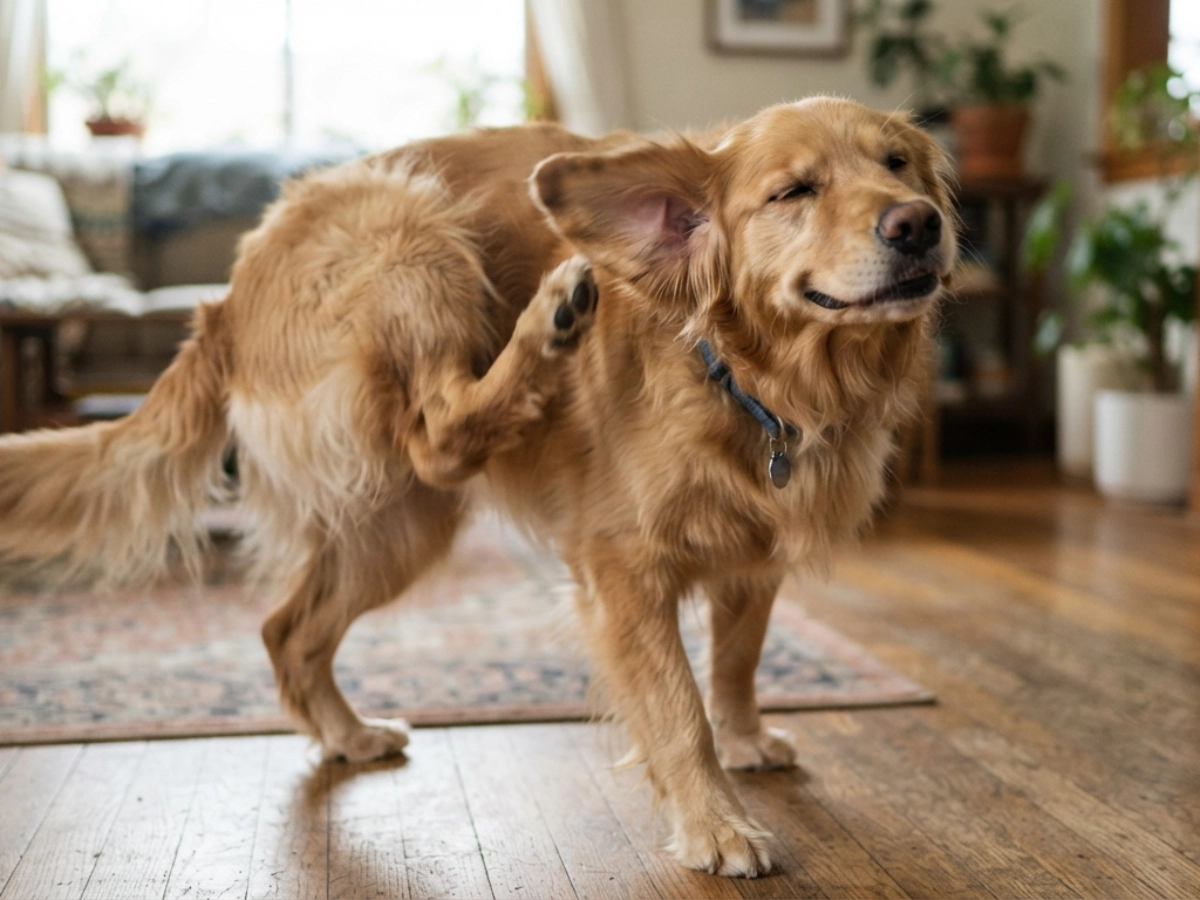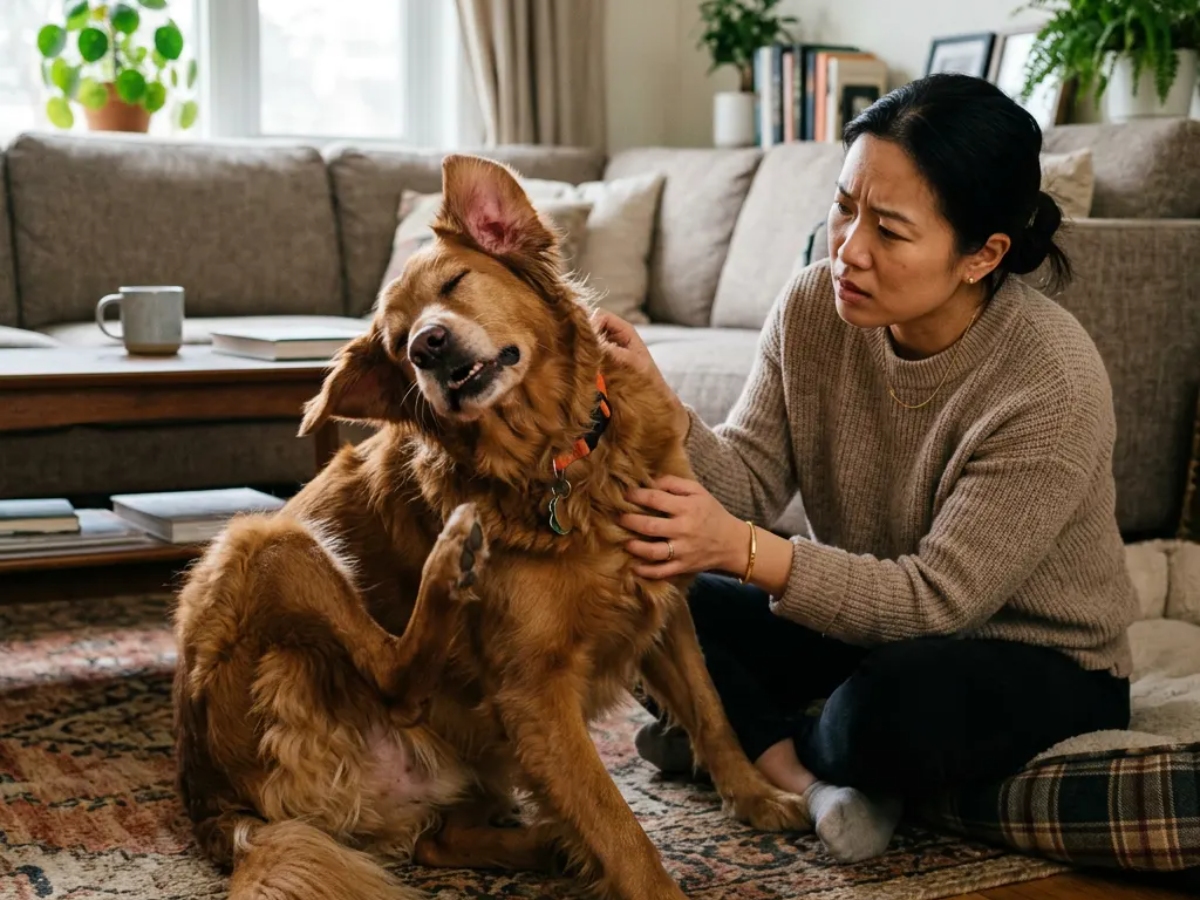

When our dogs scratch their ears frequently, shake their heads frantically, or even yelp in pain, we as owners naturally become very concerned. At times like this, we all wish for a miracle cure that can instantly heal our dog’s ears. However, the more anxious we become, the more we must remain calm—an ear infection may only be the tip of the iceberg. Skin allergies are actually the underlying reason why the condition isn’t responding to treatment. To help your dog fully recover from this distress, we need to understand the relationship between allergies and fungi and learn how to scientifically select and use antifungal ear drops for dogs.
A dog’s ear canal skin is actually an extension of its overall skin system. Under normal circumstances, a small amount of fungi (primarily yeast and Malassezia) naturally reside in a dog’s ear canal, maintaining a constant balance with the dog’s immune system. However, once an allergy occurs, this balance is instantly disrupted.
Whether caused by environmental or food allergies, these reactions trigger systemic skin inflammation, leading to congestion and redness in the ear canal. Localized inflammation further raises the temperature inside the ear canal and increases oil secretion. According to the American Kennel Club (AKC) guide on yeast infections, this warm, moist, and high-fat environment becomes a perfect breeding ground for yeast overgrowth. Ultimately, this leads to a massive proliferation of fungi, causing ear inflammation. If the dog scratches its ears excessively, damaging the skin inside the ear canal, it can lead to secondary infections.
Some owners, fearing that delaying intervention will worsen their dog’s condition, may simply grab a bottle of generic ear drops for dogs and apply them to their pet’s ears. This incorrect use of medication is not only ineffective but can also further damage the immune barrier in the dog’s ear canal. What we need to do is take the dog to a veterinary clinic so a veterinarian can prescribe professional treatment. You can also make a preliminary judgment based on your own years of experience.
In the case of a fungal infection, the ear canal typically emits a very distinctive sour odor, and the discharge appears brown or black. The dog will constantly rub its ears against the carpet or frantically scratch them with its hind legs due to intense itching.
In the case of a simple bacterial infection, the dog’s ears will emit a pungent, foul odor or a fishy smell, and the discharge will be yellowish-green, thick, and pus-like, accompanied by severe pain.
As noted in the VCA Animal Hospitals overview of Otitis Externa, severe otitis caused by allergies is often a mixed infection involving both fungi and bacteria.When the ear canal is scratched open due to itching from an allergic reaction, bacteria can take advantage of the opening. If treatment relies on a single type of medication, it may not be effective.
Once a fungal infection is confirmed, my first choice is a topical ear drop specifically formulated for canine fungal infections. These products penetrate the skin to disrupt the fungal cell wall, thereby killing the fungus. However, before selecting a medication, I have some advice for pet owners: be sure to carefully read the ingredient list and look for the following core ingredients that have been proven effective.
Miconazole is the most classic active ingredient in clinical antifungal ear drops for dogs; it is highly effective against Malassezia fungi.
Clotrimazole and ketoconazole remain excellent broad-spectrum antifungal agents. If you choose a medication containing these ingredients, opt for a combination formula that includes both. These formulations enhance absorption through other components, significantly accelerating the healing process.
Note⚠️: If your dog’s ear fungal infection is already severe, a single bottle of ear drops is usually insufficient; in such cases, we typically need to combine it with a topical ointment.
For instructions on how to use the ointment when your dog has a severe fungal infection, please refer to my guide: The Correct Application and Care of Antifungal Ear Ointment for Dogs.
Veterinarians generally recommend that you can, but only if you are certain that your dog’s eardrum is intact. If your dog’s ear infection has persisted for a long time, or if the eardrum has perforated due to intense scratching, blindly using antifungal ear drops for dogs could cause the medication to enter the inner ear directly, leading to severe pain. In the worst-case scenario, your dog could suffer permanent hearing loss or facial nerve paralysis. You should only consider purchasing over-the-counter antifungal ear drops for dogs to try at home during the early stages of the infection.
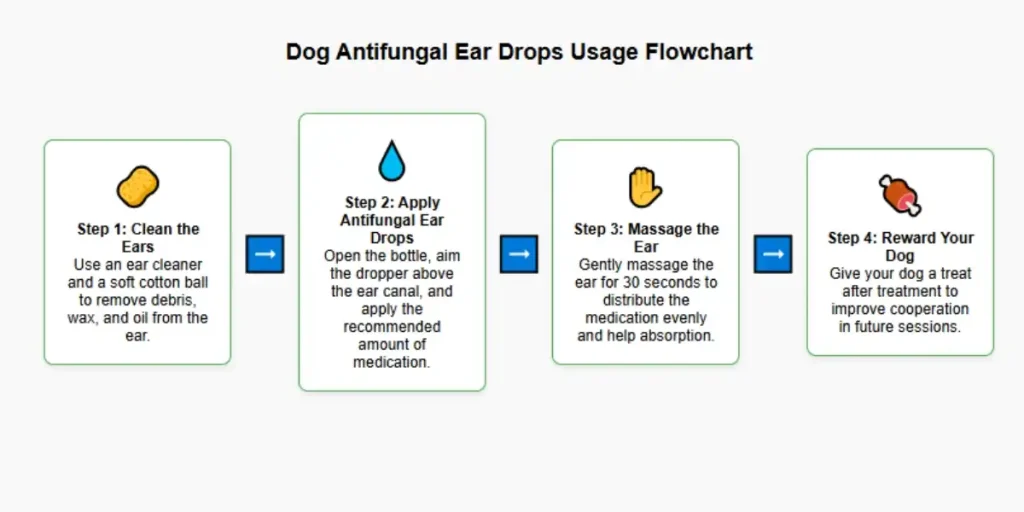
To get the most out of antifungal ear drops for dogs, you need to use them correctly. Here is a step-by-step guide to using antifungal ear drops for dogs.
Step 1: Clean the Ears
The medication’s ingredients are better absorbed in a completely clean environment. You can use an ear cleanser to remove debris, earwax, and oil from your dog’s ears. Wipe the ear canal with a soft cotton ball or ear wipe to keep it clean and fresh.
Step 2: Apply the antifungal ear drops
Open the cap of your chosen ear drops, position the dropper tip above the ear, and squeeze an appropriate amount of solution into the ear canal.
Step 3: Massage the Ear to Aid Absorption
With clean hands, gently massage the inside of your dog’s ear for 30 seconds to distribute the medication evenly, helping it penetrate deeper into the ear canal and be absorbed more quickly.
Final Step: Give a Reward
Once you’ve completed these steps, give your dog a small treat. This will help improve their cooperation during future treatments.
Does your dog also experience recurring symptoms after recovery? Treating a dog’s fungal ear infection isn’t just about using ear drops; the key to preventing recurrence is controlling allergens and keeping the ear canal dry.
Home Treatment: If your dog suddenly tilts its head, walks unsteadily, or does not respond to calls, this indicates that the infection has spread to the inner ear. Stop any home treatment immediately. The ear infection has become severe, so please take your dog to a veterinary clinic as soon as possible.
While every effort has been made to ensure the accuracy of the information presented in this article, it should not be used as a substitute for professional veterinary care. Ear infections, parasites, allergies, and other medical conditions can share similar symptoms. Only a licensed veterinarian can provide an accurate diagnosis and appropriate treatment plan for your dog.