
Have you noticed more and more of your friends keeping dogs? Nowadays, pet ownership is not a burden but a lifestyle choice driven by love. Poodles have won the hearts of countless families thanks to their intelligence, lively nature, and versatile styling options. Yet, regardless of the breed, dogs often face a common health issue: ear infections.
So, why are Poodles prone to ear infections? What do you need too know?
Table of Contents
What is a poodle?
The Poodle originated in Europe (widely believed to have started in Germany before gaining popularity in France) and was initially used as a water retriever. Known for their curly coats, intelligence, and trainability, they come in various sizes, including Toy, Miniature, and Standard Poodles. According to the standards of the FCI and the AKC, the Poodle is considered a single breed, though they are strictly categorized into different groups based on size.
| Type | Height (Inches) | Weight (KG) |
| Toy Poodles | 9.4-11 | 6.5-7.5 |
| Miniature Poodles | 11-14 | 12-14 |
| Medium Poodles | 14-18 | 15-19 |
| Standard Poodles | 18-24 | 20-32 |
Despite the vast differences in size, Toy Poodles and the towering Standard Poodles share identical genetic and physiological structures, including their unique ear canal characteristics.
Tip: In Western countries, terms like “Teddy” (referring to the “Teddy Bear cut” style) and “Giant Poodle” (a colloquial Chinese term) are not typically used. “Teddy” is understood as a stuffed toy bear, and there is no native equivalent for “Giant Poodle”; the formal name is “Standard Poodle,” though “Giant Poodle” may sometimes be used as an alternative name to emphasize its size.
Why are poodles prone to dog ear infections?
Their unique curly coats and specialized ear canals create conditions that predispose them to dog infection issues.
Poodels ear infections rarely stem from a single cause. The Merck Veterinary Manual notes that otitis externa (outer ear infection) can result from a combination of factors, including parasites, foreign bodies in the ear canal, allergies, bacteria, yeast, and even middle-ear issues. Ear problems are common in pet-owning households but occur with particular frequency in poodles.
Breed Specifics: High Risk of Disease
An epidemiological study published in the Journal of Veterinary Medical Science analyzed 1,370 dogs. It found that the incidence of otitis externa was 12.6% in dogs with floppy ears, compared to only 5.0% in dogs with erect ears—a statistically significant difference. Because Poodles possess two high-risk traits—floppy ears and dense hair growth within the ear canal—they are considered a breed highly susceptible to ear infections. Consequently, ear infections are a matter requiring special attention for Poodle owners.
Typical Floppy-Ear Conformation: A Warm, Humid, Enclosed Environment
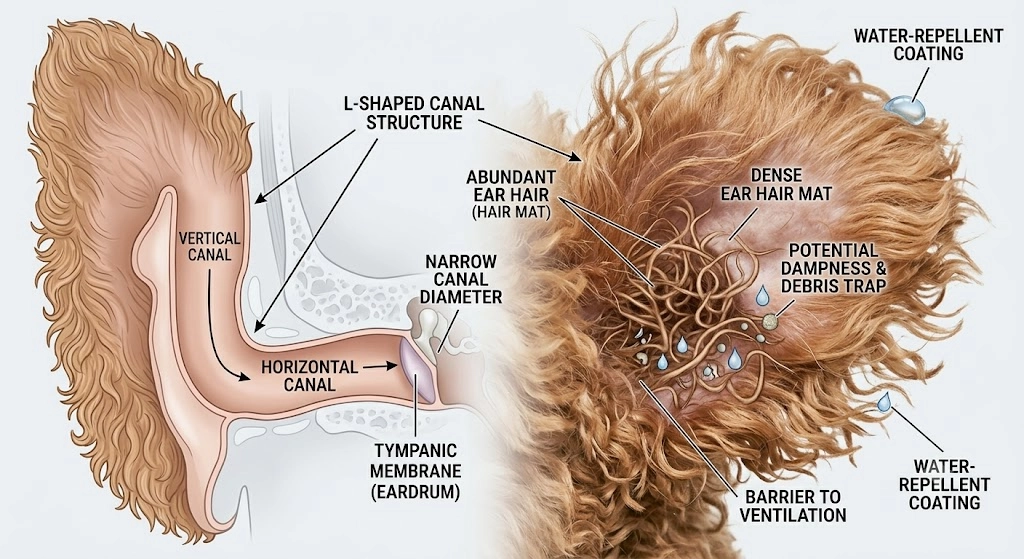
Unlike breeds with erect ears—such as German Shepherds and Shiba Inus—poodles are a classic example of a floppy-eared breed. Poodles possess long, drooping ear flaps. While this shape is charming, the flaps constantly cover the ear canal opening, acting as a natural “lid” that prevents airflow and creates an environment where earwax, moisture, and microorganisms easily accumulate.
The “L-shaped” Ear Canal: A Hairy Characteristic
While all dogs have ear canals consisting of vertical and horizontal sections, poodles have canals that are relatively narrower and contain more hair.
Unlike most breeds, Poodles have a single-layer coat and are low-shedding. Inherited from their water-retrieving ancestry, their ear hair is naturally water-resistant; this hair forms a dense mat inside the canal, acting much like an airtight filter.
Poor Habits: Neglecting Care After Swimming or Bathing
Research by the Royal Veterinary College (RVC)—specifically the Vet Compass study analyzing data from 22,333 dogs in the UK—found that Poodle-type and Cocker Spaniel-type dogs face a higher risk of ear infections. This confirms that Poodles require special attention regarding ear health, particularly if they suffer from allergies or are bathed frequently.
Because Poodles have curly coats that require regular grooming and bathing—and many naturally enjoy swimming and playing in water—failure to thoroughly dry the ear canal after these activities can lead to problems. If the skin remains soaked and trapped moisture is sealed inside the poorly ventilated canal, local pH levels shift, creating an ideal environment for yeast growth; this dampness significantly increases infection risk. Proper ear care is especially crucial after swimming in the summer!
Allergic Constitution: Recurrent Ear Infections
Ear problems often stem from more than just inadequate hygiene; in fact, allergies are frequently the root cause of ear infections. VCA notes that allergies are among the most common underlying causes of chronic or recurrent otitis (ear inflammation) in dogs. Clinical data shows that allergic factors are involved in up to 43% of otitis cases, while 65%–80% of dogs with food allergies develop ear infections.
For breeds like Poodles that are naturally prone to allergic skin conditions, treating the ear infection alone often fails to resolve the issue completely; it is also necessary to investigate potential triggers such as food allergies, pollen, and dust mites. The most troublesome aspect is not the initial infection itself, but its tendency to recur.
What are the symptoms of dog ear infection?
- Abnormal behaviors such as frequent scratching or shaking of the ears or rubbing the ears against the floor or furniture.
- A noticeable sour or yeasty odor; redness, swelling, and heat in the skin inside the ear flap.
- Increased brown earwax, accompanied by yellow purulent discharge or black, coffee-ground-like discharge.
While it may seem like a minor issue, it becomes difficult to manage if left untreated for too long.
Ear Mites vs Yeast Infections: The Differences
To distinguish between ear mites and a yeast infection, look at the discharge and the dog’s symptoms, as well as whether the condition is contagious.
However, the Merck Veterinary Manual notes that ear mites are parasites, whereas yeast and bacterial issues involve infectious overgrowth; the treatments differ significantly. Using the wrong medication is not only ineffective but can also aggravate the condition. Not every instance of dark debris in the ear indicates ear mites; treating for the wrong condition can delay proper care.
Many owners, upon seeing their dog scratching its ears or noticing dark brown discharge, blindly purchase medication for ear mites. Consequently, the actual problem goes untreated, and the condition may worsen. Ear mites are often confused with yeast or bacterial infections because the outward symptom—frantic ear scratching—looks the same.
| Comparison Aspect | Ear Mites | Yeast Infection |
| Cause | Parasite | Fungus (Malassezia) |
| Discharge Appearance | Dry, crumbly dark brown/black debris | Dark brown to yellowish waxy or greasy discharge, often with a distinct sweet/bready or yeasty smell |
| Contagiousness | Highly contagious | Not contagious |
| Commonly Affected Groups | More common in puppies and kittens | Floppy-eared, heavy-coated breeds (Poodles, Cocker Spaniels, etc.) |
For a detailed comparison between ear mites and ear infections, please read this article: “Dog Ear Mites vs Ear Infections: How to Tell the Difference”
How to Prevent Ear Infections in Poodles?
The key to preventing poodles ear infection is not constant cleaning but rather controlling moisture, minimizing irritation, and ensuring good airflow.
Most recurrent infections can be significantly reduced by properly managing ear hair, ensuring ears are thoroughly dried after bathing, and promptly treating allergies and early-stage inflammation.
VCA Animal Hospitals emphasizes that you should never administer ear medication to your dog without a professional diagnosis. A veterinarian needs to use an otoscope to check the integrity of the eardrum and perform cytology on the ear canal discharge to determine whether the infection is caused by fungus, bacteria, or a severe ear mite infestation.
1. Identify the Condition
Effective treatment requires targeting the specific cause; first, you must clearly identify the symptoms to distinguish between ear mites and an ear infection. If you cannot tell the difference, take your dog to a veterinarian for an examination. Do not rely solely on visual inspection, and avoid the long-term, indiscriminate use of ear drops or excessive ear cleaning.
If your dog has ear mites but you cannot find suitable medication, please refer to the following: “Dog Ear Health Guide: How to Choose the Best Ear Mite Medicine for Your Dog”
Things you can do at home before visiting the vet:
- Observe the ears for redness, swelling, odor, the nature of the discharge, and signs of pain in your dog.
- Pause the use of medications, bathing, frequent ear flushing, and irritating cleaning methods.
- Keep the ears dry, monitor the dog’s ear condition closely, and ensure good indoor ventilation.
- Take photos of the dog’s ear condition over recent days; these can help the veterinarian with diagnosis and facilitate prompt treatment during your visit.
2. Keep the ears dry
Promptly care for the ears after bathing: first, use a towel to absorb moisture from the outer ear flap, then use a hairdryer on a low-heat, low-speed setting—held at a distance—to dry the fur around the ears and prevent residual moisture from entering the ear canal. This step is especially crucial if the dog enjoys swimming or is frequently exposed to rain; prolonged dampness in the ear canal significantly increases the risk of yeast and bacterial overgrowth.
3. Regular grooming
Poodles have dense ear hair; trimming excess hair from the ear canal improves ventilation and airflow. It is best to have a professional groomer or veterinarian handle this. As a pet groomer with many years of experience, I do not recommend that pet owners attempt to pluck the hair themselves. The goal of ear hair maintenance is to ensure proper ventilation, not merely to achieve a neat appearance. Excessive plucking can irritate the ear canal and may actually increase the likelihood of inflammation.
4. Diet and allergy prevention
Ear problems in Poodles are often linked to a sensitive constitution, environmental allergies, or food intolerances. If ear issues recur frequently, it is advisable to keep a record of food, treats, seasonal changes, and grooming products used to help identify potential triggers.
For Poodles diagnosed with allergic dermatitis, dietary adjustments (such as switching to a hypoallergenic prescription diet) or the use of anti-allergy medications—under veterinary guidance—can help eliminate the root cause of ear infections.
My own dog, Leo, suffered from recurring ear infections despite frequent ear cleaning and medication changes; however, after an eight-week food elimination trial and a switch to a hypoallergenic prescription diet (as recommended by the vet), the frequency of flare-ups dropped significantly.
5. Master the correct ear-cleaning method
The golden rule when cleaning a poodle’s ears is never to insert a cotton swab into the ear canal. If the dog’s ears are generally healthy—free from unpleasant odors or discharge—a maintenance check and necessary cleaning once every one to two weeks is usually sufficient. However, for dogs with a history of recurring infections, oily ears, or allergies, it is recommended to shorten the interval between checks as advised by a veterinarian and to use pet ear drops specifically formulated for canine ears.
If the dog flinches, shakes its head, or twists its body before you even touch its ears—or runs away the moment it sees the bottle of ear cleaner—it is essential to master the correct cleaning technique; doing so is key to preventing ear infections. Never use hydrogen peroxide, alcohol, or ear cleaning solutions intended for humans on your dog’s ears.
Here are the steps to clean a dog’s ear:
- Preparation: You will need pet-specific ear drops for a dog, medical-grade cotton balls or gauze, and the dog’s favorite treats.
- Applying the solution: Gently lift the ear flap and squeeze the drops into the ear canal. Fill it until the liquid is visible and nearly overflowing.
- Massaging the base: Use your fingers to massage the base of the ear in a circular motion for 30 seconds.
- Letting the dog shake: Release the ear and step back, allowing the dog to shake out the liquid and the loosened debris.
- Wiping the outer ear: Use a cotton ball or pet wipes to wipe away any debris and residual liquid from the ear flap.
- Rewarding: Immediately offer a treat and praise to help reduce the dog’s resistance to future cleanings.
Veterinarian Disclaimer
The content of this article is for educational and informational purposes only and should not replace professional veterinary diagnosis and treatment.
If you observe symptoms such as pain when the ears are touched, loss of balance or head tilting, significant bleeding, a severe odor, or purulent discharge, please visit a professional veterinary clinic for examination and treatment. Attempting to treat the issue yourself is not recommended, as it could worsen the infection.
Release Date: 6/15/2016
Last Updated Date: 8/18/2026
-
Sale!
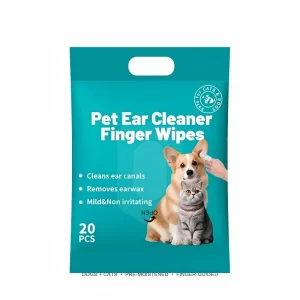
Gentle Neutral pH Round Pet Eye Wipes Tear Stain Removal
Original price was: $5.98.$2.99Current price is: $2.99. Add to cart -
Sale!
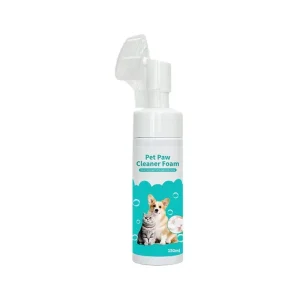
Foaming dog body cleaner with a silicone brush for pet paws no rinsing
Original price was: $8.98.$4.49Current price is: $4.49. Add to cart -
Sale!
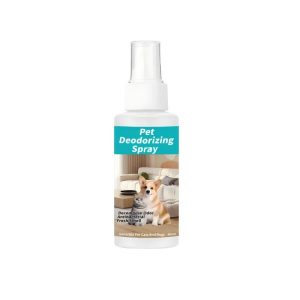
Pet Deodorizing Spray 60ml – Portable Pocket Odor Remove
Original price was: $4.19.$3.99Current price is: $3.99. Add to cart