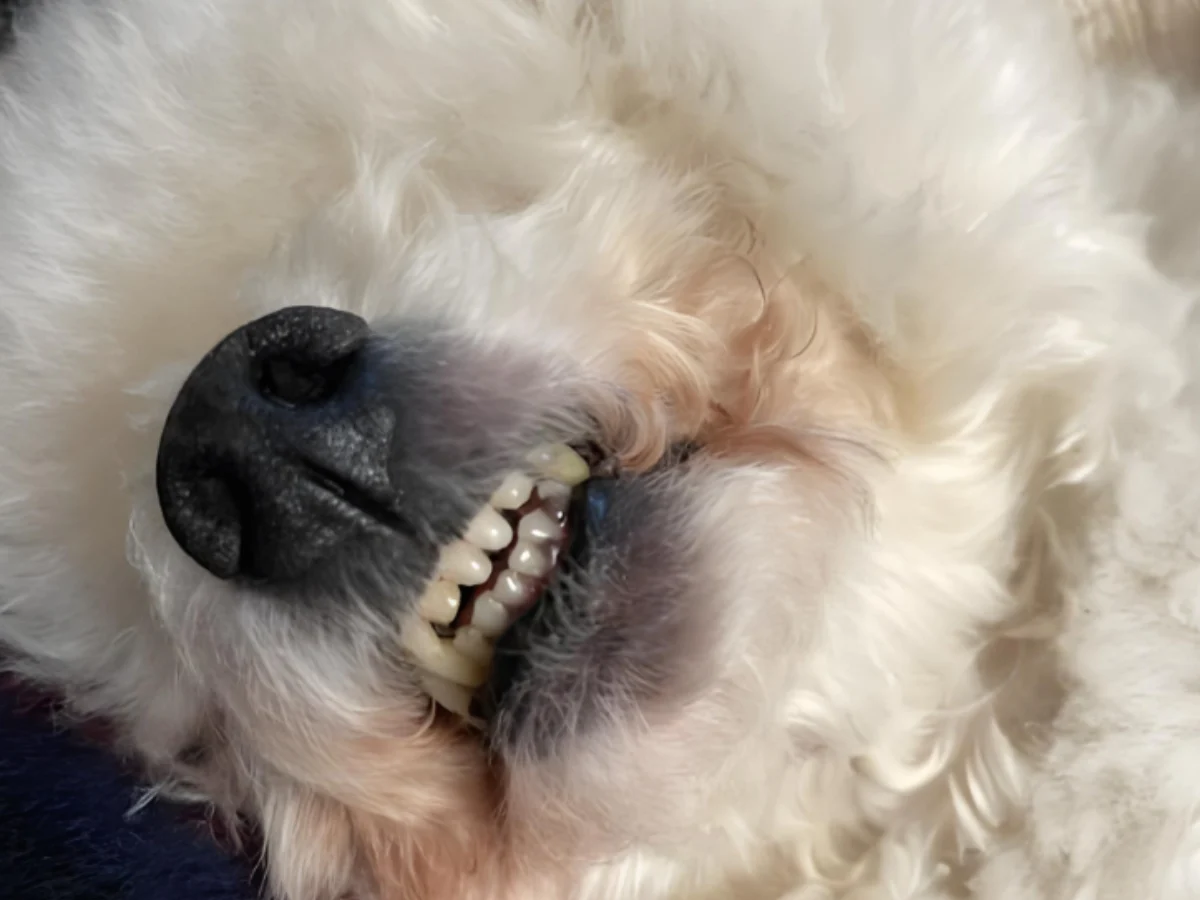

Here is a skin-crawling truth. By the time you actually spot a live flea on your dog, thousands of hidden eggs and larvae are already nesting deep inside your carpets and bedding. Flea infestations can escalate quickly due to hidden eggs and larvae in the environment. This is exactly why you feel stuck in a vicious cycle, watching the pests return wave after wave even after blasting your home with heavy chemicals.
If your pup has hypersensitive skin or you are just plain tired of exposing your family to harsh toxins, turning to natural remedies for fleas on dogs is a smart move. No internet fluff here. This vet-approved guide will show you how to use simple kitchen staples and easy cleaning hacks to break the flea cycle for good.
Disclaimer: This guide is for informational and educational purposes only, focusing on daily prevention and mild home care. If your dog shows signs of extreme lethargy or pale gums (flea-bite anemia), skip the home care and head straight to the vet.
Table of Contents
Why Pet Parents Prefer Natural Flea Treatment
Safety concerns around chemical flea and tick treatments are prompting more pet owners to seek natural, plant-based alternatives.
However, veterinary experts from the American Veterinary Medical Association (AVMA) emphasize that natural alternatives are best utilized as supportive prevention during low-risk periods, as bridge care between chemical treatments, or for dogs with extreme chemical sensitivities—rather than a complete replacement during a severe, acute infestation.
Before applying any natural remedies for fleas on dogs, ensure your pet actually has fleas by checking for these classic symptoms.
How to Know If Your Dog Has Fleas: Symptoms & Test
Classic Symptoms to Watch For
Before starting, make sure your dog actually has fleas. Fleas are masters of hide-and-seek, but they always leave distinct clues behind. Keep a close eye out for these classic signs:
- Scratching and biting: Constant itching, biting, or licking at the base of the tail, groin, and underarms.
- Flea allergy dermatitis (FAD): An allergic reaction to flea saliva that causes intense inflammation, redness, and hair loss.
- Flea dirt: Tiny black specks on your dog’s skin or in their bedding that look like black pepper.
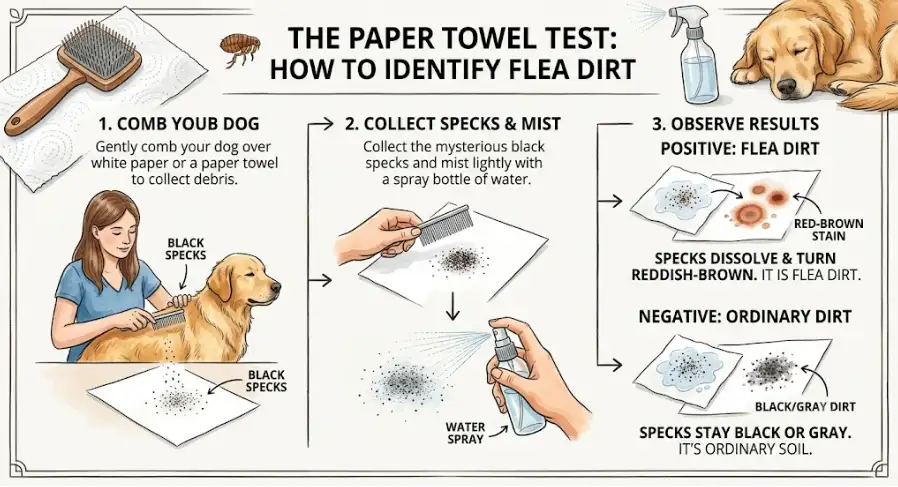
The “Paper Towel Test” for Flea Dirt (Step-by-Step)
To distinguish regular dirt from flea dirt (which is actually digested blood), use this simple first-hand test:
- Gently comb your dog over a piece of white paper or a dry paper towel.
- Collect the mysterious black specks and mist them lightly with a spray bottle of water.
- If the specks dissolve and turn a reddish-brown color, it is officially flea dirt. If they stay black or gray, it’s just ordinary soil.
Top 3 Natural Remedies for Fleas on Dogs (Pantry Ingredients)
You can find effective solutions right in your kitchen pantry.
1. Diluted Apple Cider Vinegar (ACV) Repellent Spray
How it works: Apple cider vinegar doesn’t kill fleas directly, but it creates a highly acidic environment on your dog’s skin and coat. Fleas absolutely despise this taste and smell, making it an excellent preventative barrier.
The Recipe: Mix equal parts of organic apple cider vinegar and water in a clean spray bottle.
Safety Warning: Always dilute ACV properly. Never spray this solution onto open wounds, broken skin, or raw, hot skin, as the acidity will cause intense stinging.
2. Organic Coconut Oil Rub
- How it works: Coconut oil contains high amounts of lauric acid, which acts as a physical disruptor to adult fleas, effectively suffocating them on contact. Simultaneously, its fatty acids soothe dry, irritated skin instantly.
- The Recipe: Take a small amount of extra-virgin coconut oil in your palms, rub them together until it melts, and thoroughly massage it into your dog’s coat down to the skin.
3. Homemade Lemon Rinse
How it works: Lemons contain a natural compound called d-limonene, which is universally repellent to fleas and other biting insects.
The Recipe: Slice a whole fresh lemon (including the rind), place it in a pot of water, bring it to a boil, and let it steep overnight. Strain the liquid the next morning and sponge or pour it over your dog’s coat.
Safety Warning: Never use concentrated citrus essential oils directly on your dog. Essential oils are too potent and can cause liver toxicity if licked. Stick strictly to the diluted, boiled whole-lemon rinse method.
Multi-Pet Household Warning Checklist
If you are looking for natural flea remedies for a multi-pet home, you must tread carefully. Many substances that are completely non-toxic to dogs are highly toxic to cats due to differences in feline liver enzymes.
| Ingredients | Safe for Dogs | Safe for Cats | Core Precautions |
| Apple Cider Vinegar | Yes (Diluted) | Yes (Highly Diluted) | Use sparingly around cats due to strong scent. |
| Cedarwood Oil | Yes (Diluted) | Caution | Must be 100% phenol-free and specially formulated for cats. |
| Lemon Rinse / Citrus | Yes (Boiled Rinse) | Toxic | Cats cannot process limonene; do not use citrus around cats. |
| Essential Oils (Tea Tree, etc.) | Risky (Sensitivities) | Deadly Toxic | Avoid completely in multi-pet homes. |
Specialized Scenarios: Flea Control Without Bathing or Chemicals
How to Repel Fleas on Dogs Without Bathing (The Comb & Spray Method)
For dogs that despise bath time, repelling fleas without a full bath can be a lifesaver.
The Method:
- Prepare a bowl of warm water mixed with a few drops of dish soap or ACV.
- Dip a fine-toothed flea comb into the mixture and carefully brush through your dog’s fur, paying close attention to the neck and tail area.
- As you trap live fleas in the comb, immediately submerge the comb in the soapy water to drown them.
- Finish by lightly misting the coat with your diluted ACV spray.
Baking Soda and Salt: The Ultimate Carpet & Home Treatment
Fleas don’t just live on your pet; 95% of their life cycle is spent in your environment as eggs, larvae, and pupae. To eliminate fleas in your carpets naturally, you must treat your flooring directly.
The Method:
- Mix equal parts of baking soda and finely ground salt.
- Sprinkle the powder generously across your carpets, rugs, and pet mats.
- Brush it into the fibers, let it sit overnight to dehydrate the flea eggs and larvae, and vacuum thoroughly the next day.
Safety Warning: Only use this on household surfaces. Never apply baking soda and salt mixtures directly onto your dog’s sensitive skin, as it can cause severe dehydration and irritation.
Best Natural Remedies for Fleas and Ticks on Dogs (Cedarwood Oil & Food-Grade DE)
Beyond basic kitchen staples, you can elevate your pet’s defense system with two heavier-hitting organic options: Cedarwood oil and Food-Grade Diatomaceous Earth (DE).
- Cedarwood Oil: A highly effective, pet-safe essential oil that disrupts the respiratory systems of both fleas and ticks. Use only properly pre-diluted, commercially formulated pet sprays.
- Food-Grade Diatomaceous Earth (DE): This natural powder consists of microscopic fossilized algae. It acts like tiny shards of glass to insects, piercing their exoskeletons and drying them out completely.
Safety Warning: Always purchase Food-Grade DE (never pool-grade). When dusting carpets or pet bedding, ensure pets and humans leave the room until the dust settles, as inhaling the fine powder can irritate respiratory pathways.
Step-by-Step Guide: How to Get Rid of Fleas on Dogs Fast
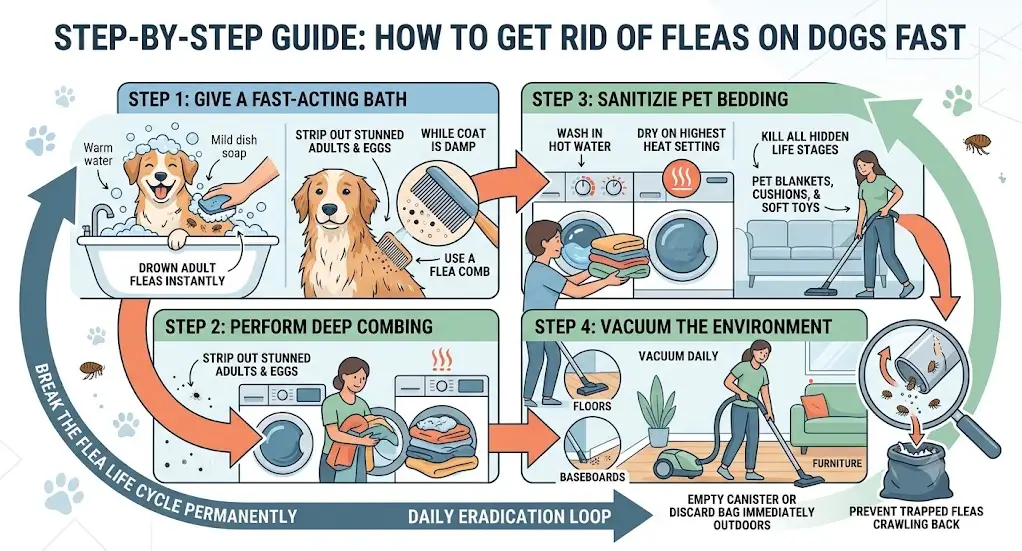
To get rid of fleas fast, follow this 4-step daily eradication loop to break the flea life cycle permanently.
Total Time: 3 days
Step 1: Give a fast-acting bath:
Use warm water and mild dish soap to drown adult fleas instantly.
Step 2: Perform deep combing:
Strip out stunned adults and eggs with a flea comb while the coat is damp.
Step 3: Sanitize Pet Bedding:
Strip all pet blankets, cushions, and soft toys. Wash them in hot water and dry them on the highest heat setting to kill all hidden life stages.
Step 4: Vacuum the Environment:
Strip all pet blankets, cushions, and soft toys. Wash them in hot water and dry them on the highest heat setting to kill all hidden life stages.
Conclusion
Embracing natural home remedies protects your dog’s long-term health while managing seasonal pest spikes safely. Consistency and environmental sanitation are your strongest weapons.
Frequently Asked Questions
1. Are there any natural remedies for fleas on dogs that work instantly?
No natural home remedies instantly kill fleas like commercial neurotoxins. However, as detailed in our 4-step loop above, a warm dish soap bath combined with immediate flea combing is the fastest way to physically eliminate them on contact.
2. How often should I apply natural flea sprays?
Homemade ACV or lemon sprays should be applied every 2 to 3 days for active defense, or sprayed directly onto the legs and underbelly immediately before going on walks in wooded or high-grass areas.
3. Can natural remedies completely replace vet-prescribed chemical flea treatments?
Not entirely. Per AVMA guidelines, they are best used as supportive prevention or bridge care, rather than replacing vet prescriptions during peak infestations.
-
Sale!
Fragrant shampoo for dogs and cats with dry skin featuring a foaming stain remover
Original price was: $7.29.$6.29Current price is: $6.29. Add to cart -
Sale!
-1-300x300.webp)
clean food residues and dog cat blackheads non-irritating wipes
Original price was: $11.89.$9.99Current price is: $9.99. Add to cart -
Sale!
Disposable hand wipes for pet cleaning paws and body fur no irritation
Original price was: $8.98.$4.49Current price is: $4.49. Add to cart