
Every dog parent knows the feeling: you just get back from a daily walk, and before you can even react, your pup has already hopped onto the couch, leaving muddy paw prints all over the cushions. All you can do is shake your head, smile, and start cleaning up the mess. But giving them a full bath every single day is an absolute hassle—and honestly, it is terrible for their skin. So, how can you clean dog without bath, saving yourself time while keeping them safe and healthy?
Below, I am sharing my go-to quick-cleaning hacks to help make your post-walk routine a breeze!
A dog’s skin naturally produces oils that act as a waterproof shield, protecting them from environmental threats like bacteria, yeast, and parasites. Constantly bathing your dog strips away these essential oils. Over time, this leaves their coat looking dull and brittle, and causes their skin to become dry, sensitive, and prone to issues like dandruff, itching, and redness.
It is easy to overlook the details, but washing your dog’s paws without drying them thoroughly leaves moisture trapped deep inside the toe crevices. This leads to obsessive paw-licking and chewing. When you combine trapped moisture with leftover dirt, you get the perfect storm for bacterial infections like pododermatitis (interdigital cysts).
Forcing your dog into the tub too often can trigger serious stress and anxiety. Some dogs even develop a deep fear of the bathroom. For instance, when my own pup was just over four months old, he was absolutely terrified of water and the sound of the blow dryer. After a couple of forced baths, he would run and hide the moment he saw me heading into the bathroom to turn on the faucet.
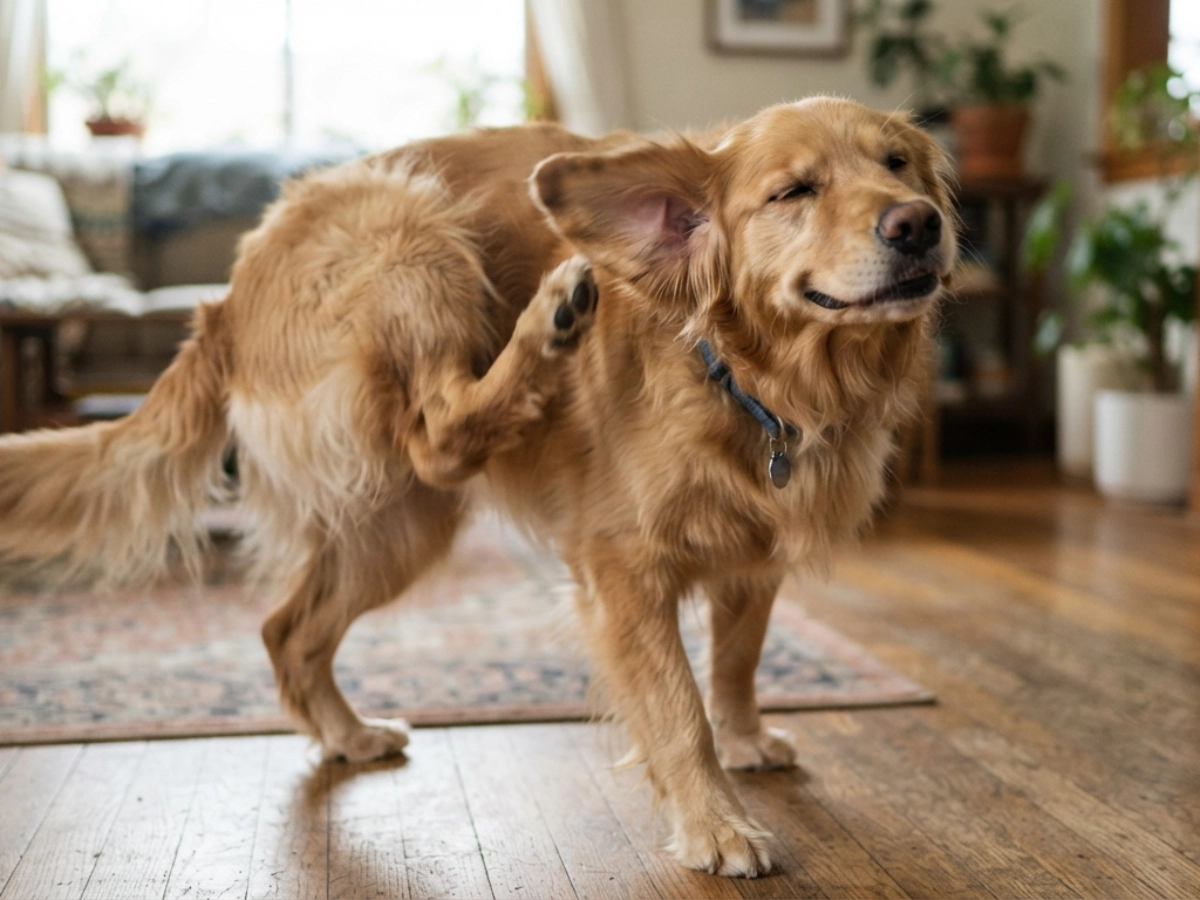
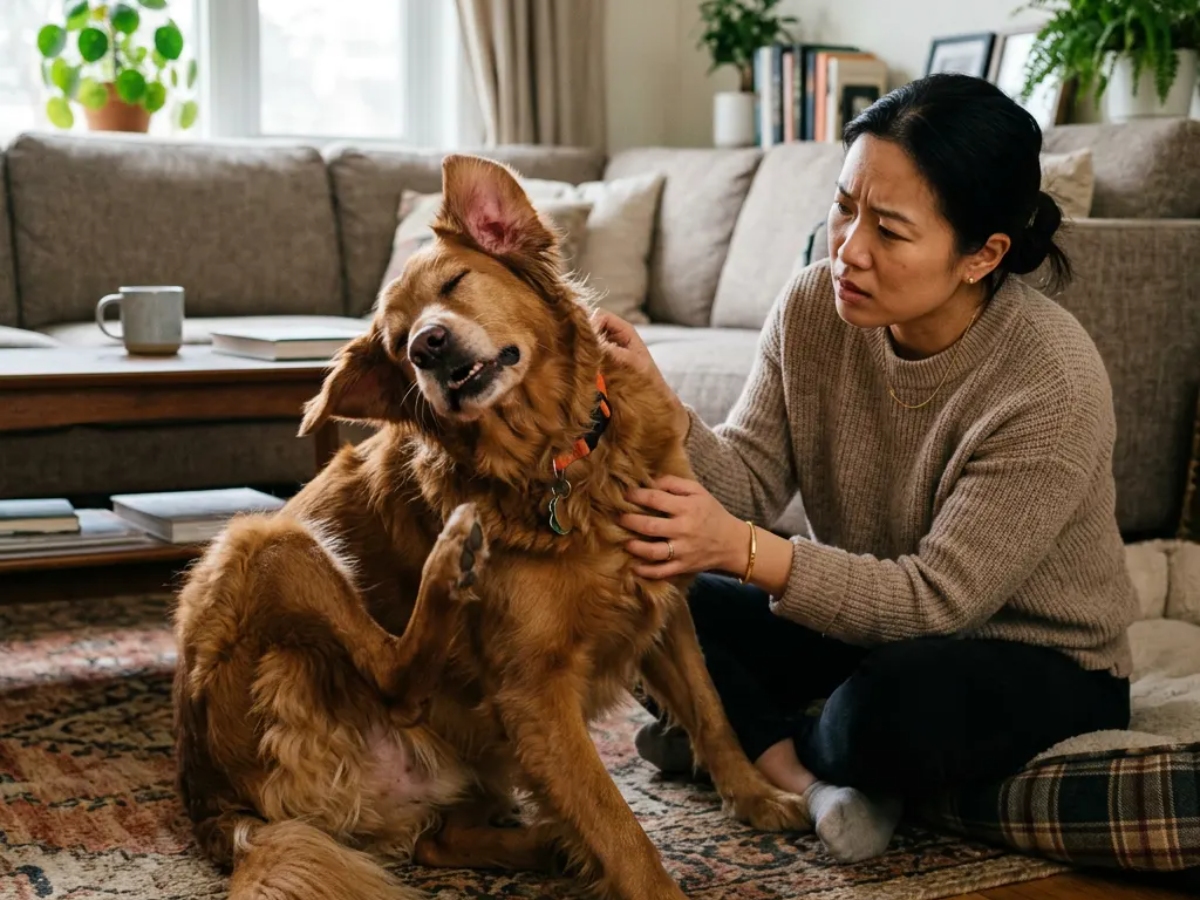
Have you ever noticed your dog scratching their ears frantically or licking their paws the second they get home from a walk? That is usually caused by outdoor pollen and fine dust clinging to their coat.
These microscopic particles settle deep in the ear canals and paw pads, irritating the skin and triggering local allergic reactions. Instead of running a bath, simply grab a specialized pet grooming wipe, thoroughly wipe down their ears and paws to remove these allergens, and watch them get instant relief from the itching.
Behind the lush grass and paved paths lie tiny gravel stones and sharp grass seeds that easily wedge themselves between your dog’s paw pads. As your dog walks, the friction causes constant, sharp pain—and in worse cases, can puncture the skin and cause infections. Checking and clearing out these hidden debris after every single walk is crucial to prevent limping and constant paw chewing.
The moment you walk through the door, grab a slicker brush and give your dog a quick, thorough brush-out from head to toe—covering their back, legs, and chest. This removes loose grass, dried mud clumps, and twigs before you start wiping. Knocking out the heavy debris first ensures you won’t grind abrasive dirt back into their undercoat or tear through your wipes.
Slip the grooming gloves onto your hands and start with some gentle, reassuring pets on your dog’s head and back. Unlike flimsy, flat single-sheet wipes, glove-style wipes mimic your bare hands. Your dog will simply think they are getting a loving massage rather than a stressful bath, making them way more cooperative.
Using long, gentle strokes, wipe down the larger areas like their back, sides, and belly, moving in the direction of hair growth. I highly recommend picking a glove wipe formulated with natural plant-based ingredients and a gentle deodorizer. It lifts away dust and odors while conditioning dry fur—all with zero rinsing required.
Take advantage of the glove’s individual finger design to get right between each toe. Spread the toes slightly to rub away trapped mud, grass seeds, and fine dust from the deep folds of their paw pads. Cleaning these blind spots prevents the irritation that leads to red, itchy paws.
Once you have wiped them down, grab a dry towel and gently pat down their fur to absorb any leftover surface moisture. There is no need for a noisy blow dryer; their coat will air-dry to a clean, fresh finish in just a couple of minutes.
Absolutely not. Human wipes and pet wipes are fundamentally different, and knowing why is key to keeping your dog safe. Human skin is naturally acidic, with a pH of about 4.5 to 5.5. A dog’s skin, however, is much closer to neutral, ranging from 6.5 to 7.4.
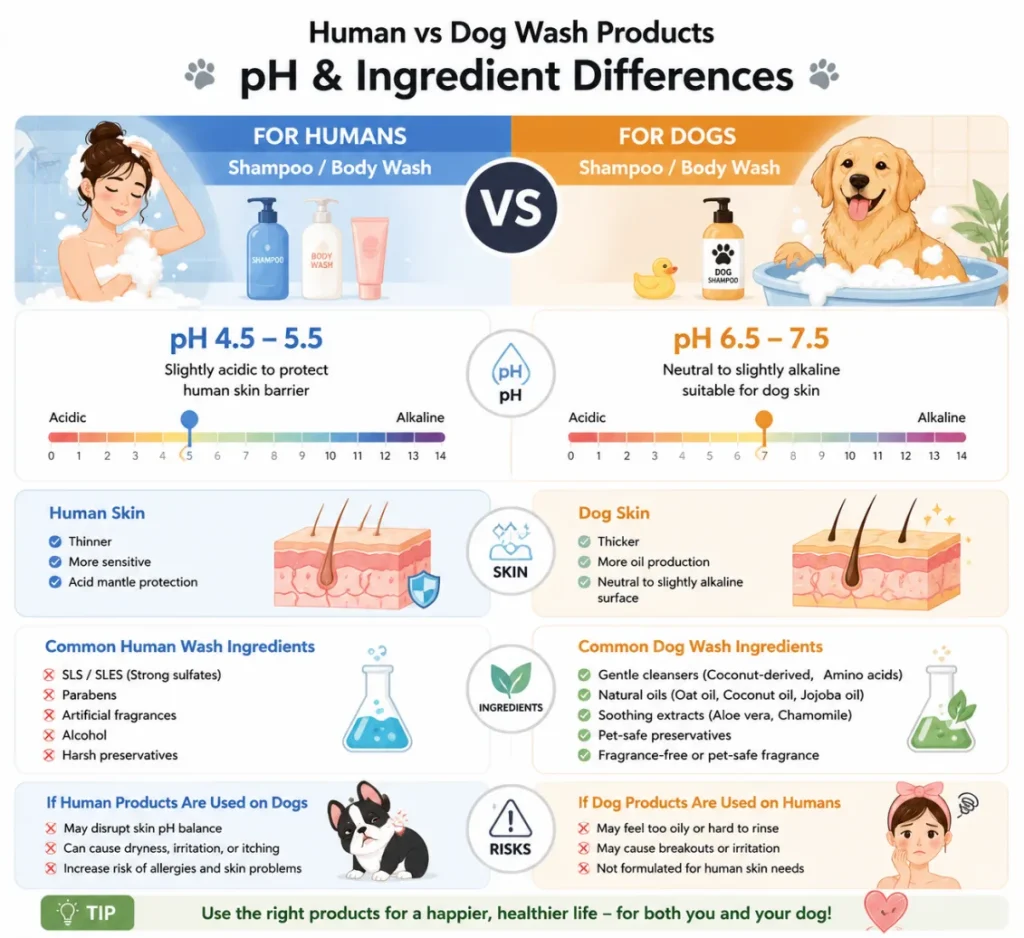
Using human baby wipes on a dog will disrupt their skin’s natural pH balance, stripping their protective barrier and leaving them vulnerable to skin infections. Pet wipes are specifically formulated to match a dog’s pH, using much gentler, pet-safe ingredients.
I really don’t recommend letting your dog air-dry after getting caught in the rain. If it was just a light sprinkle, the weather is warm, and your dog has a very short coat, they might be fine. But if your dog is soaked through—especially if they have a long coat, double coat, or floppy ears—leaving them wet creates a warm, damp environment. This is a massive invitation for bacteria and yeast to multiply, leading to itchy skin, a foul “wet dog smell,” and ear infections.
Wet coats are also highly prone to matting as they dry, making breeds with dense coats like Goldens, Poodles, and Bichons incredibly painful to brush out later. Whenever I take my dogs out on a rainy day, I follow a strict routine the moment we get back:
I grab a super-absorbent towel and focus on these three high-moisture zones:
① Paws and toe crevices (the ultimate hiding spot for mud and bacteria)
② Underbelly and chest (the areas closest to the wet ground)
③ Around the ears (especially critical for floppy-eared breeds)
Tip: If your dog has a thick coat, use a blow dryer on a low, warm setting to dry the roots and skin. You don’t need to do a full blowout—just make sure the skin itself is dry.
Using regular, thin wipes to clean dirty paws is incredibly frustrating. They rip the second they touch a bit of rough dirt, leaving your hands a mess. Instead, look for heavy-duty, thick pet glove wipes. High-quality glove wipes are thick enough to trap mud and gravel, and because they fit your hand perfectly, you can easily clean 360 degrees around the paws, getting into every single nook and cranny.
If you don’t have standard pet soap, always opt for a dedicated pet-safe body wash or a waterless cleaning foam. You can select one tailored to your dog’s specific coat type (such as puppy-friendly, long hair, short hair, or sensitive skin formulas). For puppies, always look for a gentle, tear-free formula, while long-haired breeds benefit greatly from detangling and conditioning formulas.
To make the process easier, keep these tools on hand:
●A pet brush: Brush through their coat before you start to remove loose dander and prevent painful mats from tightening up.
●An absorbent towel & blow dryer: Pat dry their fur first, then use a blow dryer on a low, warm setting to dry them off slowly without overheating their skin.
● Cotton balls: Gently place a cotton ball just inside the opening of each ear canal before cleaning to block stray water from getting inside.
To freshen them up quickly, you can use a light spritz of pet-safe cologne spray. Make sure to choose a low-irritancy formula designed specifically for a dog’s sensitive skin and powerful sense of smell. Alternatively, you can use a pet odor-eliminating spray. Spritzing this around your dog’s favorite lounging spots and bedding works wonders to neutralize stubborn odors and keep your home smelling fresh.