
If you have a cat, you know that moment: you open the door and are hit by a mix of ammonia and cat litter smells. Even though you just cleaned the litter box, the smell just won’t go away.
It’s not your fault; it might just be that you chose the wrong litter.
Cat litter is a high-demand pet product on Amazon, and related products have been consistently popular on the best-seller list, showing there are plenty of consumers looking for quality cat litter.
In this article, we’ll help you understand: how cat litter controls odors, what is the best cat litter for odor control, and most importantly: how to choose the best cat litter for your kitty.
Table of Contents
How does cat litter control odors?
Physical adsorption
High-quality cat litter has lots of tiny pores on the surface of the granules. When urine comes into contact with the litter, the liquid gets sucked into the granules, ammonia molecules stick to the surface, and the smell gets trapped inside so it can’t escape into the air.
Activated carbon is a common additive. It’s internationally recognised as an industrial-grade deodoriser. According to chemical structure studies, because activated carbon has countless micropores inside, just 1 gram of it has a surface area of 500 to 1500 square metres, which is equivalent to 3 to 7 tennis courts. This allows it to act like a magnet, trapping odor molecules in the air, such as ammonia and mercaptans, instantly in its micropores.
Chemical neutralisation
The most common is adding baking soda (sodium bicarbonate). Baking soda is alkaline and can react with the acidic-smelling compounds in cat urine, turning them into odorless neutral salts.
Biological enzyme breakdown
Some litters add specific probiotics like lactic acid bacteria and Bacillus, which feed on urea and sulfur-containing substances in urine, breaking down the source of the smell and stopping the production of ammonia and sulfides. This effectively reduces odor.
Odor masking
Some kitty litters include natural fragrances that cover the smell of cat urine. However, this isn’t true odor removal. It doesn’t eliminate the source of the smell, just masks it.
The American Animal Behaviour Society (ABS) points out that a cat’s sense of smell is about 14 times that of humans. What seems like a mildly scented litter to you is like being locked in a perfume spray room for a cat. That’s why many cats start peeing on the sheets or sofa (litter box avoidance).
What is the best cat litter for odor control in 2026?
Here are some of the best-reviewed and top-selling cat litters for odor control and dust-free on the market, based on real data research.
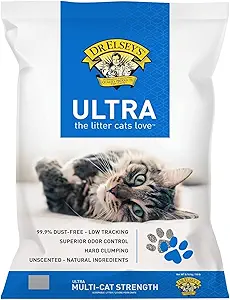
Dr. Elsey’s Ultra Cat Litter
Product features:
- Made from 100% sodium bentonite.e Fragrance-free formula, with no added artificial scents.
- Uses a ‘low-dust process’, producing less dust than regular bentonite litters.
- Fine granules that form very solid clumps after clumping.
- Available in various sizes, 18lb and 40lb options.
Price: 18lb bag, around $12.99 on Amazon.
What we like:
The deodorising effect is really good. A Reddit user with three kitties shared that in his open-plan home, the litter box is in the corner of a large room, and guests visiting wouldn’t even know there are cats unless they saw them. We also found that with daily scooping, the litter lasts three weeks without noticeable odor.
Clumps are very solid. You can confidently shake it while scooping to sift loose granules back without clumps breaking apart. This means less waste and longer use per bag. Our tests show that one cat using it normally will make an 18lb bag last about three to four weeks.
Dust is well-controlled for bentonite litter. While not entirely dust-free like tofu litter, it doesn’t create noticeable dust when pouring or scooping.
What we don’t like:
Some users reported more dust and finer granules later in use (around the third week), probably due to mechanical friction from scooping. The solution is to replace the whole litter every three to four weeks instead of waiting until it’s totally used up.
Best for: Most households, especially multi-cat homes. If your top priorities are deodorising and clumping performance, and weight isn’t a big issue, this is a solid choice. Things to note: Since it’s fragrance-free, those who prefer a scented litter might not like it. Some users also mentioned occasional sticking to the litter tray bottom, so laying it thicker (3–4 inches) is recommended.
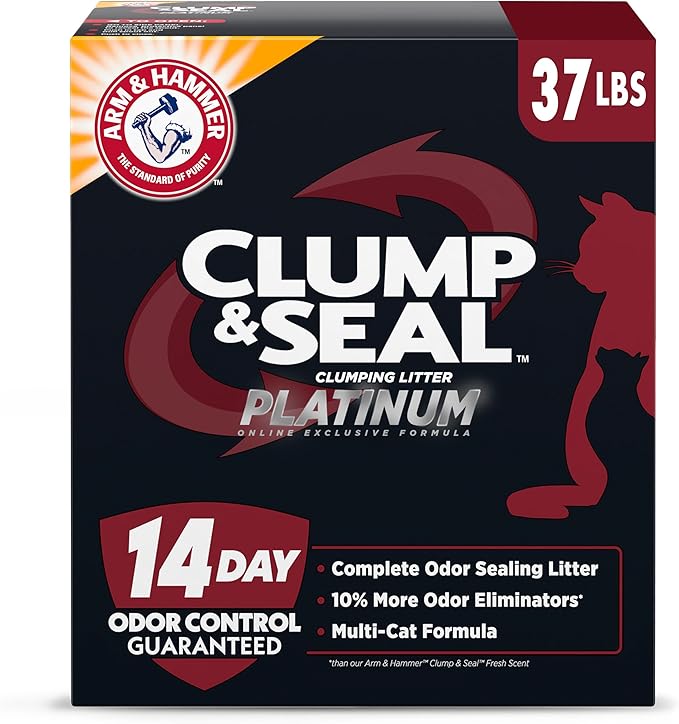
Arm & Hammer Clump & Seal Platinum Cat Litter
Product Features:
- Made of bentonite and baking soda.
- Uses ‘micro-granule technology’, with finer granules than regular cat litter.
- Available in lavender-scented and unscented versions.
- Officially claims 99.9% dust-free.
Price: 37lb bag, selling on Amazon for $34.99.
What we like:
Thorough odor control. Arm & Hammer is a baking soda expert. The physical adsorption of baking soda and bentonite differs; baking soda neutralises odors chemically. Regular kitty litter just ‘hides’ odors, while baking soda actually ‘eliminates’ them. This difference is crucial for some cats with particularly strong smells.
Clumping works well and makes cleaning easy. Because the granules are finer, they wrap tightly around urine when clumping, forming a “sealed shell” that keeps odors in. Our tests showed these clumps are firmer than regular bentonite, making scooping neater.
Dust control is good. Several users have said this is the least dusty bentonite litter they’ve used.
What we don’t like:
The biggest drawback is the weight. A 37lb bag can be a dealbreaker if you live in a flat without a lift or have back problems.
Sometimes clumping too tightly can actually be a minor problem. Some users have reported that the clumps stick to the bottom of the litter tray and need to be scooped up with some force. We recommend laying it a bit thicker (over 4 inches) and scooping each time gently.
Best for: If you find regular cat litter doesn’t control odors well enough, or your cat has a particularly strong smell, you might want to try this one. The neutralising effect of the baking soda is different from physical absorption and could be key to solving some stubborn odor issues.
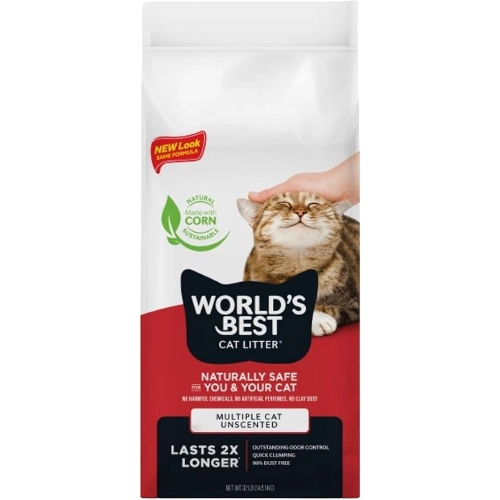
World’s Best Cat Litter
Product Features:
- Made from corn.
- Plant-based material, flushable with no pollution.
- Granules are larger than clay litter but smaller than tofu litter.
- Officially claims long-lasting deodorising effect, 99% dust-free.
- Various sizes available: 8lb, 15lb, 32lb.
Price: 15lb bag, selling for $16.54 on Amazon.
What we like:
This cat litter is called ‘World’s Best Cat Litter’. It may be a bit of an exaggeration, but it does have a lot of loyal users.
The biggest advantage is that it’s light. The same volume of corn litter is much lighter than clay litter. For people with back issues or those living in apartments without lifts, the lightness alone makes it worth the price.
Good clumping effect. One user did a comparison test and found that World’s Best clumps very well, with minimal waste. There is a little dust, but the granules are large and don’t fly everywhere.
What we don’t like:
Corn-based litter can produce aflatoxins in damp conditions. If your home is humid or your litter box is in the bathroom, we recommend thinking carefully about this one.
Best for: If you find clay litter too heavy to move but want a similar clumping experience, this is a great alternative. It’s also suitable for households that value the environment and like using renewable materials.
How to choose the best cat litter?
There isn’t a one-size-fits-all answer because the “best” cat litter depends on your cat’s preferences and your lifestyle. But we’ve put together a decision framework to help you quickly narrow down your options.
Step 1: Consider your cat’s needs.
Your cat is the most important factor when choosing litter. If your cat doesn’t like a certain type, it might refuse to use the litter box and go elsewhere, like your bed or carpet.
We suggest first understanding your kitty’s preferences. Some cats like fine, soft litter (bentonite), some don’t mind the granule size (tofu litter, corn litter), and some cats reject scented products.
If you’re unsure, start with unscented, fine-grain bentonite litter, as it’s the easiest for cats to accept. If your fur-baby refuses it, gradually try other materials.
Step 2: Consider your own needs
Once your cat is happy, think about your own living situation.
If you’re thinking about odor control, when choosing deodorising kitty litter on Amazon, look for products with Activated Charcoal or Carbon in the formula. One gram of activated charcoal has an internal surface area equivalent to several tennis courts. It works purely physically to trap odors, is 100% safe for cats, and is much more reliable than fragrances.
If you live in an apartment and carrying heavy trash bags downstairs every day to throw away cat litter is a hassle, flushable tofu or corn litter would be more convenient.
If you’re planning long-distance cat shipping, aside from an airline-approved carrier and water dispenser, reach out to a reputable “pet travel company” you’re working with. They typically recommend leak-resistant, easy-to-clean mineral or mixed cat litter to cut down on odors and liquid spills during transit.
If you have multiple cats and use a lot of litter, cost-effective clay litter is the more economical choice.
Dr. Elsey’s costs less than $0.7 per pound, while plant-based litters usually cost around $2-3 per pound. If you or your kitty have respiratory sensitivities, low-dust or dust-free tofu, corn, or walnut shell litter is a better option.
Step 3: Consider the budget
The price of cat litter varies a lot. We did a simple estimate, assuming a cat uses 20 pounds per month:
Dr. Elsey’s Ultra (18 lb bag): about $15 per month
Pidan tofu litter (5 lb bag): about $60 per month
Arm & Hammer (37 lb bag): about $19 per month
As you can see, bentonite litter is the most economical, while plant-based litter is roughly twice as expensive. If your budget is limited, bentonite litter is the more reasonable choice.
How often should the cat litter box be cleaned?
At least once a day
This is the most basic and important routine. Scoop clumps and faeces daily to remove the source of odor. If you can scoop twice a day, morning and evening, it works even better.
Why is the frequency so important?
Because the longer clumps stay in the litter box, the more likely the dry surface is to break, exposing the moist core. Once the wet core is exposed to the air, it continuously releases ammonia. No matter how good the litter is, if you only scoop every three days, it won’t be as effective.
Completely change the litter box every two to four weeks
Even if you scoop daily, the litter tray gradually “ages”. Tiny debris accumulates, bacteria grow on the particles, and the litter’s absorption ability declines.
Our suggested replacement schedule is:
- Bentonite litter: completely replace every 2-4 weeks
- Tofu/corn litter: completely replace every 3-4 weeks
- Crystal litter: completely replace every 2-4 weeks (when most particles change colour)
The rule is simple: if you notice a strong odor when scooping or the litter overall has darkened, it’s time to replace the whole box.
Every time you completely change the litter, don’t just pour out the old litter and add new litter. You should do this:
- Clean out the old litter: Bag and throw away all the old litter in the trash; never pour it down the toilet, as it can cause blockages.
- Scrub the litter tray: Use a pet-safe cleaner or unscented soap to clean the tray thoroughly (avoid cleaners containing bleach or strong chemical solvents to prevent a lingering odor). Use a sponge or soft cloth to scrub the tray walls, especially the corners and bottom.
- Dry completely: Make sure the litter tray is thoroughly dry before adding new litter to prevent clumping of damp litter.
- Pour in new litter: Add new litter to a depth of at least 5 to 8 centimetres to allow the cat to dig and cover waste naturally.
Plastic litter trays can develop tiny scratches invisible to the naked eye after one to two years of use, which can harbour bacteria and cannot be removed by regular cleaning. If you notice that even after thorough cleaning, the smell returns quickly, it’s time to get a new litter tray. Consider switching to a stainless steel litter tray, as the surface is less prone to scratches, more antibacterial, and lasts longer.
What cat litter do vets recommend?
Vets don’t have a one-size-fits-all answer since every cat is different. But we’ve put together some advice for common situations:
- Kittens under four months: Use non-clumping litter (paper litter, pine litter).
- Kittens might try to eat litter, and clay clumping litter can form hard blocks in the intestines, which could lead to blockages.
- Cats with asthma: Use low-dust or dust-free litter, tofu litter, paper litter, corn litter, or walnut shell litter are all good choices.
- Cats recovering from surgery: Use paper litter, which is soft and won’t irritate wounds. Senior cats: Use fine-grained, soft clay litter, which is easier for older cats with joint issues to dig in.
Hope this article can help you find the litter that’s best for your kitty. After all, the happiness of both cat owners and their cats can sometimes be hidden in a good litter box.
Disclaimer: The prices mentioned in this article come from publicly available Amazon data, and actual prices may vary at the time of purchase. Product recommendations are based on public user reviews and evaluation data and are for reference only.
-
Sale!
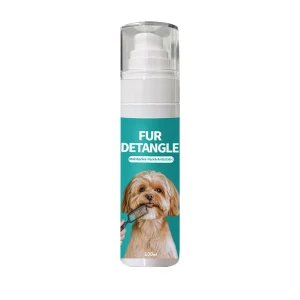
Multipurpose pet hair cleansing spray anti-static for detangling knots
Original price was: $7.98.$3.99Current price is: $3.99. Add to cart -
Sale!

Gentle Neutral pH Round Pet Eye Wipes Tear Stain Removal
Original price was: $4.99.$1.99Current price is: $1.99. Add to cart -
Sale!
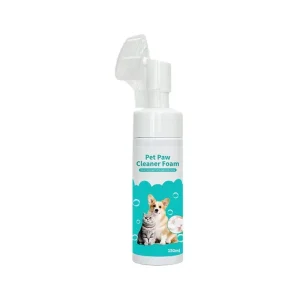
Foaming dog body cleaner with a silicone brush for pet paws no rinsing
Original price was: $8.98.$4.49Current price is: $4.49. Add to cart