
Many dog owners brush their dogs’ teeth daily and utilize various dental aids—such as standard dental sticks and sprays—yet their dogs still suffer from bad breath, and their gums remain red, swollen, and inflamed. This suggests we may have overlooked a deeper underlying cause hidden beneath these surface symptoms: a major culprit behind canine bad breath and periodontal disease—an imbalance in oral microbiota. In this article, we introduce you to a new ally in Dental Probiotics for Dogs
💡 Quick Summary:
Table of Contents
Now, let’s turn our attention to the world of a dog’s mouth—a realm teeming with billions of microorganisms.
In a healthy state, a dog’s mouth harbors a vast population of symbiotic bacteria. These microorganisms interact with one another to maintain the oral pH balance while collectively forming a natural protective barrier that effectively prevents the proliferation of harmful bacteria.
When beneficial bacteria within the mouth diminish and harmful bacteria gain the upper hand, the oral microbial community falls out of balance. This imbalance significantly increases the likelihood of plaque formation.
This multilayered bacterial biofilm is what we refer to as dental plaque. By this stage, it has developed resistance to the flushing action of saliva as well as to certain common antimicrobial agents. However, if not removed promptly, it will eventually harden into indestructible dental tartar—at which point, professional removal at a veterinary clinic becomes the only viable solution.
As long as the plaque has not yet calcified into tartar, it can still be removed through effective home care cleaning methods.
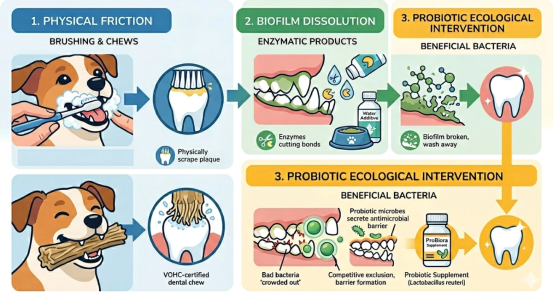
According to a recent clinical review published in 《Frontiers in Veterinary Science》—as well as clinical guidelines established by the American Veterinary Dental College (AVDC)—modern veterinary medicine increasingly favors oral care interventions that utilize probiotics to modulate the oral microbiome, rather than relying on traditional, strong-alkaline bactericidal agents. This approach not only effectively prolongs the benefits of professional dental cleaning but also helps prevent dogs from suffering the pain of periodontal disease by addressing the issue at its source.
After evaluating colony-forming unit (CFU) strength, delivery methods, and clinical strain efficacy, we have narrowed down the absolute best dog dental probiotics on the market this year to help you find the perfect, science-backed probiotics for dogs teeth and periodontal wellness.
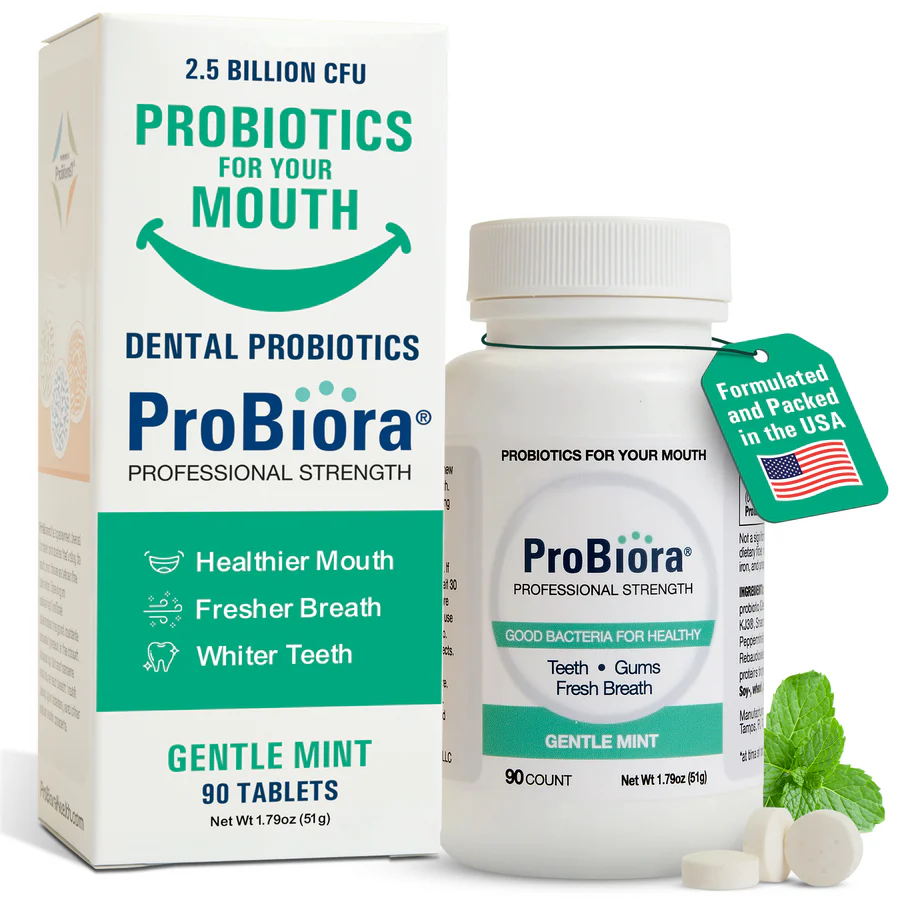
Active Microorganisms: Streptococcus oralis KJ3®, Streptococcus uberis KJ2®, Streptococcus rattus JH145®
Why It Works:
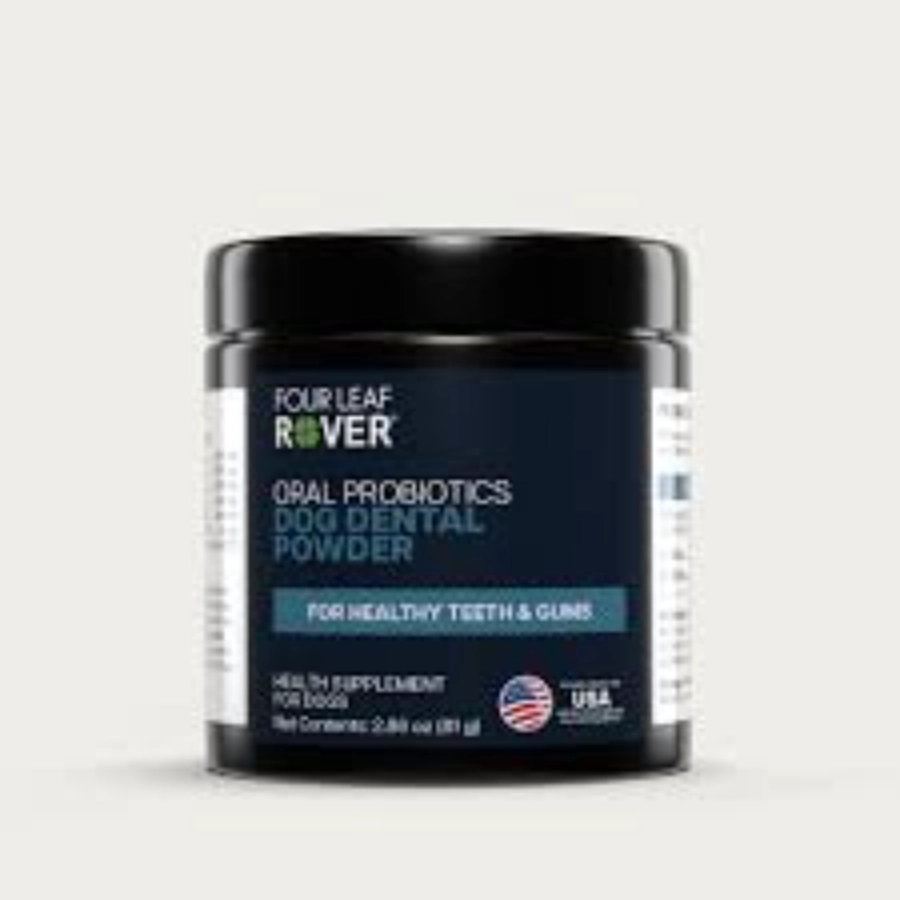
Active Microorganisms: OraCMU® (Weissella cibaria CMU)
Why It Works:
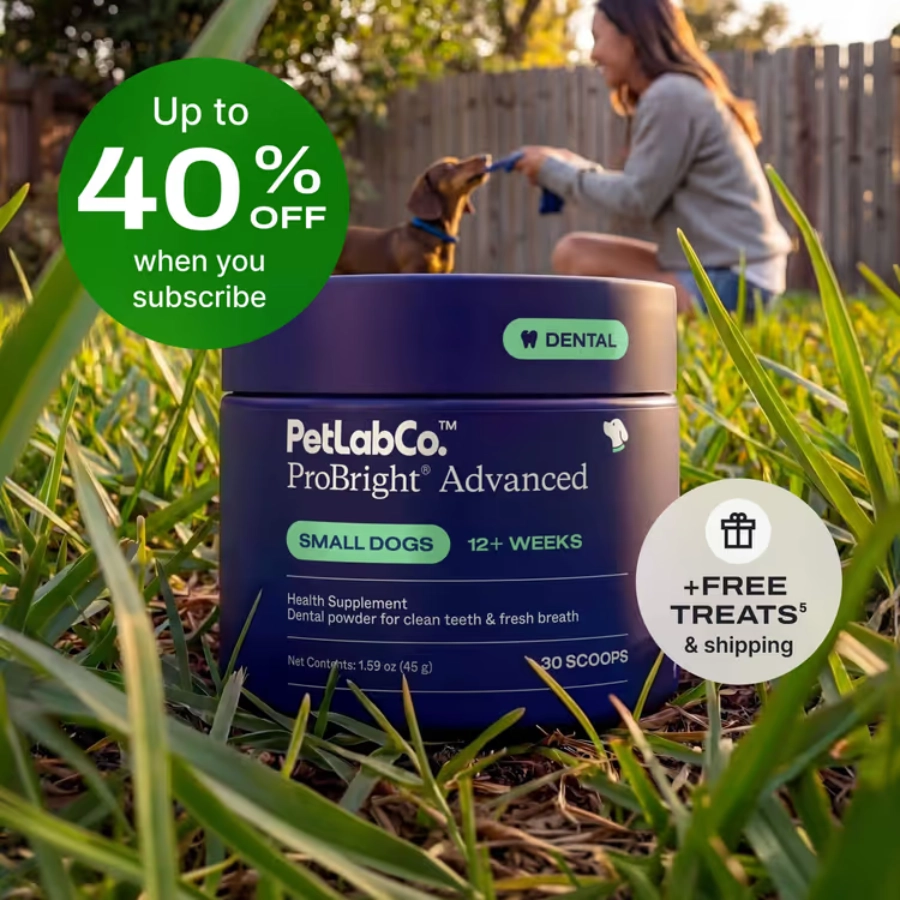
Active Microorganisms: Custom Oral-Specific Probiotic Blend
Why It Works:
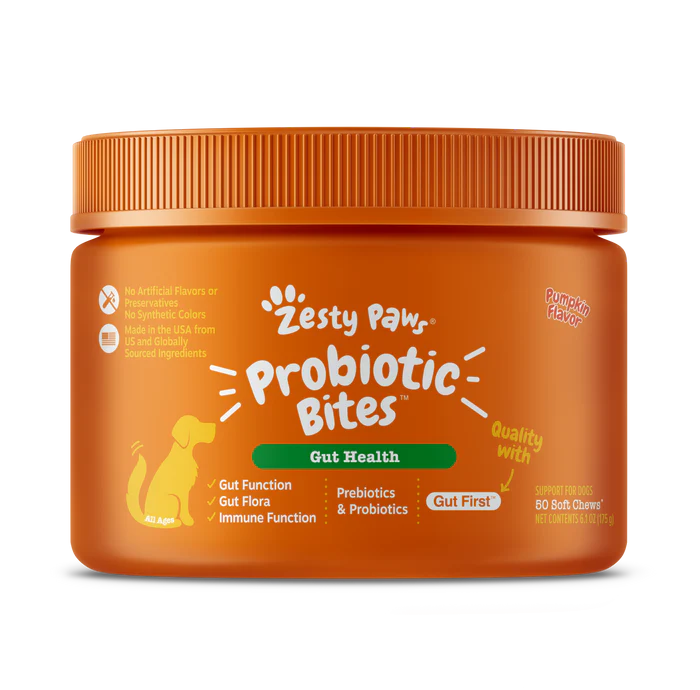
Active Microorganisms: Bacillus coagulans
Why It Works:
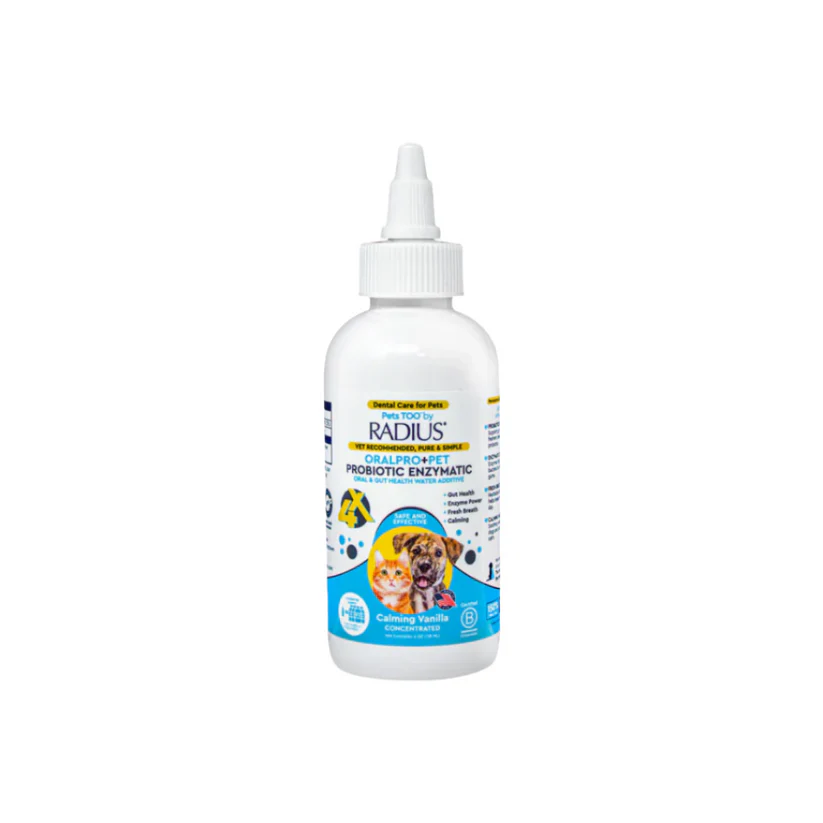
Active Microorganisms: Bacillus coagulans (1 Million CFU)
Why It Works:
Navigating the vast array of probiotic-containing products currently available on the market to find the right fit is no easy task. The choice of dosage form directly determines whether the probiotics can successfully establish themselves within the oral cavity; different dosage forms possess distinct advantages, disadvantages, and specific use cases.
| Dosage Form Name | Mechanism of Action | advantage | shortcoming | Suitable Dogs and Scenarios |
| Teeth Cleaning Powder | A dental cleaning powder containing fine active bacterial powder; simply add it directly to your daily meals. | Convenient to feed, high value for money. | Due to the act of swallowing, the residence time within the oral cavity is brief. | Suitable for timid and sensitive dogs. |
| Oral Spray | This probiotic-infused spray leverages the fluidity of its liquid form to penetrate the entire oral cavity. | Intense localized delivery and precise targeting.Highly effective at instantly eliminating odors after meals. | The sound of the physical spray—specifically its rushing noise and tactile sensation—can easily trigger panic in dogs.。 | Suitable for dogs that are not sensitive and tend to swallow their food whole without chewing. |
| lozenge | Rich in a high concentration of specialized oral-specific bacterial strains, released via saliva. | It has the highest probability of colonizing the oral cavity and is most effective at alleviating bad breath. | It is easily swallowed whole by dogs and therefore cannot take effect. | Suitable for dogs that are emotionally stable and willing to cooperate with slow licking. |
| Compound Chewable Tablets | Probiotics are released through physical chewing. | Multi-functional: simultaneously regulates from the oral cavity to the gastrointestinal tract. | It lacks strong localized targeting—it is not as effective as an oral spray. | Suitable for most dogs and a wide range of settings. |
Helpful Tip: Regardless of the product form you choose, always carefully read the ingredients list before purchasing. Prioritize products containing *Lactobacillus reuteri* or *Streptococcus salivarius* K12; these two specific strains have been clinically proven to be highly effective in targeting and inhibiting oral streptococci in dogs, as well as in reducing sulfide-related bad breath.
First, while probiotics are not a universal cure-all for canine oral care, each of their specific benefits corresponds precisely to a microbial defense mechanism. Their primary function is to resolve stubborn bad breath and periodontal disease.
Since the emergence of probiotics designed to combat canine bad breath, many dog owners have been actively seeking out the most effective probiotic solutions for improving their dogs’ oral odor.
Periodontal disease poses a direct threat to a dog’s health and longevity; moreover, over 80% of dogs aged three years and older suffer from periodontal disease to varying degrees. Research into the use of dental probiotics for gum disease—a subject of interest in traditional veterinary clinical practice—centers primarily on their ability to exert anti-inflammatory effects and establish a defensive barrier within the gum tissues.
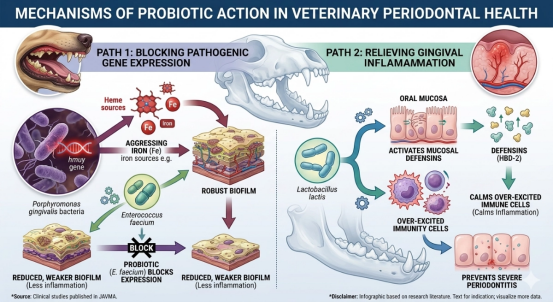
Blocking Pathogenic Genes: During the progression of periodontal disease, a specific bacterium known as *Porphyromonas gingivalis* expresses a gene called *hmuy*. This gene aggressively scavenges iron elements within the oral cavity, thereby rendering dental plaque significantly more tenacious and resistant.
According to a clinical study published in the 《Journal of the American Veterinary Medical Association》(JAVMA), supplementation with specific probiotics—such as *Enterococcus faecium*—can effectively inhibit the expression of the *hmuy* gene.
Alleviating Gum Redness and Swelling: Probiotics such as *Lactobacillus lactis* can stimulate the expression of mucosal defensins while simultaneously calming overactive immune cells; this mechanism helps to alleviate gingivitis and prevent its progression into severe periodontitis.
Please do not blindly trust the “Veterinarian Recommended” claims found on product packaging; the true core criteria lie in whether the product has passed clinical data reviews by authoritative bodies and whether it has obtained VOHC validation.
Before evaluating any dental cleaning product, veterinarians first check to see if it bears the VOHC certification seal.
VOHC Certification: A panel comprising nine top-tier veterinary experts and scientists reviews double-blind clinical trial data submitted by product manufacturers. Certification is granted only when a product is proven to effectively reduce plaque accumulation by 15% to 20% or more.
Integrated Care Protocols: Because true oral probiotics for pets represent a frontier therapy in microbial ecology, they have not yet been widely incorporated into the traditional VOHC certification roster (which currently favors dental chews or water additives that rely on physical abrasion or chemical dissolution). Therefore, the optimal scientific approach to pet dental care involves using VOHC-certified physical cleaning aids—such as dental chews or toothbrushes—in conjunction with oral probiotics containing *Lactobacillus reuteri* to provide targeted ecological support.
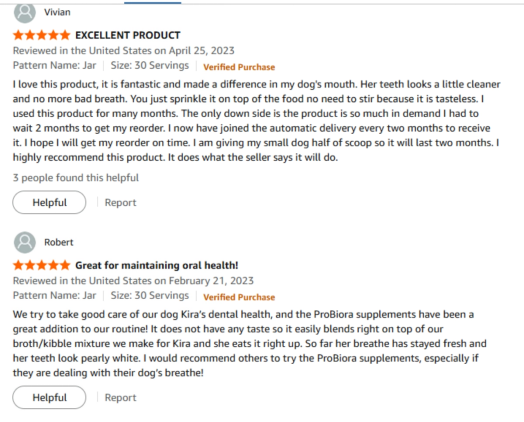
When searching for dental probiotics for dogs, ProBiora for Dogs stands out as one of the most frequently mentioned brands on the market, as well as one with a high search volume. Consequently, I took the time to examine its core patents and review authentic consumer feedback across various e-commerce platforms. The following are the key points I have summarized.
ProBiora’s core competence lies in its patented ProBiora3® blend of bacterial strains, which comprises:
Streptococcus oralis KJ3
Streptococcus rattus JH145
Streptococcus uberis KJ2
These strains prefer to colonize the surfaces of teeth and the gingival sulci; once activated by saliva, they are able to rapidly occupy the ecological niches of pathogenic bacteria while simultaneously releasing trace amounts of hydrogen peroxide, thereby inhibiting bacterial growth
A dog’s oral health involves far more than just the simple issue of bad breath. Modern veterinary medicine has long established that in cases of severe, chronic periodontal disease, bacteria can enter the bloodstream and travel to the heart, kidneys, and liver; this leads to organ dysfunction, resulting in more serious health complications—some of which can even be life-threatening.
The adoption of canine oral probiotics marks a new era in pet oral care—one characterized by a more advanced, natural approach focused on restoring microbial ecological balance.
Yes, if they are formulated for oral health. Unlike mints that only mask odor, targeted dog probiotics for bad breath introduce beneficial bacteria that crowd out the volatile sulfur compound (VSC)-producing anaerobic bacteria responsible for halitosis, tackling the root cause of the smell.
Regular gut probiotics are optimized to survive stomach acid and balance the digestive tract. In contrast, specialized dental biotics for dogs are formulated with specific strains (like Streptococcus oralis) designed to colonize the mouth, gums, and teeth biofilm directly to combat plaque and breath odors.
Probiotics cannot instantly dissolve heavily calcified dental calculus (tartar). However, daily use of probiotics for dogs teeth helps break down the soft plaque biofilm before it can mineralize into tartar, making it significantly easier to manage and prevent over time.