
Almost every dog owner has faced the frustrating challenge of dealing with matted fur, especially those caring for long-haired breeds. However, a tangled coat is far more than just a cosmetic nuisance—it directly impacts your pet’s health and well-being. As industry icon Melissa Verplank beautifully puts it, “Humanity outweighs vanity.” A dog’s coat serves as a vital protective barrier for their skin, meaning their comfort must always come first during grooming. If you are wondering how to get knots out of dog hair safely without causing pain, this comprehensive, step-by-step guide will walk you through the exact professional techniques you need.
Reasons for dog’s fur getting matted
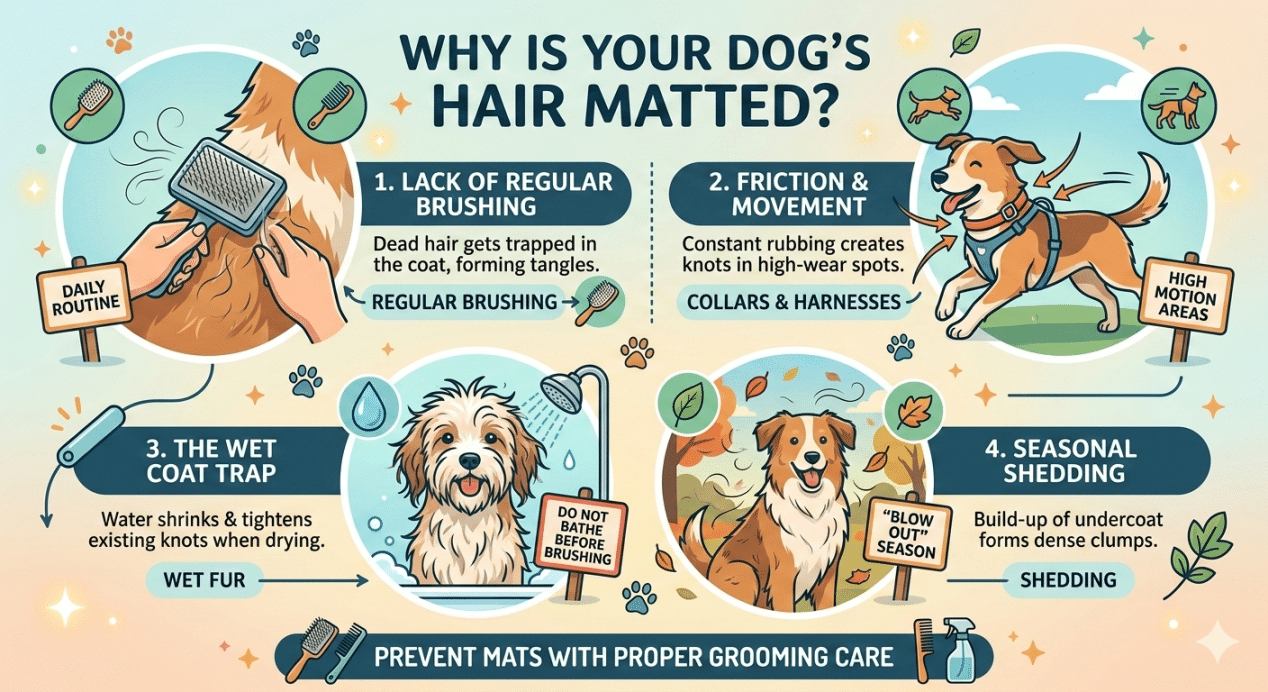
- Neglected Brushing: Skipping daily grooming sessions is the fast track to severe matting. When loose, dead undercoat isn’t brushed out, it traps itself around the living, healthy hairs during your dog’s daily movements, eventually weaving into tight, stubborn knots.
- Friction and High-Motion Areas: Active dogs are highly prone to matting in friction-heavy zones. Areas like the armpits, inner thighs, and beneath collars or harnesses experience constant rubbing during daily exercise, which quickly chafes and tangles the fur into dense mats.
- The Wet Coat Trap: Bathing or swimming a dog that already has minor tangles is a recipe for disaster. Water causes the hair shafts to swell and shrink as they dry, locking those minor tangles into solid, concrete-like mats. Always brush before you bathe!
- Shedding Season:Double-coated breeds (Golden Retrievers, Border Collies) shed a lot of fur during shedding season. If not dealt with promptly, this hair can get trapped between the new growth and eventually form mats.
Is matted fur painful for dogs?
Is matting painful for your pup? Absolutely. While a few loose knots are a common grooming hurdle, ignoring them—especially after outdoor adventures in wet or grassy terrain—can lead to severe distress. As mats tighten, they begin to relentlessly pull on the dog’s thin, highly sensitive skin, causing acute pain with every single step they take
- If the matting isn’t addressed promptly when it’s still in its early stages, the matting will worsen, pulling on the dog’s skin. Because a dog’s skin is thin, this continuous pulling will exacerbate the strain with every movement, causing the dog pain.
- When the matting becomes severe, it can harden into a closed space, trapping moisture, heat, and bacteria, leading to skin redness, swelling, and various skin diseases.
What to use for knots in dog hair
To effectively and safely remove mats from a dog’s fur, we can use different combinations of tools and methods depending on the situation, minimizing the dog’s pain during the process.
Untying tools
| Tools | Effect | Method |
| Leave-in conditioner/detangle spray /corn starch | Lubricates, softens, and reduces friction before handling knots | Spray generously or apply directly onto the knot; let it sit for 2 minutes to penetrate the hair shaft. |
| Slicker Brush | Safely separates tangled hair layers without ripping the coat. | Use a gentle “pat and pull” motion, working strictly from the outer edges of the knot inward. |
| Stainless Steel Comb | Line-combing to detect deeply hidden undercoat knots. | Work systematically from the skin level outward to ensure no hidden “pin knots” remain. |
| De-matting Rake | Slices through dense, severely hardened mats. | Slide the rakes carefully beneath the knot, cutting vertically away from the skin along the hair growth line. |
How do you untangle severely matted hair on a dog?
First, you need to assess the severity of your dog’s matted fur in order to choose the appropriate treatment method.
Degree Assessment
- Gently lift the knotted fur. If the skin follows, the knot is very tight and no longer suitable for regular brushing. Forcing it can cause serious consequences such as skin tearing.
- Some dog owners may wonder, should I trim the knots in my dog’s fur? When more than 20% of a dog’s fur is severely matted, I recommend using professional electric clippers to remove the knots.
Preparation
Similar to dealing with minor tangles, you’ll need to soften the tangles thoroughly with a Detangling Spray (cornstarch can be used as a substitute) before proceeding.
Gradual separation
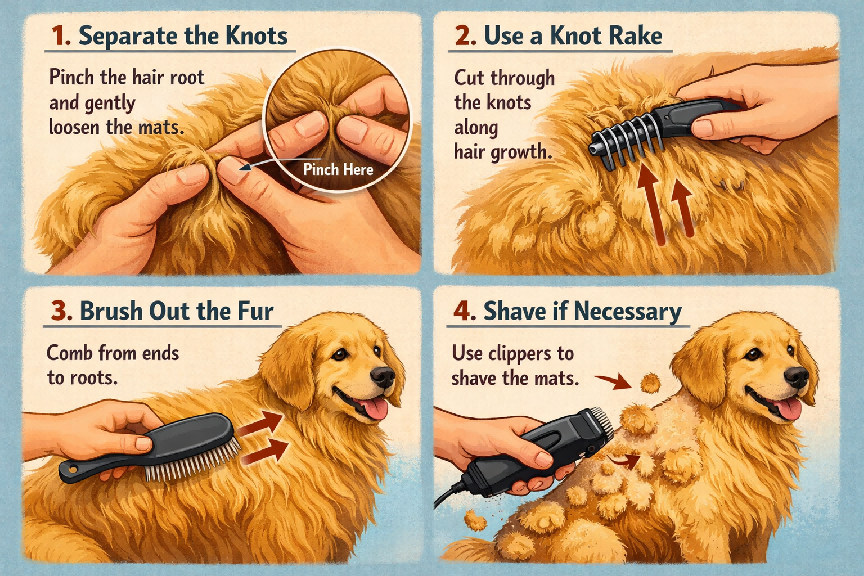
Step 1: Manual Pre-Separation (Pinch & Tease)
Before introducing any metal tools to a severe knot, use your fingers to gently tease the softened mat apart. Crucial Professional Tip: Always firmly pinch the base of the hair (the space between the knot and the skin) with your thumb and forefinger. This critical barrier ensures that any pulling force is entirely absorbed by your hand, completely protecting your dog’s sensitive hair follicles from pain.
Step 2: Vertical Splitting with a De-Matting Rake
For dense mats, employ your de-matting rake to slice vertically in the direction of hair growth. By dividing one massive mat into several tiny, manageable strands, you drastically reduce its density, making it easy to brush out without hurting your dog.
Step 3: Gentle Outer-to-Inner Brushing
Gently pat the hair with a long pin slicker brush, pulling it slightly outwards. Always remember the golden rule of how to get knots out of dog hair: comb from the ends of the hair first, slowly working your way down to the roots to prevent tugging.
Step 4: Know When to Shave
If the prior three steps fail to budge the knot, do not force it. I highly recommend using professional electric clippers to safely shave the area, immediately eliminating the mat and minimizing your dog’s discomfort.
If the matting is too severe to handle yourself, do not attempt to untangle it, as this can cause serious harm to your dog. Seek professional help. The VCA Animal Hospital expert team points out :that when fur becomes severely felted, the skin is in a state of extreme sensitivity and ‘suffocation.’ Professionals will immediately examine the area after shaving to assess for reperfusion injury—the sudden flow of blood back into the constricted area that can cause localized swelling and discomfort. This professional assessment cannot be provided by home care.
However, once the professional treatment is complete, home care plays a vital role in recovery and prevention; switching to a specialized Poodle Shampoo and Conditioner can help soothe the irritated skin barrier and prevent future matting.
How to Get Knots Out of Dog Hair Behind the Ears
The skin behind a dog’s ears is paper-thin, incredibly vascular, and highly sensitive. When learning how to get knots out of dog’s hair in this delicate zone, absolute precision is required to avoid painful brush burns or skin tears.
- Use a conditioning spray before processing (cornstarch can be used as a substitute).
- Before using tools, try gently “parting” any clumps with your fingers. Pull the clumps horizontally, not from the head outwards.
- When brushing, place your thumb and forefinger at the base of the hair, applying full pull with your fingers. The dog should not feel any pressure other than your fingers pinching its ear.
Professional Veterinary Warning: When fur behind the ears or on the body becomes severely “felted” (matted to the skin), the underlying tissue suffers from a lack of airflow and circulation. The experts at VCA Animal Hospitals warn that once these severe mats are shaved, the sudden rush of blood back into the restricted capillaries can cause reperfusion injury. This localized swelling and intense bruising require immediate medical assessment that simply cannot be replicated by DIY home care. If the knot is tight against the skin, always yield to a professional groomer or vet.
In summary,
dog grooming should be approached from a health perspective. Daily grooming is essential for every dog owner. It’s advisable to keep some common grooming tools at home for emergencies. Don’t wait until the matted fur has become irreparable before addressing it, as this can cause serious harm to your dog.
-
Sale!
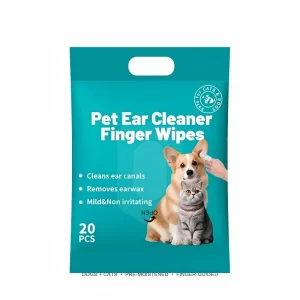
Gentle Neutral pH Round Pet Eye Wipes Tear Stain Removal
Original price was: $5.98.$2.99Current price is: $2.99. Add to cart -
Sale!
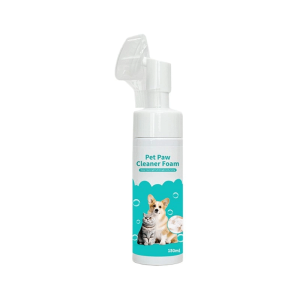
150ml No-Rinse Pet Paw Cleaner Foam – Waterless Paw Washer
Original price was: $7.19.$5.99Current price is: $5.99. Add to cart -
Sale!
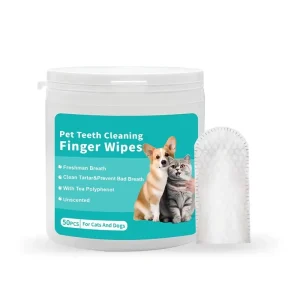
disposable Finger-shaped dental cleaning wipes for pets fresh breath
Original price was: $6.68.$3.34Current price is: $3.34. Add to cart