
Imagine this scenario: you’ve just been sprayed with your favorite perfume and are ready to head out. The dog next to you looks at you with those watery eyes. Do you want to make your baby fragrant too? Wait! Before you pick up that bottle of perfume, stop and read this article. You may be surprised to find that a bottle of perfume can become an invisible killer of your dog’s health.
However, the good news is that, as long as you master the right methods and choose the right products to keep your dog smelling good, you can achieve it without harming its health. This article will give you a comprehensive understanding of why human perfume is dangerous for dogs. How to choose and protect your pet’s olfactory health? What are the safe and effective alternatives?
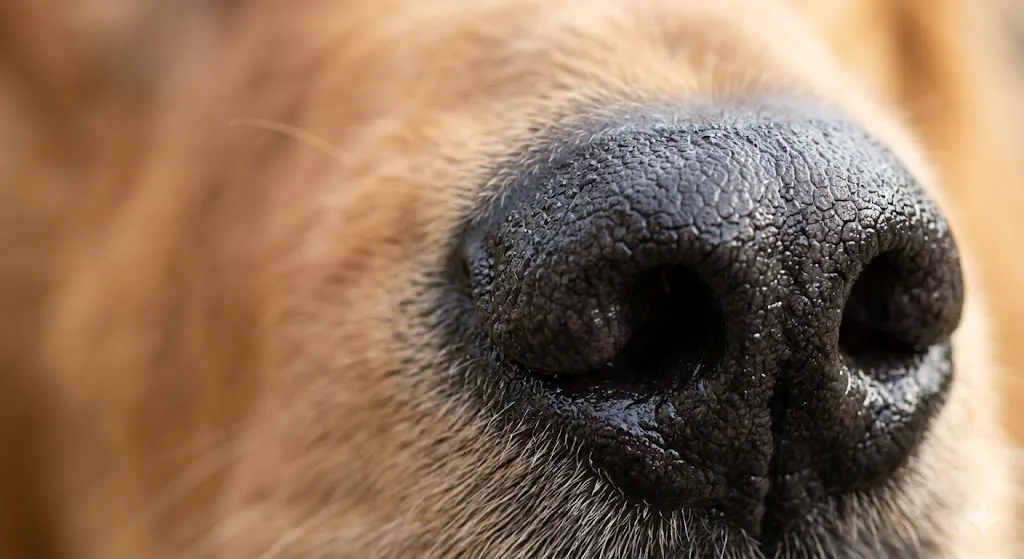
How powerful is a dog’s nose?
Before discussing perfume safety, we need to understand a core fact: dogs live in a world with a much stronger sense of smell than you might think.
Alarming gap in olfactory sensitivity
| Compare the project | Human | Dog |
| The number of olfactory cells | About 6 million | From 125 million to 300 million |
| Olfactory mucosal area | 5 cm² | 150 cm² |
| Olfactory sensitivity | Once | 1000 to 10000 times |
Dogs’ favorite scents
What you may not know is that dogs have a particular fondness for certain smells. According to a study published in PubMed, researchers conducted tests on 14 adult dogs of various breeds, aged 1 to 14 years old. The results showed significant differences in how frequently dogs interacted with different odors.
Dogs’ Favorite Scents Ranking:
1. Blueberries & blackberries
2. Peppermint
3. Rose
4. Lavender
5. Linalool
This finding is quite meaningful. It tells us that choosing scents based on dogs’ natural preferences is far more scientific than forcing them to tolerate fragrances humans love.
Why is human perfume a no-go zone for dogs?
The core problem lies in three toxic ingredients commonly found in perfumes:
| Causes dry skin, chemical burns, and contact dermatitis | Harm to Dogs |
| High-concentration alcohol | Causes dry skin, chemical burns and contact dermatitis |
| Synthetic fragrances & phthalates | Disrupt endocrine function; long-term exposure may lead to liver damage |
| Certain essential oils (tea tree, eucalyptus, citrus, etc.) | Causes dry skin, chemical burns, and contact dermatitis |
Three ways dogs get harmed by human perfume
- Skin contact: Causes redness, itching, and hair loss.
- Inhalation irritation: Triggers sneezing, coughing, and asthma attacks.
- Licking & ingestion: Leads to vomiting, diarrhea, and drooling; severe cases may result in poisoning.
Which essential oils are toxic to dogs
As warned by Veterinarian Chen Qintong from Taiwan Shuolian Animal Hospital, the toxicity of the following essential oils has been repeatedly confirmed:
| Risk Level | Essential Oils |
| Extremely toxic — Strictly prohibited | Tea tree, eucalyptus, cinnamon |
| High risk | Wintergreen, pine needle, peppermint, citrus oils |
| Caution for both dogs and cats | Clove, ylang-ylang, chamomile |
The Truth About Pet-Specific Fragrances
Benefits of Pet-Specific Fragrances
| Benefit | Description |
| Alcohol-free or low-alcohol content | Reduces skin irritation and respiratory tract damage |
| pH-balanced formulation | Matches the natural pH level of a dog’s skin |
| Free of known toxic ingredients | Contains no tea tree, high-concentration citrus, or other harmful components |
| Hypoallergenic design | Lowers the risk of allergic reactions |
Drawbacks & Potential Risks of Pet-Specific Fragrances
| Drawback | Risk Explanation |
| Still disrupts a dog’s sense of smell | Any strong fragrance may disorient dogs and interfere with their social and scent-marking behaviors |
| May mask underlying health warning signs | Bad breath indicates dental issues; musty odor signals skin disease; corn-chip-like scent points to yeast infections. Perfume can cover these smells and prevent vets from detecting early symptoms |
| Inadequate regulatory oversight | There is currently no unified national official standard for the Pet Safe labeling; most labels are self-declared by brands |
| Controversial ingredients | For example, D&G Fefé contains ylang-ylang, which may cause neurotoxicity in dogs upon heavy exposure or ingestion |
| May trigger allergies or asthma | Higher risk for dogs with pre-existing skin or respiratory conditions |
Veterinarians’ Authentic Professional Opinions
Italian veterinarian Federico Coccía from Rome points out: We should not arbitrarily alter dogs’ natural scent just to satisfy our own preferences. Dogs rely on smell to identify themselves and others, and to build social bonds. Masking their natural odor with perfume may prevent veterinarians from making an accurate diagnosis — for example, the characteristic odor of sebaceous adenitis is crucial for clinical identification.
Dr. Sarah Nold, a veterinarian at Trupanion, also issues a warning: I do not recommend using pet perfume at all. Healthy dogs and cats naturally do not have strong body odor. If you notice an unusual smell, it may signal an ear infection, skin disease, or dental problems — these conditions require proper treatment, not odor masking.
Safe Usage Guidelines
If, after careful consideration, you still want your dog to smell nice for special occasions (such as photoshoots or events), please follow these safety rules:
- Spraying area: Focus on the back and flanks, especially the area between the shoulder blades and the base of the tail.
- Application method: Spray the fragrance onto your palms or a comb first, then gently pat or brush it onto your dog’s back and the base of the tail.
- Observe reactions: If your dog starts sneezing, scratching excessively, rolling on the floor, hiding in corners, or over-grooming and licking its fur, stop use immediately and bathe your dog to remove the scent.
- Limit frequency: Use at most once a week, and avoid consecutive weekly use.
Patch test: Before full application, spray a tiny amount on the inner thigh, then monitor for 24 hours to check for redness or allergic reactions.
Important Precautions:
- Never spray directly onto your dog.
- Keep the product completely away from the face, eyes, ears, nose, genitals, and belly.
- Do not use any human perfume on dogs.
7 Healthier Alternatives to Make Your Dog Smell Nice Without Perfume
1. Bathe regularly
Long-haired or oily-coated dogs: bathe every 2–4 weeks.Short-haired or dry-skinned dogs: bathe every 6–12 weeks. Always use pH-balanced shampoo formulated specifically for pets.
2. Use dry shampoo powder or foam
Use between baths to absorb excess oil and dirt. You can also make your own with cornstarch and baking soda.
3. Stick to regular teeth brushing
Bad breath is most often caused by tartar buildup. Brush your dog’s teeth 2–3 times a week with pet-only toothpaste.
4. Wash bedding frequently
Wash your dog’s bed, blankets, and toys every 1–2 weeks — these are one of the biggest sources of lingering odor.
5. Coconut oil coat massage
Food-grade coconut oil has a mild natural scent and benefits the skin. A small amount applied to the fur boosts coat shine and leaves a gentle, fresh fragrance.
6. Pet wet wipes for daily cleaning
Wipe your dog’s paws and rear after walks to quickly get rid of local dirt and odor.
7. Lavender or chamomile aromatherapy
Use a diffuser placed high out of your dog’s reach, or pet-calming sprays containing linalool. Studies have shown that dogs respond positively to these scents.
Note: If your dog still smells unpleasant after following all these cleaning routines, take them to the vet right away — a persistent bad odor is very likely a sign of illness.
Frequently Asked Questions
What should I do if I accidentally spray perfume on my dog?
1. Immediately wipe off excess liquid with a dry towel, then apply cornstarch or baking soda to absorb oil and residue.
2. Give your dog a full bath with mild pet shampoo, focusing heavily on the sprayed area.
3. Rinse thoroughly for at least 5 minutes until no foam or scent remains.
4. Monitor your dog for 12 hours. If vomiting, excessive drooling, lethargy, red irritated skin, constant scratching, or breathing difficulty occur, take them to a veterinary clinic right away.
Is a dog’s body odor always a sign of illness?
Not all body odor means sickness, but see a vet right away if you notice:
1. Persistent corn-chip odor — likely a yeast infection
2. Bad breath or rotten tooth smell — possible periodontal disease
3. Strong sweet or sour rotting odor — may indicate metabolic disease
4. Fishy smell — usually anal gland issues
Can you spray dog with perfume?
It is not recommended. Puppies under 6–12 months old have underdeveloped respiratory systems, skin barriers, and immune systems, making them far more sensitive to irritants. If you absolutely must use a fragrance, choose fragrance-free or ultra-hypoallergenic formulas only, and use them under a veterinarian’s guidance.
Is DIY natural dog perfume safe for puppies?
Whether diy natural dog perfume is safe depends entirely on ingredient selection, dilution ratio, and your dog’s individual physical constitution. Always avoid letting dogs have direct contact with alcohol, tea tree, cinnamon, citrus, peppermint, and clove essential oils.
Conclusion
Ultimately, dogs are born with their own scent preferences and need no artificial perfume to alter their natural smell. Instead of forcing artificial fragrances, respect their innate sense of smell and prioritize their health. Keeping them fresh through scientific grooming and natural care is the kindest and most responsible way to care for your pet.
-
Sale!
Pet Wipes Cat Dog Circle Wipes for Cleaning Eyes
Original price was: $6.99.$2.99Current price is: $2.99. Read more -
Sale!
50 Pcs Top Nose Cleaning Finger Wipes Natural & Non-Irritating
Original price was: $6.89.$3.45Current price is: $3.45. Add to cart -
Sale!
Gentle Pet Ear Drops for Dogs Cats Ear Care & Wax Removal
Original price was: $6.19.$5.99Current price is: $5.99. Add to cart