
As a cat owner, have you noticed your cat frequently shaking its head, scratching its ears with its paws, or developing unusual black or yellow discharge?
These signs often point to a very common issue: cat ear infections. Cat ear infection home remedies ingredients,what works and what doesn’t?
Why is cat ear health so important?
When an infection compromises ear health, it threatens not only hearing but can also spread from the outer ear to the inner ear, potentially causing permanent hearing loss and balance disorders—severely impacting the cat’s quality of life.
A cat’s ears are far more than just organs for hearing; they are also vital tools for maintaining balance. They form a complex system comprising the outer, middle, and inner ear.
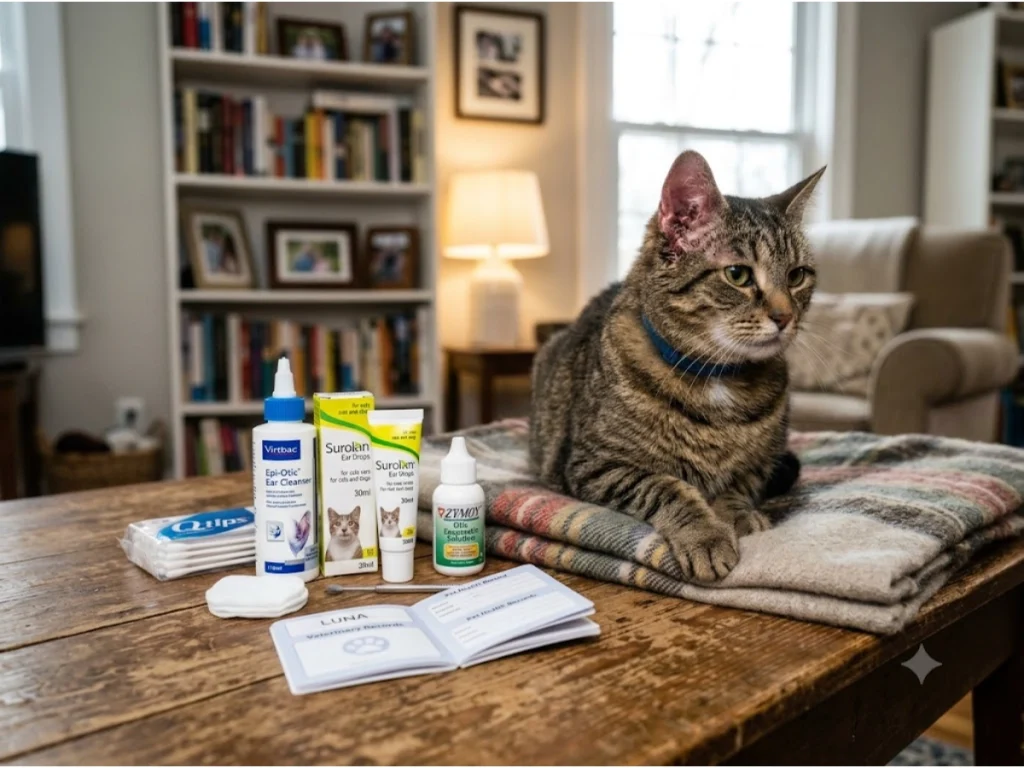
Fiona always communicates her emotions through her ears; I can even pick up on other secrets just by observing them. By monitoring the condition of your cat’s ears daily, you can spot potential problems early.
Data from the Cornell Feline Health Center and veterinary sources indicate that ear diseases in cats are not uncommon. Furthermore, if an infection progresses to the middle or inner ear, treatment becomes more complex, potentially requiring otoscopy, imaging, or even more advanced diagnostic procedures.
A review article on feline otitis media notes that while gross examination reveals evidence of the condition in only 2%–10% of necropsied cats, histological examination uncovers it in up to 56% of cases—demonstrating just how insidious middle-ear problems in cats can be.
If you aren’t aware of how important their ears are to cats, you might be overlooking something crucial—perhaps this information will help! — “Interesting Stories About Cat Ears—The Structure and Function of Cat Ears”
How can you identify ear problems in your cat at home?
The following are common issues, symptoms, and durations associated with feline ear problems (for reference only):
| Infection type | Common Causes | Key Symptoms | Possible Duration |
| Ear Mite Infection | Otodectes cynotis | Black coffee-ground-like debris, intense ear scratching, frequent head shaking | Weeks to months |
| Yeast Infection | Moist ear canal, weakened immunity,Malassezia bacteria overgrowth | Dark brown ear debris, noticeable odor, itchy ears | Weeks to months |
| Bacterial Infection | Bacterial overgrowth, ear canal injury or moisture | Redness, swelling, yellow purulent discharge | Weeks or longer |
| Allergic Otitis | Food or environmental allergies | Bilateral ear itching, increased ear wax, recurrent episodes | Long-term, recurrent |
| Middle/Inner Ear Infection | Chronic outer ear infection worsening | Head tilt, loss of balance, hearing loss | Months to years |
Before applying anything to your cat’s ears, it is essential to understand the specific issue being treated, the associated symptoms, and the underlying cause.
One evening, I noticed Fiona constantly scratching her ears and tilting her head. At first, I assumed it was just a routine buildup of earwax, but a few days later, a dark brown discharge with a distinct, unpleasant odor appeared. Like many pet owners, I initially turned to the internet in search of natural remedies. However, I eventually realized that the lack of results wasn’t due to the remedies themselves, but rather because I had misidentified the problem entirely.
Cats rarely develop ear infections without a reason; underlying causes often include ear mites, infections, allergies, or pathologies deep within the ear canal.
This experience taught me that the danger of feline ear issues lies in their deceptive appearance: what looks like simple “dirt” on the surface may actually mask an infection, an allergy, or a more serious underlying condition.
Tip: If symptoms persist for more than 3–5 days, or if you observe pus, bleeding, or balance issues, please take your cat to the vet immediately to prevent the infection from spreading to the middle or inner ear.
Vet-Approved Cat Ear Infection Home Remedies Ingredients to Help Alleviate Cat Ear Infections
The following recommendations apply only to mild ear infections. Please consult a veterinarian before using any remedies on your pet; do not use them blindly or without professional vet advice.
For many pet owners, visiting the vet can be stressful or financially burdensome, leading to the question: “Can I find cat ear infection home remedies?”
A 2018 retrospective clinical study published in the Journal of Feline Medicine and Surgery analyzed 19 cases of primary middle/inner ear infections in cats. The findings showed that 63% of the affected cats had no history of visible outer ear inflammation, and 47% appeared completely normal upon initial visual inspection of the ear canal.
Cats often displayed only subtle signs—such as occasional scratching or a slight head tilt—which owners frequently mistook for simple earwax buildup. Consequently, owners attempted home care, delaying proper treatment and leading to persistent balance issues and permanent hearing loss.
Cat ear infection home remedies ingredients, what works and what doesn’t?
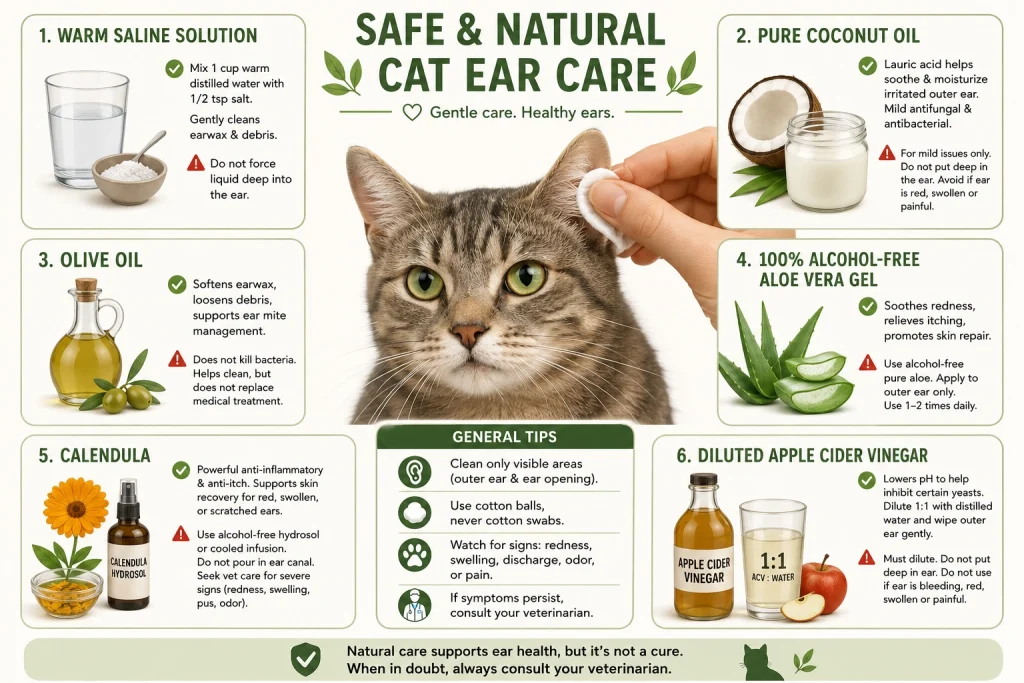
Effective Natural Ingredients for cat ears – Recommended Use:
Cleaning with Warm Saline Solution
Function: Mix 1 cup of warm distilled water with 1/2 teaspoon of salt. This method effectively flushes out earwax and loose debris from the outer ear. It is gentle, non-irritating, and causes no stinging sensation, making it suitable for routine home cleaning and effective in preventing serious infections later on.
Note: Do not force large amounts of liquid deep into the ear canal. I really like using warm saline solution to clean Fiona’s ears. It is the most suitable for daily ear care. Saline solution is also something readily available. This method is definitely worth recommending.
Pure Coconut Oil
Function: Coconut oil contains lauric acid, which offers mild, natural antifungal and antibacterial properties. A cotton ball soaked in warm coconut oil can be used to gently dab irritated skin on the outer ear flap; this effectively soothes irritation, moisturizes the skin, and inhibits the growth of certain microorganisms.
Note: Suitable for mild cat ear issues. Do not pour coconut oil deep into the ear canal. If the ear is already visibly red, swollen, or painful, do not use this method; instead, seek professional veterinary treatment.
Olive Oil
Function: Suitable for managing earwax buildup or aftercare following ear mite treatment. It softens earwax, helps loosen debris in the ear canal, aids in ear mite management, and effectively assists in cleaning the ear canal.
Note: Please note that olive oil does not kill bacteria; it merely aids in cleaning the ear canal and cannot replace proper medical treatment.
100% Alcohol-Free Aloe Vera Gel
Function: Choose 100% pure aloe vera gel. Aloe vera is rich in polysaccharides, antioxidants, and natural moisturizing factors; it effectively soothes redness and swelling, relieves itching, and promotes skin repair.
Note: Select alcohol-free, aloin-free,pure aloe vera gel. Apply a small amount to the outer ear flap and massage gently until absorbed, avoiding the deep ear canal. Use 1–2 times daily.
Calendula
Function: Rich in flavonoids and triterpenoids, it possesses potent anti-inflammatory and anti-itch properties and promotes skin tissue recovery. It is ideal for soothing outer ear flaps that have become red, swollen, scabbed, or slightly scratched due to the cat scratching itself—often caused by ear mites or yeast infections.
Note: You must use alcohol-free calendula hydrosol, a pet-specific calendula spray, or an infusion made from dried calendula petals (boiled, completely cooled, and thoroughly filtered). Never use calendula tinctures intended for humans, and avoid pouring liquids directly into the ear canal.
If the deep ear canal shows redness, swelling, pus discharge, or a foul odor, immediately use a natural enzymatic product (such as Zymox) or consult a veterinarian.
Diluted Apple Cider Vinegar
Function: Apple cider vinegar is rich in acetic acid, which lowers the pH level of the ear canal, thereby inhibiting the growth of certain yeasts. Dilute the apple cider vinegar with distilled water at a 1:1 ratio, moisten a cotton ball with the mixture, and gently wipe the ear flap (pinna) and the opening of the ear canal.
Note: Although this is one of the most popular natural remedies online, it must be diluted before use; otherwise, it may irritate the ear canal or worsen an existing infection. Do not drip it directly into the deep ear canal. Do not use if the cat’s ear shows signs of bleeding, redness, swelling, abrasions, or pain.
Ineffective Natural Ingredients or Items for cat ears—Do Not Use:
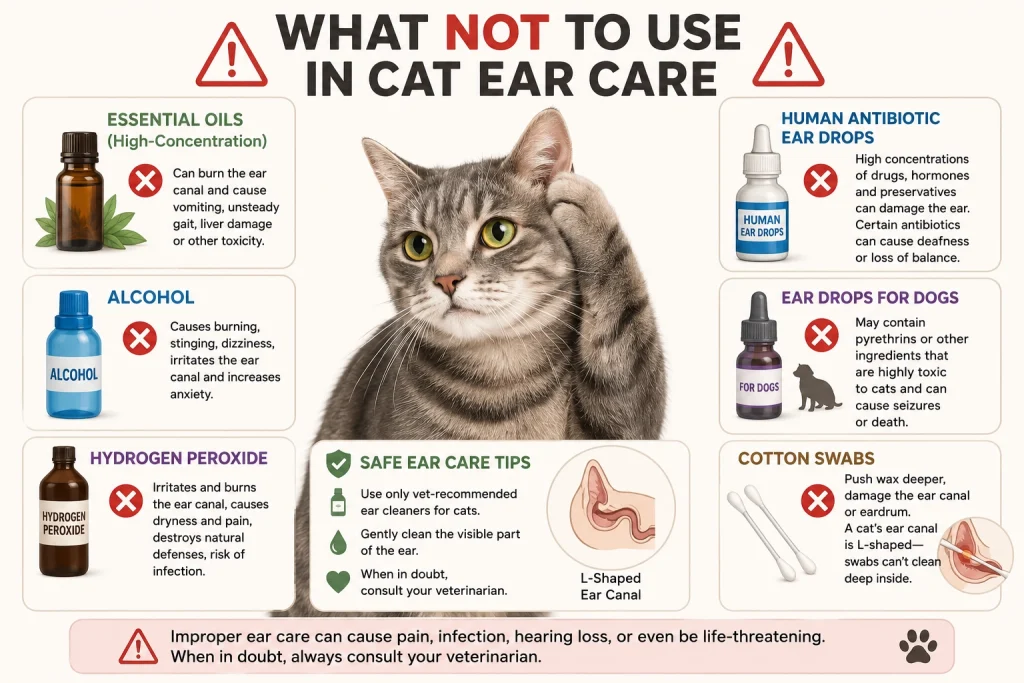
Tea Tree Oil/High-Concentration Essential Oils
Essential oils are far more toxic to cats than to humans. Oils that have not been professionally diluted or selected can burn the skin of the ear canal and cause symptoms such as drooling, vomiting, unsteady gait, and—upon absorption—liver damage or other forms of toxicity. Cat ear infection home remedies ingredients,what works and what doesn’t?
Alcohol
Causes an intense burning sensation, stinging, and dizziness; it irritates the ear canal and exacerbates infections. It also causes extreme panic in cats, making them resist further handling. It is recommended to use alcohol-free pet wipes.
Hydrogen Peroxide
Its strong oxidizing properties irritate ear canal tissue, causing redness, swelling, and pain. It leads to dryness and burns, destroys the ear’s self-cleaning ability, and can trigger serious complications or predispose the ear to bacterial or yeast infections.
Human Antibiotic Ear Drops
Using ear drops intended for humans is a common issue veterinarians warn against. Human products contain high concentrations of medication, hormones, and preservatives unsuitable for cats. Certain aminoglycoside antibiotics used by humans (such as neomycin or gentamicin) are known to be highly ototoxic (toxic to the ear).
It is advisable to use the ear drops recommended by the veterinarian and specifically for pets for ear cleaning.
Ear drops for dogs
Many highly effective ear medications for dogs (especially those targeting severe ear mites or infections) contain high concentrations of pyrethrins or specific compound ingredients. While pyrethrins are safe for dogs, they are highly neurotoxic to cats. Accidental use of dog ear medication on a cat can trigger continuous convulsions within hours and, in severe cases, lead to death.
Cotton swab
This is the most common grooming mistake. A cat’s ear canal has an L-shaped structure. Cotton swabs cannot effectively clean deep-seated earwax; instead, they tend to push wax deeper, damage the ear canal, or irritate the eardrum. The Merck Veterinary Manual emphasizes that the principles of ear care involve avoiding mechanical injury and improper deep cleaning.
When to stop home remedies and see a Vet?
If your cat exhibits the following signals, the eardrum may be ruptured or the infection may have penetrated deeply; introducing any liquid into the middle ear at this stage could result in permanent deafness, so immediate veterinary attention is required:
- Frequent ear scratching and incessant head shaking
- Persistent head tilting, loss of balance while walking, or walking in circles
- Thick green or yellow pus leaking from the ear canal, accompanied by a strong, foul odor
- Screaming in pain, hissing, or cowering when the head is touched
- Severe congestion (redness) of the ear flap and fever
- Symptoms persisting for more than 3 to 5 days without improvement
Cat ear infection home remedies ingredients: what works and what doesn’t? Cat ear infection home remedies with natural ingredients can only address minor oily buildup or superficial scratching of the outer ear.
Both the Cornell Feline Health Center and veterinary clinical data indicate that if an ear infection progresses to the middle or inner ear, diagnosis typically requires otoscopy, ear canal cytology, and—if necessary—imaging studies.
Veterinary Disclaimer
The content of this article is for educational and informational purposes only and is not a substitute for professional veterinary diagnosis, treatment, or medical advice. While we strive to ensure the accuracy and currency of the information, feline ear infections can be caused by ear mites, bacterial infections, yeast overgrowth, allergies, foreign bodies, or other underlying conditions; the specific cause can only be determined through a veterinary examination.
-
Sale!

disposable Finger-shaped dental cleaning wipes for pets fresh breath
Original price was: $6.68.$3.34Current price is: $3.34. Add to cart -
Sale!
Gentle Neutral pH Round Pet Eye Wipes Tear Stain Removal
Original price was: $5.98.$2.99Current price is: $2.99. Add to cart -
Sale!
Foaming dog body cleaner with a silicone brush for pet paws no rinsing
Original price was: $8.98.$4.49Current price is: $4.49. Add to cart