
As a pet owner, you’ve probably heard all sorts of claims about spaying and neutering: that it solves behavioral problems, makes dogs calmer, and can even help with potty training. Does your dog relieve itself anywhere in the house? This is likely a source of anxiety for many owners, so how can you train your dog to use the bathroom properly? Does neutering help with potty training? Let’s explore some basic facts every dog owner should know!
What Is Neutering?
Neutering is a routine veterinary procedure that involves surgically removing a pet’s reproductive organs, permanently rendering it unable to reproduce! For male dogs, the procedure involves removing the testicles; for female dogs, it typically involves removing the ovaries and uterus.
In addition to preventing unwanted pregnancies, neutering significantly reduces or eliminates the risk of testicular cancer, ovarian cancer, prostate disease, and other conditions. The American Veterinary Medical Association (AVMA) notes that removing a male dog’s testicles reduces his breeding drive and may result in less roaming and urine marking behavior, though each dog’s response varies.
If behavioral changes occur, they usually develop gradually over a period of weeks or months.
What Is Potty Training?
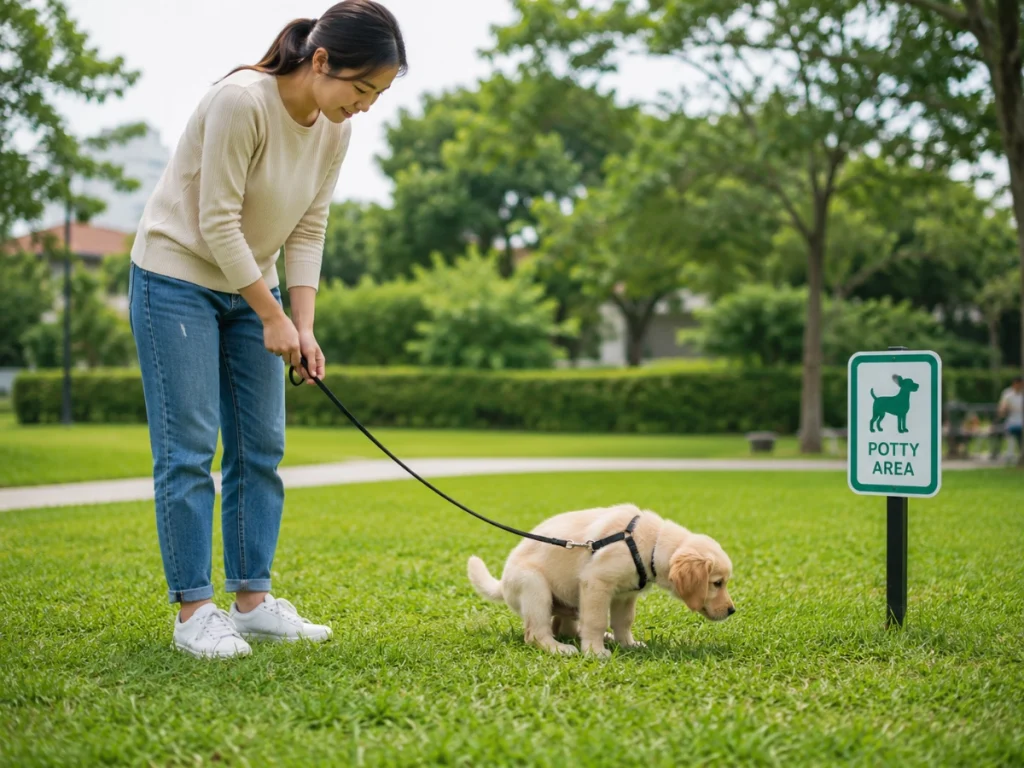
Potty training is the process of teaching a pet to urinate and defecate in a location designated by the owner that meets hygiene standards, while suppressing the urge to relieve itself indoors or in inappropriate places, through a series of guidance and reinforcement techniques.
Based on the pet’s conditioned reflexes and behavioral shaping, this process utilizes regular routines—such as scheduled feeding times, scheduled outings, and positive reinforcement—to establish behavioral habits by providing food or praise after the pet relieves itself in the correct spot.
Unlike neutering, potty training is a behavior that requires daily practice to master.
I often reward Leo with his favorite treat after he goes to the bathroom in the right spot, and the next time, he’ll go in the same place. To this day, he still doesn’t relieve himself just anywhere.
What Is the Connection between Potty Training and Neutering?
There is no direct causal relationship between the two; rather, the connection arises through indirect, behavioral influences! Does neutering help with potty training?
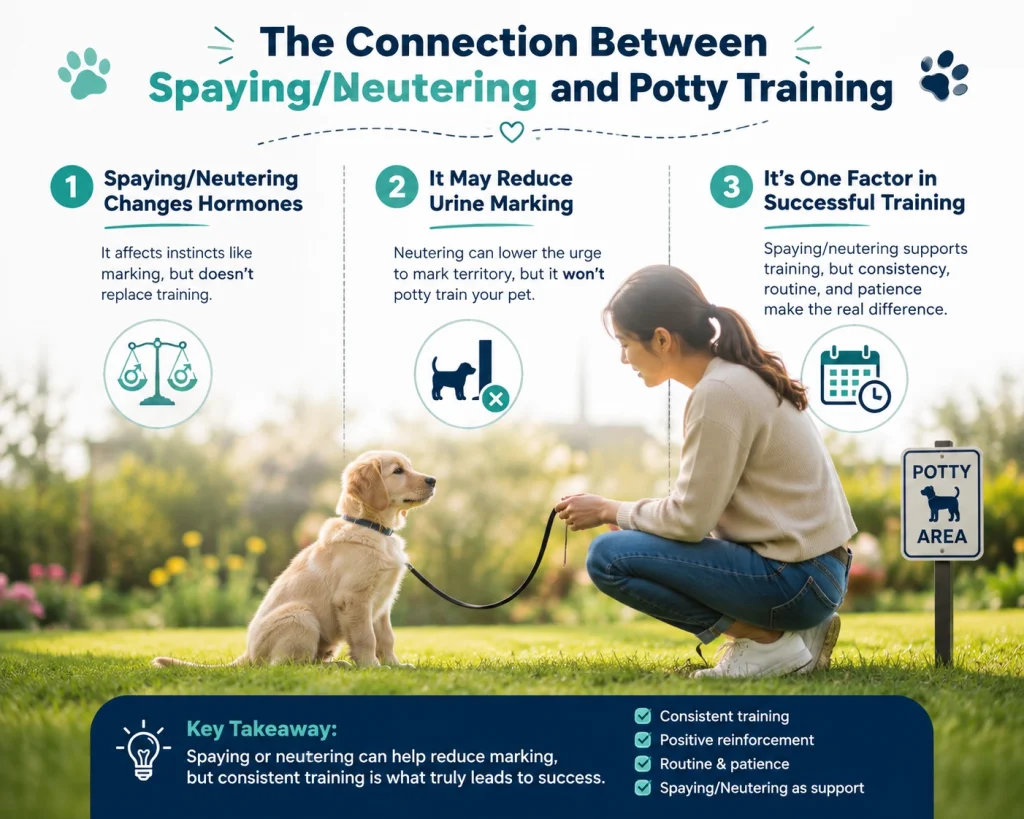
Neutering may reduce some dogs’ urine-marking behavior, but it does not automatically teach them to relieve themselves in a designated spot. Successful potty training depends on persistence, a consistent routine, positive reinforcement, and prompt cleanup afterward.
1. Neutering may reduce urine marking behavior, but it does not eliminate the need for potty training
Urine marking: An instinctive behavior in which dogs communicate with other dogs by leaving small amounts of urine
Potty training: A behavioral habit achieved through systematic, long-term training
In fact, while neutering may reduce a dog’s urine marking behavior, it does not directly alter its toileting habits. Even after being neutered, Leo did not naturally begin to urinate in a designated spot; rather, I taught him proper toileting behavior later on through training and treat-based reinforcement.
How to remove the unpleasant smell from your pet at home? Here are some simple tips.
2.Neutering affects hormones, while toilet training depends on consistent learning
Unspayed or unneutered male and female dogs experience a surge in hormones during puberty. These hormones trigger their instinct to mark their territory—leaving small amounts of urine on furniture, walls, or carpets to announce their presence to other animals.
Neutering significantly lowers testosterone levels in male dogs and eliminates the estrus cycle in both males and females, which reduces urine marking behavior. The decrease in hormone-induced restlessness also makes it easier for dogs to concentrate during training.
However, bladder capacity remains unchanged, so consistent potty training is still necessary to ensure the dog urinates and defecates in designated areas.
3. Neutering is a factor in potty training
Potty training requires a comprehensive plan that includes regular potty times, positive reinforcement, a clean indoor environment, patience, and consistency in establishing habits. Sticking to these practices may lead to a higher success rate!
A Quick Comparison Chart of Neutering and Potty Training
| Neutering | Potty Training |
| A veterinary surgical procedure to prevent reproduction | A behavioral training process to teach toilet habits |
| May reduce urine-marking behavior in some dogs, which is driven by hormones | Teaches a dog when and where it is appropriate to eliminate |
| Does not prevent indoor elimination accidents | Requires a routine, systematic approach, and positive reinforcement to form habits |
| Results vary from dog to individual dog | Success depends on the owner’s and pet’s involvement and daily practice |
Does neutering help with potty training? There is only a limited connection between spaying or neutering and potty training, and it’s not something that happens overnight. Potty training requires cultivating good habits through small, everyday actions!
Maintaining Hygiene During Potty Training Is Extremely Important!
Preventing Odor Traces Indoors and Outdoors: Dogs Have a Keen Sense of Smell
After our dogs relieve themselves outdoors, grass, dirt, and tiny particles of urine often stick to their paws and bellies. To prevent them from bringing these residual odors back indoors, we usually clean them off when they return inside!
Daily Cleaning Tips:
- Keep a pack of durable, alcohol-free pet wipes in your pet’s on-the-go cleaning kit. Wipe your dog’s paws and rear end after every outdoor bathroom break to prevent urine odors from lingering on carpets or furniture once you get home.
- For active dogs or when a quick cleanup is needed, use multi-purpose pet cleaning gloves. Slip them over your hands so you can firmly hold your dog while easily wiping their paws and legs clean of urine particles, keeping them clean and minimizing lingering odors.

Prompt Cleaning After Relieving Themselves Outdoors: Cleaning Paws and Fur
Frequent outdoor training in muddy or wet weather can get puppies dirty, but bathing them with water too often can dry out their skin and make them prone to ear infections.
Handy Tips:
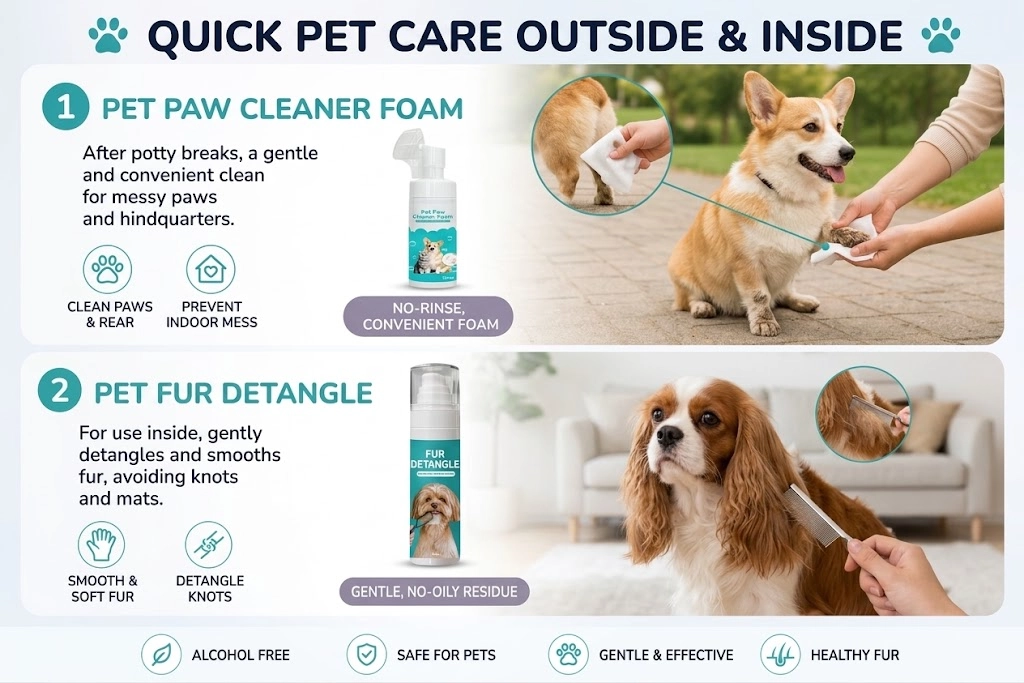
- After taking your dog for a walk to relieve themselves, their paws usually get dirty or soiled with urine. I usually use a no-rinse pet paw cleaning foam to clean Leo’s paws after we’re out—it’s incredibly convenient!
- Whether after being outside or indoors, their fur can get dirty and tangled, so it needs to be groomed promptly to prevent matting. I usually use a multi-purpose pet fur detangler designed to gently remove knots and tangles while keeping your pet’s coat soft, smooth, and healthy.
Properly Handling Indoor Urination and Defecation Accidents
Many pet owners prefer to use alcohol-free pet wipes or no-rinse cleaning foams to quickly clean their pets’ paws, floors, crates, and surrounding surfaces without irritating their pets’ sensitive noses, rather than using harsh household chemicals.
The AVSAB describes small amounts of urination, often occurring on vertical surfaces, as more consistent with urine marking; larger amounts of urination, often occurring on horizontal surfaces, are more likely to be inappropriate urination. The Merck Veterinary Manual recommends that any sudden or persistent indoor elimination problem should first rule out urinary, pain-related, incontinence, and other medical causes.
Common Mistakes in Potty Training!
- Failing to praise the dog after a successful bathroom break
- Relying on pee pads for too long without promptly transitioning to potty training
- Frequently changing the potty training schedule, preventing the dog from developing a consistent sense of timing
- Cleaning with ammonia-based cleaners
- Yelling at or pulling the dog after an accident, causing the dog to become frightened
- Not taking the dog outside often enough and ignoring the dog’s signals to relieve itself
If you discover an accident indoors, do not scold, pull, or take the dog to the mess to reprimand it. AVSAB points out that dogs cannot correctly associate punishment after the fact with their previous elimination behavior; this approach may teach the dog to urinate in secret rather than to relieve itself in the correct spot.
Reward-based training and timely management are safer and more in line with modern canine behavioral recommendations.
Veterinary Disclaimer:
The information in this article is provided for educational and reference purposes only and should not be construed as veterinary advice, diagnosis, or treatment.
Every dog is unique, and the underlying causes of potty training difficulties may vary. If your dog suddenly begins having frequent accidents, shows signs of pain while urinating, has blood in their urine, or exhibits other abnormal symptoms, please consult a licensed veterinarian immediately for a professional evaluation!
1. How long does potty training take?
Most puppies can learn basic potty training within 4 to 6 months, but the exact time depends on various factors, such as their age and breed.
2. Is neutering a dog mandatory?
Not necessarily. While neutering may help reduce hormone-induced urine marking behavior in some dogs, it is not a prerequisite for successful potty training. Whether to spay or neuter your dog is a personal decision that depends on factors such as the dog’s age, breed, lifestyle, health, and your veterinarian’s advice.
3. Why has my six-month-old puppy suddenly started relieving itself indoors again?
Because the dog has entered puberty. Excitement, lack of focus, increased independence, or changes in daily routines can all lead to indoor accidents!
4. Will my dog stop urinating indoors immediately after being neutered?
It won’t take effect immediately. It takes several weeks for hormone levels to return to normal. Additionally, house training requires consistent, long-term training to establish good behavioral habits, maintain cleanliness, and eliminate urine-based scent marking.
-
Sale!
150ml No-Rinse Pet Paw Cleaner Foam – Waterless Paw Washer
Original price was: $7.19.$5.99Current price is: $5.99. Add to cart -
Sale!

Gentle Neutral pH Round Pet Eye Wipes Tear Stain Removal
Original price was: $5.98.$2.99Current price is: $2.99. Add to cart -
Sale!
disposable Universal multi-purpose pet cleaning wipes body fur care
Original price was: $6.28.$3.14Current price is: $3.14. Add to cart