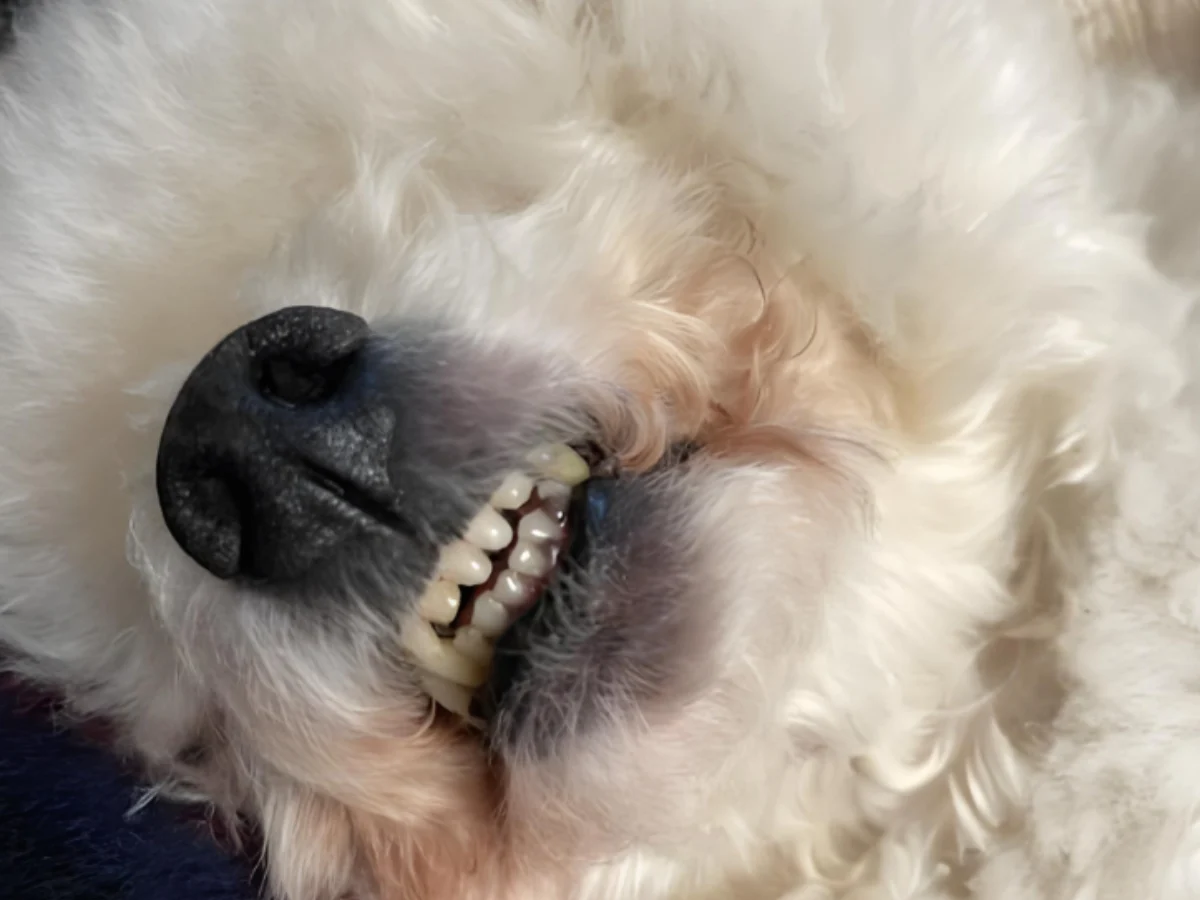

As dog owners, we all know how easily a dog’s eyes can get dirty, especially in dogs with light-colored fur. Dust, tear buildup, and small debris can collect around the eyes throughout the day. Regular, gentle cleaning can help keep the eye area clean and comfortable.
Dog eye wash can be useful for routine cleaning and rinsing, but not every product is suitable for dogs. So, how do you choose a safe option?
This guide explains what dog eye wash is, what to look for when choosing one, how to use it correctly, and when eye cleaning should be left to a veterinarian.
What is dog eye wash?
Dog eye wash is a specially formulated solution designed for routine eye-area cleaning and rinsing. Depending on the product, it may help remove dust, loose debris, and eye discharge from the surface of the eye and surrounding area.
Dog eye wash generally falls into two categories:
- Daily care type: These are designed for routine cleaning and are typically formulated to be gentle enough for regular use. They can help rinse away minor debris and remove normal eye discharge.
- Medicated treatment: These products may contain active ingredients intended to treat specific eye conditions. They should only be used according to veterinary advice, especially when a dog has redness, pain, swelling, or unusual discharge.
For routine cleaning, a gentle product specifically formulated for dogs is generally the better choice than using an eye product at random.
How to choose the best eye wash for dogs?
When choosing the best eye wash for dogs, look for a product that is specifically formulated for canine eye care and is appropriate for use around the eyes. Ideally, it should be sterile, free from unnecessary irritants, and formulated with a pH that is suitable for the eye.
You can also learn more about routine eye cleaning in our guide to dog eye care tips.
Here are some commonly considered options:
- Sterile eye wash for dogs
A sterile eye wash specifically designed for dogs is one of the simplest choices for routine eye cleaning. These products are formulated with pet eye care in mind and can be used to rinse away loose debris and normal buildup when used according to the label directions.
- Sterile saline solution (must be labeled as for pet eye care)
Sterile saline may also be suitable for rinsing a dog’s eyes in some situations, provided the product is intended for eye use and contains no unnecessary additives or medications.
It can help flush away small particles or loose debris from the eye surface. However, not every saline product is appropriate for use in the eyes, so always check the label carefully before using it.
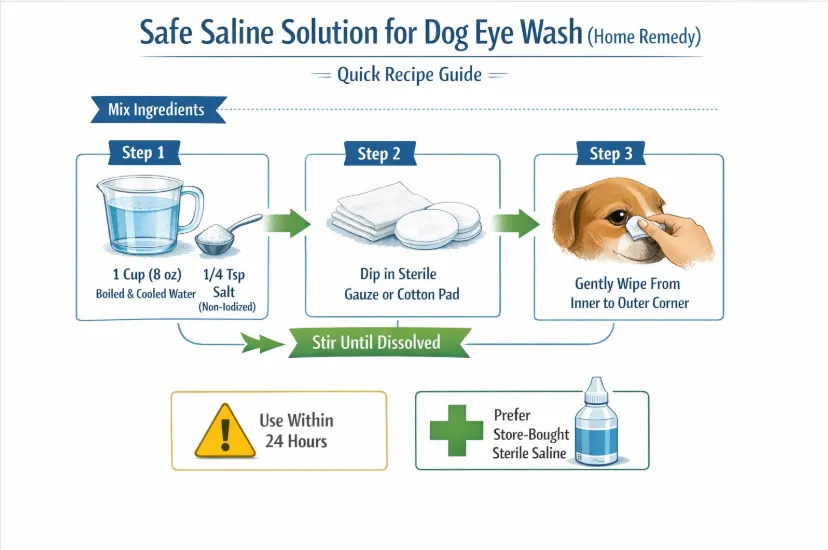
Some online sources recommend homemade saline as a dog eye wash home remedy, but homemade solutions are not sterile and can become contaminated during preparation or storage. For that reason, a commercially prepared sterile eye-rinsing solution is generally a safer choice for routine use.
- Veterinarian-approved eye drops
When a dog has persistent or unusual eye symptoms, a veterinarian-recommended product is the safest option. A veterinarian can determine whether your dog needs a simple rinse, a medicated treatment, or further examination.
For routine cleaning, however, a sterile eye wash specifically formulated for dogs is usually more appropriate than using medicated eye drops without professional guidance.
Can human eye wash be used to wash a dog’s eyes?
Not all human eye products are automatically unsafe for dogs, but you should not assume that a human eye wash is suitable simply because it is intended for human eyes.
Some human eye products contain medications, preservatives, vasoconstrictors, or other ingredients that may not be appropriate for dogs. Using the wrong product can cause additional irritation or make it harder to identify the underlying problem.
If you are unsure whether a particular eye wash is appropriate for your dog, check the product label and ask your veterinarian before using it. You can also consult trusted veterinary resources such as VCA Animal Hospitals for general information about canine eye care.
How do you use dog eye wash?
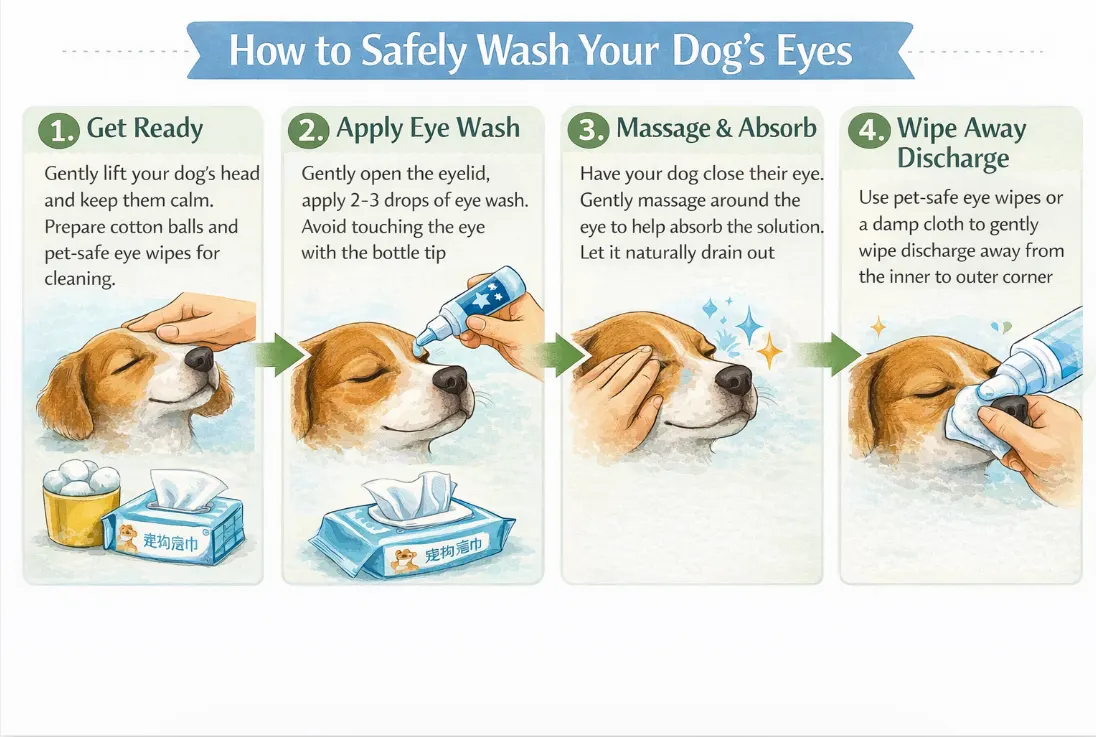
Using dog eye wash is relatively simple, but gentle handling is important. Follow the product’s instructions first, and avoid letting the bottle tip touch the eye or surrounding skin.
- Prepare your dog: Choose a calm location and gently support your dog’s head. Have clean gauze, cotton pads, or a soft damp cloth ready for wiping away loose discharge.
- Apply the eye wash: Gently open the eyelids and apply the recommended amount of solution. Keep the bottle tip away from the eyeball, eyelids, and fur to help prevent contamination.
- Allow the solution to rinse the eye: Let your dog blink naturally after applying the solution. This helps the rinse spread across the surface of the eye and loosen small particles or discharge.
- Wipe away loosened debris: Use clean gauze or a soft, damp cloth to gently wipe away discharge from the eye area. Avoid rubbing the eye, and use a clean section of the cloth for each eye.
Red Line Warning: When to See a Vet Immediately
Dog eye wash is intended for routine cleaning and gentle rinsing. It should not be used as a substitute for veterinary care when a dog develops significant or persistent eye symptoms.
Seek veterinary attention promptly if your dog has any of the following:
- Abnormal discharge: Thick yellow or green discharge, especially when it continues or becomes worse.
- Behavioral changes: Frequent pawing at the eye, persistent squinting, repeated blinking, or rubbing the face against furniture or the floor. These behaviors can indicate eye discomfort or pain.
- Visible changes to the eye: Significant redness or swelling, unusual light sensitivity, cloudiness, a white spot, or a bluish-gray appearance on the surface of the eye.
These signs can have many possible causes, and some eye problems can worsen quickly. In these situations, rinsing the eye at home should not delay professional evaluation.
Summarize
Keeping your dog’s eyes clean does not have to be complicated. Regularly checking the eye area, gently removing normal buildup, keeping the surrounding fur well maintained, and choosing a dog-safe eye wash can all be part of a simple grooming routine.
The most important point is knowing the difference between routine cleaning and a potential eye problem. If your dog’s eyes look persistently red, swollen, cloudy, painful, or produce unusual discharge, skip home treatment and contact a veterinarian.
With the right products and gentle cleaning habits, you can help keep your dog’s eye area clean and comfortable every day.
Disclaimer
This article is for informational purposes only and is not a substitute for professional veterinary advice, diagnosis, or treatment.
If your dog develops redness, unusual discharge, swelling, cloudiness, squinting, or other signs of eye discomfort, consult a licensed veterinarian. Do not rely solely on home remedies or over-the-counter products when your dog may have an underlying eye problem.
-
Sale!

disposable Finger-shaped dental cleaning wipes for pets fresh breath
Original price was: $6.68.$3.34Current price is: $3.34. Add to cart -
Sale!

Gentle Neutral pH Round Pet Eye Wipes Tear Stain Removal
Original price was: $5.98.$2.99Current price is: $2.99. Add to cart -
Sale!

Foaming dog body cleaner with a silicone brush for pet paws no rinsing
Original price was: $8.98.$4.49Current price is: $4.49. Add to cart