
Just as humans occasionally experience eye discomfort, our pets naturally do as well. Unlike humans, dogs and cats cannot clearly articulate whether their eyes are painful; however, they signal such issues through behaviors such as squinting, frequent blinking, pawing at their eyes, excessive tearing, increased discharge, or redness around the eyes. Common forms of eye discomfort are not necessarily indicative of an infection; they may also stem from dry eyes, allergies, foreign objects, irritation from smoke or dust, physical trauma, or corneal injuries.
How do pet eye drops work? How do you typically handle such situations? According to《Conjunctivitis in Dogs》by the Cornell University College of Veterinary Medicine, the typical clinical signs of conjunctivitis in dogs include “ocular discharge, squinting or frequent blinking, and redness or swelling around the eyes.”
Common Signs of Eye Discomfort in Pets
- Prolonged eye closure or squinting
- Frequent pawing at the eyes
- Redness, swelling, and excessive tearing of the eyes; sensitivity to light
- Increased ocular discharge—particularly yellow-green secretions—accompanied by signs of significant pain
Eye conditions in pets can sometimes progress very rapidly; delaying treatment may impair vision or even lead to more serious consequences. Whenever my pet exhibits these symptoms, I strictly avoid self-medicating or trying random remedies; instead, I seek veterinary advice and treatment as soon as possible. This is because a pet’s eyes are highly sensitive; what appears to be a minor issue on the surface may, in reality, have already developed into a big problem!
The Primary Mechanisms of Action for Pet Eye Drops
Have you ever wondered what happens after you finally manage to squeeze those eye drops into your cat’s or dog’s eyes? It may seem like magic, but it is actually the result of clever scientific principles. How exactly do pet eye drops work?
1. They Wash Away Irritants
The liquid itself acts as a gentle rinse. It helps flush out dust, pollen, or anything else stuck in your pet’s eye, providing instant relief.
2. They Add Moisture
Some pet eye drops are like artificial tears. They lubricate dry eyes and form a protective film over the surface to keep them comfortable.
3. They Fight Infection
If your pet has an infection, the drops contain medicine (like antibiotics). These ingredients get to work immediately to kill the bad bacteria and stop the problem from getting worse.
4. They Reduce Swelling
For allergies or injuries, pet eye drops can contain anti-inflammatories. These help calm down redness and swelling, making your pet feel much better.
What Are the Common Types of Pet Eye Drops?
Just as the vast array of human eye drops can be difficult to distinguish, the same holds true—perhaps even more so—for pet eye drops. Understanding the different types of eye drops and learning how to select the appropriate treatment for specific symptoms is essential to achieving the best possible results!
Since becoming a pet owner, I have come to realize that the greatest fear regarding pet eye health issues is not discovering them too late, but rather discovering them only to treat them using the wrong methods—especially when it comes to something as seemingly ordinary yet frequently used as eye drops.
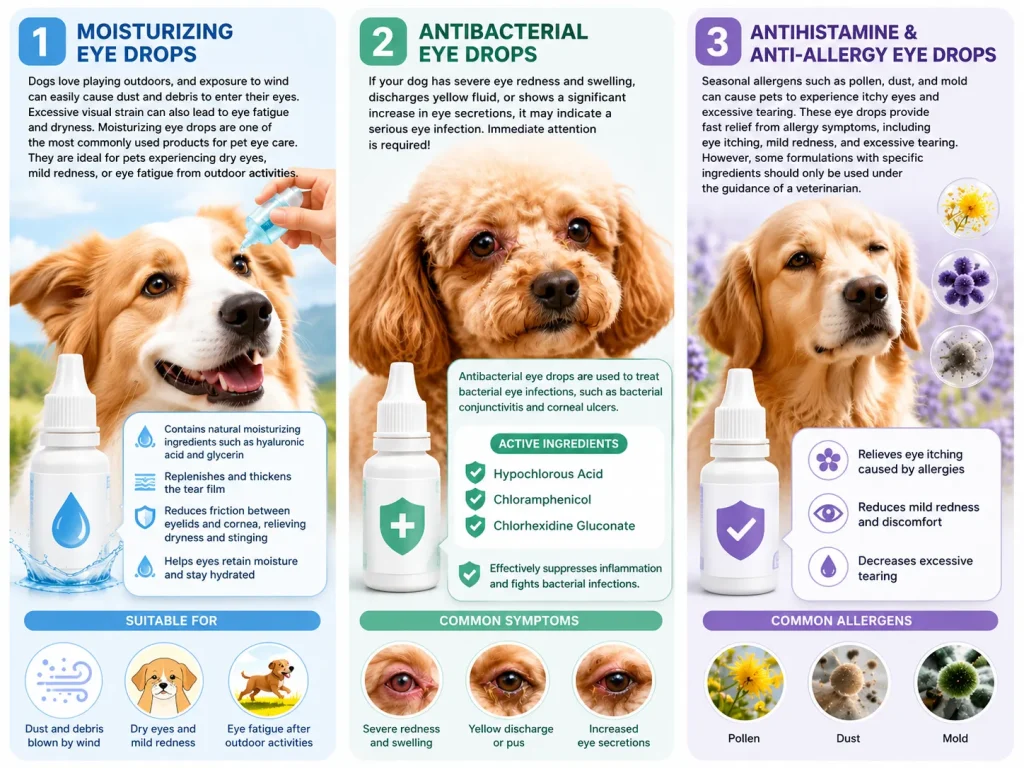
1. Moisturizing Eye Drops
Dogs love spending time playing outdoors; consequently, exposure to wind inevitably leads to dust and debris entering their eyes. Furthermore, excessive visual strain can cause eye fatigue and dryness. For these reasons, lubricating and moisturizing eye drops are among the most frequently used products for pet eye care. They are ideal for pets experiencing dry eyes, mild redness, or eye fatigue resulting from outdoor activities.
These eye drops are formulated with natural moisturizing ingredients—such as hyaluronic acid and glycerin—that help replenish and thicken the pet’s tear film.
By moisturizing the surface of the eyeball, these drops reduce friction between the eyelids and the cornea, thereby relieving dryness and stinging sensations while helping the pet’s eyes retain moisture and maintain optimal hydration levels.
2. Antibacterial Eye Drops
If your dog exhibits severe eye redness and swelling, discharges yellow fluid, or shows a significant increase in eye secretions—indicating a serious eye infection—immediate attention is required. Both Cornell University and VCA emphasize that treatment for infections should be based on a definitive diagnosis rather than treating all cases of “pink eye” as infections.
Antibacterial eye drops are a type of medicated ophthalmic solution specifically designed to treat bacterial eye infections, such as bacterial conjunctivitis and corneal ulcers.
These drops contain active ingredients—such as hypochlorous acid, chloramphenicol, and chlorhexidine gluconate—that effectively suppress inflammation and combat bacterial issues within the dog’s eyes.
3. Antihistamine & Anti-Allergy Eye Drops
Seasonal allergens—such as pollen, dust, and mold—often cause pets to experience itchy eyes and excessive tearing. These types of eye drops can rapidly alleviate acute allergy symptoms, including eye itching, mild redness, and excessive tearing; however, these medications must be used strictly according to a veterinarian’s advice and should not be administered independently or for prolonged periods.
Learn to Correctly Distinguish Between Human and Pet-Specific Eye Drops
While the eyes of humans and animals share some similarities, they also possess distinct differences. A critical mistake frequently made by pet owners is using human-grade eye drops on their pets! The Cornell University College of Veterinary Medicine’s guidelines on ophthalmic medication emphasize that the administration of eye drops to pets requires strict adherence to proper procedures and must be conducted under veterinary guidance. Similarly, the American Veterinary Medical Association (AVMA) places strong emphasis on professional guidance regarding the prescription and use of veterinary medications.
In reality, however, there are significant differences between human and veterinary eye drops in terms of ingredients, safety profiles, and formulations. The improper use of eye drops not only fails to resolve a pet’s existing eye issues but can also lead to the development of additional health complications. When selecting pet eye drops, I prioritize two key criteria: ensuring the product is specifically formulated for pets and verifying that its intended use aligns precisely with the pet’s condition.
1. Differences in Ingredients and Formulations
Human eye drops are developed based on the specific anatomical structure and physiological tolerance of the human eye, whereas pet-specific eye drops are designed to cater to the unique characteristics of feline and canine eyes. Consequently, interchanging the two is strongly discouraged.
2. Differences in pH Levels
The pH environment of a cat’s or dog’s eye differs from that of a human’s. Pet-specific eye drops are formulated with an adjusted pH level to ensure optimal compatibility and comfort for use in animal eyes.
3. Differences in Sensitivity
Pets’ eyes are typically far more sensitive than human eyes. Applying human eye drops to a pet can cause irritation, potentially leading to symptoms such as excessive tearing and swelling.
The Correct Method for Administering Eye Drops
Cornell University College of Veterinary Medicine 《Administering Eye Medications to Your Pet》(2016): Do not allow the dropper tip to touch the pet’s eyes; when administering drops, pull down the lower eyelid and apply the drops to the inner corner of the eye; for eye ointments, squeeze a thin strip along the inner surface of the lower eyelid.
- First, gently secure your pet’s head to prevent sudden movements or struggling.
- Do not allow the tip of the bottle to make contact with the eyeball or eyelid.
- Gently pull down the lower eyelid and apply the drops from the inner corner of the eye.
- After administering the drops, allow your pet to close their eye naturally for a few seconds.
- If multiple eye medications are required, strictly follow your veterinarian’s instructions regarding the proper intervals between applications.
- If your pet is extremely resistant, do not force the procedure; doing so could result in scratches or injury to the eye.
FAQS:
Q1: Can eye drops eliminate tear stains?
Certain antibacterial and cleansing eye drops can help reduce the appearance of tear stains, but they cannot make them disappear completely. Reducing tear stains requires consistent daily cleaning and grooming.
Q2: How often should pet lubricating eye drops be used?
Once or twice daily is generally sufficient; however, in cases of severe eye infection, please follow your veterinarian’s specific recommendations regarding usage frequency.
Q3: Can eye drops for cats and dogs be used interchangeably?
Generally speaking, no. Not all eye drops are suitable for every breed of cat or dog; therefore, please carefully review the product instructions or consult a veterinarian before use.
-
Sale!

Premium Pet Glove Wipes – Hypoallergenic Aloe for All Animals
Original price was: $3.29.$2.99Current price is: $2.99. Add to cart -
Sale!
3pcs Pet Dental Gel Easy Teeth Cleaning and Fresh Breath
Original price was: $11.19.$9.99Current price is: $9.99. Add to cart -
Sale!

50Pcs Pet Ear Cleaning Finger Wipes for Dogs/Cats
Original price was: $5.19.$4.99Current price is: $4.99. Add to cart