
If you have ever given ear drops to your cat, you probably understand that helpless feeling: the moment you open the bottle, your usually adorable cat starts waving their paws, shaking their head everywhere, and before you know it, half of the medication ends up on your clothes instead of in their ears.
Many first-time cat owners feel completely lost when giving ear drops to their cats. Your cat is not refusing to cooperate on purpose. Their ears are naturally sensitive, and the unfamiliar feeling of liquid entering the ear can make them feel uncomfortable or nervous.
Based on my own lessons and experiences with giving ear drops to cats, as well as feedback from many cat owners, I have put together this practical guide to teach you how to give cat ear drops and hopefully make the process easier for you and your feline friend.
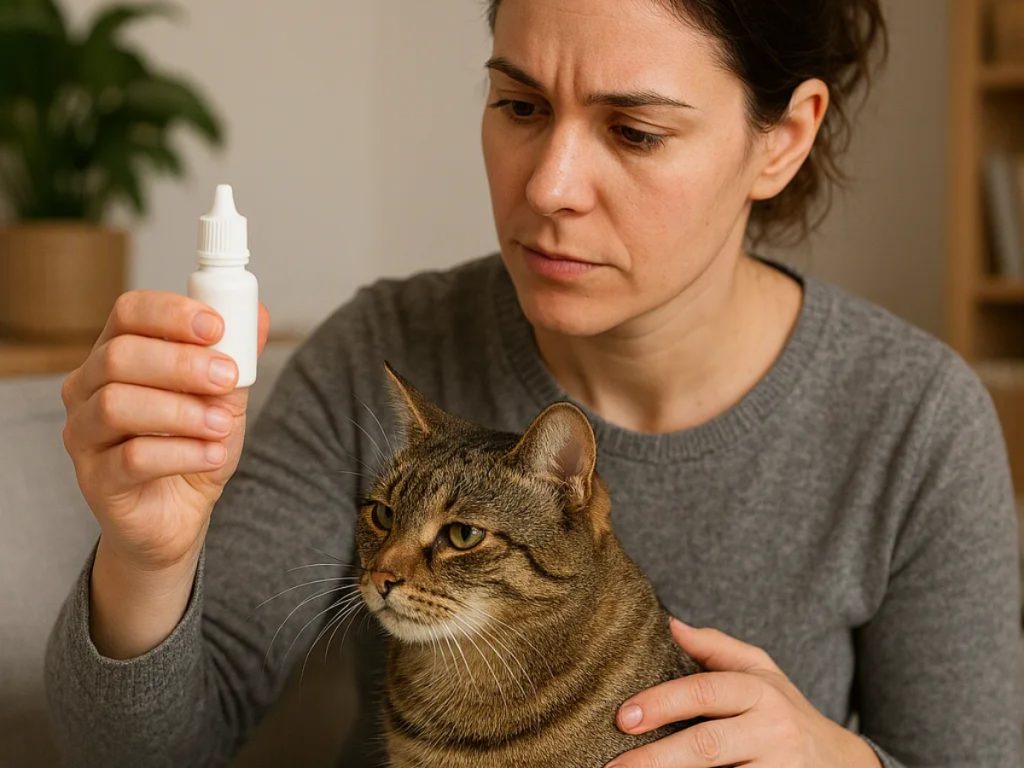
Table of Contents
1. Preparation Before Giving Ear Drops
Warm the Medication to Near Body Temperature
If the ear drops have just been taken out from a cool place or the refrigerator, the temperature may be too low.
When cold liquid suddenly enters your cat’s sensitive ear canal, your cat may shake their head or resist because of the sudden temperature change.
♥ Practical tip:
Before applying the ear drops, hold the bottle between your palms for 2–3 minutes, or place it in your pocket and warm it gently with your body heat.
When the medication is closer to your cat’s body temperature, your cat will usually feel much less discomfort when the drops enter the ear.
Choose the Right Location and Wrap Your Cat
Choose a small room with a door and place all the supplies on a table at waist height. This makes the process easier and prevents you from having to crouch on the floor, where it is harder to control your movements.
If your cat likes to push your hands away with their paws or tends to run away during ear care, a towel or blanket can be used as an extra helper.
① Place the towel flat on the table and let your cat sit in the middle, facing outward.
② Wrap one side of the towel securely around your cat’s shoulders to gently hold their front legs.
③ Wrap the other side around your cat, leaving only the head exposed.
If your cat has a large amount of black earwax or crust around the outer ear, you can gently wipe it away with a cotton pad moistened with warm water before applying the medication.
However, never use cotton swabs to dig deep inside your cat’s ear canal!
This will only push the debris further inside.
2. 5 Core Steps for Giving Cat Ear Drops
① Position and Secure Your Cat
Gently wrap your cat with a towel or blanket, leaving only the head and ears exposed. Make sure your cat feels safe and cannot move around too much.
Calmly comfort your cat and allow them to relax before starting.
Let your cat lean against your body or one side of your arm. If you are right-handed, you can stand slightly behind your cat’s side and use your left arm to gently hold your cat’s body in place.
② Lift the Ear Flap
A cat’s ear canal has an “L” shape.
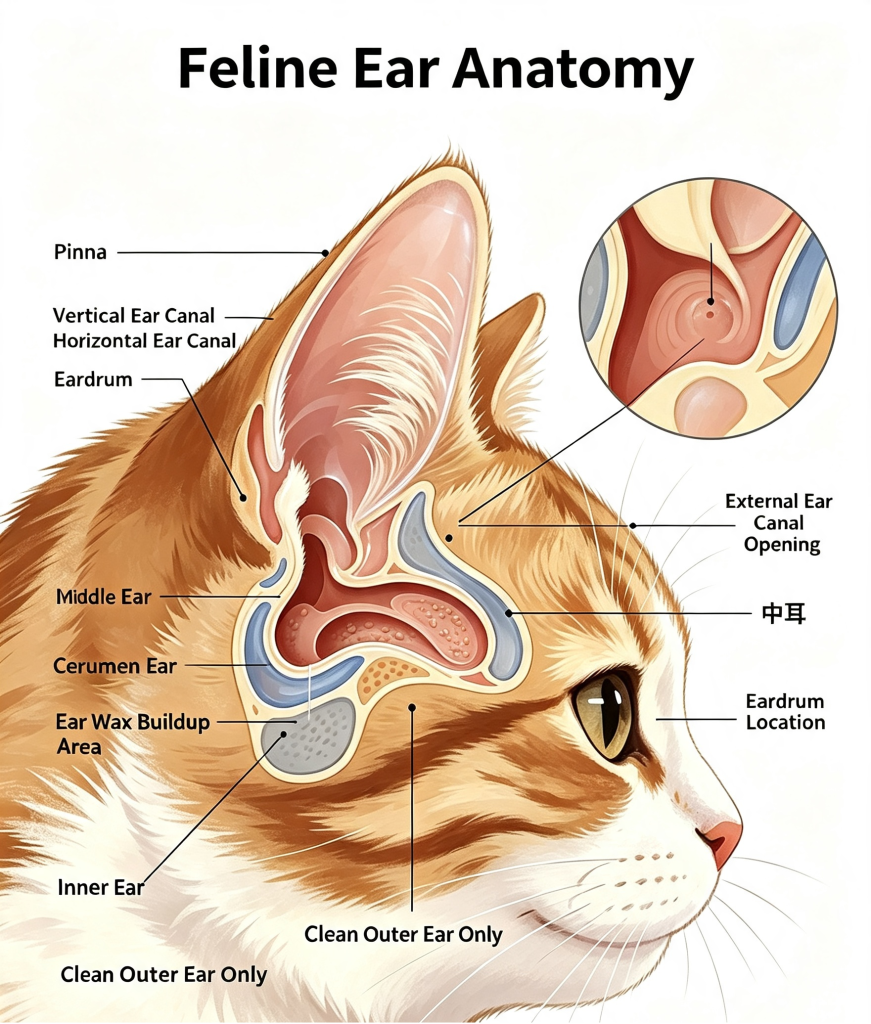
At this point, use your left hand to hold the top of your cat’s ear flap and gently lift the ear upward.
Be careful not to pull too hard. The purpose is simply to open the ear area and make it easier to apply the medication.
③ Apply the Medication
Hold the medication bottle with your right hand and slowly approach from behind your cat’s head.
(This helps prevent your cat from becoming alert or nervous when seeing the bottle directly.)
Keep the bottle tip suspended about 1–2 cm above the ear opening.
Following your veterinarian’s instructions, apply the correct and appropriate number of drops into the ear.
Important:
The bottle tip should never touch the skin inside your cat’s ear!
If the bottle tip touches infected skin, the medication may become contaminated with bacteria.
Also, if your cat suddenly shakes their head, a bottle tip placed too deep may accidentally injure the ear canal.
④ Massage the Ear Base to Help Absorb the Medication
Use your fingertips to gently massage the base of your cat’s ear.
Massage the ear base for about 10–15 seconds to help the ear drops spread more evenly throughout the outer ear canal area.
When you hear a soft “squishy” sound or liquid movement sound from the ear base, it means the medication has reached deeper into the ear canal.
Then release your cat and allow them to shake their head freely.
Your cat will naturally shake out the debris and excess ear drops from the ear canal.
⑤ Clean Remaining Liquid and Debris
Use a clean cotton ball or pet ear wipes to gently wipe your cat’s outer ear.
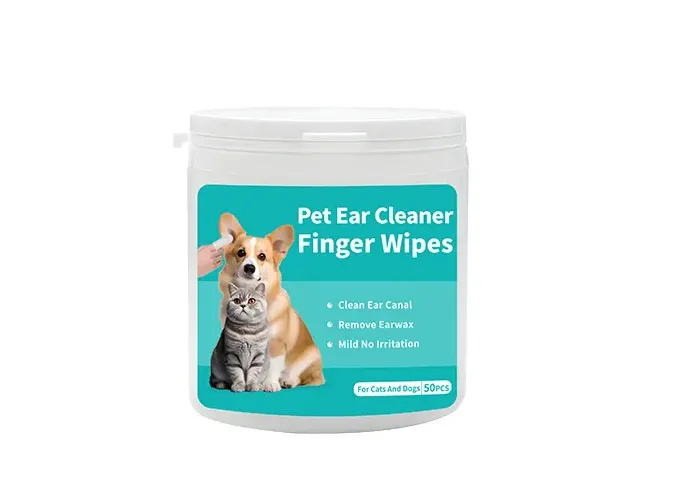
Remove any remaining debris and ear medication.
Remember to keep your movements gentle and avoid damaging your cat’s ear canal.
3. Give Your Cat a Reward After Treatment
After finishing the ear cleaning process, remember to give your cat some small treats or spend some time playing with them as a reward.
This positive experience can help your cat become more familiar and cooperative during future ear cleaning sessions.
4. What If Your Cat Strongly Resists Ear Drops?
Two-Person Method:
One person can hold the wrapped cat gently and comfort them by petting their head or chin.
The other person can focus on lifting the ear flap and applying the medication.
When I first tried doing it alone, it was difficult to handle because my cat would run away as soon as they saw the ear drop bottle.
The next day, I asked a friend to help me give my cat the ear drops, and surprisingly, my cat became much calmer and more cooperative.
Complete the Process in Multiple Sessions:
If your cat reacts strongly and refuses to cooperate, do not force the entire process at once.
You can divide it into several smaller steps and complete only part of the process each time.
For example:
- In the morning, only clean the outer ear.
- In the afternoon, apply the ear drops separately.
This can help reduce your cat’s stress and make the experience easier.
Ask Your Veterinarian About Long-Lasting Medication Options:
If your cat has a severe ear infection and experiences extreme pain when touched, forcing ear drops is not recommended.
You can ask your veterinarian whether a clinic-applied long-lasting ear gel or ear medication is suitable.
These treatments can be applied by a veterinarian at the clinic, and the medication may last longer, reducing the need for frequent applications at home.
5. When Should You Stop and Contact a Veterinarian?
Home care cannot replace professional diagnosis and treatment.
If any of the following problems occur during or after applying ear drops, stop using the medication immediately and contact your veterinarian.
Persistent Head Tilting
After applying ear drops, if your cat’s head remains tilted to one side and does not return to a normal position, you should pay attention to this symptom.
Loss of Balance or Eye Twitching
If your cat:
- Walks unsteadily
- Has difficulty standing normally
- Shows rapid involuntary eye movements from side to side
you should stop the treatment and contact your veterinarian.
Severe Pain Reaction
Even if you only gently touch your cat’s outer ear, if your cat:
- Cries out loudly
- Shows strong resistance
- Reacts with obvious pain
it may indicate that the ear condition requires professional evaluation.
Bleeding From the Ear Canal or Unusual Bad Odor.
If you notice bleeding from your cat’s ear canal or an unusual foul smell coming from the ear, stop using the ear drops and seek veterinary advice.
6. Frequently Asked Questions (FAQ)
Can I Use Human Ear Drops or Hydrogen Peroxide to Clean My Cat’s Ears?
No.
Warrenville Grove Animal Hospital pointed out in 2025 that hydrogen peroxide can irritate sensitive ear canals, causing more severe inflammation and even ear infections.
Cats that repeatedly experience ear problems need to use cleaning products specifically designed for their ears and should follow veterinary guidance when cleaning.
The ingredients and concentrations in human medications may not be suitable for cats and could potentially be harmful.
How Long Should I Wait Before Wiping My Cat’s Ears After Applying Ear Drops?
After massaging the ear base, allow your cat to shake their head freely for 1–2 minutes.
After your cat shakes out the deeper liquid and debris, you can use a clean cotton pad to gently wipe away the remaining dirt from the outer ear flap.
What Should I Do If I Missed the Ear or I’m Not Sure How Many Drops I Applied?
If the medication only landed on your cat’s fur or outer ear flap, simply wipe it away and apply another drop.
However, if you are not sure whether the medication actually entered the ear, do not apply more drops again immediately.
You can wait until the next scheduled medication time and continue the treatment as usual.
Using too much ear medication, especially products containing steroids or specific active ingredients, may cause unwanted side effects.
-
Sale!

Pet Wipes Cat Dog Circle Wipes for Cleaning Eyes
Original price was: $6.99.$5.89Current price is: $5.89. Add to cart -
Sale!
No-Rinse Pet Paw Cleaner Foam with Silicone Brush All-Year
Original price was: $7.12.$6.89Current price is: $6.89. Add to cart -
Sale!
Pet Deodorizing Spray 150ml – best Natural Dog Cat Odor Remover
Original price was: $5.29.$4.99Current price is: $4.99. Add to cart