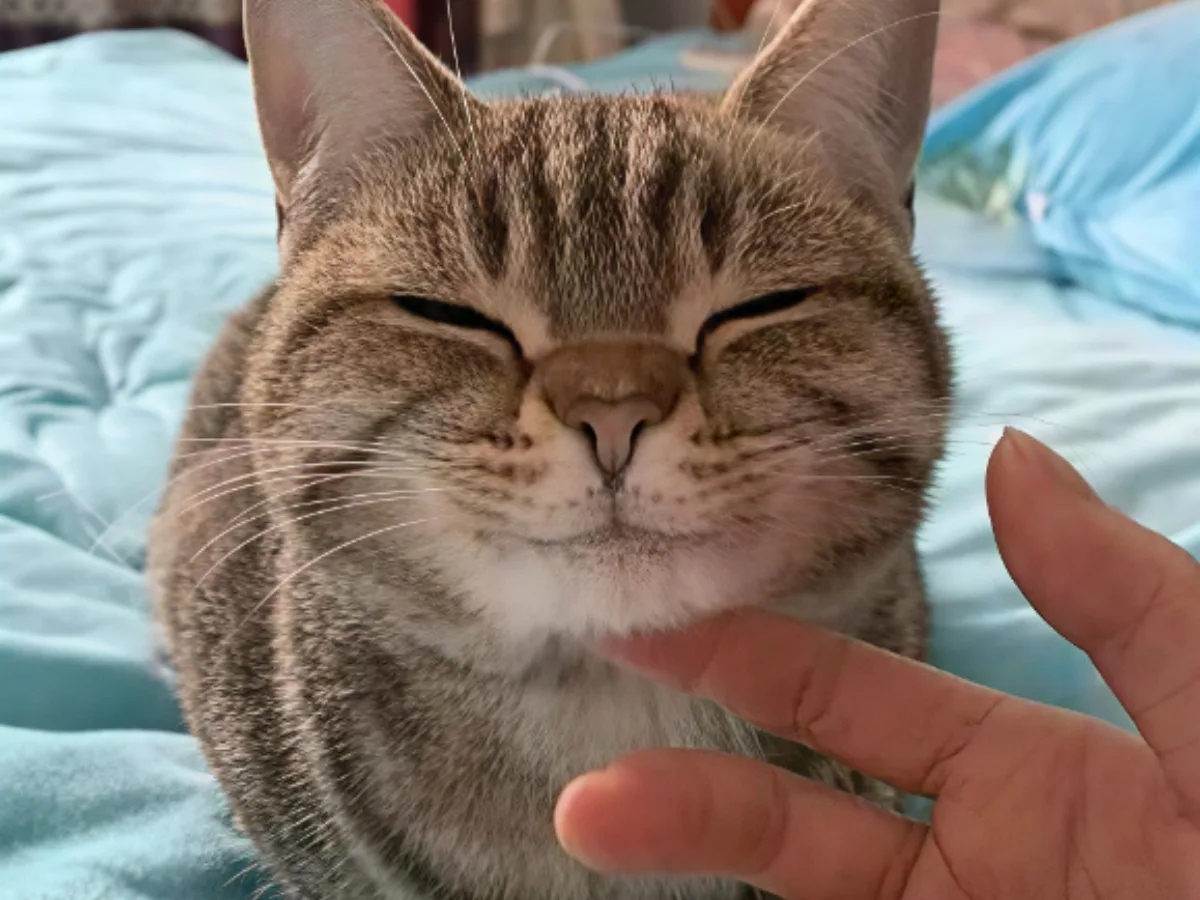

Have many cat owners not checked their cats’ eyes in a long time? Are there tear stains and dirt around the eyes? Tear stains on cats are truly heartbreaking—seeing your feline friend with streaks of tears near the eyes always feels unpleasant. Today, I’d like to share an effective solution: cat eye wipes. Let’s explore how to use them properly, care tips, and a guide to choosing the right ones.
1. Are eye wipes safe for cats?
Safety depends primarily on ingredients and usage. Cat-specific eye wipes should only be used to clean around the eyes and remove discharge, never directly or repeatedly wiped across the eyeball.
How to determine safety:
• Choose pet-specific eye wipes; never substitute with human-use wipes, as cats’ skin differs from humans’, increasing the risk of irritation.
• Check the ingredient list: Avoid alcohol, bleach, fluorescent agents, formaldehyde, and other irritants.
• If the product has antibacterial properties, ensure it has been tested for oral toxicity and skin compatibility, since cats often lick their faces and fur.
2. Essential Guide to Cat Eye Wipes for Beginners
2.1 What can you use daily to clean your cat’s eyes?
Use pet-safe wipes, soft cotton swabs, saline solution, or clean lukewarm water—always ensuring sterility.
① Gently place your cat on your lap, hold its head still, and calm it with soothing words to help it relax.
② Use a wipe or a cotton swab soaked in saline solution to gently wipe away debris from the inner corner of the eye outward. Be extremely gentle to avoid injuring the eye.
③ After cleaning, lightly press the corner of the eye with a clean tissue to absorb excess moisture or residue. This completes routine eye care.
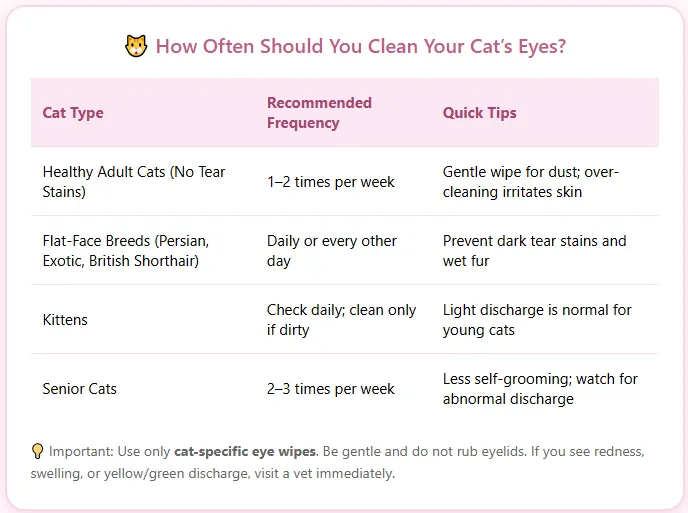
2.2 How often should you clean your cat’s eyes?
Keeping a cat is a joyful experience, but it requires attentive daily care. The frequency of eye cleaning varies and should depend on the cat’s breed, age, and eye condition.
3. Which cat eye wipe should be used for different situations?
3.1 How to clean brown discharge from a cat’s eyes?
✔ Correct cleaning method:
① First, wash your hands thoroughly to reduce bacteria. Prepare cotton pads or gauze soaked in warm water or saline solution, soften the discharge before gently wiping it away.
② Be gentle when cleaning—wipe from the inner corner of the eye toward the outer corner in one direction only; avoid rubbing back and forth.
③ If the discharge is dry or hard, moisten it for a few seconds first, then gently wipe. Never pick it out directly. Use a fresh pad for each eye to prevent cross-contamination.
❌ Incorrect practices:
① Do not use your fingers to dig or scratch the eyes, nor should you insert cotton swabs directly into the eye.
② Avoid using unverified eye-washing solutions or human eye drops without veterinary guidance.
③ If your cat keeps scratching its eyes, squinting, or showing obvious discomfort, don’t just focus on cleaning.
If you notice persistent increase in discharge, yellow-green or foul-smelling secretions, recurring brown discharge, accompanied by sneezing, runny nose, lethargy, loss of appetite—especially in kittens—or symptoms such as red eyes, excessive tearing, inability to open the eyes, or frequent eye rubbing, seek immediate veterinary care.
3.2 How effective are specialized eyelid cleaning wipes in practice?
Below are insights compiled from real user feedback on Reddit, which we hope will be helpful to you:
| Dimension | Summary |
| Daily Cleaning | Effective for mild eye discharge and tear stains; wipes remove them quickly. |
| Gentleness | Some find it gentle, but most prefer warm water with cotton pads as a more natural option. |
| Cat Acceptance | Some cats cooperate, but not all will be calm or cooperative. |
| Limitations | Cannot treat red eyes, infections, or persistent tearing. |
| Suitable For | Light eye discharge and minor tear stains; routine grooming. |
| Not Suitable For | Red eyes, yellow-green discharge, frequent eye rubbing, or signs of pain. |
3.3 For cats with conjunctivitis, should you choose specialized eye wipes or eye drops?
Choosing eye drops. According to data from authoritative veterinary institutions in the U.S., eye drops are an effective treatment for feline conjunctivitis, while eye wipes serve only as a supplementary cleaning aid and cannot replace medication.
Based on data from VCA Animal Hospitals, recovery rates: most bacterial and viral infections can be cured within 5–14 days. Dosage frequency: eye drops typically require administration 3–6 times daily at the start of treatment, whereas ointments are used less frequently but are more difficult to apply. Treatment duration: even if symptoms improve, the full course of treatment must be completed; stopping medication prematurely may lead to recurrence and make the infection harder to treat. Role of wipes: sterile cotton balls or gauze soaked in saline solution can be used to clean around the eyes, helping prevent bacterial growth, but they must be used alongside eye drops for effective treatment.
4. Pet Cleaning Tips
4.1 Can cat ear wipes and eye wipes be used interchangeably?
It is not recommended to mix them. The formulations are specifically designed for the sensitivity of different areas, and using them interchangeably may easily irritate your cat.
Cat eye wipes: These are formulated to be gentle and non-irritating, free from alcohol, fragrances, and harsh preservatives. The fabric is softer and more plush, intended only for cleaning secretions around the eyes—never touch the eyeball, and do not use them on the ears.
Cat ear wipes: These offer stronger cleansing power, specifically designed to remove dirt and debris from the folds of the outer ear.
5. Buying Guide for Brand and Channel Eye Wipes
5.1 In-Store Purchase: How to Choose PetSmart Cat Eye Wipes
Alcohol-Free:
Selection Criteria: Look for clear labeling on the packaging stating “alcohol-free.” Alcohol is highly irritating; wiping it around a cat’s eyes can cause dryness, flaking, redness, and swelling, damaging the delicate eye area skin.
Avoid Artificial Fragrances:
Selection Criteria: Choose products labeled as fragrance-free, preferably unscented. Cats have extremely sensitive noses—artificial scents may irritate them and cause resistance.
My Ragdoll cat previously used a scented wipe, and whenever I tried cleaning its eyes, it would avoid me and run into the kitchen. After switching to an unscented version, it became much more cooperative.
Prioritize Safe Formulas:
Selection Criteria: Check for labels indicating “food-grade” or “safe for licking.” Cats often lick their faces after grooming, so using non-toxic ingredients significantly reduces the risk of accidental ingestion.
Natural Plant-Based Ingredients:
Selection Criteria: Look for ingredients such as purified water, wood pulp fiber, witch hazel, chamomile, and aloe vera—gentle, soothing components ideal for cats with sensitive eyes or tear stains.
Maintain Slightly Acidic pH:
Selection Criteria: The pH should be between 5.5 and 7.0, matching the natural pH range of feline skin (6.2–7.5). Mismatched pH levels can disrupt the skin barrier around the eyes, making it increasingly fragile over time.
Choose Eye-Specific Products:
Selection Criteria: Ensure the packaging clearly states “for eyes” or “tear stain removal only.” Full-body wipes contain stronger formulas not suitable for the delicate eye area; dedicated eye wipes are gentler and better suited.
Select Cat-Specific Wipes:
Selection Criteria: Prefer cat-specific products; if unavailable, choose dual-purpose wipes for both cats and dogs. Feline skin is more sensitive than canine skin, and cat-specific wipes are formulated according to feline tolerance, offering higher safety.
5.2 Which Cats Should Not Use Medicated Eye Wipes?
Cats with corneal injuries, herpesvirus, allergies, kittens, pregnant cats, autoimmune diseases, or open wounds should not use medicated eye wipes. These cats must first see a veterinarian for proper medication, then use non-medicated, fragrance-free, alcohol-free cleansing wipes for supportive care.
6. Hidden Health Risks in Cats That Are Easy to Overlook
6.1 What Hidden Health Risks Do Eye Abnormalities in Cats Signal?
Eye abnormalities in cats are not merely local issues; they may also be “hidden signals” of systemic diseases. Deep red or yellow-green discharge, abnormal pupils, protrusion of the third eyelid, and cloudy eyes are all high-risk signs requiring immediate veterinary attention. Mild tearing or a thin pink film can be observed for 2–3 days; if no improvement occurs, medical consultation is necessary. Early detection of eye problems can effectively prevent hidden health risks such as kidney disease, dental abscesses, and neurological disorders.
-
Sale!

Gentle Neutral pH Round Pet Eye Wipes Tear Stain Removal
Original price was: $4.99.$1.99Current price is: $1.99. Add to cart -
Sale!
Pet deodorizing spray 500ml – professional body smell control
Original price was: $7.89.$5.99Current price is: $5.99. Read more -
Sale!
-1-300x300.webp)
Large Green Pet Dental Wipes Teeth Cleaning amp Fresh Breath
Original price was: $5.99.$3.99Current price is: $3.99. Read more