
Your dog sits next to you, looks up with those eyes, and then starts gnawing on their paw like it’s a chew toy. You’ve seen it before. The smell hits you before you even get close. Not fresh. Not pleasant. Chances are, it’s a dog paw yeast infection.
And honestly? It’s more common than most people realize. Here’s what it actually is and how you can handle it at home.
Table of Contents
What Is a Yeast Infection?
In dogs, a yeast infection refers to an overgrowth of Malassezia (a type of yeast) on their paws and between their toes, which leads to fungal dermatitis.
Malassezia is a type of yeast that naturally calls a pet’s skin and ears home. In a healthy dog or cat, a strong immune system and resilient skin keep these yeast numbers strictly in check. Together with a tiny community of bacteria, they form a defensive shield known as the normal flora. This biological armor protects the skin and ears, blocking environmental bacteria from moving in and staging an infection.
However, if the skin’s defense barrier weakens or the immune system falters, Malassezia will seize the opportunity to multiply rapidly, leading to a full-blown yeast infection.
What Triggers an Outbreak?
- Trapped Moisture: Walking in the rain without a thorough paw-dry afterward, or simply living in a damp environment, creates the perfect breeding ground.
- Allergy Flare-ups: Food or environmental allergies (like pollen and dust mites) are often the secret culprits that keep inviting the yeast back.
- A Weakened Defense: If another illness strikes or your pet is on long-term medication, their immune system drops its guard, leaving the door wide open.
- Anatomic Traps: Breeds most prone to this condition include Bulldogs, Cocker Spaniels, Basset Hounds, Retrievers, Shih Tzus, Poodles, English Setters, West Highland White Terriers, English Springer Spaniels, and Dachshunds. These pups are prime targets for yeast due to their deep skin folds, dense hair between their toes, or an underlying genetic tendency toward skin issues.
According to the NIC, once a yeast infection is under control, proactively hunting down and managing the root cause is absolutely critical. If underlying issues like atopic dermatitis, food allergies, Cushing’s disease, or hypothyroidism are left unaddressed, the infection will almost certainly stage a comeback.
What Does a Paw Yeast Infection Look Like?
When a dog’s immune system drops its guard, allergies flare up, or its paws stay damp for too long, yeast will seize the moment to multiply, sparking a painful inflammation.
Red Flags to Watch For:
- Relentless Itching & Licking: The itchiness can be unbearable, driving your dog to constantly lick, chew, or gnaw at their paws.
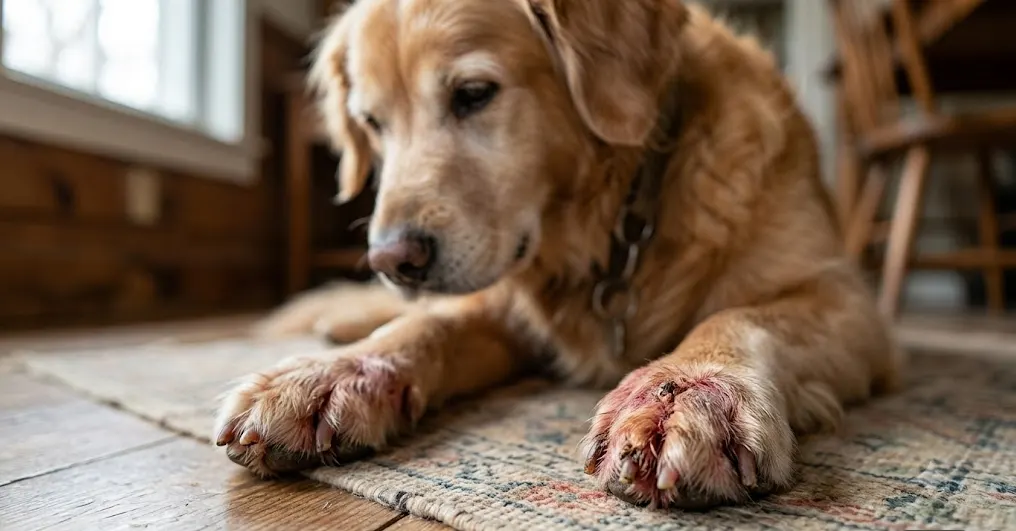
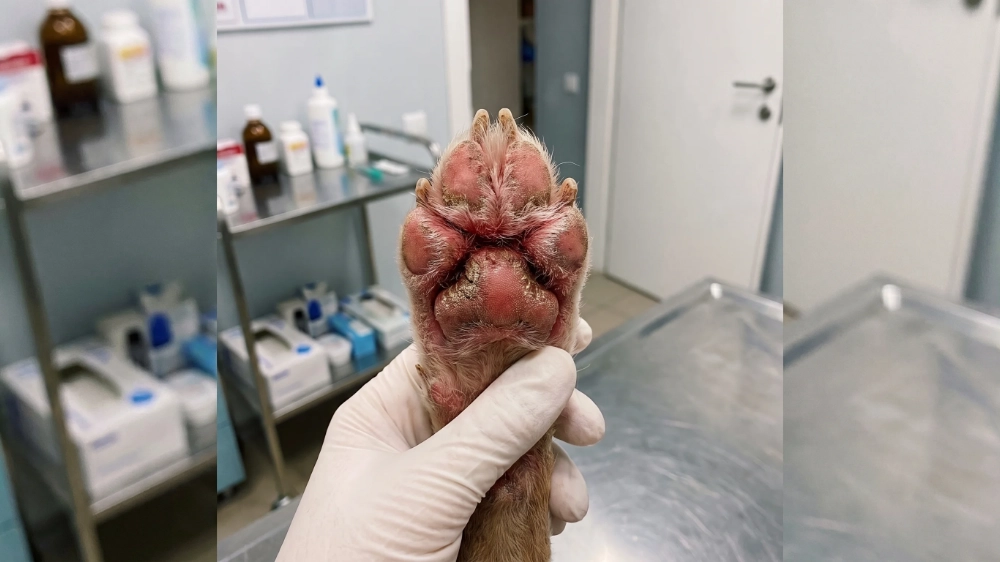
- Color Changes & Angry Red Skin: A telltale sign is fiery red skin between the toes, often accompanied by rusty brown stains fur, especially right around the nail beds.
- The Fritos Odor & Discharges: Infected paws often give off a distinct, pungent smell resembling corn chips or musty mold. You might also notice greasy, brown, waxy debris or sticky discharge.
- Bald Patches & Crusty Skin: As the fungus takes over, the skin can become excessively oily or develop crusty scabs, leading to noticeable hair loss.
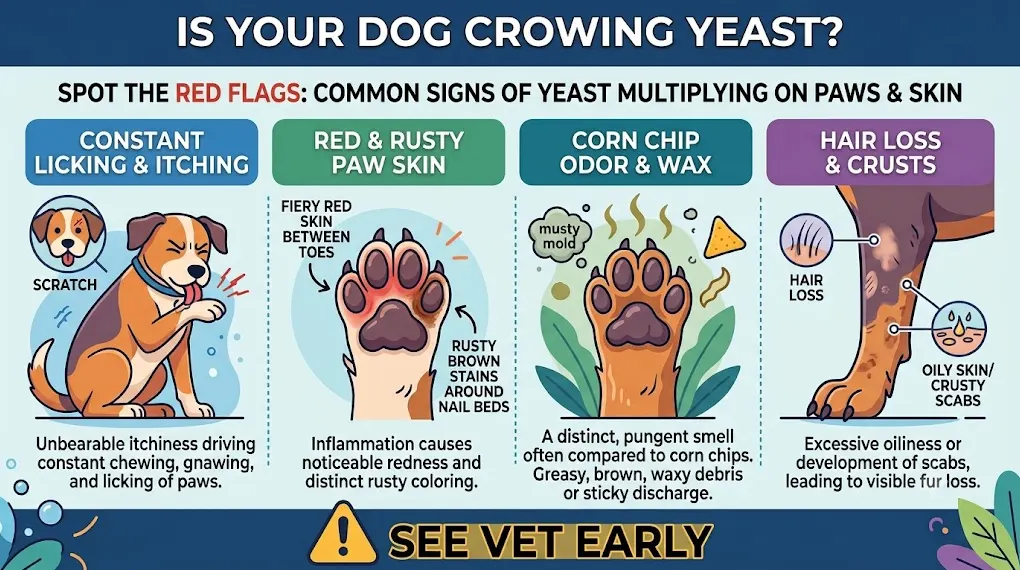
If you see these signs, call your vet. Early treatment means less discomfort for your dog and fewer complications down the road.
How to Treat Dog Paw Yeast Infections at Home?
1. The Daily Wash
Gently wash your dog’s paws daily with lukewarm water or a mild, pet-safe shampoo. Crucially, blow-dry or towel-dry them completely, as trapped moisture acts as an open invitation for yeast to multiply.
2. The Paw Trim:
Trim the overgrown hair between the paw pads and toes. This clears out the clutter and lets the skin breathe, keeping the area fresh and dry.
3. Targeted Medication
Apply a vet-recommended antifungal ointment (typically packed with hard-hitting ingredients like miconazole, ketoconazole, or terbinafine). Make sure to work the cream deep into the skin folds between the toes.
4. The Apple Cider Vinegar Soak
Many pet parents swear by an apple cider vinegar (ACV) soak. Mix equal parts ACV and warm water, and submerge the paws for 30 seconds to suppress the fungus. Important: Skip this step entirely if the paw pads are raw, cracked, or bleeding, as it will sting terribly.
Note: Put on the Cone! Once you’re done treating the paws, immediately pop on an Elizabethan collar (the cone of shame). If left to lick, your dog will reintroduce moisture and mouth bacteria to the healing skin, opening the door for a much nastier secondary infection.
When to See the Vet?
Mild paw yeast infections usually show clear signs of improvement within 3 to 7 days of topical treatment. However, you must stop all at-home remedies immediately and call your vet if you notice any of the following red flags:
- The skin is raw, broken, bleeding, or giving off a foul, overwhelming odor.
- Your dog is in severe pain or struggling to walk normally.
- Symptoms fail to improve or get progressively worse after one week of home care.
As a golden rule during a yeast flare-up, switching to a low-carb, low-sugar diet is highly beneficial, as yeast relies heavily on simple sugars and starches to survive. Instead, load up their bowl with premium proteins, healthy Omega-3 fatty acids, and high-quality probiotics to help suppress the fungus and turbocharge their immune system.
Keep in mind, while many pet parents across online communities like Reddit and pet health blogs swear that strict carb restriction is the ultimate cure, veterinary experts at Purina PetCare offer a more nuanced view: unless the yeast infection is triggered by a specific food allergy, a simple dietary change alone may not completely eradicate the root cause.
If your dog is battling recurring yeast infections, professional veterinary intervention and clinical treatment are strongly recommended.
Can a Dog Paw Yeast Infection Heal on Its Own?
The short answer is no—a paw yeast infection will rarely, if ever, heal on its own. While mild symptoms might occasionally seem to quiet down, leaving it untreated is a recipe for trouble. The infection will almost certainly flare up again or spread, turning into a vicious cycle of relentless itching, leathery skin, and potentially a much nastier secondary bacterial infection.
PetMD states clearly that because yeast infections in dogs often develop secondary to another health condition, they will not resolve without veterinary treatment.
The Anti-Yeast Diet: What to Feed (and Avoid)
Did you know that your dog’s diet plays a massive role in fueling yeast infections? Switching up what goes into their bowl can help your pup shake off that stubborn infection much faster.
Yeast has a major sweet tooth. It thrives and multiplies by feeding on sugars and carbohydrates. That means a daily diet loaded with sugars acts as an all-you-can-eat buffet for yeast growth. Unfortunately, many commercial dog foods are secretly packed with high sugars, heavy carbs, and high calories. If you aren’t careful, you might inadvertently be buying a bag of “yeast food.”
If you’re unsure which everyday ingredients are secretly feeding the enemy, you are not alone. According to veterinary nutritionists, here is the ultimate cheat sheet on what to ditch and what to add.
| ❌ Avoid (Feeds the Yeast) | can Add (Fights the Infection) |
|---|---|
| High-Glycemic Starches: Potatoes, sweet potatoes, corn, wheat, rice, oats. | Lean Proteins: Turkey, beef, salmon, white fish. |
| Hidden Sugars: High-fructose corn syrup, honey, molasses. | Low-Carb Greens: Broccoli, kale, spinach, celery. |
| Sugary Fruits & Veggies: Carrots, peas, pumpkins, apples, bananas. | Natural Antifungals & Probiotics: Coconut oil (MCT), plain unsweetened kefir. |
Conclusion
While canine yeast infections are incredibly common, they are also highly treatable with the right game plan. By combining proper veterinary care—including a target course of initial medication—with proactive dietary tweaks, you can tackle the root cause of the yeast bloom, giving your pup a smooth and speedy road to recovery.
-
Sale!

disposable Finger-shaped dental cleaning wipes for pets fresh breath
Original price was: $6.68.$3.34Current price is: $3.34. Add to cart -
Sale!
Gentle Neutral pH Round Pet Eye Wipes Tear Stain Removal
Original price was: $5.98.$2.99Current price is: $2.99. Add to cart -
Sale!
Foaming dog body cleaner with a silicone brush for pet paws no rinsing
Original price was: $8.98.$4.49Current price is: $4.49. Add to cart