
With their irresistible good looks, playful personalities, and low-dander coats, curly hair dogs—like Poodles, Bichon Frises, various Doodle mixes, and Water Dogs—have become the ultimate dream companions for countless families. But for every curly-coated Pet Parent, alongside all that fluff and joy come two major nightmares:
Matted fur / Matting
Skin barrier damage and eczema / hot spots
Below, we’ll explore the top 10 curly hair dog breeds, dive into what makes their coats unique, and share expert daily grooming secrets to keep them healthy and tangle-free.
💡 QUICK TAKEAWAYS
4 Core Facts About Curly-Coated Dogs
Genetics
That signature corkscrew curl is primarily driven by a mutation in the KRT71 gene[cite: 3].
The Hypoallergenic Truth
No dog is 100% hypoallergenic[cite: 3]. Curly dogs trap dead hair and dander, preventing them from floating in the air[cite: 1, 3].
Matting Risk
Loose hair twists with new growth into knots. Add moisture, and you get skin redness and acute hot spots[cite: 1, 3].
Grooming Frequency
Spot-check daily, do line brushing 2–3 times a week, and schedule haircuts every 4–8 weeks[cite: 3].
Why Do Some Dog Breeds Have Curly Hair?
Why do certain dog breeds feature curly coats? It boils down to a combination of genetics, functional selective breeding, and unique hair follicle structures.
Functional Selective Breeding for Survival:
Many curly breeds (like Poodles, Portuguese Water Dogs, and Irish Water Spaniels) were originally bred as water retrievers. Their tight, dense curls act like a natural wetsuit—repelling freezing water, retaining body heat, and protecting them from thorny briars in dense brush.
Irregular Hair Follicle Structure:
Straight-haired dogs have round hair follicles that sprout hair straight out. In contrast, curly-coated dogs have oval or flattened follicles—sometimes with a slight hook shape—causing the hair shaft to twist into spirals or waves right from the root.
Genetic Factors (The KRT71 Gene Mutation):
Scientific research reveals that the primary driver behind canine curls is a mutation in the KRT71 (Keratin 71) gene. This mutation alters how keratin proteins bind together, causing the hair shaft to twist and form corkscrew curls as it grows.
The Curly Hair Dog Identification Guide (By Size, Color & Name)
Whether you’re looking to bring a new Fur Baby home or trying to identify that adorable pup you passed on your walk, many pet parents search by size, coat color, and styling features.
Small Curly Hair Dogs: The Compact Companions
Bichon Frise
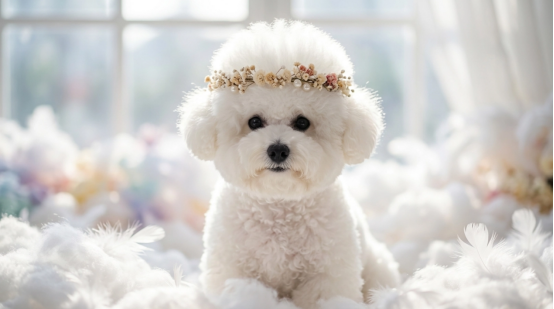
They feature a dense, cloud-like, soft, and bouncy coat of pure white curls. Bichons are outgoing, friendly, and trap shed hairs inside their coat, making them a top hypoallergenic small companion.
- Coat Features: Bichons have a double coat. The undercoat is soft and dense, while the outer coat is coarser with corkscrew curls. This combination creates a velvety, springy texture that bounces back when pressed.
- Coat Benefits: Bichon hair rarely sheds on its own; loose hairs get trapped within the curls. While ideal for allergy sufferers, it means regular human intervention is a must.
- The Classic “Powder Puff” Round Head: Professional groomers leverage the plush density of the Bichon’s curls to trim their head into a signature, perfectly round “cotton ball” or “powder puff” look.
Toy & Miniature Poodle / Doodles
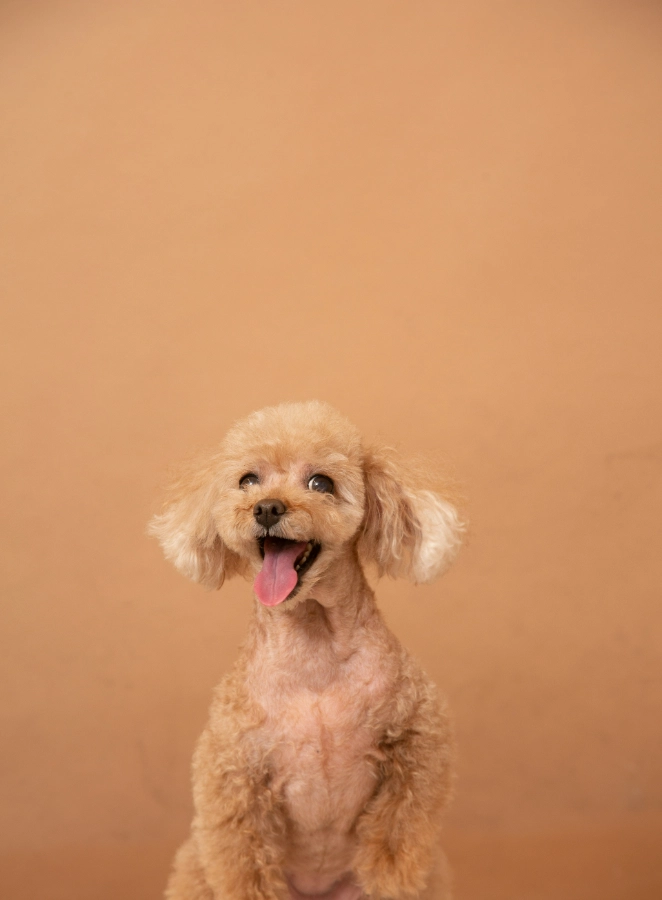
Toy Poodles, Miniature Poodles, and popular hybrids like Maltipoos and Cockapoos. With their signature Teddy Bear Cut and rich reddish-brown, chocolate, or apricot curls, they boast off-the-charts cuteness and intelligence.
- Coat Features: A Poodle’s coat is typically coarser and denser than a Bichon’s, featuring a distinct wool-like spiral texture that easily supports complex, sculpted styles.
- Coat Benefits: Poodles feature a single coat that grows continuously much like human hair. They rarely shed, making them the gold standard for allergy-conscious families.
- Versatile “Teddy Bear Cut”: The “Teddy Bear” isn’t a breed—it’s a popular haircut style for Toy Poodles! By leaving fuller hair around the muzzle and rounding the ears, they look just like a plush toy bear.
Bedlington Terrier
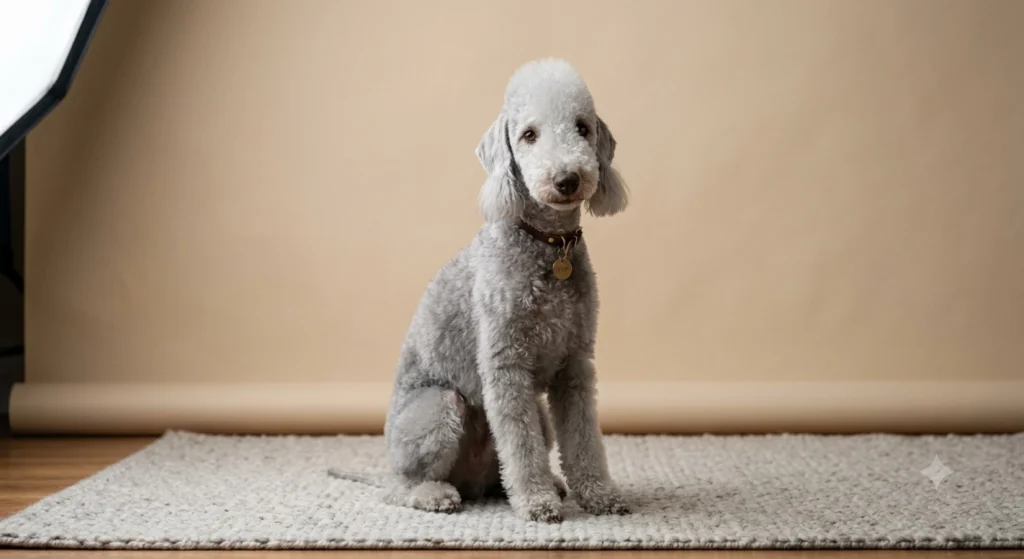
A uniquely styled British terrier that resembles a gentle lamb, featuring an arched back, soft woolly curls, a mild temperament, and virtually no shedding.
- Coat Features: Their coat is a unique blend of hard and soft hairs. Standing crisp away from the skin, it feels neither like wire nor like cotton, but rather has a crisp, linen- or tweed-like texture.
- Coat Benefits: Very low shedding. Lacking the heavy oily secretions of traditional hounds, Bedlingtons have practically zero doggy odor, perfect for scent-sensitive homes.
- Signature “Lamb Head” & “Rat Tail”: Traditional Bedlington cuts keep a dense, silken wedge-shaped topknot on the head, tassel-like “ear tassels,” and a shaved face and tail that reveals a slender, rat-like tail.
Medium Curly Hair Dogs: Athletic & Versatile
Medium curly dogs combine athletic stamina with a manageable size, making them perfect for active outdoor families.
Lagotto Romagnolo
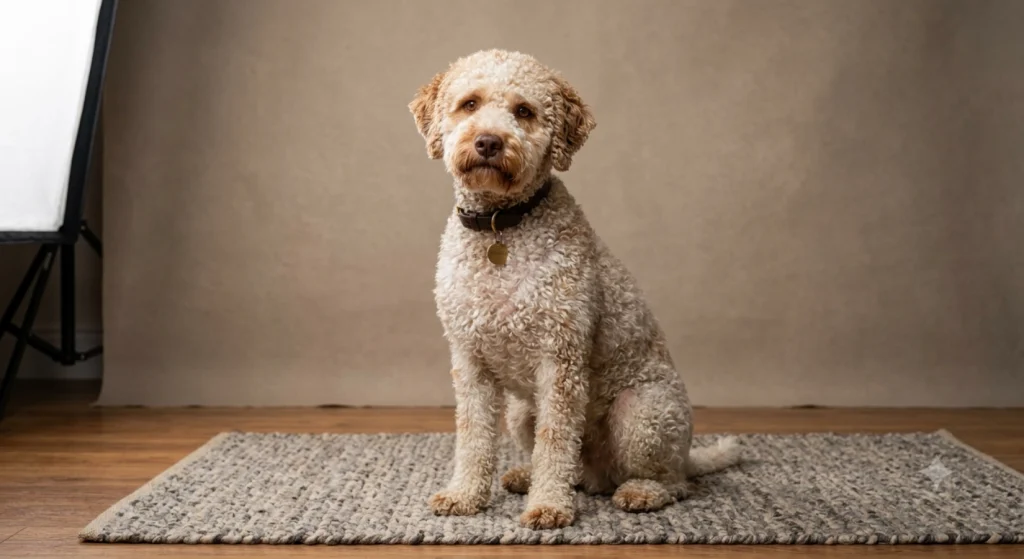
After the Italian marshes were drained in the 19th century, their original role as water retrievers faded. Breeders discovered their extraordinary sense of smell and focus, transitioning them into premier truffle-hunting dogs.
- Coat Features: Extremely tight, woolly, non-oily brown double curls serve as their line of defense. This coat is 100% waterproof and thermal-insulating, providing scratch protection while digging through thorny brambles for expensive white truffles.
- Facial “Moustache”: Their heads are covered in thick hair forming a charming beard and moustache, with eyebrows delicately framing their eyes.
Portuguese Water Dog & Spanish Water Dog
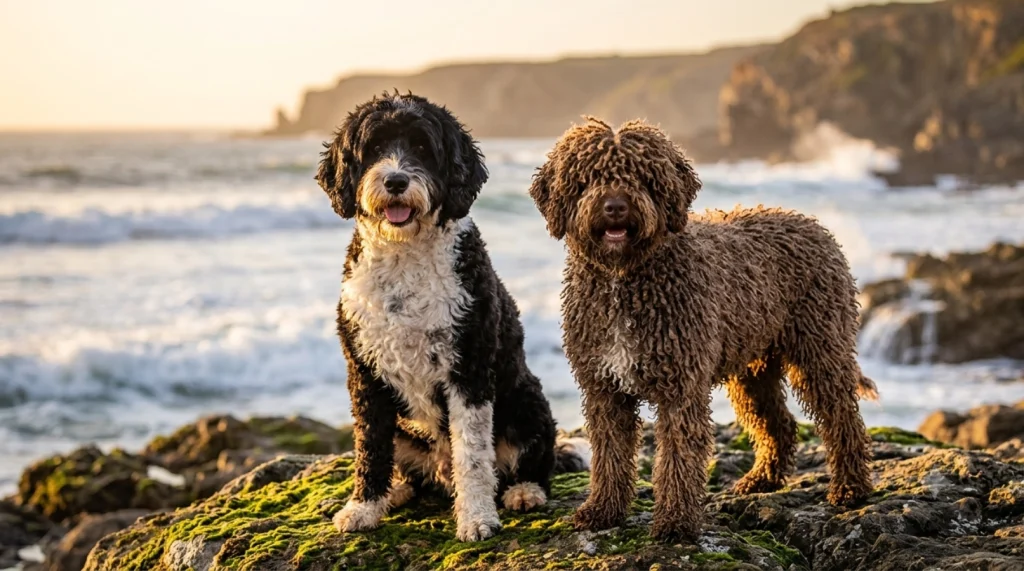
Both breeds boast naturally water-resistant coats and served historically as fishermen’s indispensable mates. Their bouncy curls and high energy make them a match made in heaven for active, water-loving households.
Portuguese Water Dog vs. Spanish Water Dog
A quick comparison of two iconic athletic water-loving breeds
| Feature | Portuguese Water Dog | Spanish Water Dog |
|---|---|---|
| Historical Job | Fisherman’s assistant (courier, driving fish, retrieving gear) | All-around farm dog (herding livestock, part-time water retriever) |
| Size & Weight | Slightly larger & heavier Males: 42–60 lbs | 20–22.5″ |
Slightly smaller & lighter Males: 40–49 lbs | 17.5–19.5″ |
| Coat Texture | Single coat, softer texture (curly or wavy variants) | Woolly texture, naturally cords into “mop-like” dreadlocks |
| Grooming Style | Lion Cut (shaved hindquarters) or Setter/Retriever Cut | Natural full cords, or clipped short evenly (never brushed straight) |
| Expression & Temperament | Intelligent, steady, warm (like Bo, President Obama’s dog) | Alert, focused, classic herding dog intensity |
Kerry Blue Terrier
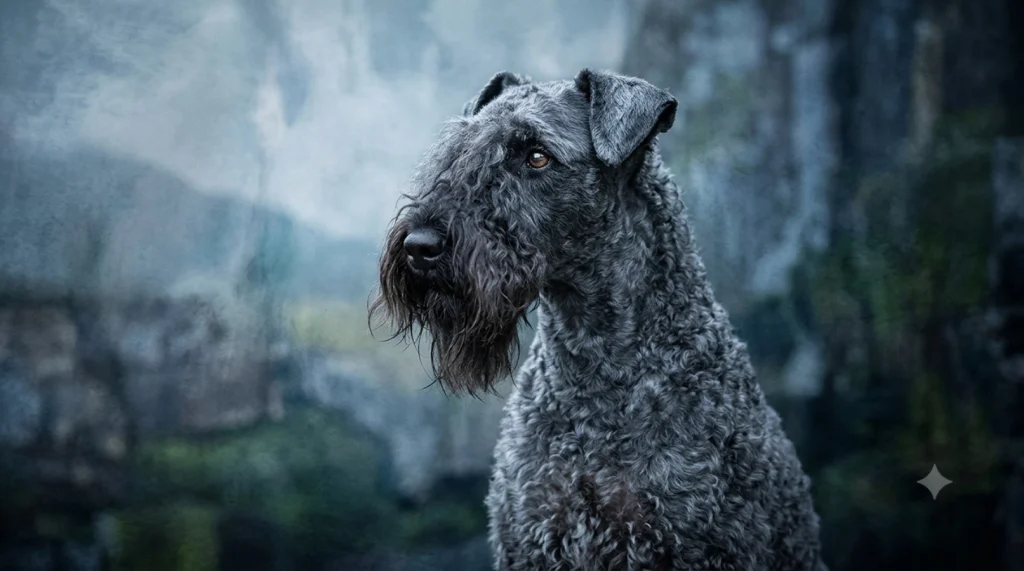
As one of the larger members of the terrier group, the Kerry Blue’s blue coat is a true showstopper. Originally bred by Irish farmers as versatile working dogs, they hunted otters, cleared rodents, herded sheep, and guarded property.
- Coat Features: Born jet black, they undergo a “clearing” phase around 18 months, settling into shades of slate blue, silver blue, or deep blue-gray. This silky metallic sheen is unique in the canine kingdom.
- Coat Benefits: Absolutely no harsh wire texture. Breed standards require a soft, dense, silky wavy coat free of harshness.
- Classic “Beard” Trim: Grooming emphasizes a clean-shaven top head and ears contrasted with a long, dense rectangular beard on the muzzle and chin.
Pumi
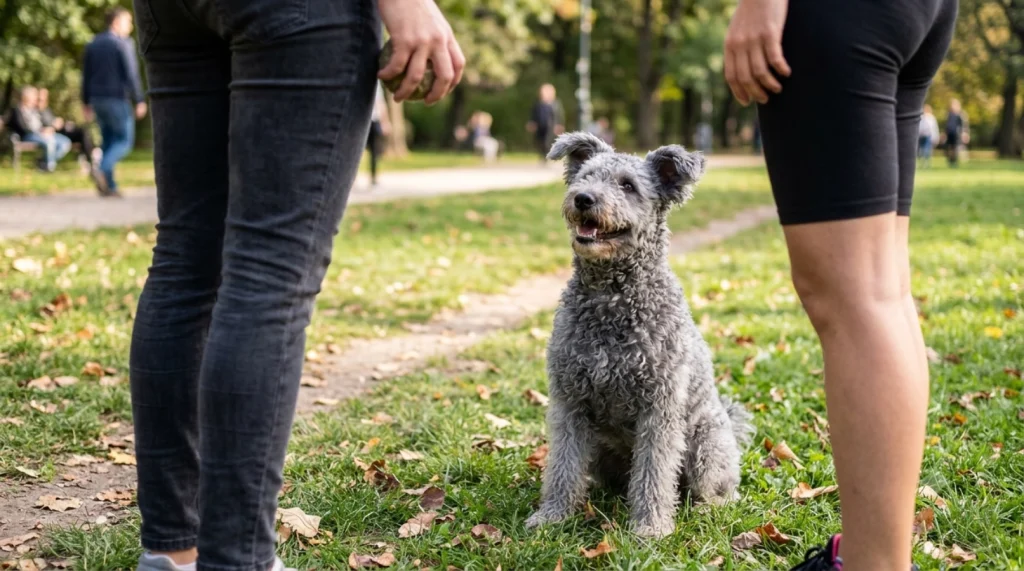
Officially recognized by the AKC in 2016, the Pumi is a rarer Hungarian breed whose whimsical look made it an instant internet sensation.
- Coat Features: Their most captivating feature is their ears! High-set, erect at the base, with the top third folding playfully forward, covered in long, whimsical curls like a fairytale elf.
- Coat Benefits: Made of a 50/50 blend of hard and soft hairs, the coat forms natural corkscrew-like tufts, giving them a delightfully rounded appearance.
Big & Large Curly Hair Dog Breeds: Majestic & Friendly
Large curly breeds combine majestic presence with a gentle heart. While coat care requires more effort, their loyal companionship is unmatched.
Standard Poodle & Large Doodles
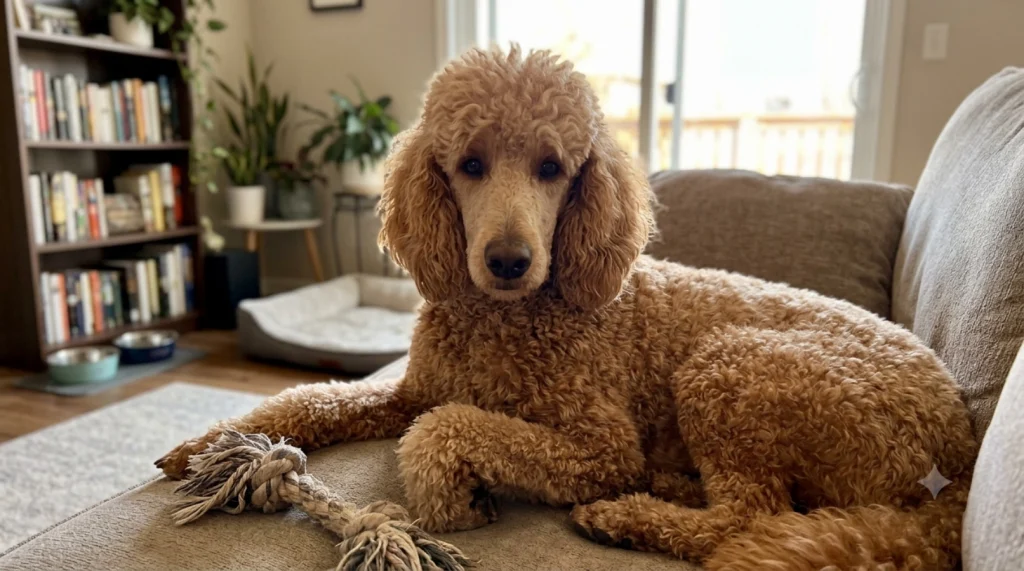
Standard Poodles represent the pinnacle of large curly breeds, renowned for high intelligence and regal poise. Large Doodles (like Goldendoodles and Labradoodles) are equally beloved—a fluffy brown Doodle puppy (puppy brown curly hair dog) looks just like a giant, cuddly teddy bear.
- Coat Features: Standard Poodles feature a dense, springy, single coat with a woolly texture. Originally water retrievers, their coat acts like a protective wetsuit that repels cold water and retains heat.
- Coat Benefits: They rarely shed and lack doggy odor—a dream come true for large-dog lovers who suffer from allergies or hate finding dog hair everywhere.
- Sporting / Teddy Cut: The most popular pet style! The body is trimmed evenly with a rounded facial trim, turning them into giant, comforting teddy bears.
- Grooming Considerations: Due to continuous hair growth and high matting risk, daily brushing is essential. Expect a trip to the professional groomer every 4–6 weeks. Grooming a large Poodle requires a significant commitment of time and money!
Curly-Coated Retriever
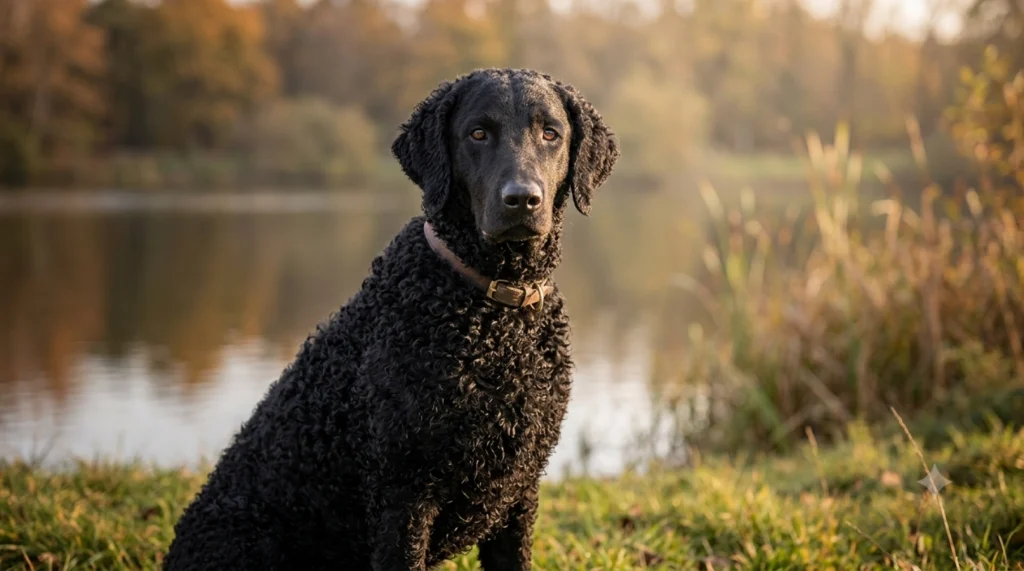
Native to England, the Curly-Coated Retriever is wrapped head-to-tail in tight, crisp, water-resistant dark brown or black curls. Equal parts skilled hunting retriever and quiet family protector, it is the oldest and tallest of all retriever breeds (like Goldens and Labs).
- Coat Features: Unlike Golden or Labrador Retrievers, the Curly’s neck, body, and tail are covered in small, tight, crisp curls.
- Coat Benefits: Remarkably, they have no undercoat. This tight, hard outer coat is 100% waterproof and acts like tough rubber, protecting them from brambles and icy marshes.
- The Tallest Retriever: Standing 25–27 inches tall and weighing 70–95 lbs, they boast a sleek, streamlined athletic build taller than Goldens or Labs.
Pro Grooming Tips & Naming Inspiration
Naming Ideas for Curly Dogs:
Brown / Red-Brown: Mocha, Teddy, Bear, Hazel, Coco
White / Light Colors: Clover, Cotton, Pearl, Mallow
Black / Slate Blue: Shadow, Pepper, Blue
The Puppy Coat to Adult Coat Crisis: First-time Pet Parents often hit a wall during the Coat Switch (6 to 12 months old). Fine, soft Puppy Coat hair rarely tangles, giving a false sense of security. But as dense, adult Undercoat grows in, it entangles with shedding puppy hair. Without daily brushing, severe Matting can form near the skin within days. Establishing daily grooming habits early is the key to preventing an emergency “shave-down.”
The Line Brushing Blueprint: Preventing Matting Before It’s Too Late
The Golden Rule: “Prevent matting before it requires shaving to the skin”
Many new dog owners assume matting is merely a cosmetic issue, but medically speaking, severe matting is a serious health risk:
Hot Spots: Pelted mats trap moisture and dander against the skin like a wet sponge, blocking air circulation. In warm months, this triggers fungal infections and intensely itchy Hot Spots (acute moist dermatitis).
Restricted Blood Circulation & Skin Pulling: As mats tighten, they pull constantly on the skin barrier and can even restrict localized blood circulation, causing pain during movement and inducing severe anxiety.
According to the PPGSA (Professional Pet Groomers & Stylists Alliance) Standards of Care, Safety and Sanitation, severely matted fur poses a major animal welfare and dermatological hazard. The PPGSA Grooming Safety Standard explicitly states that when matting reaches a severe level, dematting causes skin tears and extreme stress; at that point, shaving the coat is the only humane, safe protocol.
Professional Technique: Section-by-Section Line Brushing
To avoid a shave-down, adopt Line Brushing, recommended by NDGAA (National Dog Groomers Association of America) Master Groomers.
The Ultimate Grooming Toolkit Checklist
The Ultimate Grooming Toolkit Checklist
Essential tools for maintaining a healthy, mat-free curly coat
Slicker Brush
Fine, flexible wire pins penetrate deep into curls to remove shed undercoat. Core tool for Line Brushing.
2–3 times weekly
Metal Comb / Steel Comb
The ultimate test to check if undercoat is clear. Fine teeth for face, wide teeth for body.
After every session
Wide-Tooth Comb
Wider spacing, ideal for sensitive, fragile-haired areas like ears and tail, or fluffed styles.
Daily quick touch-ups
Dematting Rake
Features safe, recessed blades to split stubborn local mats without cutting bare holes.
As needed for mats
Detangling Spray
Smooths hair cuticles, reduces friction and static, and prevents breakage during brushing.
Every time before brushing
Curl Magic Cream / Leave-in
Applied post-bath to deeply nourish spiral curls, lock in curl definition, and prevent tangles.
Post-bath blow-drying
Step-by-Step Tutorial:
- Step 1: Spray Base & Finger Detangle: Never brush dry hair! Spray a light coat of detangling spray or diluted leave-in conditioner. Gently pull larger tangles apart with your fingers (Finger Detangle) to minimize pain.
- Step 2: Lift Coat & Expose the Skin Line: Use one hand to push the coat upward until you see a clear line of exposed skin (Skin Line).
- Step 3: Line Brush with Slicker Brush: Holding the slicker brush in your other hand, brush downward in small sections starting right at the root, following hair growth. Ensure pins reach all the way down.
- Step 4: Check with Metal Comb: The gold standard! Glide a metal comb from root to tip. If it slides through effortlessly, the section is clear. If it catches, repeat Step 3 locally.
Special Care: Ear Canal Hair & Ear Infections
Curly breeds (especially Poodles, Bichons, and Doodles) typically have floppy ears and hair growing directly inside the ear canal.
Why Curly Dogs Are Prone to Ear Infections
Ear canal hair traps earwax and moisture from baths/swimming. In this dark, humid environment, yeast and bacteria thrive, leading to redness, odor, discharge, and painful ear infections.
3-Step Safety Routine:
- Keep Dry: Thoroughly dry the ear canal opening with pet cotton balls after swimming or baths.
- Gentle Plucking / Trimming: If hair is overgrown, use ear powder for grip under vet/groomer guidance to gently remove excess hair, or carefully trim ear canal entrance hair using round-tip safety shears.
- Regular Ear Cleaning: Use a vet-recommended ear cleanser weekly—squirt into the canal, massage the base of the ear for 30 seconds, and let your dog shake it out.
❓ FREQUENTLY ASKED QUESTIONS
Got Questions? We’ve Got Answers
Essential advice for keeping your curly-coated pet healthy and tangle-free[cite: 1, 3]
Are all curly hair dogs hypoallergenic and non-shedding?
While no dog is 100% hypoallergenic, curly dogs shed significantly less visible hair because their tight curls trap dander and loose fur[cite: 1, 3]. Regular brushing removes this trapped hair[cite: 1, 3].
What are the most common small brown curly hair dog breeds?
The most popular small brown curly breeds include Toy and Miniature Poodles, the Lagotto Romagnolo (small-to-medium), and Doodle mixes like Maltipoos or Cockapoos in chocolate, red, or apricot tones[cite: 3].
How often should I brush a curly-coated dog to prevent matting?
High-friction areas (behind ears, armpits, tail) should be checked daily, while full-body line brushing with a slicker brush and metal comb should happen at least 2–3 times a week[cite: 3].
What should I do if I find matting on my curly dog?
Never yank through mats with a brush[cite: 3]. Apply detangling spray, gently pull mats apart with your fingers (finger detangling), and carefully use a dematting rake[cite: 3]. If mats are tight against the skin, consult a professional groomer to avoid tearing the skin[cite: 3].
Which large curly hair dog breeds make the best family pets?
Standard Poodles, Goldendoodles, Labradoodles, Portuguese Water Dogs, and Barbets are widely considered top choices for active families thanks to their gentle nature, intelligence, and trainability[cite: 3].
Disclaimer
This post is for educational and grooming reference only and does not constitute professional veterinary advice or diagnosis. Every pet is unique; if your dog experiences skin inflammation, ear infections, or severe matting, please consult a licensed veterinarian or certified professional groomer.
-
Sale!

disposable Finger-shaped dental cleaning wipes for pets fresh breath
Original price was: $6.68.$3.34Current price is: $3.34. Add to cart -
Sale!
Gentle Neutral pH Round Pet Eye Wipes Tear Stain Removal
Original price was: $5.98.$2.99Current price is: $2.99. Add to cart -
Sale!
Foaming dog body cleaner with a silicone brush for pet paws no rinsing
Original price was: $8.98.$4.49Current price is: $4.49. Add to cart