
Bringing a new puppy home is a joyful experience. However, the subsequent “potty training” often becomes a headache for pet owners. This is a process every pet owner must go through, and training a puppy to go to the bathroom is a stage all dog owners must navigate. It’s not just behavioral training—it’s a journey of getting to know each other and building trust.
So, what do you need to prepare for potty training a dog? Do you have any tips? Come share them with me!
Essential Checklist Before Potty Training
During Leo’s potty training, the one thing I most want to remind new pet owners is: don’t wait until an accident happens before you start scrambling around the house looking for tissues, spray bottles, and leashes. Having these items in the right places ahead of time will make the daily routine much easier.
Mental Preparation:
Did you feel flustered when welcoming a new family member—unprepared, woken up in the middle of the night by your dog, and constantly dealing with unpleasant odors around the house? If so, potty training your puppy is absolutely essential!
What do you need to prepare for potty training a dog? Potty training isn’t a matter of luck—it requires consistency and establishing a regular routine!
First and foremost, we need to be mentally prepared! Patience is key, and accidents happen all the time. Dogs—especially puppies—don’t know the difference between the carpet inside and the grass outside. Positive guidance and space management are especially important for them. Successful potty training will benefit them for life and help keep your home fresh throughout the entire training process.
Physical Preparations:
Don’t wait until you need them to get ready—prepare in advance to prevent accidents! Equipping yourself with the right management tools and convenient cleaning supplies can turn messy accidents into manageable daily routines.
Space Management Preparations:
Dog Crate: A properly sized crate serves as a tool for managing rest periods when you can’t supervise your dog for short periods. It helps establish a sense of security and alleviates the discomfort and fear your dog may feel when first arriving at a new home!
The RSPCA states that if a family needs to use a crate, it should be treated as a quiet resting area and a space for short-term supervision, rather than a punishment area for misbehavior. Dogs should not hide to relieve themselves out of fear of being scolded; this often makes potty training more difficult.
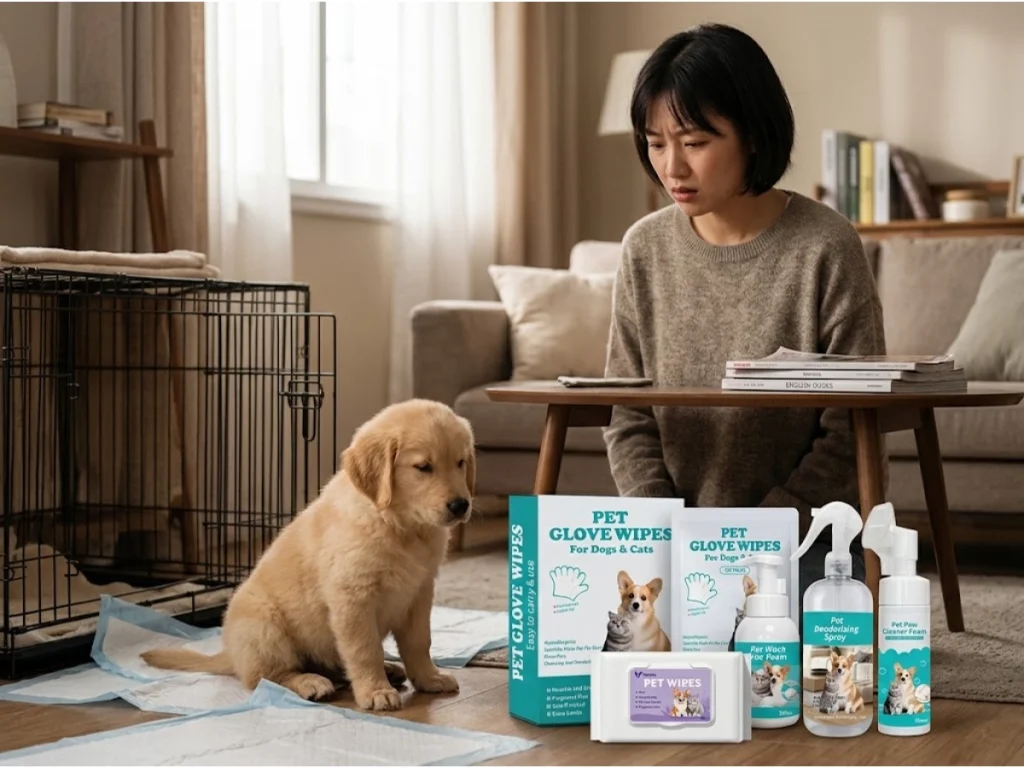
Pet Pee Pads: Ideal for households living in high-rise apartments or those with puppies under 8 weeks old who haven’t yet completed their vaccinations and cannot yet go outside for potty training. During the early stages of training, you can place the pee pad near the door, then gradually move it closer to the outdoors until your dog gets used to relieving themselves entirely outside.
Hygiene and Daily Cleaning Supplies:
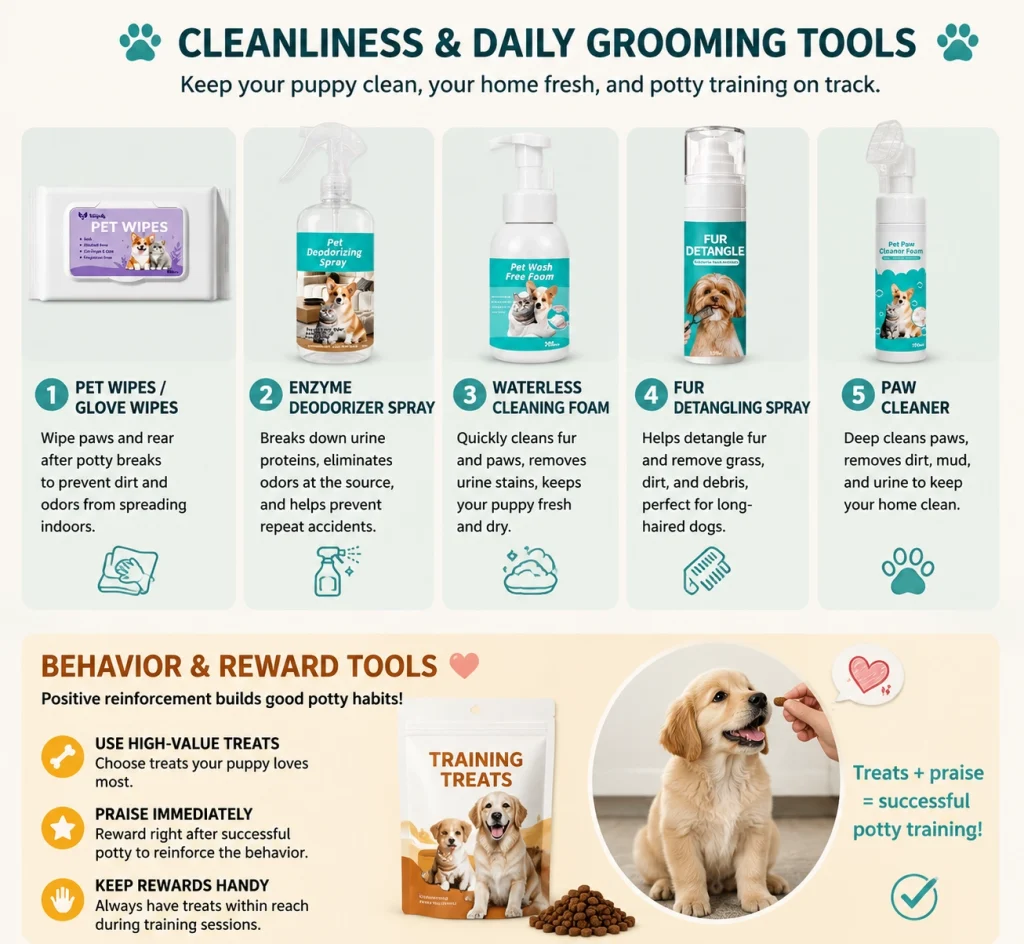
Pet Wipes/Glove Wipes: When puppies are first learning to relieve themselves, they often get their paws and hindquarters dirty. Keeping pet wipes or glove wipes by the door so you can wipe them down when they come inside effectively prevents stains and odors from being tracked onto the sofa and bed.
Enzyme-Based Odor-Neutralizing Spray: Dogs choose where to relieve themselves based on scent. Ordinary household cleaners cannot break down the proteins in urine; while the smell may disappear to us, it remains detectable to dogs with their keen sense of smell.
Enzyme-based odor-neutralizing spray effectively blocks odors from lingering in the air, preventing accidents and keeping the indoor air fresh!
No-Rinse Cleaning Foam: After potty training, urine stains are bound to remain on your dog’s fur. No-rinse cleaning foam makes life easier for pet owners by allowing for quick cleaning and keeping your dog dry at all times. It can also be used for spot cleaning the fur and paws on rainy days or after walking on damp grass.
Pet Fur Detangler: Designed for grooming fur on the paws, belly, and around the hindquarters—areas prone to picking up grass clippings, mud, or small debris—and is especially suitable for long-haired dogs.
Paw Cleaner: During potty training, paws often get stained with urine, and after going outside, they can get covered in dirt. To keep your dog’s paws clean, prevent them from soiling every corner of your home, and ensure a thorough clean, a paw cleaner is a must-have item for every household.
Behavioral Training Tools (Rewards):
Prepare treats your dog loves. Immediately after your dog correctly follows the potty command, give a treat and verbal praise. Positive reinforcement—rewarding successful potty training—motivates your dog to use the bathroom on command! In Leo’s training routine, rewards are always kept within easy reach.
A Stage-by-Stage Potty Training Plan for Puppies and Key Management Points
Potty training varies by stage, and specific results depend on the dog’s temperament and daily training. After all, training isn’t an overnight process—it’s a gradual process of building behavioral habits over time! Does neutering a puppy help with potty training? This may be a common question!
Below are the potty training timelines for each stage, provided as a reference for new pet owners:
| Stage | Key Potty Training Cues to Observe | Pet Owner’s Management Focus |
| Newly Arrived Puppy | Waking up, eating/drinking, playing, leaving the crate | Take to the designated spot frequently; prioritize creating successful experiences. |
| Puppy Adapted to Home Routine | After regular meals, after naps, before/after walks, before bedtime | Keep the location and verbal cue consistent; track patterns. |
| Maturing Dog | During daily outings, after meals, before bedtime, and when clear signals appear | Gradually increase freedom of movement; avoid sudden changes to the routine. |
| Adult or Newly Adopted Dog | During the initial move-in period, before/after alone time, in unfamiliar environments | Re-establish a stable habit by following the same logic as puppy training. |
The U.S. pet health platform PetMD recommends that puppies newly brought home be taken outside to relieve themselves every 30–60 minutes during the first 1–2 weeks; as they grow and their training becomes more consistent, the intervals can be gradually extended.
What is The “10-10-10 Rule” in Potty Training?
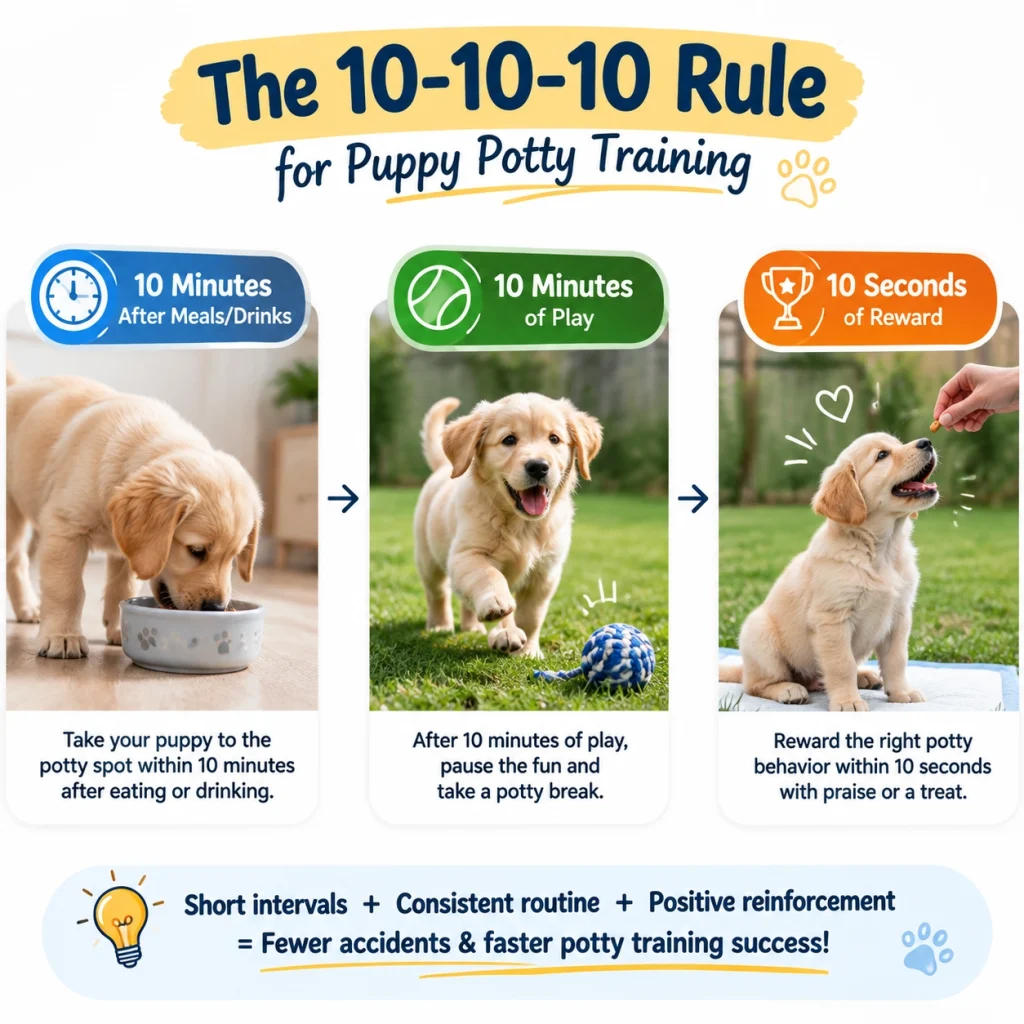
The “10-10-10 Rule” isn’t a fixed standard used by all trainers; it’s more of a handy tip to help new owners manage their puppy’s daily routine. Different trainers may interpret it slightly differently, but the core idea remains the same: reduce the frequency of accidents by observing your puppy for short periods, maintaining a regular schedule, and providing timely guidance.
- 10 minutes after eating or drinking: Take the puppy to the designated potty area within 10 minutes of eating or drinking.
- 10 minutes of play: Play helps stimulate digestion. After 10 minutes of play, pause the activity and take the puppy to the potty area.
- 10-second reward: Within 10 seconds, praise or gently pet the puppy for correct bathroom behavior to provide positive reinforcement. This establishes a direct link between “relieving oneself in the designated spot” and “receiving a reward.”
My Puppy’s Potty Training Plan
1. Identify Potty Patterns Based on the Dog’s Rhythm
Don’t rely on specific times. A dog’s age, food intake, water intake, activity level, and environmental changes can all affect when it needs to go to the bathroom. Pay attention to these key moments: after waking up in the morning, after eating or drinking, after playing or training, after waking from a nap, and when your dog shows signs such as sniffing the ground, circling, pacing, or suddenly leaving its play area—these all indicate that your dog needs to relieve itself. Take your puppy to the designated spot as soon as possible!
2. A Consistent Potty Spot and a Portable Outdoor Cleanup Kit
Don’t change the dog’s designated potty spot frequently, as this can confuse your dog and lead to accidents indoors! When taking your dog outside to relieve itself, remember to prepare a portable cleanup kit in advance so you know exactly what to do.
3. Immediate Rewards Rather Than Praise After the Fact
The key to puppy potty training is to reward correct behavior immediately, making the process a simple and effortless task. Rewards don’t have to be limited to treats; they can also include praise, allowing the puppy to run on the grass, or other fun activities.
Positive reinforcement and a consistent potty routine are more effective than punishment for establishing long-term habits.
4. Handle Indoor Accidents Calmly
Do not yell or punish your puppy. Calmly clean up after the accident to avoid causing your puppy to feel panic, fear, or other negative emotions!
The American Veterinary Society of Animal Behavior (AVSAB) states in its Position Statement on Humane Dog Training that current evidence supports the use of reward-based methods in dog training; the organization does not recommend the use of punitive training methods that may cause physical or psychological distress.
Essential Items for Outdoor Potty Training
If your ultimate goal is to have your dog relieve itself outdoors, you’ll need to plan ahead and gather the necessary supplies for your outings.
When you go out, give your dog a chance to relieve itself first, then start walking, playing, or exploring. This prevents your dog from getting the wrong idea that “once I’m done, it’s time to go home,” which would take away the fun of being outdoors!
What do you need to prepare for your dog’s potty training?
- Leash
- Poop bags
- Small pack of pet wipes
- Gloves and wipes
- Small pet deodorizing spray
- Small towel or paw wipes
- Portable treat pouch
The Proper Way to Handle Accidents Indoors
Accidents are inevitable during potty training, so instead of simply scolding your pet, you should handle them gently and calmly. What truly determines whether potty training can be sustained over the long term is often not the few times it goes well, but how you react when accidents happen.
If Leo has an accident at home, here’s how I handle it: First, I stay calm. If it’s already happened, I don’t yell at him, and I certainly don’t try to make him realize he’s done something wrong afterward—that might actually make Leo anxious, cause him to hide, or make him reluctant to relieve himself in front of me.
Next, I clean up the visible mess first, then use the appropriate pet stain remover and deodorizing spray based on the material—whether it’s hardwood floors, carpet, or upholstery. If Leo’s paws or fur are soiled, use pet wipes to clean those specific areas. Alternatively, use gloves and wipes to clean his entire body, keeping him dry!
Finally, I’ll reflect on and review the situation—rather than just blaming him! Every accident helps me identify patterns: Did I fail to take Leo outside right after waking up? Did we play for too long and forget his potty time? Did I let him out too early? Did I suddenly move the potty pad, causing him to lose his bearings? Did we have guests over, rearrange the furniture, or change the potty training schedule?
Scolding may confuse your dog, while positive reinforcement helps him understand what behavior you expect. Finally, give Leo a little treat and reassure him that he didn’t do anything wrong!
Every puppy is different in age, personality, and living environment—finding the right rhythm for your own puppy is the key.
1. What is the fastest way to potty train a dog?
Consistent potty training is essential—daily management, a strict schedule, and positive reinforcement are all indispensable!
2. Are potty pads suitable for training puppies?
It depends on the specific situation. They’re suitable for residents of high-rise apartments, for nighttime training, or for puppies around 8 weeks old who can’t be taken out frequently yet. As the dog gets older, gradually transition to outdoor training.
3. What items should I keep by the door while potty training my dog?
A leash, poop bags, pet gloves, wet wipes, pet deodorizing spray, and treat rewards.
-
Sale!
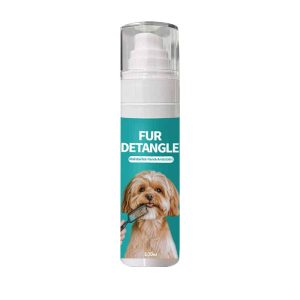
Multi-purpose Pet Fur Detangler: Antistatic & Untie Knots
Original price was: $7.89.$5.99Current price is: $5.99. Add to cart -
Sale!
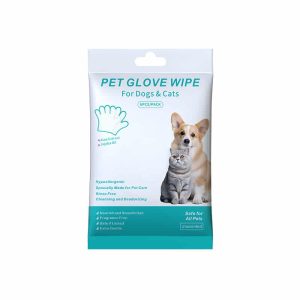
Universal Multi-purpose Pet Cleaning Gloves Aloe & Jojoba
Original price was: $6.28.$3.14Current price is: $3.14. Add to cart -
Sale!
Pet Wipes Cat Dog Circle Wipes for Cleaning Eyes
Original price was: $6.99.$4.89Current price is: $4.89. Add to cart