
When I wear black clothes and spend time playing with my cat, I often find cat hair stuck all over my clothes. Or sometimes, while I’m at work, my cat enjoys having the warm bed all to herself. When I get home and lift the blanket, I find plenty of cat hair underneath. So, why is my cat shedding so much?
Today, I’d like to share some common reasons why cats shed and a few simple ways to help reduce the amount of loose hair around your home.
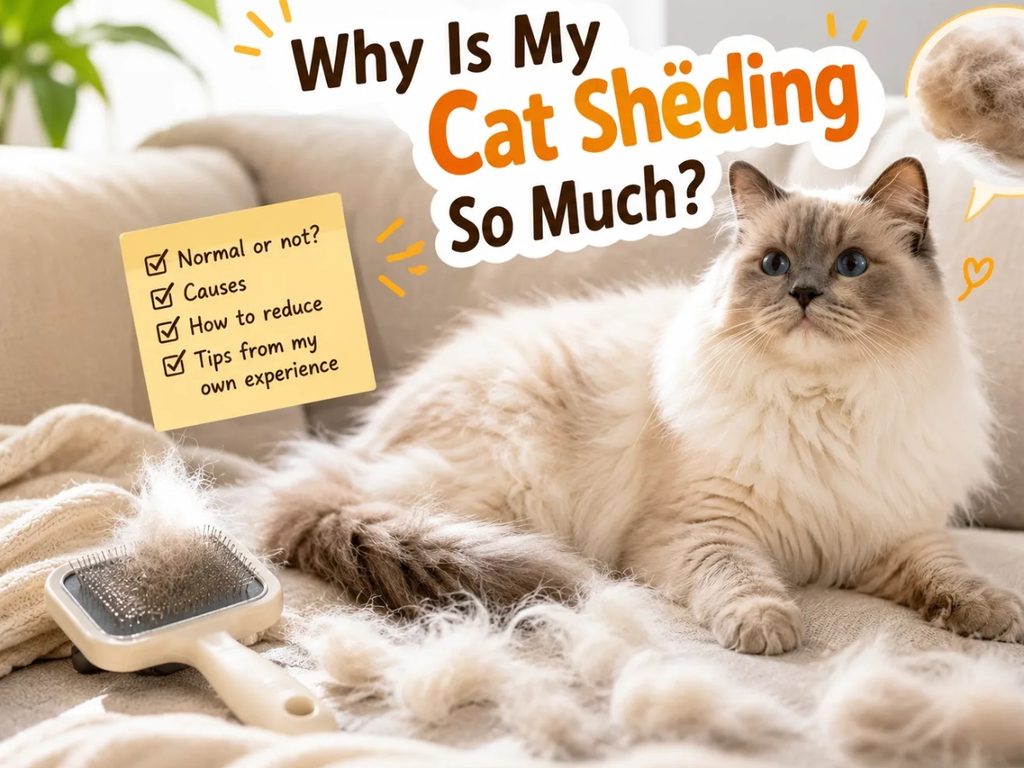
1. Why Is My Cat Shedding So Much?
① Seasonal Shedding:
Seasonal shedding is mainly noticeable in spring and fall. It’s a normal part of your cat’s coat changing to adapt to temperature changes.
② Lack of Proper Nutrition:
If your cat’s diet isn’t nutritionally balanced, it can also affect the condition of their skin and coat. Rather than blindly adding different supplements just to reduce shedding, I prefer to focus on making sure my cat gets a balanced daily diet.
③ Stress-Related Shedding:
Changes in the environment, a new family member, or other changes at home can make sensitive cats feel stressed or anxious, which may lead to increased shedding.
④ Your Cat’s Natural Coat Type:
Some cats simply shed more than others. Long-haired cats or cats with thick undercoats, for example, can leave a surprisingly large amount of hair behind after brushing. Compared with short-haired cats, their shedding can look much more noticeable.
2. Why Is My Cat Shedding So Much All of a Sudden?
Poor Grooming Habits:
Some cat owners may use human shampoo on their cats or bathe them too frequently, which can affect the skin’s natural protective barrier. Shaving a cat at home without a proper reason or using the wrong grooming methods can also lead to poor coat care.
Changes in Skin Condition:
If your cat used to shed normally but suddenly starts shedding much more, especially along with frequent scratching, excessive licking, increased dandruff, or thinning hair in certain areas, don’t simply assume it is a normal shedding season.
Allergies May Cause Hair Loss:
Allergies may be related to food or the environment. Exposure to pollen, dust mites, flea bites, mold, and other factors may trigger a reaction. Seasonal changes or changes in the indoor environment may also play a role.
✨ Tip:
If your cat develops large areas of severe hair loss, take them to a veterinarian to find out what is causing it. Avoid blindly giving medication or applying treatments at home without knowing the cause.
3. How Much Shedding Is Normal for a Cat?
There isn’t one exact standard for how much shedding is normal. VCA Animal Hospitals also notes that indoor cats generally shed small amounts throughout the year. Cats that spend more time outdoors or get more exposure to sunlight may have more noticeable shedding in late spring and late fall, when large amounts of undercoat may come out.
Normal shedding usually means there are no obvious mats or large clumps of hair coming out, and the coat remains smooth and healthy-looking.
4. How Can I Reduce My Cat Shedding?
① Brush Your Cat Regularly:
● Spend some time brushing your cat every day, and adjust the frequency based on how much your cat is shedding.
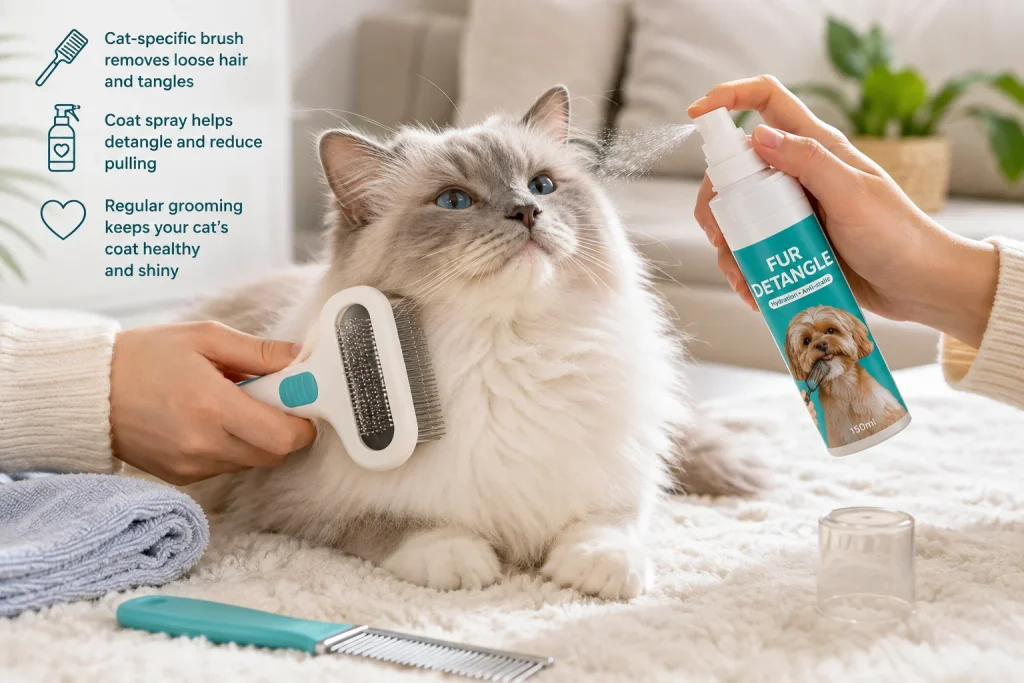
● Use a cat-specific brush. My cat seems to really enjoy it, and regular brushing helps remove loose hair and gently work through tangles.
● If my cat’s coat feels a little dry or tends to get tangled, I sometimes spray a little cat-safe coat spray first, wait a few seconds, and then gently brush through the fur. I find that this makes brushing much easier and helps avoid pulling on the hair. I really enjoy the process of brushing my cat.
② Keep Your Cat’s Diet Balanced
Choose high-quality cat food that provides enough protein and essential vitamins, and consider adding Omega-3 fatty acids when appropriate. After my cat had them in her diet for a while, I noticed that her shedding seemed to improve and her coat looked shinier.
③ Bathe Your Cat When Needed:
Proper bathing can also be part of good cat care. Cats don’t need to be bathed as frequently as dogs, and most healthy cats are quite good at keeping themselves clean.
Whether your cat actually needs a bath depends on their coat, living environment, and individual situation. If a bath is needed, use cat-specific grooming products and make sure to dry your cat thoroughly afterward.
④ Create a Comfortable Environment:
During fall and winter, cats may experience drier skin, which can contribute to increased shedding. Keeping the indoor humidity at a comfortable level can help. Keeping your home clean and tidy can also reduce dust and potential allergens, making your cat more comfortable.
I used to think cleaning up cat hair every day was a hassle. Later, I realized that it was much easier to spend a little time cleaning up regularly rather than waiting until cat hair was everywhere.
⑤ Spend More Time Playing With Your Cat:
I also spend some time every day playing with Nuonuo using a teaser wand. Although playing won’t make your cat stop shedding, exercise, playtime, and interaction are all part of everyday cat care. Seeing Nuonuo full of energy always puts me in a good mood, too.
5. Frequently Asked Questions About Cat Shedding
Do Indoor Cats Shed Seasonally?
Yes. Compared with cats that spend a lot of time outdoors, indoor cats may have less noticeable and less predictable seasonal shedding. Indoor cats generally have some loose hair throughout the year and may not have one obvious peak shedding period. Even if they don’t go outside, cats that get plenty of sunlight may still shed a little more in late spring and late fall.
The amount of shedding mainly depends on the individual cat. Long-haired cats with thick undercoats can look like they shed a lot more, while shedding is usually less noticeable in short-haired cats.
Should I Be Worried If My Cat Is Shedding a Lot?
Not necessarily. If your cat simply has more loose hair than usual, the coat is evenly distributed, the skin looks healthy, and there is no excessive scratching, biting, or licking, it is probably just normal shedding.
However, if you notice bald patches, unusual-looking skin, or changes in your cat’s behavior, it’s best to have them checked by a veterinarian sooner rather than later.
-
Sale!
Pet deodorizing spray 500ml – professional deodorant
Original price was: $7.29.$6.99Current price is: $6.99. Add to cart -
Sale!

Pet Wipes Cat Dog Circle Wipes for Cleaning Eyes
Original price was: $6.99.$5.89Current price is: $5.89. Add to cart -
Sale!

10Pcs Individually Wrapped Dog Wipes – Portable Travel Size
Original price was: $3.29.$2.99Current price is: $2.99. Add to cart