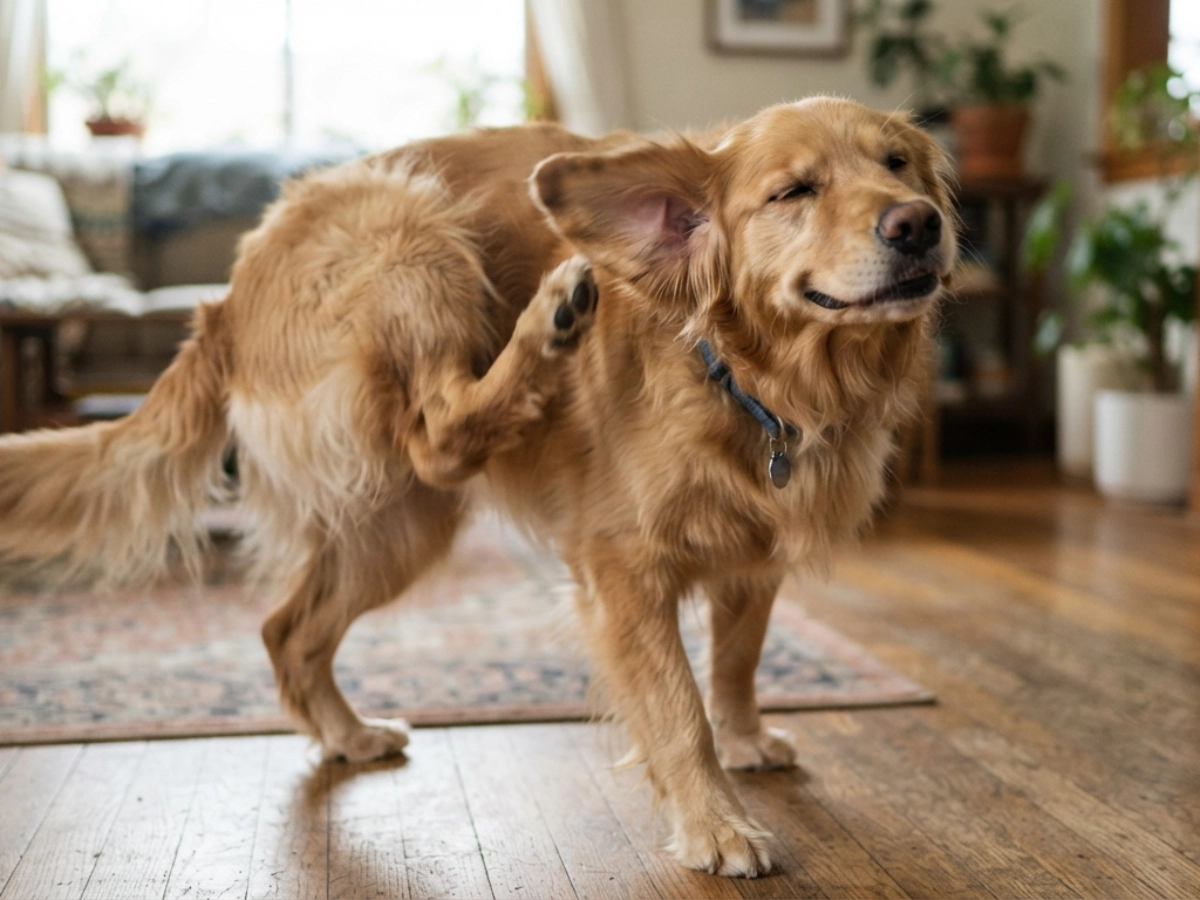
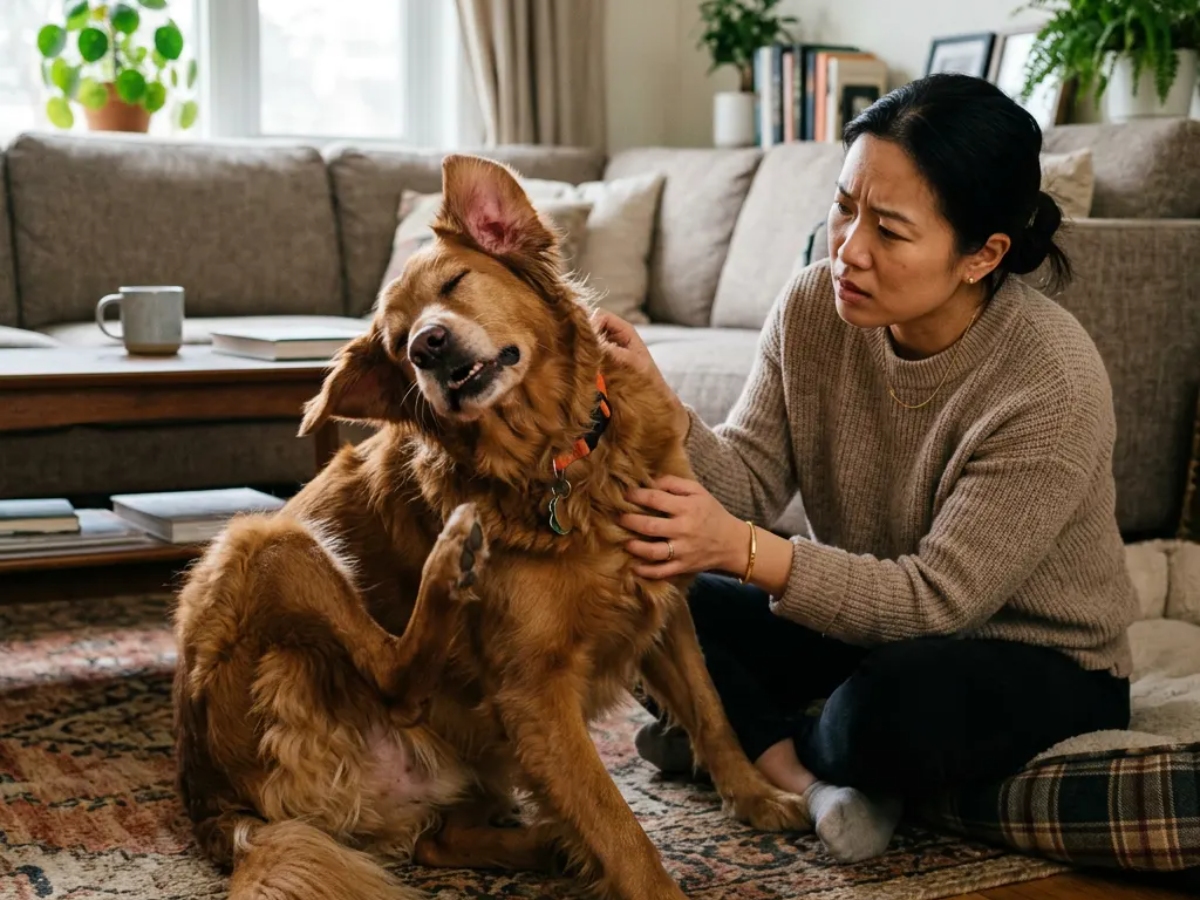
As a fellow dog owner, I know exactly how frustrating it is to be jolted awake in the dead of night by the sound of your dog frantically scratching its ears. When you take a closer look under the flap, you notice the inside is red and swollen. Naturally, anxiety kicks in: Why is my dog’s ear red and itchy? Your first instinct is likely to pull out your phone and frantically search for quick fixes, hoping to relieve the dog’s discomfort as quickly as possible.
However, based on my years of experience raising dogs, I want to give you a serious warning: never blindly trust so-called folk remedies. Using the wrong medication could damage the delicate immune barrier of the ear canal, making the condition worse.
Backed by the professional standards of the Merck Veterinary Manual and my many years of experience, here is a quick and easy guide for diagnosing and relieving a dog’s ear red and itchy crisis.
Why is my dog’s ear red and Itchy at Night?
Many dog owners have this question: “Why does my dog seem fine during the day, but starts scratching its ears like crazy as soon as I lie down?”
Aside from hormonal changes causing a dog’s ear to be red and itchy at night, there is another issue that might be overlooked: daytime distraction.
- During the day: A dog’s brain is highly stimulated. Between playing with toys, eating food, or observing their owner’s every move, these external distractions cause them to ignore the discomfort inside their ears.
- At night: When everything in the house goes quiet and the dog falls asleep with its ears drooping, the temperature inside its ears rises, and air circulation is restricted. This causes the irritants inside the ear to become active, making the ears itchier than during the day. With zero external distractions, the dog’s attention focuses entirely on its ears, leading to frantic head-shaking and clawing that leaves the ears raw and red from its sharp claws.
First, Rule Out Ear Mites
Why do we prioritize ruling out ear mites? Their treatment is drastically different from that for common skin allergies and bacterial infections. If you misdiagnose the cause and use the wrong medication, everything will be in vain, and it might even worsen the burden on your dog’s kidneys.
To determine if a dog’s ear red and itchy symptom is caused by ear mites, we can use a three-step method: “look, touch, and self-check.”
- Observe the discharge: Open the dog’s ear and see what color the earwax is. If it is infected with ear mites, the earwax will look dark brown or black, and the texture will be like dried coffee grounds.
- Touching the ear (The Pinna-Pedal Reflex): This is a very famous clinical test. If a dog’s ear infection is caused by ear mites, the nerves inside the ear are extremely sensitive. You only need to rub its ear, and the dog’s hind legs will involuntarily lift up and frantically kick and scratch in the air. This indicates that ear mites are crawling inside the ear and stimulating the nerves.
- The Black Paper Self-Check Method: According to CAPC data, adult ear mites are only 0.3–0.5 mm long, making them very difficult to see directly. They are extremely photophobic and will hide deep inside the dog’s L-shaped ear canal when a flashlight is shone on them, making them virtually invisible.
The correct method: Prepare a piece of pure black paper, scrape a tiny amount of coffee grounds onto it with a cotton swab, turn on a flashlight, and then use a mobile phone to magnify the light 3–5 times or use a magnifying glass to examine it closely. If you see small, moving white dots, these are ear mites.
Why Is My Dog’s Ear Red and Itchy, and Smelly?
If you notice a dog’s ear red and itchy issue accompanied by a foul odor, it might not just be ear mites, but an ear canal infection. We can use our nose to help diagnose whether the dog has a fungal or bacterial infection
- The sour, rancid smell of old-fashioned yogurt or fermented dough: This is the smell emitted by yeast multiplying wildly in the dog’s moist and warm ear canals.
- A putrid, fishy smell: This indicates that the dog’s ear barrier has been damaged, bacteria have multiplied rapidly, and the ear canal has been extensively infected.
The presence of either of these two odors indicates that the initial irritation has progressed to a microbial infection, which is the main culprit behind a dog’s red and itchy ear. If you would like to learn more about fungal and bacterial infections, you can read my core article: Dog Allergies and Ear Infections: How to Choose and Use Antifungal Ear Drops for Dogs.
Late-Night Relief: 3 Steps to Calm the Itch
When it’s 2 AM, and you can’t get to a vet, seeing your dog in so much pain is heartbreaking. You can try these three steps to relieve the itching:
- Step 1: Put on the Elizabethan collar: Putting an Elizabethan collar on your dog is like putting up a protective shield against further harm; it’s the lowest-cost and most effective protective measure.
- Step 2: Apply ice packs for cooling: Take an ice pack, wrap it in a clean, dry towel (never let the ice pack touch the dog’s ears directly to prevent frostbite), and apply it to the reddened area every 5–10 minutes. The low temperature will cause the dilated blood vessels to constrict quickly, reducing the dog’s itching and calming it down.
- Step 3: Clean the ears safely: First, make sure your dog isn’t tilting its head continuously, and there’s no bleeding from its ears. Use a professional pet ear cleaning solution (ideally warmed to near the dog’s body temperature to minimize irritation) to fill the ear canal. Gently massage the base of the ear for 30–45 seconds. Then let it shake its head (I personally recommend covering its head with a towel to prevent the dirty water from splashing everywhere). Finally, use sterile medical cotton balls to clean the outer edge of the ear and keep the dog in a well-ventilated area to allow the inside of the ear to dry quickly.
Can Hydrogen Peroxide Cure a Dog’s Ear Red and Itchy Infection?
The most frequently mentioned household product online is hydrogen peroxide. However, my advice is to absolutely avoid hydrogen peroxide, even though the white foam that appears when poured into the ear may seem refreshing. It carries significant risks.
According to warnings from the ASPCA Animal Poison Control Center (APCC), hydrogen peroxide has extremely strong oxidizing properties. When it comes into contact with an already inflamed, red, or scratched ear canal, it can directly burn healthy skin cells, causing severe chemical burns. Furthermore, the violent reaction of hydrogen peroxide can severely impact the already fragile eardrum, potentially leading to permanent deafness or facial paralysis in dogs.
I highly advise against using irritating formulas like apple cider vinegar or garlic water, which are popular online. Never gamble with your dog’s health.
Red Flags: When to See a Vet Immediately?
If any of the following symptoms appear alongside a dogs ear red and itchy condition, it means that the pathogen has already entered the inner ear. At this point, any home care will be in vain, and you should take your fur baby to the vet for an immediate examination:
- Unsteady standing or head tilt: If a dog starts to tilt its head continuously and its walking behavior is very different from before, it indicates that the nerves in the dog’s ear may have been damaged.
- Malignant purulent discharge: Yellowish-green purulent discharge resembling nasal mucus, or accompanied by dark red, putrid blood, draining from the ear canal.
- Severe pain (snapping or biting): When you touch the area, the dog adopts a defensive posture, groans, or tries to snap due to severe pain.
How to Prevent a Dogs Ear Red and Itchy Condition in the Future
As a seasoned dog owner with many years of experience, I have my own set of preventative measures. Thanks to my careful care, none of my four dogs have ever experienced a red, itchy dog ear issue. These mainly involve the following four methods:
- Routine Parasite Prevention: Take your dog to the vet regularly for deworming medication. It spreads throughout the body via the sebaceous glands, leaving no place for parasites like ear mites to settle.
- Keep Ears Dry After Bathing: This is especially important for owners of dogs with floppy ears. A moist ear environment is ideal for yeast to multiply rapidly. Simply wipe the outside of the ear canal with a dry cotton ball after your dog has been bathed and shaken dry, then use a hairdryer on a cool setting for about one minute to dry the ear canal completely.
- Avoid Violent Hair Removal: Forcibly plucking hair from a dog’s ear canal can cause folliculitis, which allows bacteria to enter the ear. Instead, use a mechanical hair clipper to carefully shave the excess fur, rinse the ear canal with an ear cleaning solution, and keep it completely dry.
Eliminate Allergens: If your dog’s condition keeps recurring even with thorough care, it might not be due to inadequate hygiene, but rather allergies. You need to have a veterinarian perform a detailed allergy test and then, following their professional advice, reduce your dog’s exposure to allergens in daily life.
Veterinary Disclaimer:
While every effort has been made to ensure the accuracy of the information presented in this article, it should not be used as a substitute for professional veterinary care. Ear infections, parasites, allergies, and other medical conditions can share similar symptoms. Only a licensed veterinarian can provide an accurate diagnosis and appropriate treatment plan for your dog.