Grooming your dog isn’t just about making them look pretty; it’s a crucial part of maintaining their daily comfort, coat integrity, and skin health. Many pet parents only start paying attention to coat care when their dog’s fur begins to develop mats, frizz, or odors. By then, not only has the grooming difficulty skyrocketed, but it also causes the dog significant discomfort. Truly effective coat care should be proactive and ongoing, rather than just reactive when problems arise. One of the most effective products in a grooming routine is a conditioning spray for dogs. It not only keeps the coat soft, shiny, and healthy, but it also drastically cuts down brushing time.
This article will break down exactly how to choose the best conditioning spray for dogs based on coat type, skin condition, ingredient safety, and professional grooming standards.
What is a Conditioning Spray for Dogs?
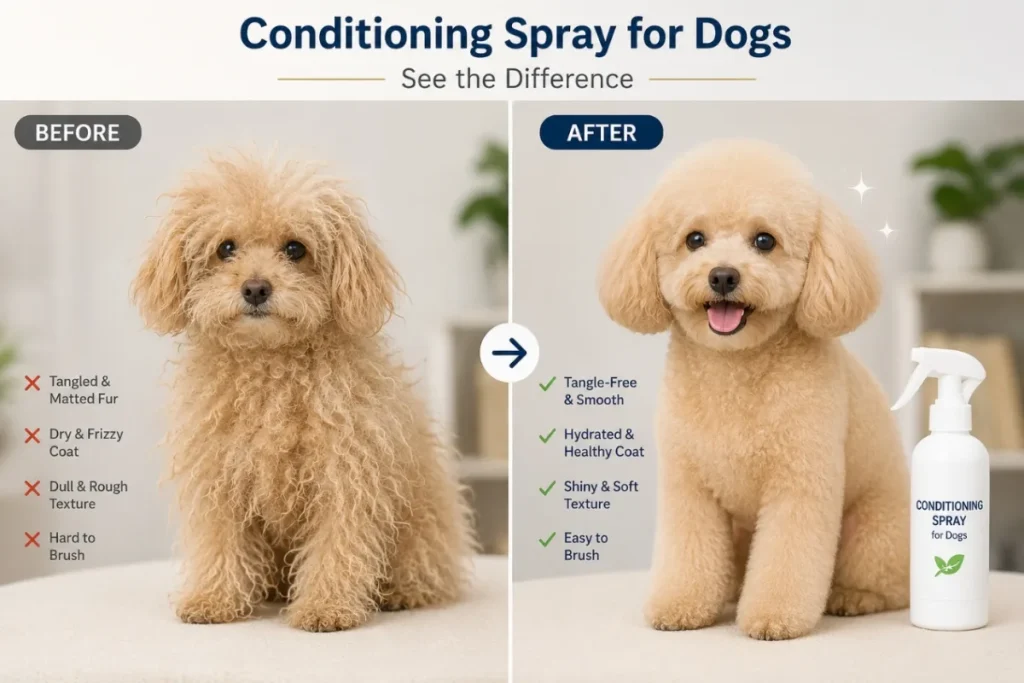
A conditioning spray for dogs is a leave-in care product designed primarily to hydrate, soften, and nourish a dog’s coat. It is typically used after a bath or between baths and can be sprayed directly onto the fur without rinsing, allowing it to provide ongoing benefits.
Conditioning sprays are often formulated with pet-safe natural ingredients and are specifically designed for canine skin pH levels, unlike human hair products.
The Benefits of Using a Conditioning Spray for Dogs
Prevents Tangles and Mats: While daily brushing helps prevent tangles and mats, it can be tough on dogs with long, curly, or silky hair, often pulling and causing pain during the process. Using a conditioning spray provides a lubricating effect that makes it easier to detangle the fur smoothly and reduces the pain caused by pulling.
Revives Dry Coats: High-quality conditioning sprays for dogs often feature natural ingredients like oatmeal, aloe vera, or coconut oil, which help lock in moisture and relieve dryness and itching. While leave-in sprays help maintain hydration between baths, dogs with dry, damaged, or easily tangled coats may benefit from using a dedicated dog hair conditioner during bath time. Learn how to choose the right product in our guide on dog hair conditioner.
Boosts Coat Shine: Ingredients like keratin, panthenol, and vitamin E help repair damaged hair cuticles, leaving the coat shinier and more elastic.
Controls Static and Frizz: Anti-static and moisturizing ingredients inside the spray effectively minimize static and prevent flyaways, which is especially noticeable during dry, cold winters.
Lowers Grooming Stress: According to the AKC, conditioning sprays play a vital role in professional grooming routines by protecting the hair from damage and breakage during brushing. This significantly reduces stress for your dog during the brushing process, making the whole grooming experience much smoother.
How to Choose the Most Suitable Conditioning Spray for Dogs
To find the perfect match, you should look at three key areas: 1. Your dog’s coat type, 2. Their skin condition, and 3. Ingredient safety.
Step 1: Identify Your Dog’s Coat Type
Dog coat types vary across breeds, ranging from short and smooth to long and curly. It is worth noting that even dogs of the exact same breed can have individual differences in their skin and coat care needs. Therefore, always consider your dog’s unique profile when picking out a product. Because of their specific coat characteristics, some breeds naturally require more effort and meticulous daily maintenance.
Below is a breakdown of the grooming pain points and care tips for five major coat systems. While we only use a few common breeds as examples, the same pain points and grooming techniques apply perfectly to any breed with a similar coat type. This way, you’ll know exactly what to look for when choosing a conditioning spray and managing daily upkeep.
Grooming Pain Points: Curly and wavy hair is highly prone to tangling, matting, or forming tight knots as it grows, requiring extra-meticulous daily care.
Pro Tips: Always towel-dry the coat thoroughly after a bath before using a blow dryer. For daily brushing, spritz a leave-in anti-matting conditioner onto the specific area, then use a slicker brush to brush against the direction of hair growth. This easily removes loose, dead hair trapped in the curls while maintaining their natural, bouncy, and fluffy texture.
Grooming Pain Points: Drop coats are characterized by fine, straight hair. While they are less prone to large mats, the hair itself is incredibly fragile. Dry brushing frequently can easily snap the hair shafts, leading to split ends and breakage.
Pro Tips: A conditioning spray is an absolute must-have weapon for this coat type. The best approach is “wet brushing”—evenly mist the coat with a conditioning spray before brushing with a slicker brush. The spray seals the cuticles of fine hair, blocks static, and provides a weightless layer of protection.
Grooming Pain Points: Double coats consist of a soft, dense undercoat (inner layer) and a tough, weather-resistant guard coat (outer layer). Because different layers require totally different brushing techniques, grooming these breeds (especially long-haired double coats) can be highly time-consuming.
Pro Tips: You must use a “layering method” when brushing. First, spray a lightweight hydrating mist and use a pin brush or standard brush on the outer coat to remove surface tangles. Next, use a wide-toothed steel greyhound comb to reach deep into the inner layer, specifically detangling and loosening dense knots in the undercoat to ensure it stays breathable.
4. Long-Haired Dogs
Typical Breeds: Irish Setter, Samoyed, Collie.
Grooming Pain Points: While they have gorgeous, flowing long hair, shedding season turns their coat into a breeding ground for mats—especially in high-friction areas like the belly, armpits, and hind legs.
Pro Tips: Long-haired dogs need conditioning sprays frequently, both after baths and during daily maintenance between baths. Fully misting the coat with a detangling spray before daily brushing significantly reduces friction between long hairs, preventing them from matting up during daily activities.
5. Wire-Haired Dogs
Typical Breeds: Wire Fox Terrier, Jack Russell Terrier, Irish Wolfhound.
Grooming Pain Points: Wire coats are coarse, dense, and bristly. While they shed less than other breeds, old, dead hair tends to get trapped beneath the stiff outer coat, making routine brushing and deshedding even more critical.
Pro Tips: Wire-haired dogs do not need heavy conditioners, which can ruin their signature crisp texture and leave the coat flat and limp. Groomers recommend an ultra-lightweight leave-in conditioning spray. A light mist during brushing nourishes the skin and protects the hair without leaving any heavy, sticky residue.
Step 2: Assess Their Skin Condition
If your dog has any of the following three skin conditions, you need to be extra cautious. using the wrong spray can backfire and worsen the issue.
Dry Skin: Look for sprays with natural ingredients like oatmeal, aloe vera, or coconut-derived elements. Symptoms include flaking dander, a dull coat, and frequent scratching. You can look for products explicitly marketed as a conditioning spray for dogs with dry skin or a top-tier moisturizing conditioning spray.
Sensitive Skin: Avoid products containing synthetic dyes, preservatives, or heavy fragrances. Opt for gentle, hypoallergenic formulas with clean ingredients.
Itchy Skin: While a conditioning spray can soothe mild discomfort, it is not a substitute for medical treatment. If your dog experiences chronic itching or skin inflammation, always consult a veterinarian. Tip: Test any new spray on a small area first to ensure your dog doesn’t react negatively.
Step 3: Ensure Ingredient Safety
According to Grand View Research, there are clear guidelines on which ingredients are safe for dogs and which ones should be avoided.
Below are common beneficial ingredients found in dog conditioners. You can tailor your purchase by looking for products that contain these based on your dog’s specific needs.
Beneficial Ingredients to Look For:
Aloe Vera: Forms a breathable, hydrating barrier on the skin and hair, reducing micro-inflammation.
Colloidal Oatmeal: Creates a protective barrier to lock in moisture and soothe irritation.
Glycerin: Penetrates the hair shaft for deep hydration, reducing frizz and brittleness.
Hydrolyzed Keratin: Repairs micro-cracks in the hair cuticles, enhancing elasticity.
Panthenol (Vitamin B5): Locks moisture inside the hair strands and boosts coat volume.
Vitamin E: An antioxidant that protects hair strands from free radicals and environmental stressors.
Ingredients to Avoid:
Mineral Oil: Though it creates temporary, superficial slickness and shine, long-term use leads to product buildup on the coat, blocking essential moisture absorption and even clogging follicles.
Preservatives: Certain preservatives may irritate sensitive skin in some dogs. Choosing pet-safe preservatives is generally recommended.
Harsh Alcohols: Alcohol strips moisture from the skin, leading to dryness and brittle, easily broken hair.
Excessive Synthetic Fragrances: Can easily trigger allergic reactions or frequent sneezing in sensitive dogs.
When choosing the right product, it’s important to understand the differences between various formulations. You can explore a more detailed breakdown in our guide on how to choose the best dog grooming spray, where we explain different spray types, ingredients, and coat-specific recommendations.
Pro Groomer Tips for Choosing a Conditioning Spray for Dogs
Beyond the three factors above, professional groomers look at products through the lens of usability and practicality. Here is what professional pet groomers really care about:
Slip (Smoothness): Allows the brush to glide effortlessly through the coat.
Spray Mechanism: Aerosolizes or atomizes evenly without getting the hair overly soaked.
Zero Residue: Leaves no sticky feeling, preventing the hair from clumping together.
Fast Drying: Lightweight formulas that dry quickly, cutting down overall grooming time. Tip: Look for sprays labeled “leave-in” and “fast-drying” for efficiency.
When to Use a Conditioning Spray for Dogs
Using a conditioning spray at key moments can deliver incredible results. Here are my go-to tips from years of experience:
Before Daily Brushing: Lightly spray onto tangles or mats before combing them out to make the entire brushing process significantly easier.
After Towel-Drying (Post-Bath): Spray directly onto damp hair to lock in moisture right when the coat is most receptive. For the best results, always begin with a high-quality shampoo that’s suitable for your dog’s coat and skin type. Our guide on choosing the best dog shampoo for your dog explains what to look for before applying any conditioning products.
During Blow-Drying: Blow dryer heat can damage the hair cuticles; using a conditioning spray reduces the risk of post-dry frizz and static, leaving the coat much smoother.
Between Baths: Give the coat a quick hydration boost anytime, anywhere, to neutralize static, maintain smoothness, and keep your dog smelling clean and fresh.
How Often Should You Use a Conditioning Spray for Dogs?
Different types of dog coats require varying frequencies of leave-in conditioning spray. Based on my years of experience caring for dogs with different coat types, I have found that regular use of a quality conditioning spray can significantly reduce tangles, brushing time, and coat breakage. Here is a summary table of the most effective recommended spraying frequencies.
Coat Type
Recommended Frequency
Curly Coat
Daily
Drop Coat
Daily
Double Coat
2–3 Times Weekly
Long Coat
Daily
Wire Coat
Weekly
Common Grooming Mistakes to Avoid
Using Human Products:VCA emphasizes that you must only use pet-specific shampoos and conditioners, as human products can severely irritate pet skin due to pH differences.
Overspraying: Spraying too much product will make your dog’s coat greasy, causing it to attract more dirt and potentially clog pores.
Spraying Without Brushing: When dealing with tangles, simply spraying the conditioner without brushing it out and letting it air dry will only make the knots tighter. The correct method is to gently brush through with a comb right after spraying.
Ignoring the Undercoat: When grooming double-coated breeds, focusing only on the surface while ignoring undercoat maintenance leads to severe matting near the skin, trapping heat and moisture, which can trigger skin diseases.
FAQ
Q: Can I use human conditioner on my dog?
A: No. Human hair products are formulated for human skin pH levels and may irritate a dog’s skin. Always choose products specifically designed for dogs.
Q: Is a conditioning spray safe for puppies?
A: Yes, provided the product is labeled safe for puppies and contains gentle, pet-safe ingredients. Avoid heavily fragranced products and always perform a patch test first.
Q: Can conditioning spray for dogs help with shedding?
A: While conditioning spray for dogs does not stop shedding, they can reduce coat breakage, minimize tangles, and make loose hair easier to remove during brushing.
Q: Can I use conditioning spray for dogs every day?
A: For curly, drop-coated, and long-haired breeds, daily use is generally safe when using a lightweight leave-in formula. Double-coated and wire-haired breeds usually require less frequent application.
Disclaimer
The grooming tips, product recommendations, and coat care advice shared in this article are intended for educational purposes only. Results may vary depending on your dog’s breed, coat type, skin condition, and individual needs. Conditioning sprays can support coat health and grooming maintenance, but they are not intended to diagnose, treat, cure, or prevent any medical condition. If your dog experiences persistent itching, skin inflammation, hair loss, or other health concerns, consult a licensed veterinarian before starting any new grooming routine or product.
Related articles
How to Clean Dog Paws: Simple and Practical Tips
Learn how to clean dog paws properly after walks. Discover simple tips, easy steps, and common mistakes to keep your dog's paws healthy and dry.
Yeast Infections in Dogs’ Ears: Symptoms, Causes, Treatment, and Prevention
Understand yeast infections in dogs' ears with this guide. Discover how vets diagnose it, home care steps, safe treatments, and how to stop recurrence.
how to choose Best Dog Food for Allergies: A Guide to Relieving Itchy Skin and Sensitive Stomachs(5 Product Recommendations)
Stop paw licking and itchy skin! Discover the best dog food for allergies, from hydrolyzed diets to LID options, to target your dog's immune triggers fast.