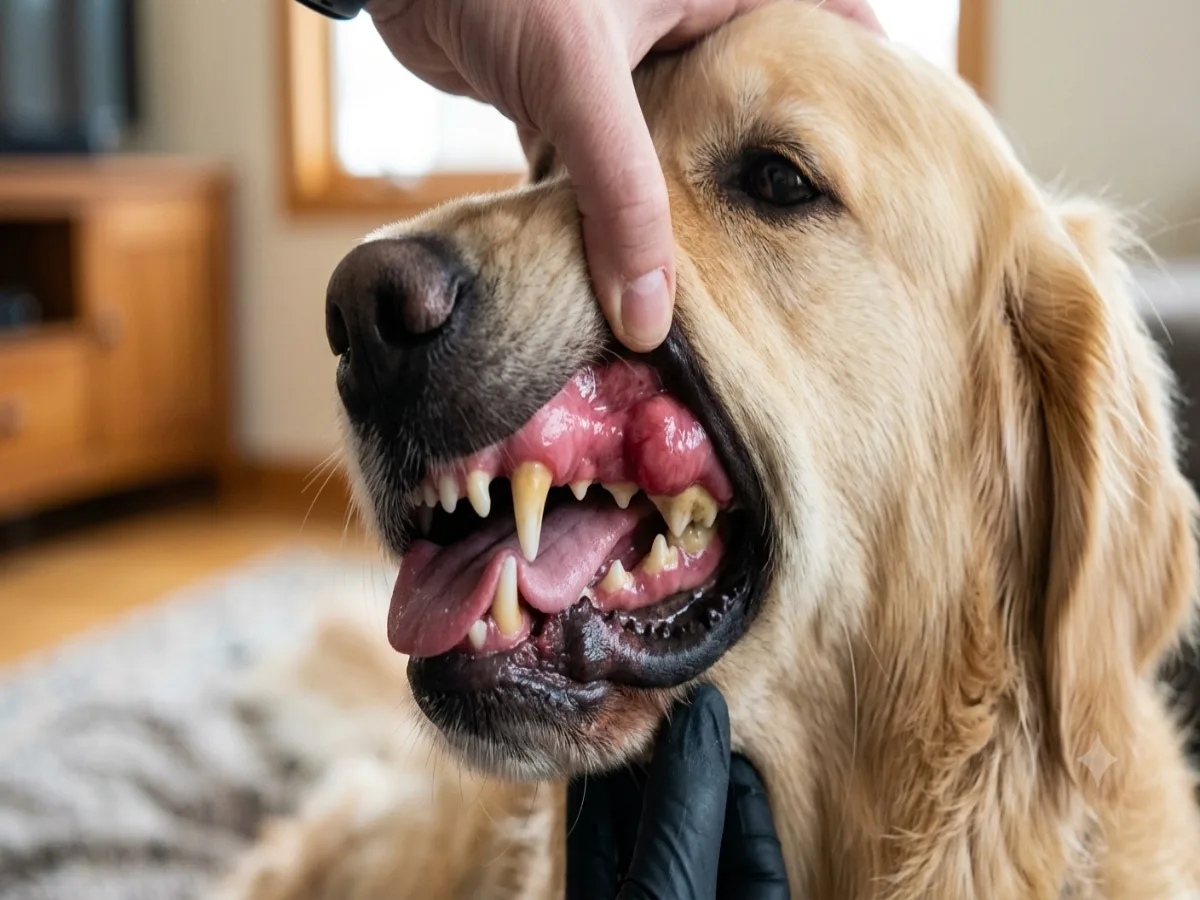

I had always assumed that cats were fastidious creatures and that their daily grooming—specifically licking their fur—was a sign of good health. However, upon closer inspection of a cat’s ears, you might discover something unexpected: an accumulation of dark, waxy material. You might immediately wonder: is this just ordinary dirt, or is it a sign of ear mites or an infection?
Many people consider cat earwax to be just as normal as human earwax; however, after consulting extensive literature, I discovered that the color, texture, and odor of a cat’s ear wax actually serve as a “barometer” for their health.
What does cat earwax look like? In this article, we will take a deep dive into cat ear issues by examining the different colors of earwax, the causes of its accumulation, and how to clean your cat’s ears at home.
Cat earwax consists of secretions from the sebaceous and ceruminous glands in the ear canal, mixed with shed skin cells, hair fragments, and environmental dust.
Normal cat ear wax is typically clear, pale yellow, or a small amount of light brown, with no strong odor; the presence of dark brown debris, yellow pus, or greasy, waxy discharge accompanied by a foul smell may indicate an ear condition. When my cat Fiona’s ears are healthy, there is only a very thin layer of pale yellow wax, with almost no visible buildup.
The inside of a cat’s ear is usually pink. A cat’s ear canal structure is completely different from a human’s. While human ear canals run horizontally, a cat’s ear canal is “L”-shaped.
Have you ever learned about the structure and function of cat ears? Here are the answers: “Interesting Stories About Cat Ears—The Structure and Function of Cat Ears.”
Cat earwax is not merely “waste”; it is part of the ear’s protective mechanism, acting as a natural barrier:
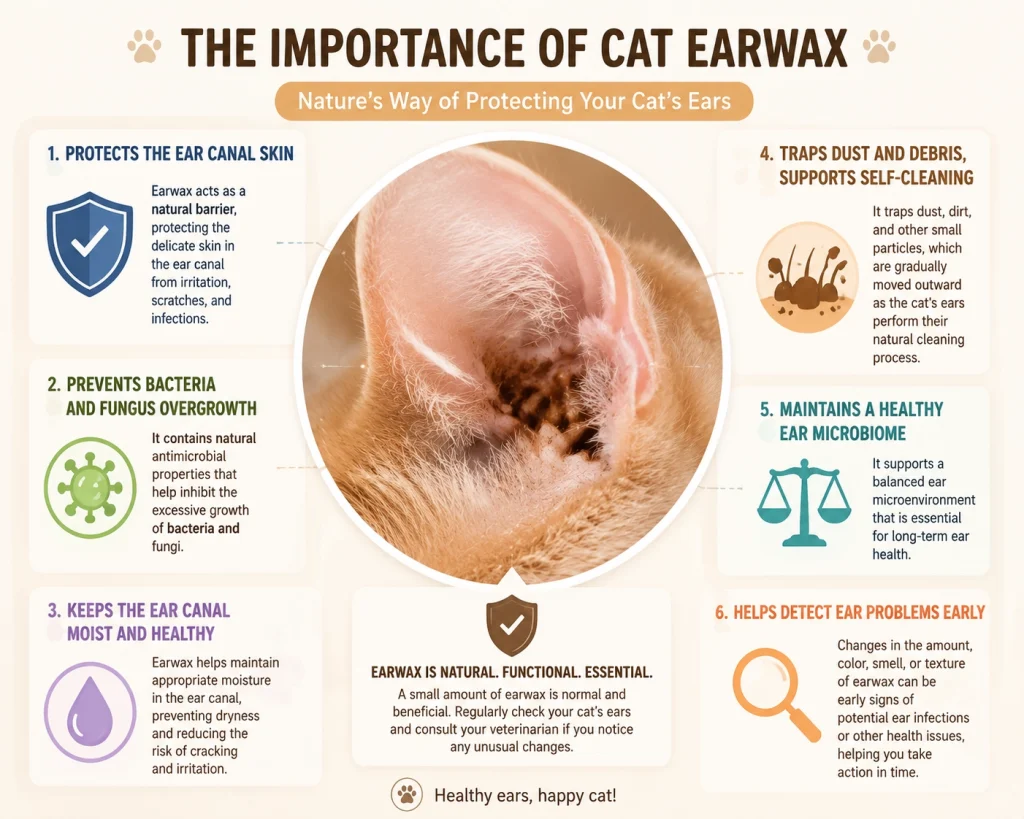
The causes of earwax in cats fall into two main categories: normal physiological processes and abnormal accumulation due to disease.
Cats have a natural process for self-cleaning and protecting their ear canals. The ear canal naturally produces a small amount of waxy secretion; these natural oils trap dust and metabolic waste. When the cat shakes its head or scratches its ears, some of this debris is expelled, maintaining basic cleanliness in the ear canal.
Ear mites: This is the most common parasitic ear infection in cats. The intense movement of the mites causes severe itching.
Yeast infection: Malassezia yeast thrives in moist, oily environments. This condition is often secondary to moisture in the ear canal, allergies, or an imbalance in the microbial flora.
Bacterial otitis externa: Severe inflammation usually caused by damage to the ear canal, water entry, or foreign objects.
Mixed infection: There is a possibility of a dual infection involving both ear mites and yeast, which often results in significant discharge.
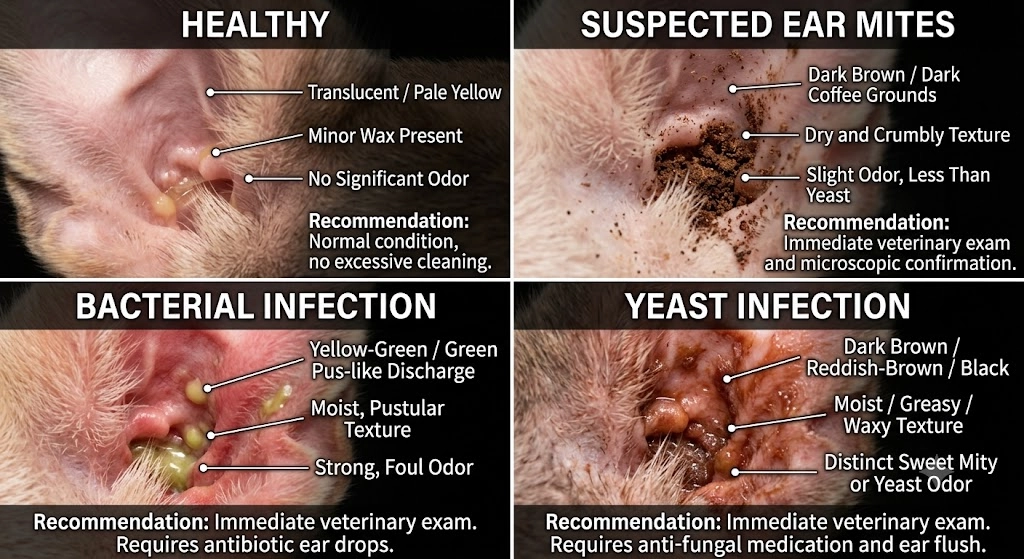
| Ear wax color | Appearance | Odor | Health Status | Recommended Action |
| Clear / Pale Yellow | Minimal wax buildup | No noticeable odor | Healthy | Normal condition. No need for over-cleaning. |
| Dark Brown | Dry, crumbly, and resembles coffee grounds | Mild odor, less noticeable than yeast infection | Suspected Ear Mites | Consult a vet immediately. A vet will use an otoscope to confirm the diagnosis. |
| Yellow / Green | Yellowish or greenish pus-like discharge | Accompanied by a strong, foul smell | Bacterial Infection | Consult a vet immediately. Usually requires vet-prescribed antibiotic ear drops. |
| Dark Brown, Reddish-Brown, or Black Wet Waxy Substance | Brown, oily, and waxy; thick and greasy texture | Distinct sweet, musty, sour yeast, or fermented odor | Yeast Infection | Consult a vet immediately. Requires antifungal treatment paired with a vet-approved ear cleaner. |
The AVMA notes that while cultures can confirm the presence of bacteria in feline outer ear and eye infections, susceptibility test results should not be used to directly predict the efficacy of topical antimicrobials; this is because the concentration of topical drugs in target tissues differs from that of systemically administered medications.
Beyond simply checking the color of earwax, a cat experiencing ear discomfort will inevitably reveal it through body language. The following signs indicate that your pet may be suffering from an ear issue:
Research published in JAVMA indicates that some cats with ear pathology may not immediately exhibit obvious symptoms; therefore, simply “looking fine” does not necessarily mean there is no underlying problem.
Many pet owners mistakenly believe that more frequent cleaning results in cleaner ears, but the reality is quite the opposite. The frequency of cleaning depends primarily on the health of the ears and the cat’s individual characteristics.
| Cat Condition | Recommended Ear Cleaning Frequency |
| Healthy cats | No frequent cleaning required; once a month is usually sufficient |
| Cats with excessive earwax buildup | Once every 1–2 weeks or as needed |
| Cats susceptible to ear infections | 2–3 times per week (based on veterinary advice) |
| Cats with special ear conditions or breeds requiring extra care | Follow a veterinarian-guided cleaning routine, usually every |
| Cats undergoing ear infection treatment | Follow the specific cleaning frequency prescribed by your veterinarian |
When I first got Fiona, I was so eager to keep her ears clean that I wiped them daily; this actually damaged the skin barrier in her ear canals and caused some redness and swelling. Beyond routine check-ups, veterinarians recommend proactively inspecting the cat’s ears every few weeks for redness, odors, or discharge.
Vet emphasize avoiding over-cleaning—which can disrupt the ear canal’s natural microbiome—while ensuring early detection of any issues. VCA notes that healthy cats generally do not require routine ear cleaning; the frequency should be determined by the condition of the ear canal, the presence of discharge, and veterinary advice.
If you notice some earwax buildup and need to use an ear cleaning solution, follow these scientifically sound steps:
Step 1: Fill
Gently wipe the cat’s ear flap and the opening of the ear canal. Vertically drip the cleaning solution into the ear canal—usually 3–5 drops—allowing the liquid to fill the vertical section of the canal.
Step 2: Massage
Hold the base of the cat’s ear between your thumb and index finger and massage gently for 15–30 seconds. You should hear a squelching sound, indicating the solution is dissolving the earwax.
Step 3: Shake
The cat’s instinct will be to shake its head vigorously; this centrifugal force helps expel deep-seated ear wax and the cleaning solution out toward the outer ear.
Step 4: Wipe
Use a cotton ball or gauze to gently wipe away the debris and fluid expelled onto the outer ear.
Finally, offer your cat its favorite treat after cleaning. This creates a positive association—”ear cleaning equals tasty treats”—helping to prevent resistance to the process in the future.
What you need to know if you discover a cat ear infection and plan to treat it at home — “Cat Ear Infection Home Remedies: What Works and What Doesn’t”
The content of this article is for informational, educational, and experience-sharing purposes only and does not constitute professional veterinary diagnosis, treatment advice, or prescriptions of any kind. If your pet experiences a medical emergency—such as severe pain, loss of balance, bleeding, or abnormal behavior—please contact your local veterinary clinic or emergency veterinary center immediately for treatment.
Indoor cats typically get ear mites from other pets in the household (like dogs or outdoor cats) or if their owners accidentally bring the microscopic mites inside on their clothes or shoes after handling infected animals.
No, a feline ear yeast infection rarely clears up on its own. It requires a veterinary diagnosis to rule out underlying allergies and prescription antifungal topical drops to eliminate the Malassezia overgrowth.
The safest and fastest way is using a veterinarian-approved cerumenolytic ear cleaner. These solutions break down hardened ear wax, allowing the cat to shake it out naturally. Never insert objects into the ear canal.