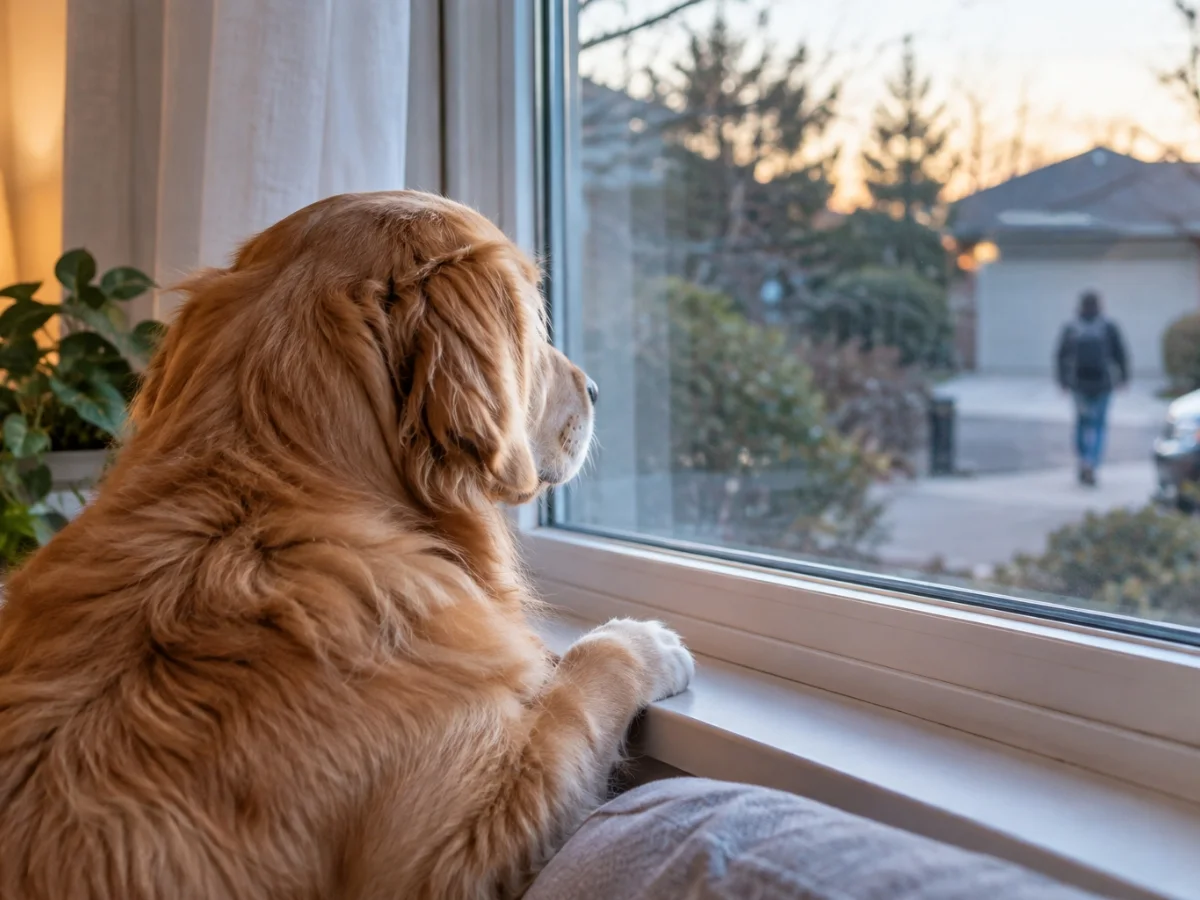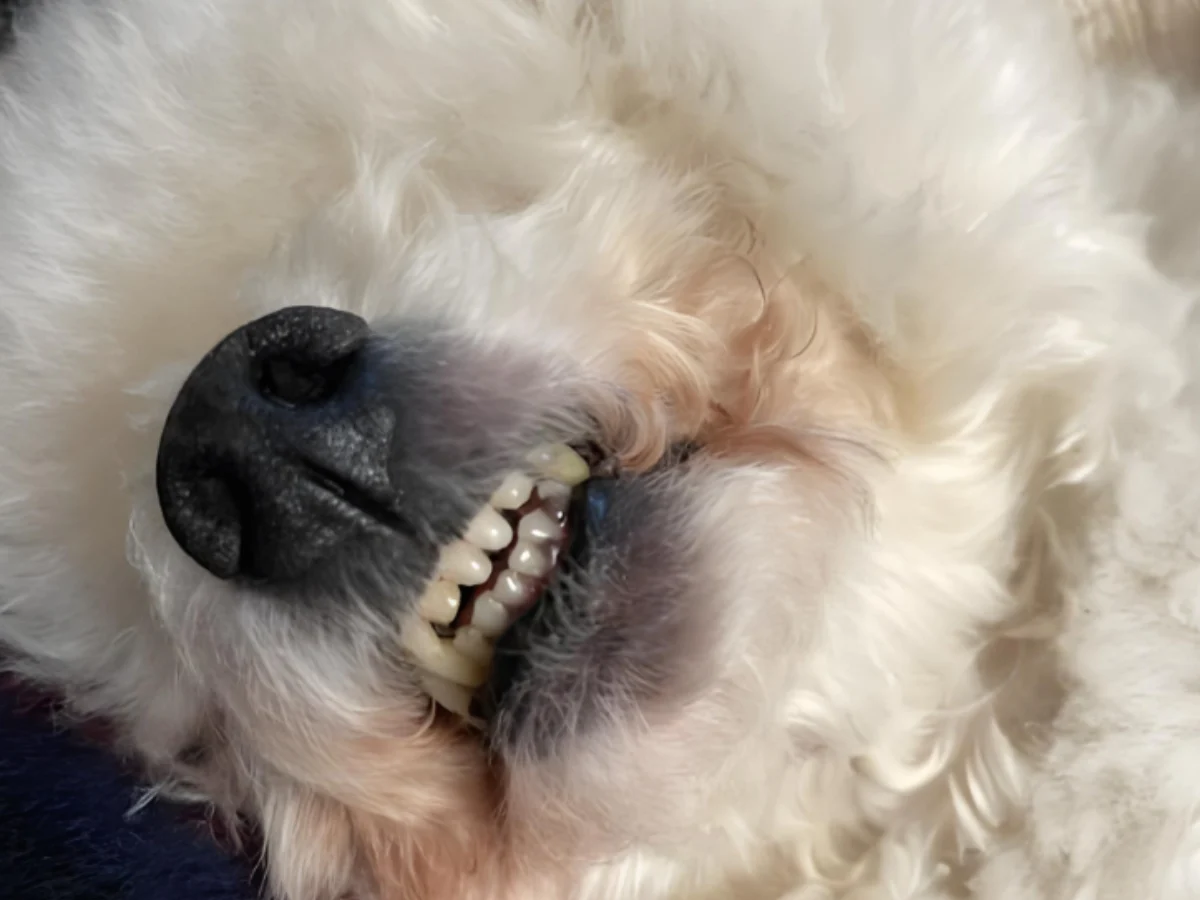

Dogs are highly adaptable, intelligent, and emotional animals. Since they cannot communicate through language, to have your dog become clever, obedient, and responsive to your commands, you must genuinely love it. The more you show affection—by frequently petting its head, neck, or body, or by hugging it—the more it will love and trust you in return.
Today, let’s discuss effective dog training tips. Through training, you can also strengthen your bond with your dog and care for its well-being. This article provides a practical and effective guide to training your dog.
1. Common Mistakes to Avoid in Dog Training
Avoid rough or aggressive behavior, and do not make instructions overly complex or long.
Why does your dog always seem to fail to learn?
The problem might lie in your training method. First, be gentle and patient with your dog during training—never use harsh or aggressive behavior. Your dog may take longer to understand your intentions, and some dogs are naturally more independent or rebellious. If a particular command doesn’t click right away, resorting to kicking or hitting defeats the purpose of training altogether.
Although dogs are intelligent animals, they don’t always remember commands after just one attempt. You need to patiently repeat instructions until they fully grasp them.
Commands should be consistent, short, and clear—ideally no more than three words. These cues serve as signals for obedience. All family members should use the same commands to ensure effectiveness. For example, decide whether you’ll say “sit” or “down” when asking your dog to sit, and stick to it.
During training, incorporate hand gestures and expressive facial cues as helpful aids.
What Are the Five Golden Rules of Dog Training?
After years of training dogs, I’ve learned that rewards are far more effective than punishment. The Royal Society for the Prevention of Cruelty to Animals (RSPCA) emphasizes positive reinforcement as the core principle: reward good behavior, provide timely feedback, progress gradually, maintain consistency, and adapt methods according to each dog’s personality and learning pace.
● Reward your dog immediately with a treat or praise whenever it performs the correct action. Over time, it will quickly learn that following commands leads to positive outcomes.
● Rewards must be given promptly—preferably within seconds of the desired behavior. Delayed rewards can confuse your dog, making it unclear what exactly is being rewarded.
● Focus on one command at a time. For instance, teach “sit” first, then gradually introduce “down” or “come.”
● Ensure all household members use the same commands. In my home, one person said “come,” while another used “here”—this often left our dog confused and frozen in place.
● Dogs learn at different speeds; some pick up new skills in minutes, while others may need several days. Going at your dog’s own pace usually yields better long-term results.
2. Dog Training Tips for Beginners
Several Effective and Quick Dog Training Techniques
① Luring:
Use items your dog loves to stimulate its motivation and trigger conditioned reflexes. Offering your dog’s favorite food will encourage cooperation during training, helping it learn commands more quickly. However, this method doesn’t always guarantee correct responses in every situation. Therefore, timing is crucial—avoid over-rewarding, minimize distractions during training, prevent bad habits, and adapt techniques according to your dog’s personality.
② Correction:
Immediately address and stop any undesirable behavior with a serious attitude. For example, if your dog picks up trash or bites people while on a walk, intervene right away when it approaches garbage. Take firm corrective action promptly to prevent the behavior from becoming habitual.
③ Rewards:
When your dog correctly performs the trained action, reward it with food, petting, praise, or verbal cues such as “Good job.”
How to teach your dog basic commands:
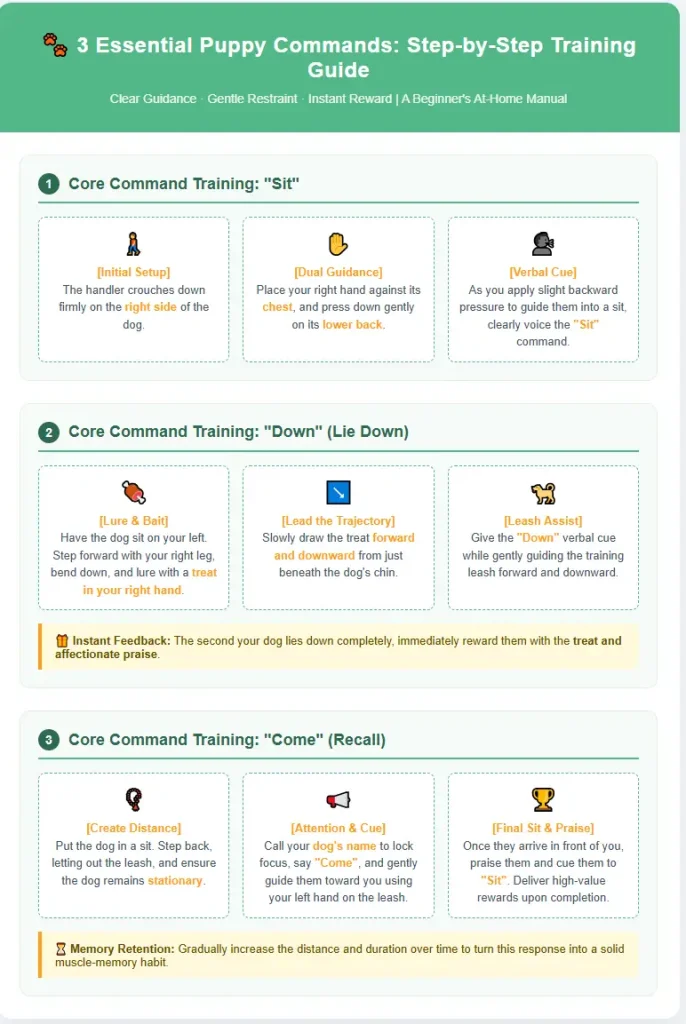
① Training “Sit”:
First, kneel on the right side of your dog. Place your right hand against its chest and gently press down with your left hand on its back—applying slight pressure from behind the tail to encourage sitting. At the same time, push its chest backward with your right hand while giving the command “Sit.”
② Training “Down”:
After commanding your dog to sit on your left, take a step forward with your right leg and bend your body downward. Use the treat in your right hand to lure the dog. When the dog shows interest in the treat, slowly move the treat downward and forward beneath its mouth while saying “Down” and gently pulling the leash downward. Once the dog lies down, immediately reward it with the treat and give gentle pets.
③ Training “Come”:
Training method: First, have your dog sit. Then, step back and release the leash. While the dog remains still, call its name to get its attention, then issue the “Come” command. Use your left hand to guide the leash toward yourself. When the dog comes to you under the leash’s guidance, praise it enthusiastically and command it to “Sit.” Once it sits, reward it again with praise and treats. Gradually increase the distance over time to help reinforce memory.
Tips:
Start training in a quiet environment. Avoid taking your dog directly to noisy places at first. Instead, gradually transition to busier environments to help improve your dog’s focus and attention span.
3. Dog Care and Training
Training Dogs to Use a Designated Toilet Area
Place a toilet tray in a fixed spot within the bathroom (use a heavy tray so it won’t be knocked over). Line the tray with old newspapers—though this is optional. After your dog eliminates, immediately replace or clean the tray, and use pet-specific wet wipes to clean the dog thoroughly, keeping the area clean. Alternatively, allow your dog to eliminate in the low-lying drain area of the bathroom, then clean it promptly afterward. Whenever your dog successfully uses the designated spot, reward it immediately with affection or treats to establish a conditioned reflex for eliminating in that specific location.
Timing is crucial when training elimination habits. Generally, take your dog to the bathroom with the tray after waking up in the morning, after feeding, or before bedtime. Sometimes dogs may not eliminate at these times, which is fine—simply confine them for a while and then release them again.
If you notice your dog sniffing around indoors, circling a spot, wagging its tail, crouching down, or lifting one hind leg, these are signs it’s about to eliminate. Immediately stop this inappropriate behavior, quickly guide it to the designated area, and gently pat its head as praise. If it has already eliminated indoors, correct it firmly and administer appropriate punishment.
Training Dogs to Carry Objects
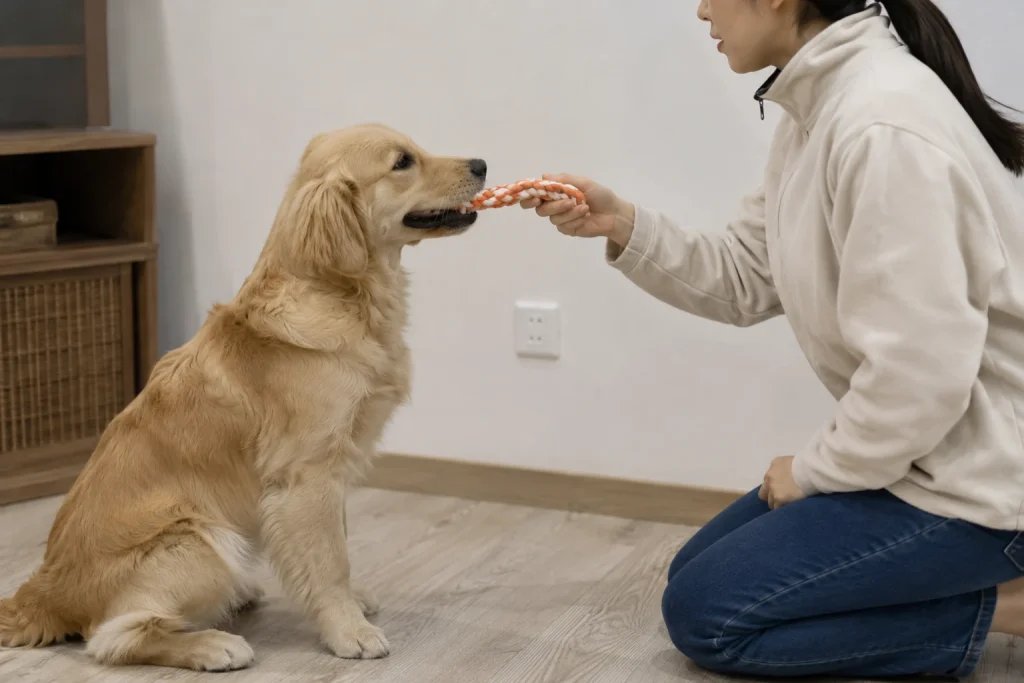
Begin in a quiet environment by selecting an item your dog finds interesting and easy to carry. Hold the object in your right hand and give the command “Take.” Then shake the object in front of the dog and repeat the “Take” command. When the dog picks up the object on cue, reward it. After a short time, say “Drop,” and take the object from its mouth, giving generous rewards. Repeat this process two to three times. Gradually reduce the guiding cues as your dog becomes more responsive, until it can reliably pick up and drop objects based solely on verbal commands.
Training Dogs to Walk Properly
First, have your dog sit on your left side. If it hasn’t yet learned to sit on command, review the “Sit” training. Once seated, step forward with your left foot and issue the “Walk” command, simultaneously pulling gently on the leash and calling your dog’s name. Praise your dog if it walks beside you.
The ideal position is for the dog to stay neither ahead nor behind you. Typically, the dog’s head and shoulders should align with your left foot. From the front view, the dog should walk parallel to you. During walking, avoid pulling tightly on the leash; instead, keep it loose. If the dog strays from the correct position, gently tighten the leash to correct it and bring it back into alignment. When training outdoors, your dog’s paws often get dirty with dust or mud. Before entering the house, carefully wipe their paws with pet wipes to maintain cleanliness and household hygiene.
4. Frequently Asked Questions for Pet Owners
What is the “3-3-3 Rule” in dog training?
Many dog trainers use the “3-3-3 Rule” to help beginners establish a consistent training routine: train three times a day, each session lasting about three minutes, and maintain this schedule for three weeks. The duration doesn’t need to be long—what matters most is patience and consistency.
How do dogs express “I love you”?
Dogs may not speak, but they communicate through actions. For example, approaching you willingly, following you around when you’re busy at home, or enthusiastically greeting you when you return are all signs of trust and affection.
Can dogs be left alone for 12 hours?
Generally, it’s not recommended. While adult dogs can tolerate being alone occasionally without issues, leaving them unattended for more than 10 to 12 hours regularly may lead to anxiety, holding in urine, or boredom. It’s best to arrange walks, interactive playtime, or have someone check on them during the day.
What is the “3-3-3 Rule” for helping dogs adjust after moving?
Many owners follow the “3-3-3 Rule” post-move: spend the first three days helping your dog adapt to the new environment, the first three weeks establishing a new daily routine, and the first three months gradually integrating into the new household. It’s common for dogs to feel stressed or lose appetite immediately after moving—just give them time and extra reassurance.
When is the best time to start training a puppy?
Puppies can begin learning simple tasks when they are 3 to 4 months old, such as sniffing with their nose or picking up objects with their mouth. How you raise and train your dog before it reaches one year of age largely determines its future behavior. Therefore, early education and training are essential to help establish good habits that will make later training easier.
What is the “7-7-7 Rule” in dog training?
Many dog owners refer to the “7-7-7 Rule,” which simply means giving your dog 7 days to adapt to a new environment, 7 weeks to develop daily routines, and 7 months to build consistent behaviors. From my own experience, this holds true—when a dog first arrives home, don’t rush into extensive training. Let them get comfortable with their surroundings first, then gradually introduce rules and commands. This approach often yields better results.
-
Sale!

50 Pcs Pet Ear Cleaning Finger Wipes for Dogs and Cats
Original price was: $5.19.$4.99Current price is: $4.99. Add to cart -
Sale!

Disposable hand wipes for pet cleaning paws and body fur no irritation
Original price was: $8.98.$4.49Current price is: $4.49. Add to cart -
Sale!
-1-300x300.webp)
clean food residues and dog cat blackheads non-irritating wipes
Original price was: $11.89.$9.99Current price is: $9.99. Add to cart