
Did you know that more than 80% of dogs show signs of periodontal disease by the age of three? According to the American Veterinary Dental College, dental problems are one of the most common health issues affecting dogs. However, many pet owners spend their time choosing the perfect harness, comparing dog food ingredients, or tracking calories while overlooking one of the most important aspects of their dog’s overall health – proper dog dental care.
Your dog’s mouth is not just for eating kibble and chewing toys. It plays a vital role in their overall health and quality of life. Without proper canine dental care, bacteria can quickly build up, leading to plaque formation, persistent bad breath, gum inflammation, and even more serious health concerns that may affect other parts of the body.
Don’t ignore chronic bad breath. While occasional “dog breath” can be normal, a strong or unpleasant odor is often your dog’s way of telling you that something is wrong.
The most effective way to protect your dog’s teeth is by creating a consistent dog dental care routine. Regular care can help maintain healthy gums, reduce plaque buildup, support better dog teeth health, and improve your pet’s comfort and quality of life.
In this complete guide, we’ll explain why dog dental care matters, how to recognize early warning signs, how to perform safe dog teeth cleaning at home, and which veterinary-recommended methods can help maintain your dog’s long-term oral health.
A dog’s mouth naturally contains bacteria. When these bacteria mix with food particles, they form a sticky layer called plaque. If plaque is not removed through regular dog teeth cleaning, it gradually hardens into tartar (also called dental calculus), which can irritate the gums and eventually lead to periodontal disease.
The American Veterinary Medical Association (AVMA) emphasizes that regular dental care plays an important role in preventing serious dental problems and supporting overall pet health.
Poor oral hygiene can contribute to several common dental issues, including:
Plaque is a soft, sticky film that develops on your dog’s teeth after eating. With consistent brushing, plaque can usually be removed before it causes problems.
However, if plaque remains untreated, minerals in saliva can harden it into tartar. Once tartar develops, it cannot be removed effectively with normal brushing at home and typically requires professional cleaning by a veterinarian.
Bacteria below the gum line can trigger inflammation and infection. Early signs of gum disease may include:
Without proper canine dental care, gum disease can progress and cause pain, tooth damage, and even tooth loss.
Dogs are experts at hiding discomfort. Many pets continue eating and playing even when they are experiencing dental problems.
If you notice your dog:
It may not simply be picky eating. These behaviors can be signs of underlying dental discomfort.
Dental problems often develop slowly and may go unnoticed until they become serious. Detecting issues early can help reduce your dog’s discomfort and prevent expensive treatments later.
Pay attention to these common warning signs:
A mild doggy odor can be normal. However, strong, unpleasant breath is often one of the earliest signs of bacterial buildup, gum disease, or other oral health problems.
If your dog’s breath suddenly becomes worse, it may be time to improve their dental care routine.
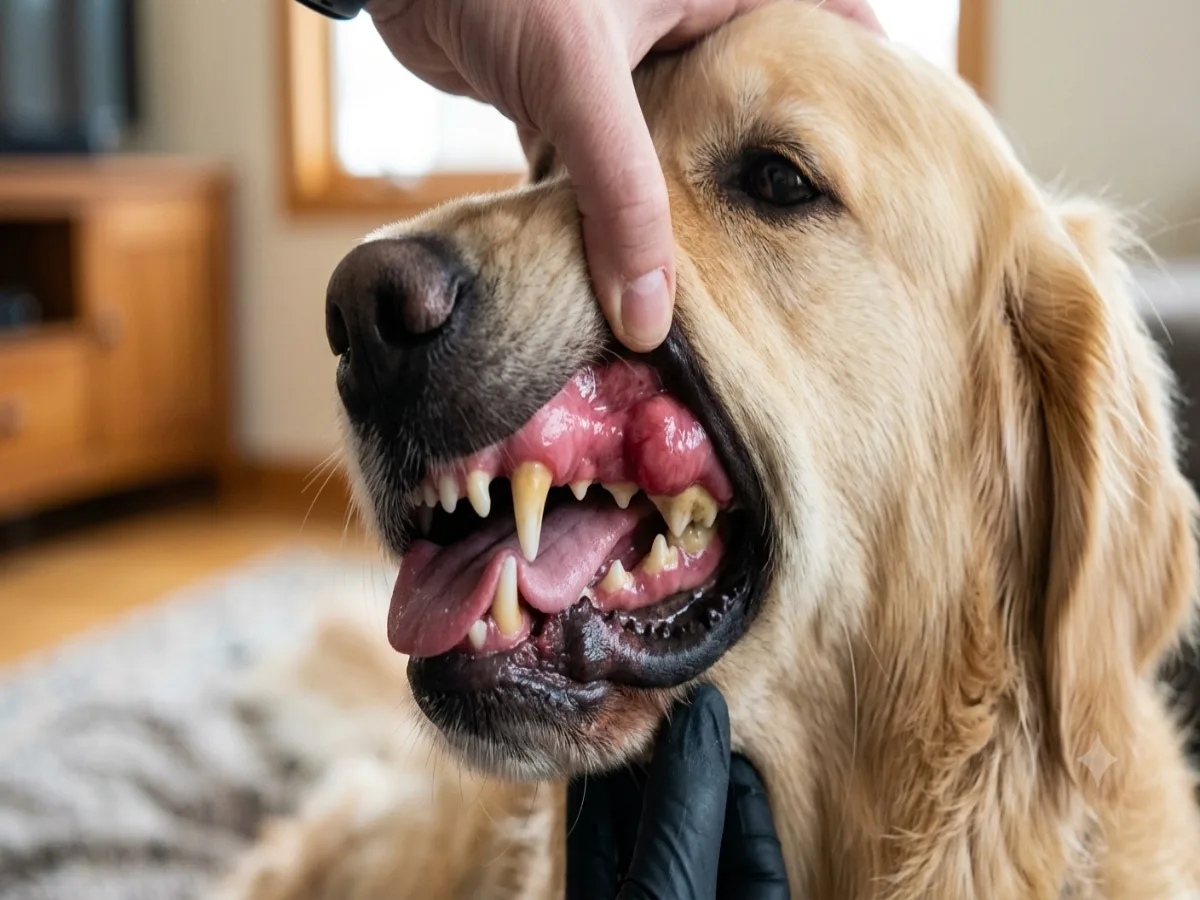
Yellow staining is usually a sign that plaque has already hardened into tartar.
Unlike soft plaque, hardened tartar cannot be removed with a regular toothbrush at home.
Professional dental cleaning may be required to restore your dog’s teeth.
Healthy dog gums should appear firm and pink.
If your dog’s gums look irritated, swollen, or bleed during chewing or brushing, this may indicate gingivitis or periodontal disease.
To help owners identify problems earlier, it is useful to understand the difference between healthy and unhealthy gums. Learning what normal dog oral health looks like can make it easier to notice changes before they become serious.
Contact your veterinarian as soon as possible if your dog shows any of the following:
Do not attempt to treat serious dental problems with home products alone. Professional veterinary evaluation is necessary to protect your dog’s health.
A consistent dog dental care routine can make a significant difference in protecting your dog’s teeth and gums. The good news is that effective dog teeth cleaning does not have to become complicated. Even a few minutes of daily care can help reduce plaque buildup and support betterlong-term dog teeth health.
The key is consistency. When it comes to canine dental care, small daily habits are much more effective than occasional deep cleaning.
Here are some of the best ways to maintain your dog’s oral hygiene at home.
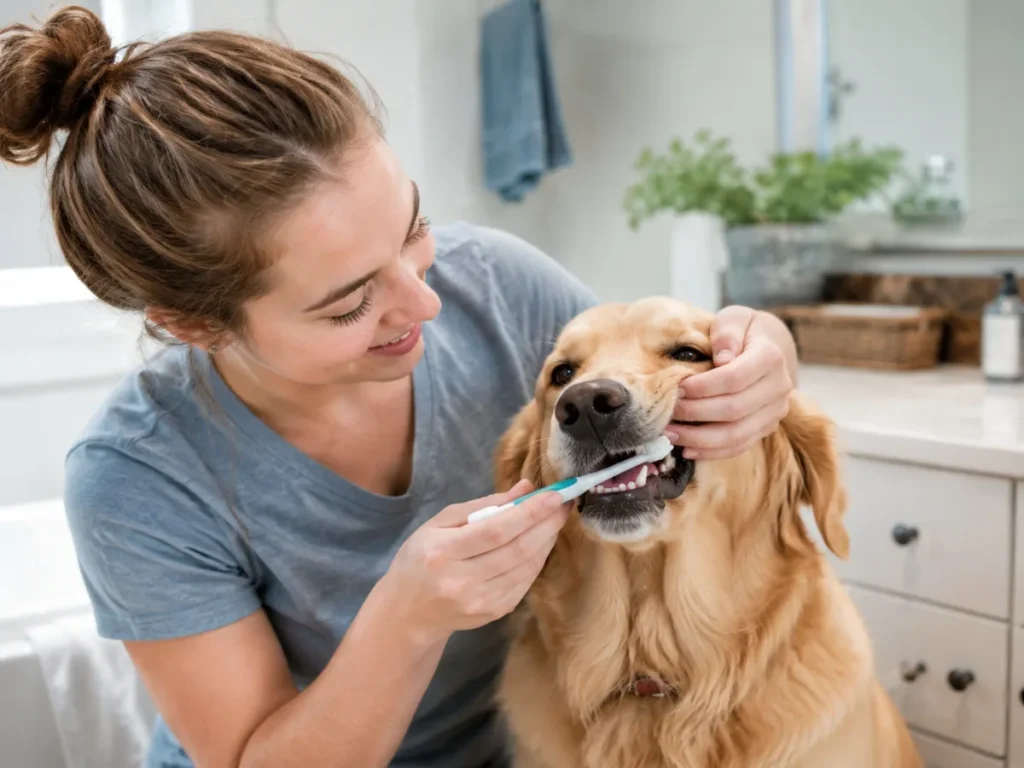
Brushing is the most effective method for removing plaque before it hardens into tartar. However, most dogs do not immediately accept having their teeth brushed. The process requires patience, positive reinforcement, and gradual training.
Follow these steps to make tooth brushing easier:
Start by allowing your dog to become familiar with pet toothpaste.
Place a small amount of dog-safe toothpaste on your finger and let your dog lick it. This helps them associate the taste with a positive experience.
Never use human toothpaste for dogs. Many human toothpastes contain ingredients such as xylitol, which can be extremely dangerous and toxic to dogs.
A toothbrush designed specifically for dogs can make dog teeth cleaning safer and more effective.
Dog toothbrushes are usually designed with:
For small breeds, a finger brush or small-headed toothbrush may provide better control.
When brushing your dog’s teeth, focus mainly on:
You do not need to brush aggressively. Gentle, consistent brushing is much more beneficial than forcing your dog through an uncomfortable experience.
If you miss brushing your dog’s teeth one day, don’t worry. Using a finger brush or clean gauze to wipe the teeth is still better than doing nothing.
The goal of dog dental care is not perfection – it is creating a sustainable routine that your dog can accept.
If your dog has never experienced tooth brushing before, this simple seven-day plan can help them gradually adjust.
Allow your dog to become comfortable with you touching their mouth.
The goal is simply creating a positive association.
Introduce a pet-safe toothpaste, such as a dog-friendly flavor like poultry or peanut butter.
Let your dog:
Do not rush into brushing yet.
Once your dog accepts toothpaste, gently wipe the outside surfaces of their teeth using:
Keep the session short and reward your dog afterward.
Attempt brushing the outer surfaces of your dog’s teeth for about 10 seconds.
Even if you only clean a few teeth, that is still a major success.
Remember, building a reliable dog dental care routine takes time. A calm and positive approach will create better results than forcing your dog.
If your dog strongly dislikes toothbrushes, dental wipes can be an excellent alternative.
Dental wipes are designed to help remove surface debris, food particles, and some plaque from
your dog’s teeth. They can be especially useful for:
For the best results, choose dental wipes from trusted brands or products that have proven effectiveness. For more recommendations, check out our guide to the best dental wipes for dogs.
When selecting dental products, look for options approved or recognized by organizations such asthe Veterinary Oral Health Council (VOHC), which evaluates products designed to support better petoral health.
However, dental wipes should be considered a supplement, not a complete replacement for brushing.
Dog dental gel is another convenient option for supporting daily canine dental care.
Many dental gels are designed to help:
Reduce harmful bacteria, Freshen your dog’s breath, support cleaner teeth, and make daily oral care easier.
For owners who struggle with traditional brushing, dental gel can be a simple additional step in their dog dental care routine.
However, dental gel works best when combined with regular brushing and professional veterinary care when needed.
Dental chews can be helpful because chewing creates a mechanical cleaning effect that may help reduce plaque on the tooth surface.
For many dogs, dental chews are also enjoyable and can make oral care feel like a treat rather than a chore.
However, dental chews should not replace brushing.
Think of them as a supporting tool that works together with:
A complete dog oral health plan usually combines multiple approaches instead of relying on a single product.
When choosing dental chews, consider products that have been evaluated for effectiveness, such as those carrying the VOHC acceptance seal.
If you are looking for guidance on choosing dental treats, you can also check our detailed guide: How to Choose the Best Dental Chews for Dogs.
Dental water additives are often considered one of the easiest options for busy pet owners.
Simply adding the recommended amount to your dog’s water bowl can help support fresher breath and better oral hygiene.
They may help:
However, water additives are not a magic solution and should never replace brushing.
The best results come from combining water additives with other forms of dog teeth cleaning,
especially regular brushing. For a deeper look, check out our complete guide to dog water additives, where we cover everything you need to know.
The best way to remove plaque from your dog’s teeth depends on how long the plaque has been present.
Fresh, soft plaque can often be managed with consistent home care. However, once plaque hardens into tartar (dental calculus), it becomes much more difficult to remove and usually requires professional veterinary cleaning.
A successful dog dental care routine focuses on preventing plaque from becoming a bigger problem in the first place.
Here are the most effective methods for controlling plaque buildup:
Regular brushing remains the gold standard for dog teeth cleaning.
Brushing helps remove food particles and soft plaque before they have a chance to harden into tartar.
For the best results:
Consistency matters more than perfection. Even brushing several times a week can provide meaningful benefits compared with not brushing at all.
A proper dog dental care routine built around regular brushing is one of the best ways to support long-term dog teeth health.
Dental wipes can be a practical option for removing surface buildup and maintaining fresher breath.
They are especially helpful for:
However, dental wipes mainly clean the visible surfaces of teeth and cannot reach deep below the gum line.
For complete canine dental care, dental wipes should be combined with other preventive methods.
Dental chews work through mechanical action. As dogs chew, the texture of the treat can help scrape away some plaque from the tooth surface.
When choosing dental chews, look for products that have been tested for effectiveness, including those with the Veterinary Oral Health Council (VOHC) seal of acceptance.
Keep in mind:
Dental chews can support dog oral health, but they cannot replace daily brushing.
They should be viewed as an additional tool, not the foundation of your dog’s dental care plan.
Professional veterinary dental cleaning is necessary when your dog has:
Once tartar develops below the gum line, home products cannot safely remove it.
Regular veterinary examinations allow problems to be identified early and help prevent more serious dental issues.
There is no single product that can completely protect your dog’s teeth.
The most effective approach combines several methods based on your dog’s age, breed, lifestyle, and individual needs.
A complete dog dental care routine may include:
The goal is not to find one “perfect” product. Instead, focus on creating a consistent routine that keeps your dog’s mouth healthy over time.
Prevention is always better than treatment.
Veterinarians generally recommend a combination of home dental care and professional examinations to maintain healthy teeth and gums.
A complete veterinary-supported canine dental care plan usually includes:
Daily brushing is considered the most effective way to prevent plaque accumulation.
If daily brushing is not possible, brushing several times per week is still beneficial.
Veterinary dental examinations help identify:
Some dental problems are impossible to detect through a simple visual check at home.
Depending on your dog’s:
Professional cleaning may eventually become necessary.
A veterinarian can determine the appropriate schedule based on your dog’s specific dog oral health needs.
Owners of small and flat-faced dogs should pay extra attention to dental care.
Breeds such as:
are often more prone to dental problems because they have the same number of teeth packed into a much smaller mouth.
This creates more crowded spaces where food particles and bacteria can accumulate.
Small dogs are among the groups at higher risk for periodontal disease.
Begin handling your puppy’s mouth at a young age.
Practice:
Early training helps make future dog teeth cleaning much easier.
Small dogs usually benefit from:
Small breeds may require professional dental cleanings more frequently than larger dogs.
Discuss the ideal schedule with your veterinarian based on your dog’s individual needs.
Because small dogs are more vulnerable to dental issues, daily dog dental care habits are especially important.
Choosing dental products depends on your budget, lifestyle, and how well your dog accepts different methods.
The best product is usually the one you can use consistently.
A routine professional dental cleaning under anesthesia can cost several hundred dollars.
More complex treatments, such as tooth extractions or advanced periodontal treatment, may cost significantly more.
From a long-term perspective, prevention is often much more affordable.
A year of home dental care using a toothbrush, toothpaste, and dental treats may cost around $200-$400, while advanced dental treatment can easily exceed $2,000.
This is why maintaining a consistent dog dental care routine is one of the smartest investments
you can make in your dog’s health.
Ideally, you should brush your dog’s teeth every day.
Daily brushing provides the best protection against plaque buildup. However, brushing several times per week is still much better than doing nothing.
The most important thing is building a routine your dog can comfortably accept.
No.
Dental chews can help reduce some surface plaque through chewing action, but they cannot fully clean the gum line.
They should be used as a supplement, not a replacement for brushing.
No.
Home dog teeth cleaning is extremely important, but it cannot replace veterinary dental care.
Once tartar forms below the gum line, professional cleaning is the only safe way to remove it.
Dental water additives may help support fresher breath and better oral hygiene.
However, they should be used as part of a complete dog oral health plan rather than as a
replacement for brushing.
Good oral health is an essential part of keeping your dog comfortable, healthy, and happy.
The best dog dental care routine does not need to be complicated.
Start with simple habits:
Whether your dog is a puppy, adult, or senior, consistent canine dental care can help protect their teeth and support a healthier life.
A few minutes of daily care can make a meaningful difference in your dog’s long-term dental health and overall well-being.
The information provided in this article is for educational and informational purposes only and is not intended to replace professional veterinary advice, diagnosis, or treatment.
Every dog is unique, and dental care needs may vary depending on factors such as age, breed, health condition, and individual circumstances. Always consult a qualified veterinarian before starting a new dental care routine, introducing new products, or making changes to your pet’s healthcare plan.
The recommendations and product information mentioned in this article are based on general research and common pet care practices. They should not be considered a substitute for regular veterinary examinations or professional dental care.
If your dog shows signs of dental problems, including severe bad breath, bleeding gums, difficulty eating, loose teeth, facial swelling, or signs of pain, contact your veterinarian promptly for proper evaluation and treatment.