
Can we homemade ear wash for cats? As a pet owner with years of experience, while cats are known for their meticulous self-cleaning habits, have you ever been confused about how to clean your own cat’s ears? Wanting to clean your cat’s ear canal, but the ear drops on the market are either mixed and difficult to distinguish or too expensive to use long-term, you want to figure out how to clean it yourself, but don’t know where to start.
For this, we are combining the experiences of countless pet owners who’ve encountered pitfalls, only delivering essential information without unnecessary fluff, saving money and ensuring safety, and guarding the health of your cat’s ear canals.
3 natural homemade ear wash for cats
The recipes are all commonly found ingredients, choose according to the cat’s condition, even beginners can succeed at once, and no longer have to waste money. The 2023 AAHA guidelines note that otitis externa (inflammation of the outer ear) is present in 20% of cases involving allergic skin disease in cats.
1. Daily de-greasing formula
Currently, the most gentle, least likely to cause allergies, and suitable for all healthy cats is undoubtedly extra virgin olive oil; it can effectively soften and dissolve stubborn dry earwax, allowing it to be expelled naturally when the cat shakes its head.
The specific method is to use 10ml cold-pressed, no-added olive oil, and fill it into a sterile small bottle, seal it. Before use, warm it to the cat’s body temperature, try not to make it too hot on the wrist, to avoid stimulating the ear canal.
2. Sensitive Skin Version
Calendula or Filbert Extract, the main ingredients calendula and filbert have natural anti-inflammatory and anti-fungal properties, these herbs are soaked into a mild extract, which can soothe irritated skin tissue, natural anti-inflammatory without any missteps.
We can specifically try using dried calendula or dandelion flowers with 100ml boiling water, steep for 20 minutes, filter and bottle, refrigerate, warm to body temperature before use, and best used within 3-5 days. This herbal infusion is incredibly soothing, natural anti-inflammatory without any drawbacks.
3. Sterilizing type
Ear discharge is reddish-brown with a slight yeast smell? Most likely it’s a fungal infection, this product can inhibit fungi, simple and effective.
Use food-grade apple cider vinegar and sterile distilled water, mix 1:1 and bottle, store at room temperature for 1 week, can store for 2 weeks in the refrigerator, warm before use, do not use frequently.
I once tried this method and found it effective for cleaning the fiona’s ears. However, if the earwax is of a darker color, it is best to visit a veterinarian as soon as possible for an examination!
Note: Must be diluted, undiluted will burn the ear canal. Also, if the ear canal is broken or discharging pus, absolutely cannot use!
If you can’t distinguish the color of your cat’s earwax, then you won’t be able to detect any problems with your cat’s ears in time!
Absolutely not to be used for cat ear ingredients
When trying homemade solutions, many pet owners may mistakenly use common human disinfectants, which can lead to chemical burns or severe pain in a cat’s ear canal. When we ear wash for cats, we will more carefully to avoid some ingredients.
Here you will find a more complete guide on the natural ingredients that can be used or not used in the cat ears at home. Maybe you should take a look!
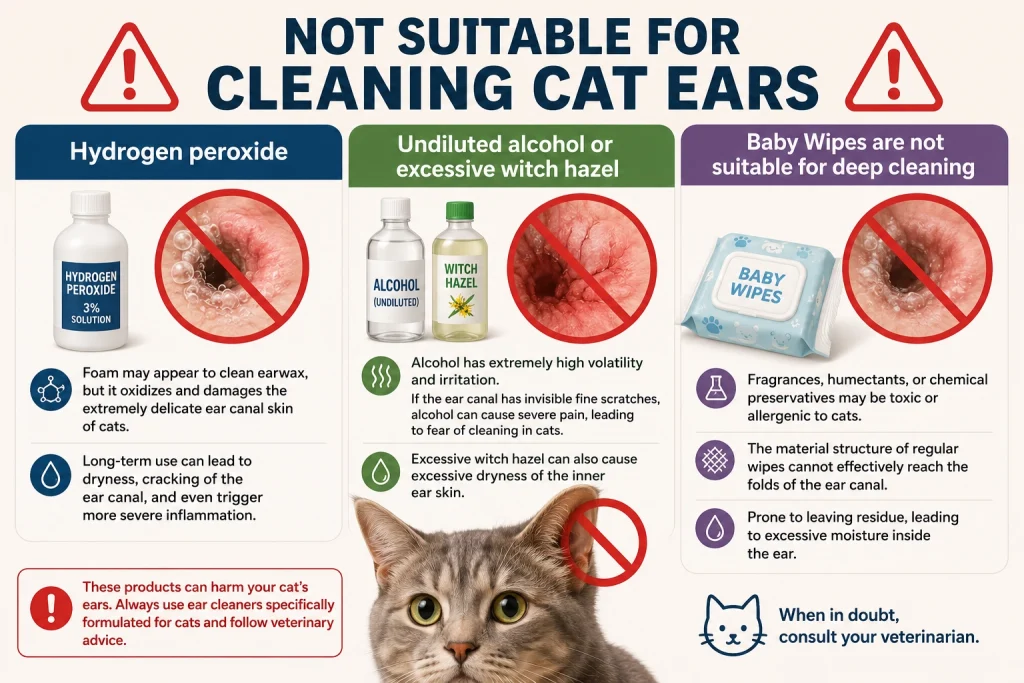
Below are three types of ingredients that must be strictly prohibited:
Hydrogen peroxide: Hydrogen peroxide foam generated when it contacts earwax may appear to clean it, but it oxidizes and damages the extremely delicate ear canal skin of cats. Long-term use can lead to dryness, cracking of the ear canal, and even trigger more severe inflammation.
Undiluted alcohol or excessive witch hazel: Alcohol has extremely high volatility and irritation. If a cat’s ear canal already has invisible fine scratches, alcohol can cause severe pain, leading to fear of cleaning in cats. Excessive witch hazel can also cause excessive dryness of the inner ear skin.
Baby Wipes: The design purpose of baby wipes is to clean human skin, and the fragrances, humectants, or chemical preservatives they contain may be toxic or allergenic to cats. Additionally, the material structure of regular wipes cannot effectively reach the folds of the ear canal and is prone to leaving residue, leading to excessive moisture inside the ear.
How to ear wash for cats?
With a safe recipe, the correct cleaning technique is the key to protecting your cat’s hearing.
Step 1: Check
First, check if there is dark brown, coffee-ground-like discharge or an odor in the ear. A healthy ear canal is light pink with a small amount of earwax and no odor; if you see “coffee-ground-like,” redness, swelling, or pus, see a veterinarian first and don’t wash blindly!
Step 2: Apply the homemade solution
Choose the corresponding formula, warm it to the cat’s body temperature, and apply 2-3 drops at a time (1-2 drops for kittens). Make sure the dropper doesn’t touch the ear canal to avoid contaminating the entire bottle of liquid
Step 3: Base massage
Knead the base of the ear for 30 seconds, and if you hear a “gurgling” sound, it means the earwax has dissolved. Be gentle; don’t press too hard or hurt the cat. When I washed Fiona’s ears, she seemed to enjoy the massage I gave it the most, looking very comfortable.
Step 4: Wiping
Let the cat shake its head to dislodge the dirt with centrifugal force, and then gently wipe and clean the outer ear canal. Then wrap your finger with pet wipes and gently clean the outer ear and the ear canal opening (no more than 1cm). Be careful not to insert cotton swabs deep into the ear canal, as this will push dirt further in.
Step 5: Rewards
Immediately give treats and praise after cleaning, making the cat think that ear cleaning equals getting food, establishing positive reinforcement. Over time, the cat will become more accustomed to it.
When to See a Veterinarian
While homemade recipes can solve daily cleaning issues, clinical veterinarians emphasize that once a cat shows the following abnormal signs of deep infections or nerve damage, home care should never be relied upon alone; professional medical diagnosis must be sought immediately to avoid delaying the condition. If any of the following situations occur, please do not attempt to ear wash for cats by yourself again:
- Redness, swelling, pus or bleeding in the ear canals, with the cat avoiding touch and crying out in pain when the ears are touched;
- Recurring black or dark brown discharge that smells foul, with the cat scratching excessively;
- A cat tilting its head, nystagmus, facial swelling;
- After using homemade liquid for a week, the symptoms didn’t improve and even worsened.
Veterinary Disclaimer
The content of this article is for informational, educational, and experience-sharing purposes only and does not constitute professional veterinary diagnosis, treatment advice, or prescriptions of any kind. If your pet experiences a medical emergency—such as severe pain, loss of balance, bleeding, or abnormal behavior—please contact your local veterinary clinic or emergency veterinary center immediately for treatment.
-
Sale!
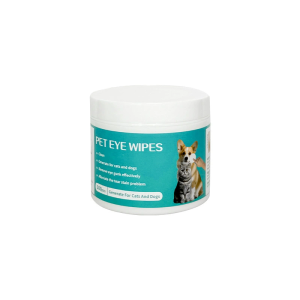
Pet Wipes Cat Dog Circle Wipes for Cleaning Eyes
Original price was: $6.99.$5.89Current price is: $5.89. Add to cart -
Sale!
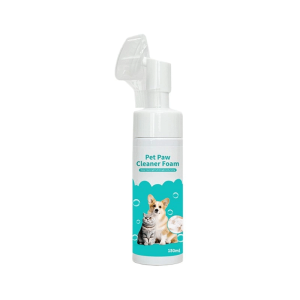
No-Rinse Pet Paw Cleaner Foam with Silicone Brush All-Year
Original price was: $7.12.$6.89Current price is: $6.89. Add to cart -
Sale!
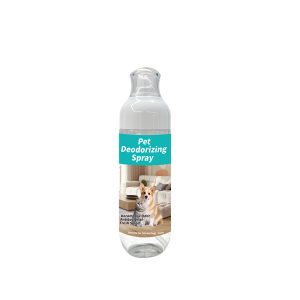
Pet Deodorizing Spray 150ml – best Natural Dog Cat Odor Remover
Original price was: $5.29.$4.99Current price is: $4.99. Add to cart