
Dogs are our most loyal companions, standing by us in times of loneliness and forming deep emotional bonds with us. Treating them like our own children requires careful attention to their daily hygiene and overall health. Today, we’ll walk you through how to groom your dog at home, step by step.
The grooming techniques described in this article are intended for general informational purposes only. If your dog has skin conditions, injuries, or is prone to stress and fearfulness, it’s recommended to seek professional grooming services at a pet salon first. The content provided here cannot replace professional veterinary diagnosis or expert pet care guidance.
1. What’s the difference between taking your dog to a grooming salon and caring for it yourself at home?
Taking your dog to a professional grooming salon offers more standardized service, as trained groomers use complete equipment and follow proper procedures. They can tailor their approach based on each dog’s skin condition, coat type, and other factors, while also checking the dog’s overall health—including skin, ears, and nails. This option is ideal for active, anxious, or heavily coated dogs, as well as for owners who lack time for grooming. However, it’s important to choose a reputable, responsible salon that prioritizes the dog’s well-being.
Grooming your dog at home is more cost-effective than taking them to a pet grooming salon, and it allows for a closer bond with your pet, making the process easier and offering greater flexibility in scheduling. However, compared to professional groomers, you may lack expertise, which can result in less thorough cleaning. Basic tasks such as brushing, nail trimming, and bathing at home can serve as routine maintenance.
When I first took my four-month-old puppy to a grooming salon for a bath, he was so nervous that he trembled constantly and barked at the staff. Since I had never tried bathing him at home before, he was afraid of both the blow dryer and water. The groomer suggested building up his habit over time. After I began grooming him at home, I noticed he gradually became accustomed to the routine and even started enjoying the baths and drying sessions with me.
2. What should you prepare in advance for the first time grooming your dog at home?
① Pet-specific shampoo: moisturizes fur, provides deep cleaning and care, and eliminates odors
② Dog-specific conditioner: choose different types based on whether the coat is coarse or soft and fine
③ Specialized shampoos for specific conditions: such as antifungal, flea control, seborrheic dermatitis, superficial or deep pyoderma, etc.
④ Bathtub and non-slip mat, large cup for rinsing foam, cotton swabs, pet-specific towel, blow dryer
⑤ Grooming tools (brushes and combs)
⑥ Ear-cleaning solution or eye wipes
⑦ Dog-specific toothbrush and toothpaste
⑧ Clipping and nail trimming tools
The American Kennel Club (AKC) recommends that basic home grooming equipment should include brushes, combs, nail clippers or nail file, dog-specific shampoo, and a blow dryer. Additional items such as paw protectant cream and styptic powder can be prepared according to your dog’s specific needs.
3. What is the correct order for dog grooming?
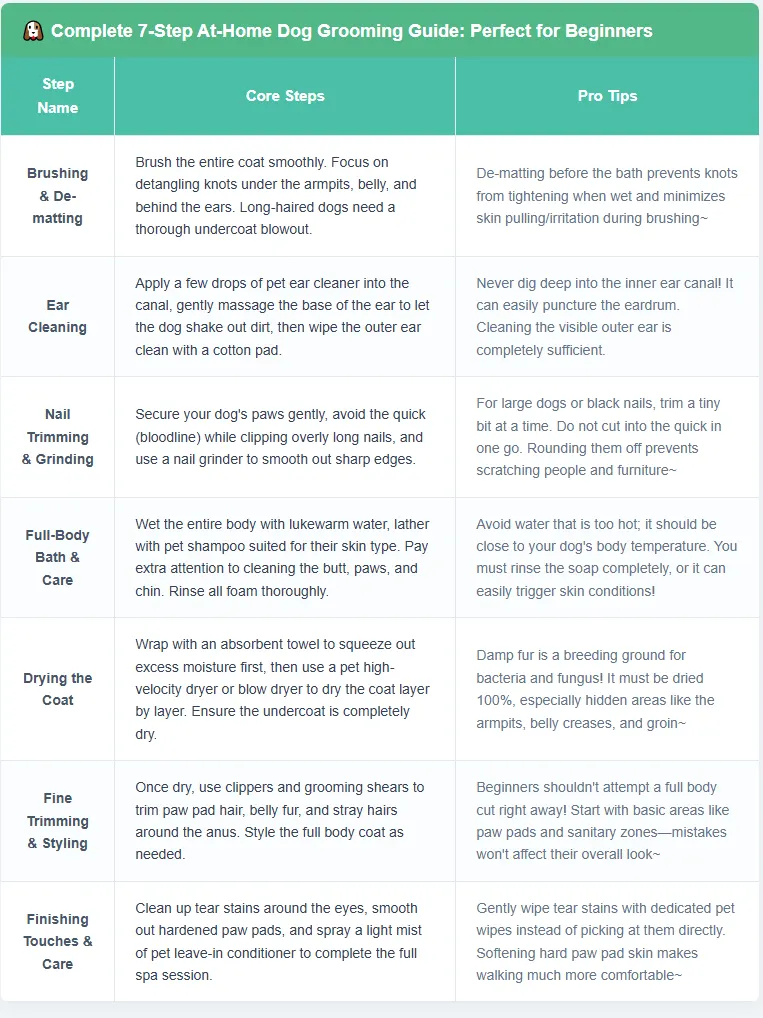
What are the seven steps in dog grooming?
It mainly consists of seven steps: first, check the dog’s skin and coat condition, then detangle the fur; trim the nails and clean the ears; bathe the dog and dry the coat thoroughly; groom the fur; finally, attend to details—clean the eyes with specialized eye wipes and apply a detangling spray, among other things.
4. How to Groom Your Dog at Home?
How to Bathe Your Dog Properly?
① Preparation:
Prepare a bathtub of appropriate size, a large water cup or other container, cotton swabs, a dedicated dog towel, a hair dryer, a grooming brush, and ear-cleaning solution.
② Steps:
● The height of the bathtub should be about half the dog’s height, and the opening should be slightly larger than the dog’s body to allow it to fit comfortably without restricting your movements. Place a non-slip mat at the bottom of the tub to prevent slipping.
● After applying shampoo, promptly rinse off the foam thoroughly using a large water cup or showerhead to avoid the dog spreading foam around.
● Immediately after bathing, wrap the dog in a towel to absorb excess moisture, then dry its coat with a hair dryer as soon as possible to help prevent colds. Afterwards, use a grooming brush to detangle and smooth the fur.
● If a small amount of water enters the dog’s ears during bathing, clean the ear canal promptly with cotton swabs after the bath. Then apply ear-cleaning solution into the ears to effectively prevent ear mites caused by trapped moisture.
How beginners can use an electric trimmer to groom their dogs?
Before grooming, it’s best to bathe your dog and thoroughly dry its coat. A smooth, dry coat makes trimming easier and helps prevent discomfort during the process.
① Secure your dog
When trimming, keep your dog still. If your dog is uncooperative, at least calm it down and gently restrain it to ensure a smooth grooming session.
② Trimming technique
Always follow the direction of hair growth when using an electric trimmer—never go against it, as this can damage hair follicles. For sensitive areas like the belly, use a gentler trimmer or wear gloves to minimize discomfort.
③ Finishing touches
After trimming, don’t forget to use scissors to carefully trim longer facial hairs that obstruct vision, as well as details like eyebrows and whiskers. These small adjustments help give your dog a neat, polished look.
④ Reward your dog
Offer comfort and reassurance throughout and after grooming—gentle petting and soothing words can ease anxiety and prevent injury. Once your dog cooperates well, reward it with a treat.
If you don’t have an electric trimmer, can you still groom your dog yourself?
Yes. Care and safety are essential; it’s best to do only minor, localized grooming.
Tip: First, brush your dog’s fur thoroughly to prevent tangles. Avoid sharp scissors and opt for rounded-tip, flat, layered, or curved shears whenever possible. Always prioritize safety—focus on trimming only messy or excessively long hair.
What should you keep in mind when grooming your dog at home with scissors?
Familiarize your dog with the tools: Avoid sharp scissors. One week before grooming, let your dog smell and touch the clippers. Turn them on so your dog can get used to the sound, then reward with treats.
Choose the right time: Groom within 1–2 hours after a meal, or when your dog has just woken up—times when they’re more relaxed and cooperative.
Take it step by step: Start with less sensitive areas like around the paws, doing small, simple trims to help your dog gradually get comfortable with the process before moving on to other parts.
Reward promptly: Give your dog a small treat each time they cooperate calmly—positive reinforcement is key, but keep rewards moderate.
Create a comfortable environment: Keep surroundings quiet and use a familiar space where your dog feels safe and relaxed, minimizing resistance.
5. Grooming Methods for Large Breeds and Poodles
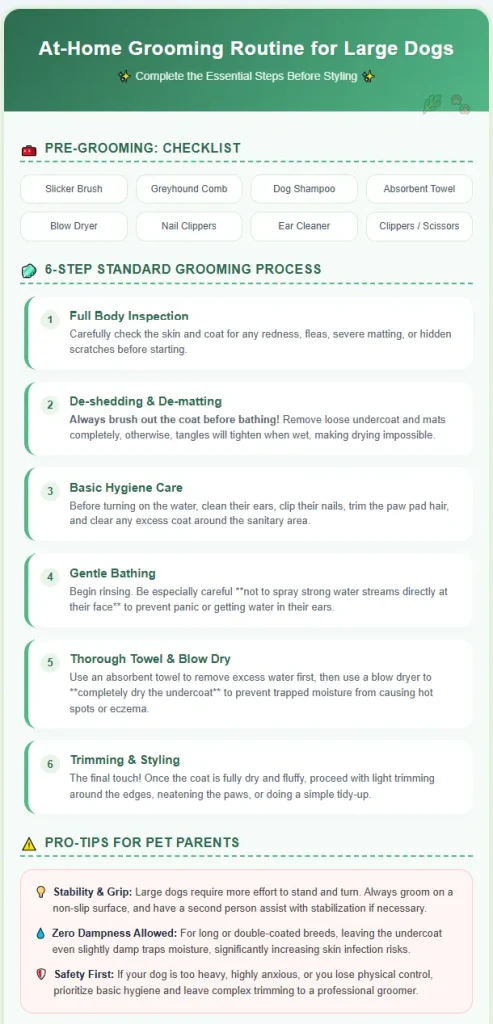
How to groom a large dog at home?
Grooming a large dog at home mainly involves brushing, bathing, drying, and basic care. For complex styles or full-body precision grooming, it’s better to leave these tasks to professionals.
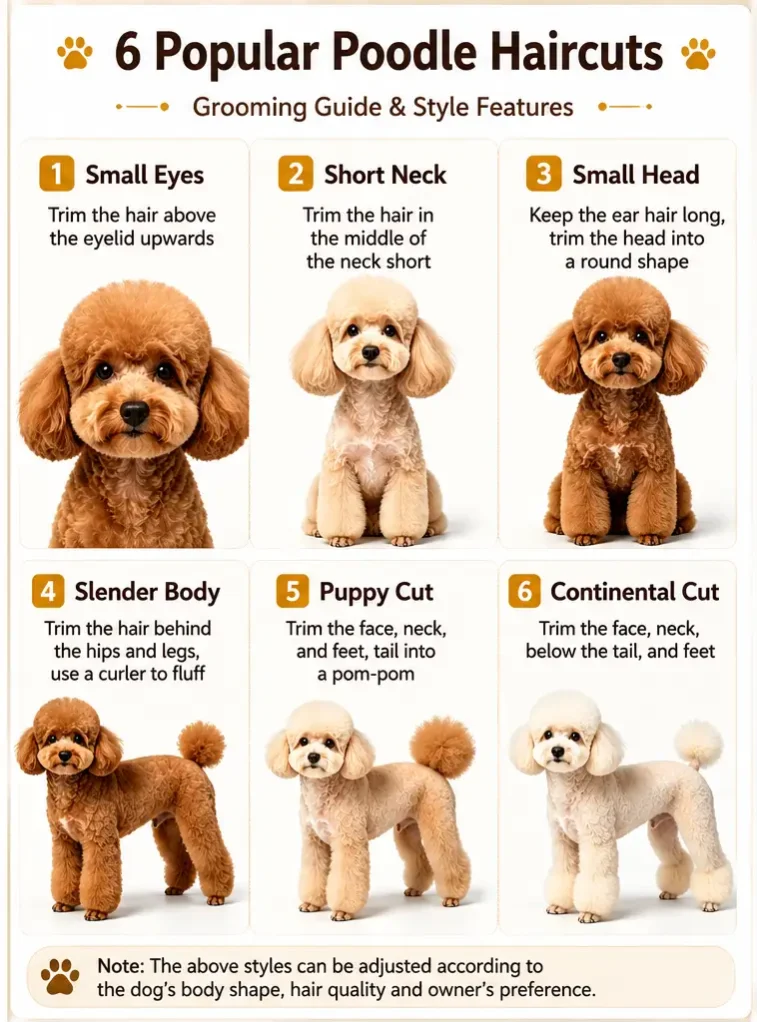
How to give a Poodle daily grooming at home?
① For dogs with small eyes: To make the eyes appear larger, trim a portion of the hair above the eyelids upward.
② For dogs with short necks: To elongate the appearance of the neck, shorten the hair in the middle section of the neck.
③ For dogs with small heads: Keep the hair around the ears long and trim the head hair into a rounded shape, while maintaining the neck hair in its natural state.
④ For slender-bodied dogs: Trim some of the hair from the rear of the hips and legs, then use a curling tool to style the coat for added volume and fluffiness.
⑤ For puppy-style grooming: Focus on trimming the facial, neck, and paw areas. It’s recommended to shape the tail hair into a fluffy ball for a cuter look. Adjust the overall body grooming according to the dog’s general body type.
⑥ For European Continental style: Trim the hair on the face, neck, underside of the tail, and paws.
6. Many owners focus only on bathing, neglecting other important grooming details.
Ear Cleaning
When dogs develop ear problems, they may emit a strong odor, frequently shake their heads, or scratch their ears with their paws—signs that should not be ignored. Establish a regular habit of cleaning your dog’s ears. Use pet-specific ear wipes to gently clean the outer ear surface during routine care. If your dog has ear mites, it will often scratch its ears excessively, and you may notice dark brown fluid in the ear canal along with an unpleasant smell. In such cases, use a specialized ear-cleaning solution to flush out the ear canal, then administer prescribed medication into the ear as directed by your veterinarian. Gently massage the base of the ear to help the medicine absorb.
Pay Special Attention to Dental Health After Grooming
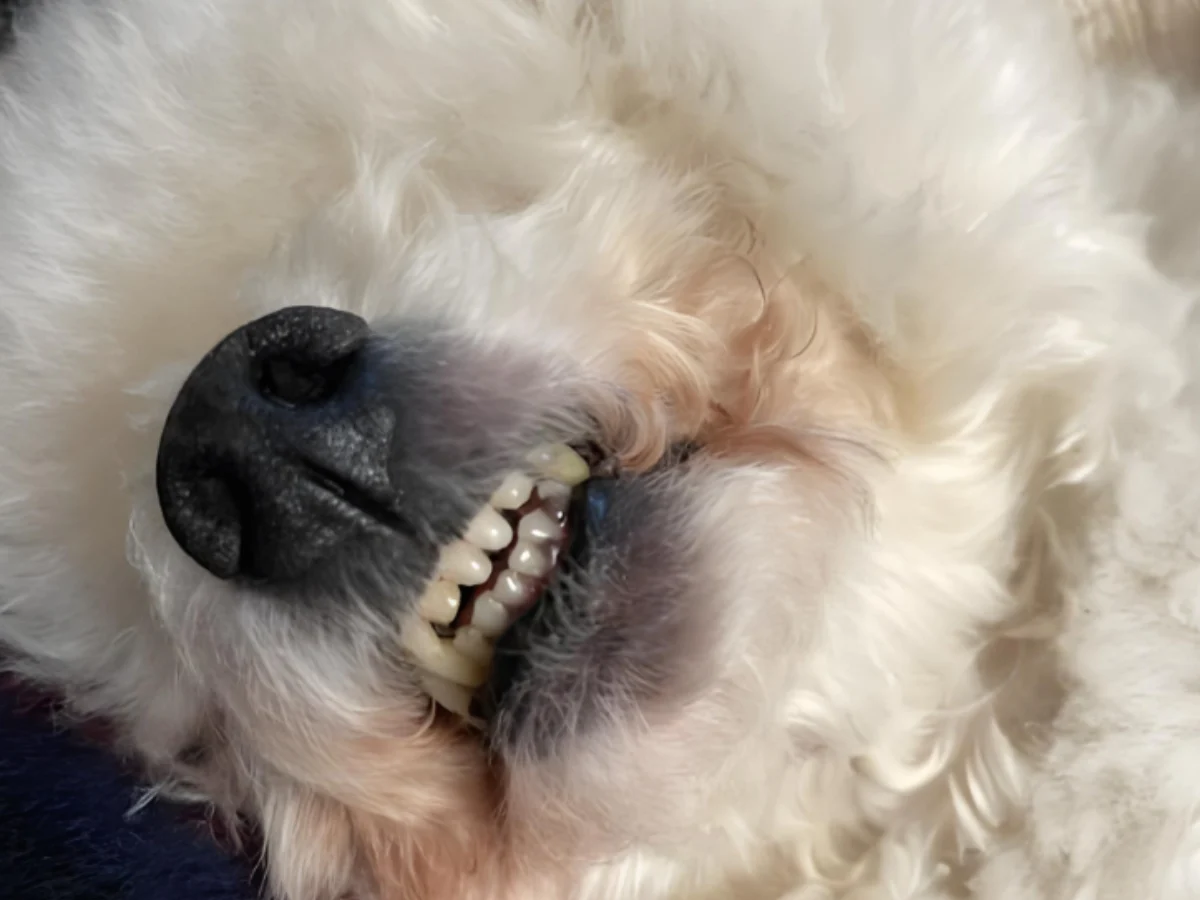
Maintaining good oral hygiene is essential for your dog’s overall health. Clean your dog’s mouth regularly and establish a brushing routine, or use wet wipes to remove food residue from the teeth after meals. In terms of diet, avoid feeding sticky, soft foods and never give your dog leftover human food. If you notice signs of tartar buildup or gum inflammation, seek veterinary care promptly.
How to Safely Trim Your Dog’s Nails?
① Gently and steadily hold your dog’s paw with one hand, positioning your hand so that it aligns with the direction of the claw. Lightly grasp the paw to expose the nail, then trim off the excess portion about 2–3 mm above the quick (the pink or red part containing blood vessels).
② Carefully observe the shape of the nail: the base is relatively straight while the tip is curved. Use nail clippers in your other hand to cut the tip, being cautious not to cut anywhere else.
③ After trimming, use a nail file to smooth and round the edges, preventing sharp edges from scratching either your dog or yourself.
Tips:
Do not cut the nails too short—doing so risks cutting into the quick, which can cause pain and bleeding. Pay close attention to the proper length when trimming.
How often should you trim your dog’s nails?
Dog nails grow quickly; it’s recommended to trim them every 7 to 10 days. This is especially important if you have young children at home, as it helps prevent injuries caused by long, sharp claws.
7. Common Mistakes I’ve Made in Dog Grooming
What are the most common dog grooming mistakes?
I’ve noticed that many pet owners, when grooming their dogs at home for the first time, often make the mistake of immediately carrying their dog into the bathroom to bathe. In fact, it’s best to carefully detangle the fur before bathing—otherwise, the knots can tighten further when wet. Many people also tend to use their own shampoo on their dogs, but a dog’s skin is more sensitive than a human’s, and long-term use may lead to dryness or even itching.
Make sure to thoroughly rinse off all the foam during bathing, especially in areas prone to residue such as underarms, abdomen, and between toes. When blow-drying, don’t just dry the surface—leaving the undercoat damp for long periods can easily lead to skin problems.
For ear and nail care, simply clean the outer ear; do not attempt to insert anything deeply into the ear canal. When trimming nails, avoid cutting too much at once to prevent nicking the quick. Many owners believe shaving their dog’s coat in summer keeps them cooler, but in fact, the fur of many breeds provides sun protection and insulation—excessive grooming can actually harm skin health.
8. Frequently Asked Questions for Dog Owners
How do dogs express “I love you”?
There are many ways, and each dog expresses it differently. For example, they might greet you enthusiastically every time you come home from work or after going out. They may also invite you to play with them, sharing their favorite treats and toys. My dog gives me a sense of security at night—any unusual sound triggers its protective instinct toward me.
What does “FFF” mean in dog grooming?
Common terms used in the dog grooming industry:
Face (Face): Trimming excess hair around the eyes and mouth to prevent obstruction of vision, food residue, tear stains, and cleaning the area around the ears.
Feet (Paws): Shaving the hair between paw pads and around the feet to prevent dirt buildup, slipping, and interdigital dermatitis, while also trimming and filing nails.
Fanny (Butt / Perineal Area): Trimming long hair around the anus to prevent feces from sticking, reduce bacterial growth, and maintain cleanliness and freshness.
-
Sale!
Gentle Neutral pH Round Pet Eye Wipes Tear Stain Removal
Original price was: $5.98.$2.99Current price is: $2.99. Add to cart -
Sale!
150ml No-Rinse Pet Paw Cleaner Foam – Waterless Paw Washer
Original price was: $7.19.$5.99Current price is: $5.99. Add to cart -
Sale!

disposable Finger-shaped dental cleaning wipes for pets fresh breath
Original price was: $6.68.$3.34Current price is: $3.34. Add to cart