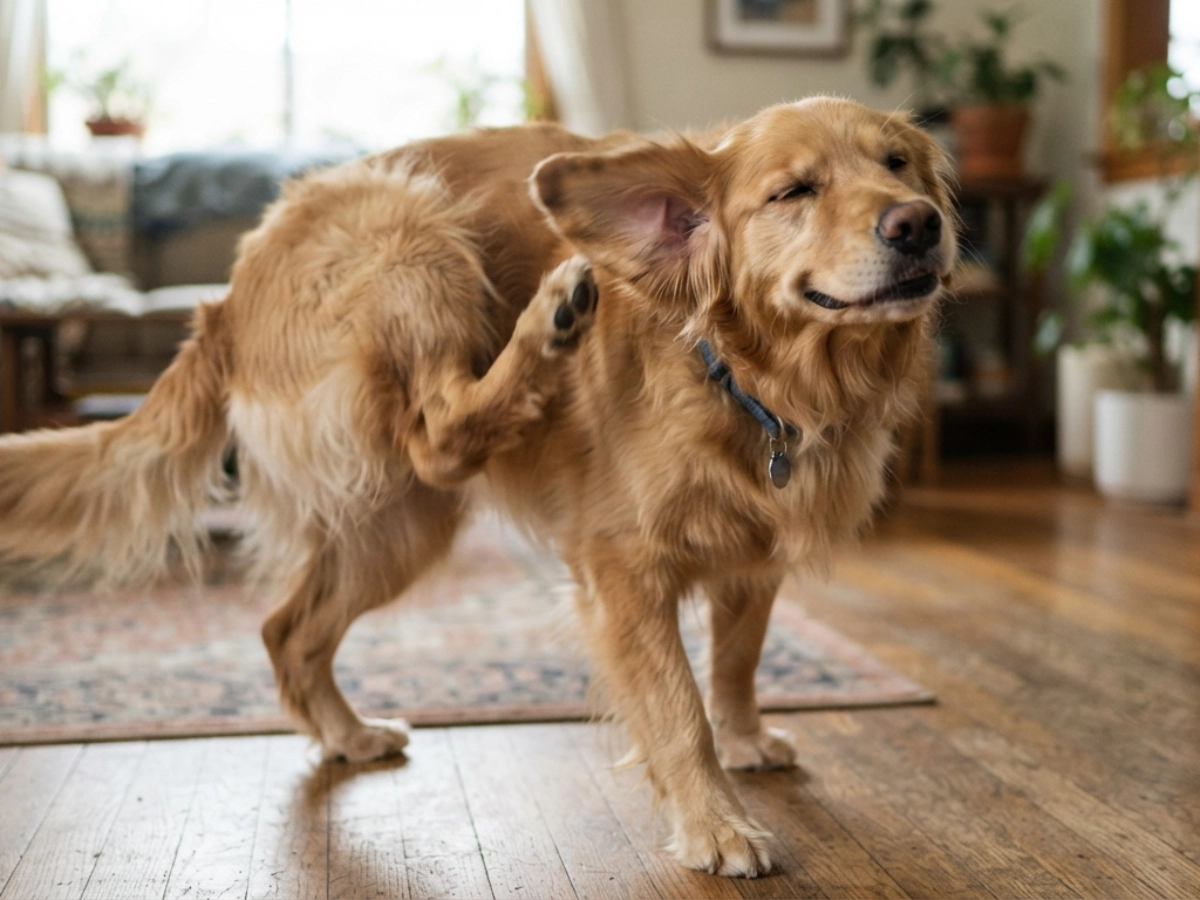

I still remember that morning clearly when my Golden Retriever, Cooper, walked over to give me his usual good morning kiss. The smell was unforgettable — almost like a tiny biological weapon, a combination of rotten fish and a damp garbage can. Like many dog owners, my first reaction was to laugh it off. I assumed that dog bad breath was simply a normal part of having a dog.
However, after discussing it in detail with my veterinarian during a routine wellness exam, I realized I had been completely wrong. Dog bad breath is not something you should ignore. It is often a warning sign from your dog’s body that something may be affecting their health.
According to clinical research published by the American Animal Hospital Association (AAHA), more than 80% of dogs over the age of three suffer from some degree of active periodontal disease. And in many cases, dog bad breath is one of the earliest warning signs.
If you are wondering how to get rid of your dog bad breath, the answer is not simply giving your dog a mint-flavored treat to cover up the smell.
A real solution requires a complete approach:
Only by addressing the root problem can you truly improve your dog’s oral health and eliminate unpleasant breath.
At its core, dog bad breath is mainly caused by an excessive buildup of odor-producing bacteria inside the mouth.
Every time your dog eats, food particles, saliva, and proteins combine and collect on the surface of the teeth, forming a sticky layer known as dental plaque.
If plaque is not removed within 24 to 48 hours, it absorbs minerals from saliva and gradually hardens into tartar (calculus).
The rough, porous surface of tartar creates the perfect environment for harmful anaerobic bacteria to grow.
When these bacteria break down leftover food particles and organic material in the mouth, they release volatile sulfur compounds (VSCs) — the primary cause of that unpleasant rotten smell coming from your dog’s breath.
Besides oral bacteria, dog bad breath can also be linked to several other underlying factors:
An imbalance in gut bacteria, digestive problems, or feeding sticky foods such as wet food for a long time without proper dental cleaning can contribute to unpleasant breath.
When the kidneys or liver are not functioning properly, or when blood sugar metabolism is abnormal, waste products and toxins can build up in the bloodstream. These substances may be released through saliva and breathing, creating unusual chemical odors.
Chewing on sticks or other objects can cause gum injuries and infections. Some dogs may also develop dog bad breath after licking irritated or overflowing anal glands, transferring unpleasant odors into their mouths.
Before purchasing any dental products or trying home remedies, take a few seconds to identify the specific type of odor coming from your dog’s mouth.
The type of smell can provide important clues about your dog’s overall health and may help you identify the possible underlying problem.
A fishy smell is one of the most common types of unpleasant dog breath and is often associated with oral health issues.
Bacteria hiding beneath the gumline can produce volatile sulfur compounds, creating a stale, fish-like odor.
As plaque accumulates and develops into tartar, these bacteria have an even better environment to multiply, making the smell more noticeable over time.
When a dog’s anal glands become full, blocked, or inflamed, some dogs repeatedly lick their rear end.
This behavior can transfer the strong-smelling anal gland fluid onto their tongue and teeth, causing a fishy odor from the mouth.
If your dog’s breath smells like feces or has an unusually rotten odor, it may indicate a more serious issue.
Some dogs may eat their own feces or pick up dirty objects while exploring outdoors.
This behavior can directly introduce unpleasant bacteria and odors into the mouth.
When gum tissue becomes severely infected or begins to break down, the resulting odor can be surprisingly similar to the smell of feces.
If there is an obstruction in the digestive tract, gases produced by fermentation may travel back through the esophagus and cause a foul odor from the mouth.
Certain unusual smells may indicate underlying health problems that require veterinary attention.
A strong ammonia or urine-like odor can be a classic sign of kidney dysfunction or kidney failure.
When the kidneys can no longer effectively filter waste products from the blood, substances such as urea can accumulate and enter the saliva, creating a chemical-like smell.
A sweet, fruity, or rotten-fruit smell may indicate diabetes in dogs.
This occurs because elevated ketone levels in the bloodstream can create a distinct fruity odor.
A musty or decaying odor, especially when combined with yellowing eyes or pale gums, may be associated with liver disease.
If your dog’s breath has a noticeable ammonia or urine-like smell, or if dog bad breath is accompanied by symptoms such as:
Do not rely on home remedies. Contact your veterinarian as soon as possible.
These signs may indicate an underlying medical condition that requires professional diagnosis and treatment.
Getting rid of dog bad breath requires more than simply masking the odor.
The goal is to reduce harmful bacteria, prevent plaque buildup, and establish a consistent oral care routine. Building a complete daily dental care routine — including brushing, dental products, and regular oral checks — is one of the most effective ways to protect your dog’s long-term health. For a complete overview of maintaining your dog’s teeth and gums, check out our guide to dog dental care
Brushing your dog’s teeth is the single most effective way to prevent plaque from hardening into tartar.
There is no substitute for regular mechanical cleaning.
Never use human toothpaste on your dog. Human toothpaste often contains foaming agents and sweeteners such as xylitol, which can be toxic and potentially dangerous for dogs. Instead, choose an enzymatic toothpaste specifically designed for dogs.
Many dogs prefer flavors such as:
These flavors can make the brushing experience much easier and more enjoyable.
If your dog refuses to cooperate, do not force the process. A gradual introduction works much better.
The goal is not to rush — it is to help your dog develop a positive association with daily dental care.
If your dog strongly resists tooth brushing, a dog dental water additive can be an excellent alternative to support daily oral hygiene.
These products are especially helpful for dogs that dislike toothbrushes because they can easily become part of a daily routine without creating additional stress. If you are looking for a convenient option, you can explore our detailed guide to the best water additives for dogs, including what ingredients to look for and how these products support oral health.
These products are typically tasteless and odorless enzymatic solutions that can be added directly to your dog’s drinking water.
Every time your dog drinks, the active ingredients work gently inside the mouth by helping break down odor-causing bacteria before they have a chance to develop into dental plaque.
While dental water additives cannot replace professional cleaning or brushing, they can be a convenient addition to your dog’s daily dental care routine, especially for dogs that do not tolerate toothbrushes.
Dental powders made from natural ingredients, such as Norwegian kelp, work from the inside out to support better oral health.
After digestion and absorption, active compounds from the seaweed enter your dog’s bloodstream and can influence the composition of their saliva.
Over a period of approximately 3 to 8 weeks, dental powders may help:
Dental powder is not an instant solution, but when combined with brushing and other dental care habits, it can become a useful part of a long-term oral hygiene plan.
Chewing creates natural mechanical friction that can help remove soft plaque from the surface of your dog’s teeth.
However, not all dental treats on the market are equally effective.
When choosing a dental chew, look for the VOHC (Veterinary Oral Health Council) accepted seal on the packaging.
This certification indicates that the product has undergone strict evaluation and clinical testing, demonstrating that it can help reduce plaque or tartar accumulation by at least 20%.
A VOHC-approved dental chew can be a helpful tool, but it should be considered part of a complete dental care routine rather than a replacement for brushing.
If you prefer using ingredients already available in your kitchen to support your dog’s oral health, the following options may provide additional support when used appropriately.
Sometimes bad breath can be related to an imbalance in digestive bacteria.
Adding about 1 tablespoon of plain, unsweetened yogurt to your dog’s daily meals may help introduce beneficial probiotics, such as Lactobacillus, which can support healthier gut bacteria and help reduce odor-producing microorganisms in the digestive system and mouth.
Always check the ingredient label carefully. Never give your dog yogurt containing xylitol (sometimes labeled as birch sugar). Xylitol can cause a dangerous drop in blood sugar levels in dogs and may become life-threatening.
Finely chop a small amount of fresh flat-leaf parsley and sprinkle it over your dog’s food.
Parsley contains chlorophyll, a natural compound often associated with odor control and may help support fresher breath when offered appropriately. However, not all types of parsley are suitable for dogs, and it should only be given in moderation. Learn more about safety considerations and whether parsley is appropriate for your pet in our guide: Can dogs eat parsley?.
Important: Avoid using wild parsley, as certain varieties can be toxic to dogs.
Extra virgin coconut oil contains lauric acid, which has mild antibacterial and antifungal properties. Adding coconut oil to your dog’s food may help support oral hygiene by limiting the growth of harmful bacteria in the mouth.
A commonly suggested amount is approximately:
½ teaspoon per every 10 pounds (about 4.5 kg) of body weight.
However, coconut oil should only be used as a supplement and should not replace proper dental care, brushing, or veterinary treatment.
At-home dental care, dental chews, and water additives are mainly designed for prevention and daily maintenance. Once plaque has hardened into brown, cement-like tartar, no toothbrush or dental chew can effectively remove it.
If you notice any of the following signs, it is time to schedule a veterinary dental examination:
In these situations, your dog may need a professional dental cleaning performed under anesthesia, including ultrasonic scaling and polishing.
Only by cleaning below the gumline can veterinarians properly treat advanced periodontal disease and prevent harmful bacteria from spreading to other organs.
A professional dog dental cleaning in the US typically costs between $300 and $1,200+, depending on your location, your dog’s weight, and whether blood work, dental X-rays, or tooth extractions are needed. While non-anesthesia cleanings are cheaper ($150–$300), veterinarians do not recommend them because they cannot clean beneath the gumline where disease starts.
Age itself is not a disease. Senior dogs are rarely “too old” for dental cleanings if they pass pre-anesthetic blood work and heart screenings. In fact, leaving chronic oral infections untreated places a far heavier strain on an elderly dog’s heart, liver, and kidneys than modern, monitored anesthesia.
You can use virgin coconut oil as a natural antibacterial treatment, but never use baking soda. Baking soda contains high levels of sodium that can cause stomach upset, electrolyte imbalances, or toxicity if swallowed in large amounts. Stick strictly to pet-safe, enzymatic toothpaste formulas.
“Teething breath” is very common in puppies aged 3 to 7 months. As baby teeth loosen and adult teeth break through the gums, minor bleeding occurs. Oral bacteria feed on the iron in this blood, creating a temporary metallic or stale odor that usually disappears once all adult teeth emerge.
Yes. Wet food and raw diets stick to teeth and gumlines much more easily, providing a constant food source for odor-causing bacteria. While dry kibble offers a slight mechanical scraping effect, kibble alone cannot clean teeth—daily brushing or water additives are still required regardless of diet.
There is no shortcut when it comes to eliminating dog bad breath. The key is building consistent daily dental care habits and sticking with them.
By combining:
my Golden Retriever Cooper’s breath finally went from a “biological weapon” back to something fresh and manageable.
Today, take a moment to gently lift your dog’s lips and check their teeth and gums. A small change in your daily routine can make a huge difference in your dog’s comfort, health, and quality of life.