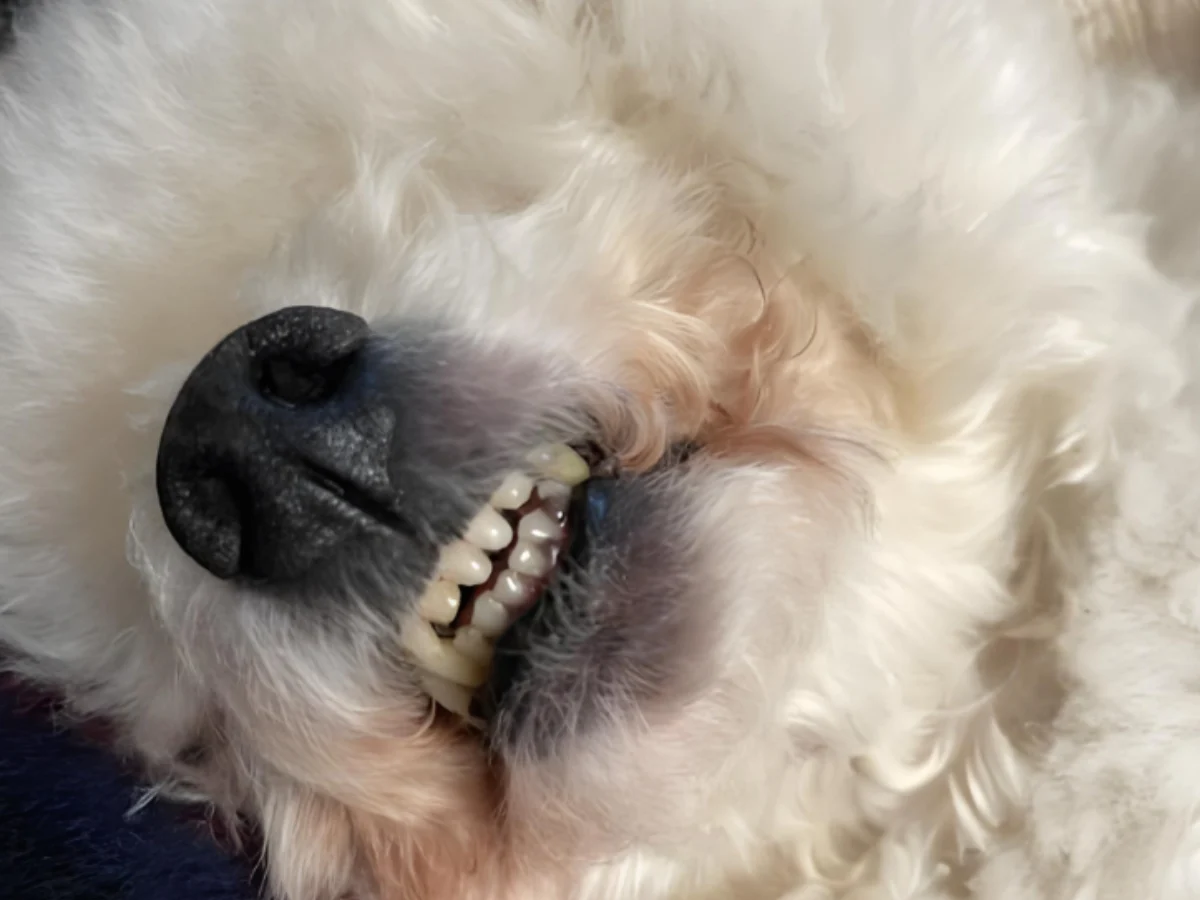

When my golden retriever pup, Luna, was going through her teething phase, she developed some seriously stinky doggy breath. As a dedicated pet parent, I immediately went looking for a safe, natural way to freshen her breath from the inside out.
That’s when my research—driven by my passion for pet nutrition—led me to a common kitchen herb: parsley. Many dog owners wonder: can dogs eat parsley? The short answer is yes. However, not all types of parsley are safe for fur babies; the wrong varieties can be highly toxic.
In the following sections, we will break down the key differences between flat-leaf and curly parsley, explore the science behind how this herb combats canine plaque, and outline strict safety guidelines that every pet owner should follow to keep their dog happy, healthy, and smelling fresh.
Can dogs eat parsley?
Yes, dogs can eat parsley, but it must be given in moderation, and the right variety must be chosen.
Which is better for dogs: flat-leaf parsley or curly parsley?
Curly parsley.
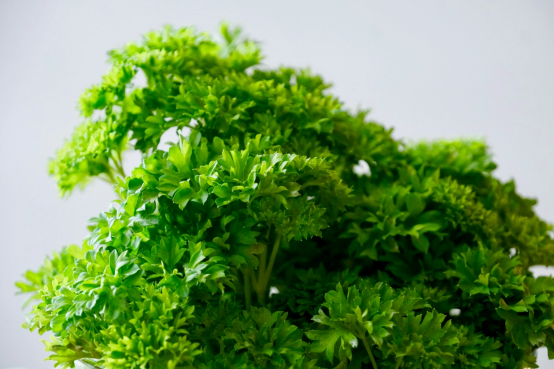
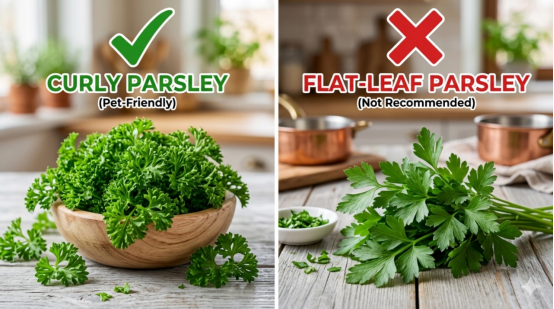
The answer is curly parsley. If you want to safely share this herb with your dog, curly parsley is the only choice. Visually, curly parsley is easy to identify: it features thick, ruffled, bright green leaves that grow in clusters and have a coarse texture, making the plant look almost like a miniature bush.
- Distinctive appearance: The leaves are deeply curled and ruffled, bright green in color, and relatively firm in texture.
- Mild flavor: Compared to flat-leaf parsley, curly parsley has a subtler herbal aroma and lower concentration of essential oils; its taste is closer to the fresh, grassy flavor of “leafy greens.”
- Crisp texture: Due to its distinct, sturdy fibers, it offers a noticeably crisp crunch when eaten raw.
According to The Canine Dietitian, clinical nutrition emphasizes that because curly parsley is a natural herb, moderate consumption provides moisture and dietary fiber that aid in diuresis and the elimination of toxins; unlike synthetic vitamins, it does not place detoxification stress or an excessive burden on a dog’s liver and kidneys (metabolic system).
Flat-leaf parsley
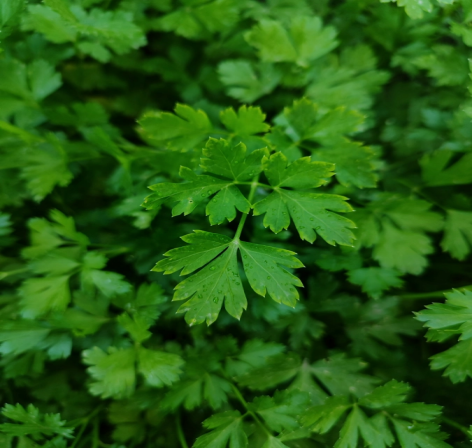
Now, let’s answer a very common question asked by well-meaning dog parents : can dogs have italian parsley leaves? Simply put, the answer is a hard NO.
Italian parsley (flat-leaf parsley) and its wild relative, spring parsley, are dangerous for dogs.Unlike the safe curly-leaf variety, the flat-leaf type is highly problematic for dogs.
- Mechanism of Toxicity (Furanocoumarins): Flat-leaf parsley and spring parsley are unsafe because they contain high concentrations of natural organic compounds known as furanocoumarins. When dogs ingest these compounds, they are absorbed into the body and trigger adverse reactions upon exposure to sunlight.
- Severe Side Effects: This chemical reaction induces extreme photosensitivity, leading to painful skin blistering and severe dermatitis; in the most serious cases, it can even cause permanent eye damage or blindness.
- Ultimate Danger (Seeds): While parsley leaves are dangerous enough, the plant’s seeds contain the highest concentrations of toxic oils and furanocoumarins. You must ensure that your dog does not come into contact with parsley seeds under any circumstances.
Curly Parsley vs. Flat-Leaf Parsley for Dogs
| feature | Curly parsley | Flat-leaf parsley |
| Shape | The leaves are intensely curled and three-dimensional, resembling a small shrub. | The leaves are flat and look very much like Chinese cilantro or celery leaves. |
| Flavor | The scent is mild, with a slight grassy note. | Rich aroma, with a more spicy and complex flavor. |
| Primary function | Focusing on visual decoration and the final sprinkling. | Primarily used for seasoning; often added when making soups or stews (consumption is prohibited for dogs ). |
Can curly parsley help dogs with bad breath and promote longevity?
Curly parsley is an excellent natural “superfood” for dogs. If your dog’s breath is becoming a bit too pungent, you might wonder: can eating parsley eliminate bad breath? Scientific research confirms that it can. When fed in moderation, it offers the following key health benefits:
- Freshens breath and combats bad breath: This is parsley’s most notable benefit. Rich in chlorophyll—which has natural antibacterial and deodorizing properties—it effectively inhibits oral bacteria and tackles bad breath at the source.
- Potent antioxidant and immune support: It is packed with vitamins C and A, as well as flavonoids. These compounds neutralize free radicals and reduce cellular damage; their strong anti-inflammatory properties help slow the aging process and prevent chronic diseases.
- Supports vision and bone health: High levels of vitamin K aid in proper blood clotting and calcium absorption, maintaining strong bones, while vitamin A (beta-carotene) protects the retina and supports good vision.
- Promotes urinary tract health (natural diuretic): Parsley acts as a mild diuretic. It stimulates urine production, helping the body flush out toxins, and plays a supportive role in preventing urinary tract infections (UTIs) and the formation of stones.
Veterinary Oral Health Standards: The use of natural breath-freshening products aligns closely with professional dental guidelines. Both the Veterinary Oral Health Council (VOHC) and the American Veterinary Dental College (AVDC) emphasize that chronic bad breath is often a primary warning sign of periodontal disease. While parsley can never replace mechanical brushing, its antibacterial properties can help slow the accumulation of dangerous tartar and plaque on a dog’s teeth, thereby supporting daily oral care.
Common Risks, Side Effects, and Veterinary Warning Signs Associated with Curly Parsley
Although curly parsley can be beneficial for dogs when fed in safe amounts, it can still pose serious health risks if fed improperly, consumed in excess, or given to dogs with specific health conditions. Here are the four primary risks associated with dogs consuming curly parsley:
Risks to the Urinary System and Kidneys
- Oxalate Accumulation: Curly parsley contains high concentrations of oxalate. If dogs consume it in large quantities or over an extended period, the oxalate binds with calcium in the body, forming calcium oxalate stones in the urinary tract, bladder, or kidneys—stones that cannot dissolve on their own.
- Risk of Kidney Failure: Parsley possesses potent natural diuretic properties. For dogs with underlying kidney disease or a compromised urinary system, excessive consumption can rapidly lead to dehydration and electrolyte imbalances; this places an increased metabolic burden on the kidneys and may even trigger acute kidney failure.
Gastrointestinal Distress
- Indigestion and Inflammation: A dog’s digestive tract isn’t built to process massive amounts of raw plant fiber. Excessive consumption of curly parsley can directly irritate the gastrointestinal lining, leading to symptoms such as vomiting, diarrhea, loose stools, abdominal pain, and loss of appetite.
- Physical Choking Hazard: The leaves of curly parsley are tightly curled and have a tough texture. If not finely chopped, large leaf fragments can easily adhere to the dog’s throat or esophageal walls, triggering severe coughing, retching, or even a risk of choking.
If you observe any gastrointestinal side effects (such as sudden vomiting, severe diarrhea or loose stools, abdominal cramping, or lethargy), stop feeding this herb immediately.
Obstetric Risks (Miscarriage and Premature Birth)
If you are caring for a breeding female dog or a pregnant rescue dog, you should completely eliminate parsley from her diet.
- Stimulation of uterine contractions: Curly parsley contains volatile oil compounds (such as apiol) that stimulate smooth muscle contractions. If a pregnant dog ingests it, it can easily trigger uterine contractions, potentially leading to miscarriage or premature birth; in lactating dogs, it may also inhibit milk production.
Fatal Poisoning from Ingesting “Close Relatives”
- Risk of Varietal Confusion: When purchasing, owners can easily mistake safe curly parsley for toxic flat-leaf parsley or wild parsley. The latter two contain high concentrations of furanocoumarins; ingestion followed by sun exposure can trigger severe photosensitive dermatitis, skin ulcers, and even blindness.
- Poisoning from Hidden Additives: Furthermore, never feed your dog processed human foods containing dried parsley, like pasta sauces or store-bought processed breadcrumbs. These often contain hidden garlic powder, onion powder, high salt content, or nutmeg. These ingredients are lethal to dogs and can cause hemolytic anemia or acute poisoning.
How to Safely Prepare Parsley for Your Dog
Understanding the pros and cons is only half the battle; the real key lies in how you use it. To ensure your beloved pet enjoys the benefits of fresher breath while avoiding digestive upset, please follow these practical kitchen guidelines.
How much parsley is safe for dogs to eat?
The golden rule is to start small. Two questions pet parents ask most often are: How much parsley is safe for a dog? and “Can dogs eat parsley every day?”
To answer this question safely, we refer to the global gold standard in pet care: the nutritional guidelines of the World Small Animal Veterinary Association (WSAVA). The WSAVA strongly advocates the “10% treat rule,” which stipulates that the total amount of any additional foods, herbs, or treats should not exceed 10% of a dog’s total daily caloric intake. Given that parsley is extremely low in calories yet potent in effect, the practical upper limit for consumption is far below that 10% cap. Never feed it in large quantities on a daily basis.
Luna’s actual dosage: To give you a practical reference, my Golden Retriever, Luna, weighs about 65 pounds. For a large dog like her, I chop up the fresh leaves and mix a teaspoonful into her food every other day. For small dogs, a pinch (about 1/4 teaspoon) a few times a week is sufficient.
Quick Reference Guide for Feeding Parsley to Dogs
| Dog’s body type | Typical weight range | Recommended single dose | Recommended feeding frequency | Examples of typical dog breeds |
| Toy dog | Under 4.5 kg(Under 10 lbs) | 1/4 teaspoon(approx. 1.25 ml) | Giving it once or twice over the weekend is sufficient. | Chihuahua, Pomeranian, Yorkshire Terrier, Maltese |
| small dog | 4.5 – 9 kg(10 – 20 lbs) | 1/2 teaspoon(approx. 2.5 ml) | 2–3 times a week | Poodle, Schnauzer, Pug, Bichon Frise |
| medium sized dog | 9 – 22 kg(20 – 50 lbs) | 1 teaspoon(approx. 5 ml) | Every other day or three times a week | Corgi, Border Collie, Shiba Inu, French Bulldog |
| large dogs | 22 – 40 kg(50 – 90 lbs) | 1 – 1.5 teaspoons(approx. 5 – 7.5 ml) | Every other day | Golden Retriever, Labrador, Husky, German Shepherd |
| Giant-sized dog | Over 40 kg(Over 90 lbs) | 2 teaspoons / approx. 1/2 tablespoon(approx. 10 ml) | Every other day | Alaskan Malamute, Great Pyrenees, Saint Bernard |
For the first feeding:you must start with a trial portion that is half the recommended amount: regardless of the dog’s size, offer only one-quarter of the recommended serving when introducing parsley for the first time. Observe the dog for 48 hours to ensure there are no allergic reactions or signs of intolerance—such as diarrhea, vomiting, or skin redness—before gradually increasing the serving to the standard amount.
Step-by-Step Guide: How to Prepare Parsley for Dogs
Regarding preparation, you might be wondering: Can dogs eat raw or cooked parsley? Is dried parsley safe for dogs? The good news is that dogs can safely consume both fresh (raw) and dried parsley—no cooking is required, as cooking can actually destroy some of the valuable vitamins and enzymes.
Here are three simple, vet-approved ways to serve it:
1. Fresh curly parsley
- Thorough washing: Be sure to rinse the herbs with cold water to remove any residual pesticides or dirt.
- Remove stems: Pick off the leaves and discard the tough stems, as these can be a choking hazard and are difficult for dogs to digest.
- Chop: Finely chop the leaves or blend them into a smooth purée.
- Mix in: Mix the chopped greens directly into their regular dry or wet food so they eat them along with their meal.
2. Feeding Dogs Dried Parsley
If you are looking for a convenient, shelf-stable alternative, organic dried parsley is an excellent choice for dogs.
- Check the label: Ensure the dried herb is 100% pure, single-ingredient parsley. It must not contain any added salt, spices, onion powder, or garlic powder (which are highly toxic to dogs).
- A little goes a long way: Because dried herbs are highly concentrated, sprinkling just a small pinch over their food a few times a week is sufficient.
3.Luna’s Favorite Summer Treat (My Secret Recipe)
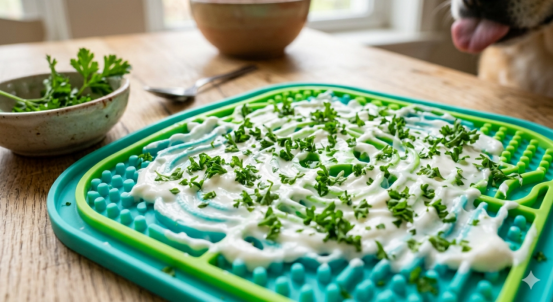
Want to level up your dog’s daily training routine? This is a personal favorite recipe of mine—one that Luna absolutely adores during the hot summer months.
- Mix a teaspoon of finely chopped fresh curly parsley with a few spoonfuls of plain, unsweetened Greek yogurt or low-sodium bone broth.
- Spread the mixture evenly onto a silicone lick mat.
- Freeze for two hours.
Serving frozen treats on a lick mat is a fantastic enrichment activity that reduces stress and anxiety, while the repetitive licking motion helps them relax and relieve stress. Plus, it leaves their breath smelling incredibly fresh and minty.
FAQ:
Q1: Besides parsley, what other herbs are safe for dogs to eat?
A: In addition to parsley, dogs can safely consume small amounts of herbs such as basil, rosemary, and thyme. Be sure to introduce them gradually to avoid upsetting their stomachs.
Q2: Can dogs eat parsley flakes from the grocery store?
A: Any 100% pure dried parsley—free from additives like onion, garlic powder, or salt—is fine, though fresh parsley contains more active enzymes.
Conclusion:
The AVMA emphasizes that regular, preventive home care—particularly regarding oral hygiene and early-stage nutrition—is fundamental to preventing chronic disease and ensuring a long, healthy life for pets. Using natural dietary supplements like parsley is not merely an online trend or a quick fix; when used correctly, it is a scientifically effective method to support a dog’s natural enzymatic pathways, immune system, and oral health from the inside out.
While it can never replace a toothbrush or regular veterinary check-ups, adding nutrient-rich whole foods like parsley is an important step in proactively caring for your pet’s health. Always monitor your dog closely when introducing new foods, and consult a veterinarian if your dog has kidney issues or other health concerns.
-
Sale!
-1-300x300.webp)
clean food residues and dog cat blackheads non-irritating wipes
Original price was: $11.89.$9.99Current price is: $9.99. Add to cart -
Sale!

Pet Dish Wash Mousse Environmentally friendly and non-irritating
Original price was: $10.99.$6.79Current price is: $6.79. Add to cart -
Sale!

Natural Cat Repellent Spray Safe for Pets and Furniture
Original price was: $8.99.$6.99Current price is: $6.99. Read more